Haplogroup G2a2b2a1a1a1b2

– 4 min read



In southeast Anatolia, at Gaziantep, two men dated to around AD 1200 from the Armenian Kingdom of Cilicia stand out for a very specific paternal signature: G2a2b2a1a1a1b2. They are recorded as samples I14650 and I14651. That is a small cluster by any measure, but it is exactly the kind of finding that makes ancient DNA useful. Instead of speaking vaguely about medieval populations in the eastern Mediterranean, we can point to named individuals from a defined place and period and ask what their Y-chromosome line was doing there.
The answer begins with a useful distinction. G2a2b2a1a1a1b2 is a very narrow branch within the wider Y-DNA haplogroup G, a lineage with deep roots in West Asia and a long archaeological presence around the Caucasus and Anatolia. Y-DNA traces only one direct paternal line, not a whole identity or ethnicity, but even so these two Gaziantep individuals place this branch firmly inside the medieval world of Cilician Armenia, a frontier kingdom tied at once to Armenian highland traditions, Anatolian geography, and the wider politics of the Crusader and Byzantine age.
The two ancient men associated with this branch come from a region that, in the early 13th century, sat at a crossroads in every sense. Gaziantep lies in southeast Anatolia, near the northern approaches to the Levant and not far from routes linking the Taurus, northern Syria, and the Armenian world to the east. By about AD 1200, the Armenian Kingdom of Cilicia had become one of the most important Christian polities of the eastern Mediterranean, shaped by migration, war, trade, diplomacy, and constant negotiation with neighbors.
That matters because paternal lineages do not move around as tidy ethnic badges. A lineage found in medieval Cilicia may reflect long local continuity, movement from nearby Armenian-speaking regions, connections with other populations of Anatolia or the South Caucasus, or some mixture of all three. What the Gaziantep evidence gives us is something both smaller and more solid: men living in the Cilician Armenian sphere could carry this exact branch, G2a2b2a1a1a1b2.
An ancient DNA study of the wider region published in Science helped show how valuable the South Caucasus and neighboring lands are for tracing long-term genetic continuity and change. For medieval samples like these, the real strength is not melodrama but placement: time, region, and a documented paternal line.
It is tempting, when confronted with a long label like G2a2b2a1a1a1b2, to throw up one's hands and retreat to the parent group. But the narrowness is the point. The broader haplogroup G appears in many ancient and modern populations across West Eurasia. This exact subclade is a much finer genealogical address.
That does not mean we can build a grand migration saga from two graves. It does mean that when this branch appears in securely dated medieval remains from Gaziantep, it becomes part of the documented history of that landscape. For people researching their own Y-DNA, such a match is most useful when handled modestly: not as proof of descent from a kingdom or a noble house, but as evidence that this paternal line was present in the Armenian-Cilician world of the early second millennium.
Modern readers sometimes imagine Cilicia as a borderland in the sense of being marginal. Historically, it was the opposite. The kingdom's ports and passes linked the Mediterranean coast to inland Anatolia and the Armenian highlands. Merchants, clerics, soldiers, craftsmen, and refugees moved through it. Dynastic politics drew in Byzantines, Seljuks, Crusader states, and later Mamluks.
So when we find G2a2b2a1a1a1b2 in two men from this setting, the significance lies in how well it fits a region where local depth and outward connection were always entangled. Medieval Cilicia was not a sealed genetic island. Yet neither was it simply a transient camp of foreigners. Ancient DNA repeatedly shows that such places often preserve long regional continuities even while absorbing newcomers.
There is another reason haplogroup G catches the archaeologist's eye. In European archaeogenetics, G lineages are famously associated with many early farming populations of the Neolithic. But that well-known story can distort the picture if we are not careful. The article's lineage is not "Neolithic G" in some vague, catch-all sense. It is a much later, much narrower paternal branch found in medieval men from southeast Anatolia.
Still, the deeper background matters. West Asia, Anatolia, and the South Caucasus are among the major historical homelands of haplogroup G diversity. That makes a medieval occurrence in Gaziantep historically plausible without requiring any fantasy of unbroken, documented descent from a single prehistoric tribe or village. In other words, these samples make best sense not as isolated curiosities, but as part of a long regional habit of survival and reshaping.
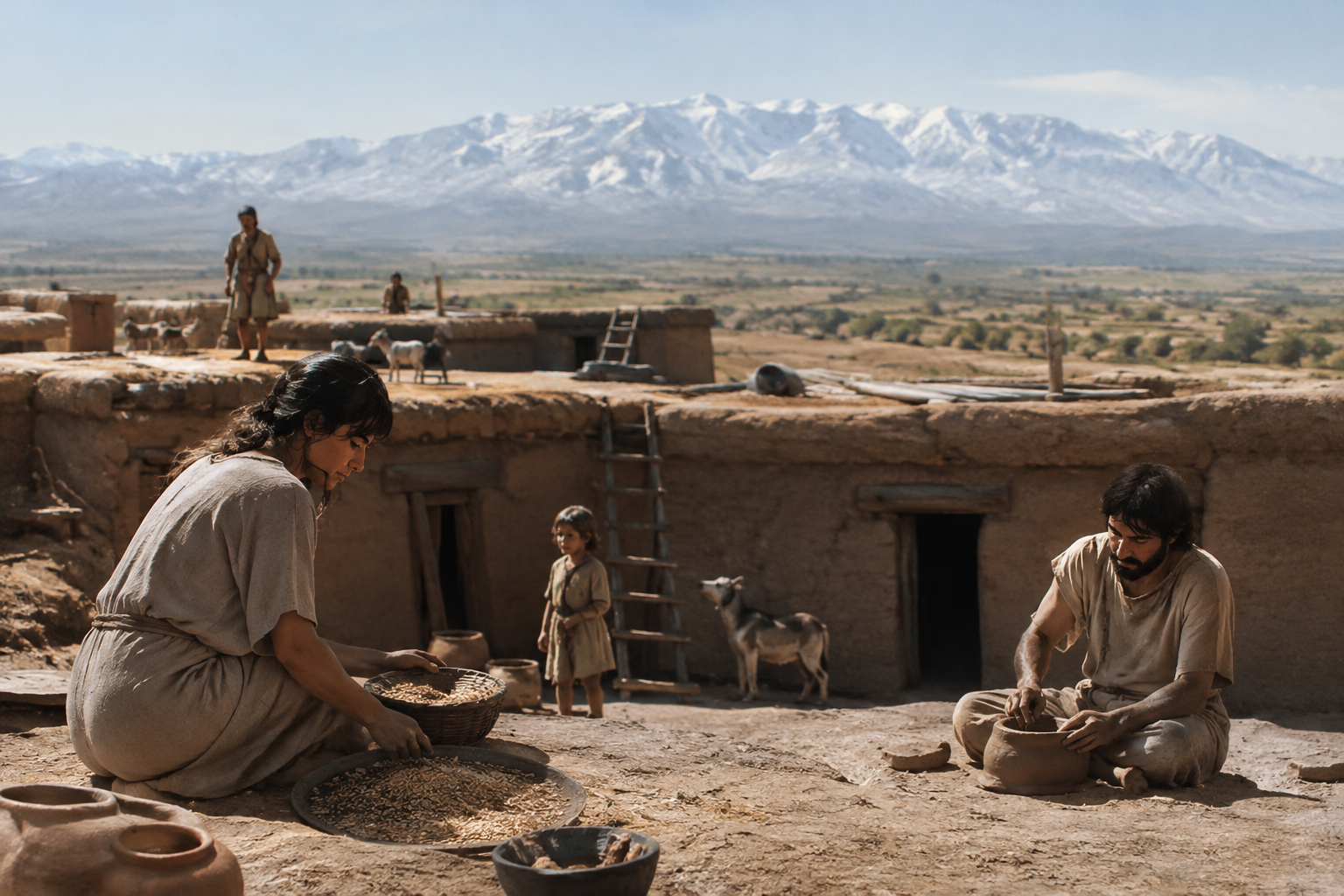
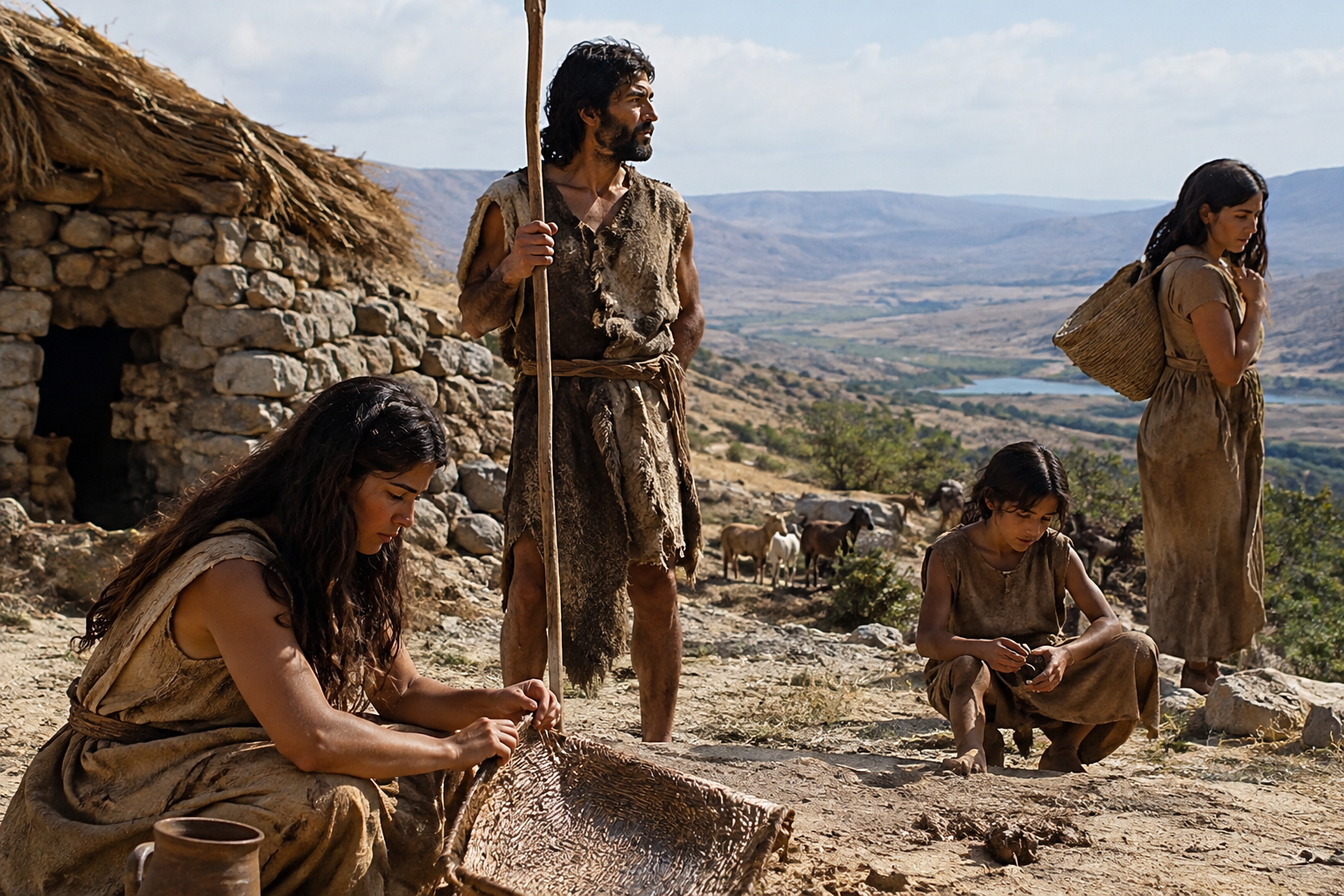
If you want the larger prehistoric backdrop to this family of lineages, the Neolithic expansions into Europe remain essential context, even though they are not the same as this exact subclade.
Neolithic Expansion in the Aegean
Quite a lot, if one avoids asking the wrong questions. We cannot say from the information here whether I14650 and I14651 were close relatives, whether they belonged to an elite family, or whether this branch was common in Cilician Armenia as a whole. Two samples are two samples.
But two samples from the same historical setting are not nothing. They show recurrence, and recurrence matters. It suggests that G2a2b2a1a1a1b2 was not an accidental one-off in this medieval community. In a region where written history is rich but uneven, and where political labels often flatten local human complexity, even a pair of matching paternal lines can sharpen the picture.
That is especially true in medieval eastern Mediterranean history, where identities were layered rather than singular. A man could live under Armenian rule, in Anatolia, in a city connected to Syrian trade, and within a world shaped by Greek, Arabic, Turkic, and Latin-speaking powers. Y-DNA does not tell that whole story. It does, however, preserve one durable thread running through it.
For this haplogroup, the clearest ancient anchor in the evidence provided is medieval Gaziantep, in the orbit of the Armenian Kingdom of Cilicia, around AD 1200, represented by I14650 and I14651. That is already a meaningful historical placement. It suggests that this paternal branch belonged within the human landscape of southeast Anatolia and the Armenian-Cilician world, where deep regional roots met intense medieval mobility.
For a present-day tester carrying G2a2b2a1a1a1b2, that does not promise a royal pedigree or a single ethnic label. What it offers is something better: a real archaeological foothold, two medieval men in a documented frontier kingdom, reminding us that paternal lines endure not in abstractions but in particular places, at particular moments, where history was actually lived.


Comments