Haplogroup G2a2b2a1

– 5 min read


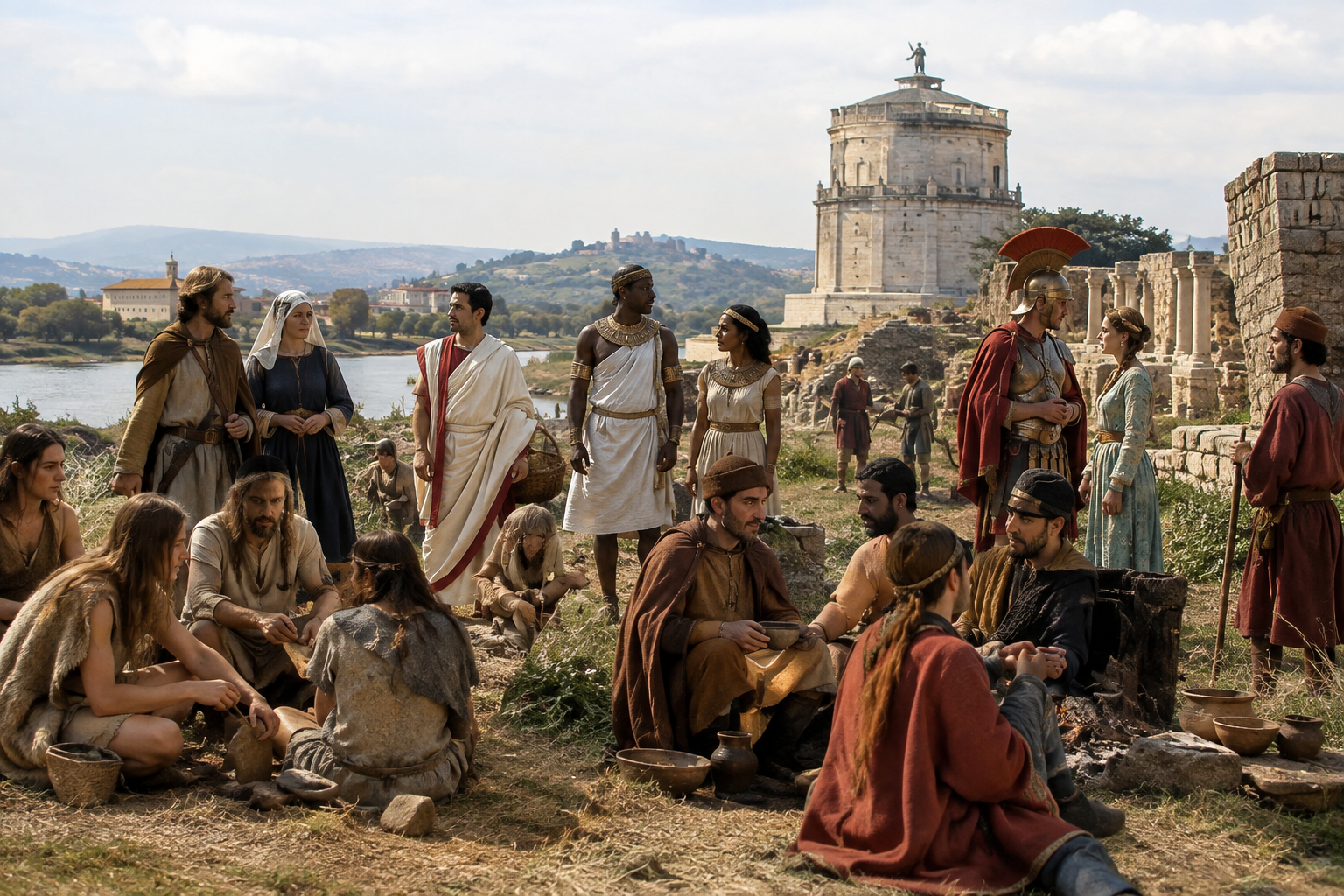
Some Y-DNA haplogroups announce themselves with royal swagger. G2a2b2a1 is more subtle. It turns up not as the banner of one empire or one famous people, but as a recurring paternal thread in places that matter enormously to European and Mediterranean history: Neolithic France, Iron Age Italy, Roman and post-Roman worlds, medieval England, and even Christian Nubia. That makes it historically interesting for exactly the reason archaeologists love awkward evidence: it refuses to stay inside neat national stories.
Y-DNA haplogroups trace one very specific line of ancestry, from father to father to father. They do not describe a person's whole ancestry, culture, language, or identity. Even so, paternal lineages can be extraordinarily useful. They let us watch certain male lines appear, disappear, persist, and travel across centuries. In the case of G2a2b2a1, the story seems to belong above all to the long afterlife of early farming populations and to the complicated mobility of the Mediterranean and Europe from prehistory into the Middle Ages.
Haplogroup G as a wider Y-chromosome family is strongly associated in ancient DNA research with some of the first farming populations that spread into Europe from Anatolia and nearby regions. That broad point is well established. What needs more caution is the leap from the big family tree to a narrow branch like G2a2b2a1. We should not simply pour the entire history of haplogroup G into this one subclade. But the pattern in the supplied ancient samples is revealing: some of the clearest appearances of this lineage come from Neolithic France, suggesting that at least part of its history in western Europe may indeed lie in those early agricultural expansions.
That matters because the Neolithic was not just a change in diet. It was a demographic and social revolution. Farming communities brought new settlement patterns, new burial customs, and in many regions new paternal lineages. If G2a2b2a1 was one of the lineages carried by such groups, then its later reappearances in Iron Age, Roman, and medieval contexts may represent not a sudden arrival, but survival through repeated layers of change.
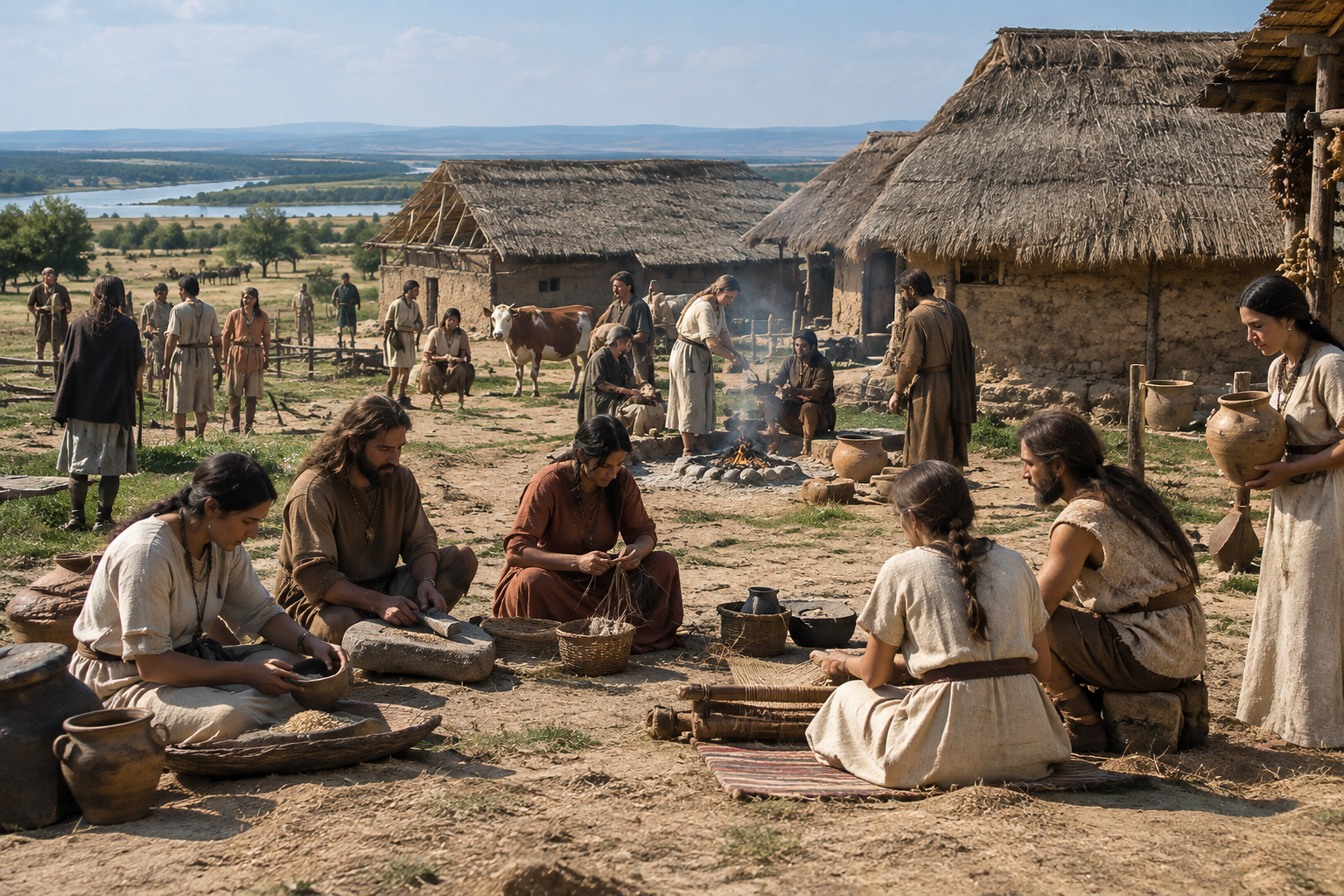
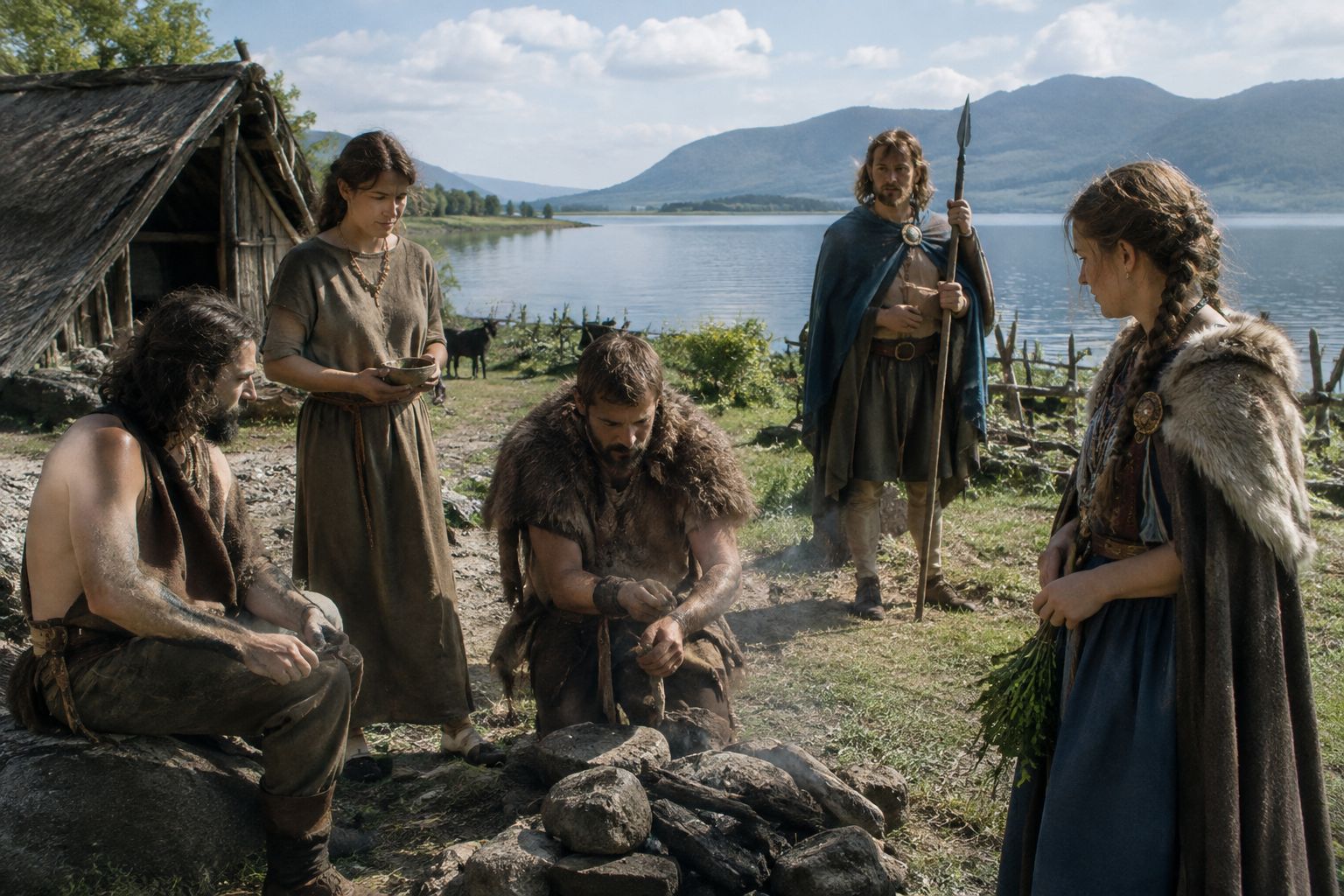
The earliest cluster in the dataset comes from Neolithic France: HBS002 dated to 4300 BC, and GRG035, GRG027, GRG021, GRG043, and GRG003, all dated to 3500 BC. One sample can be a curiosity. A cluster like this is a pattern. It suggests that this paternal branch was present in multiple men within Neolithic communities in France, exactly the sort of evidence that makes archaeogenetics so valuable. It is not just one dramatic burial but a repeated signal from a real population.
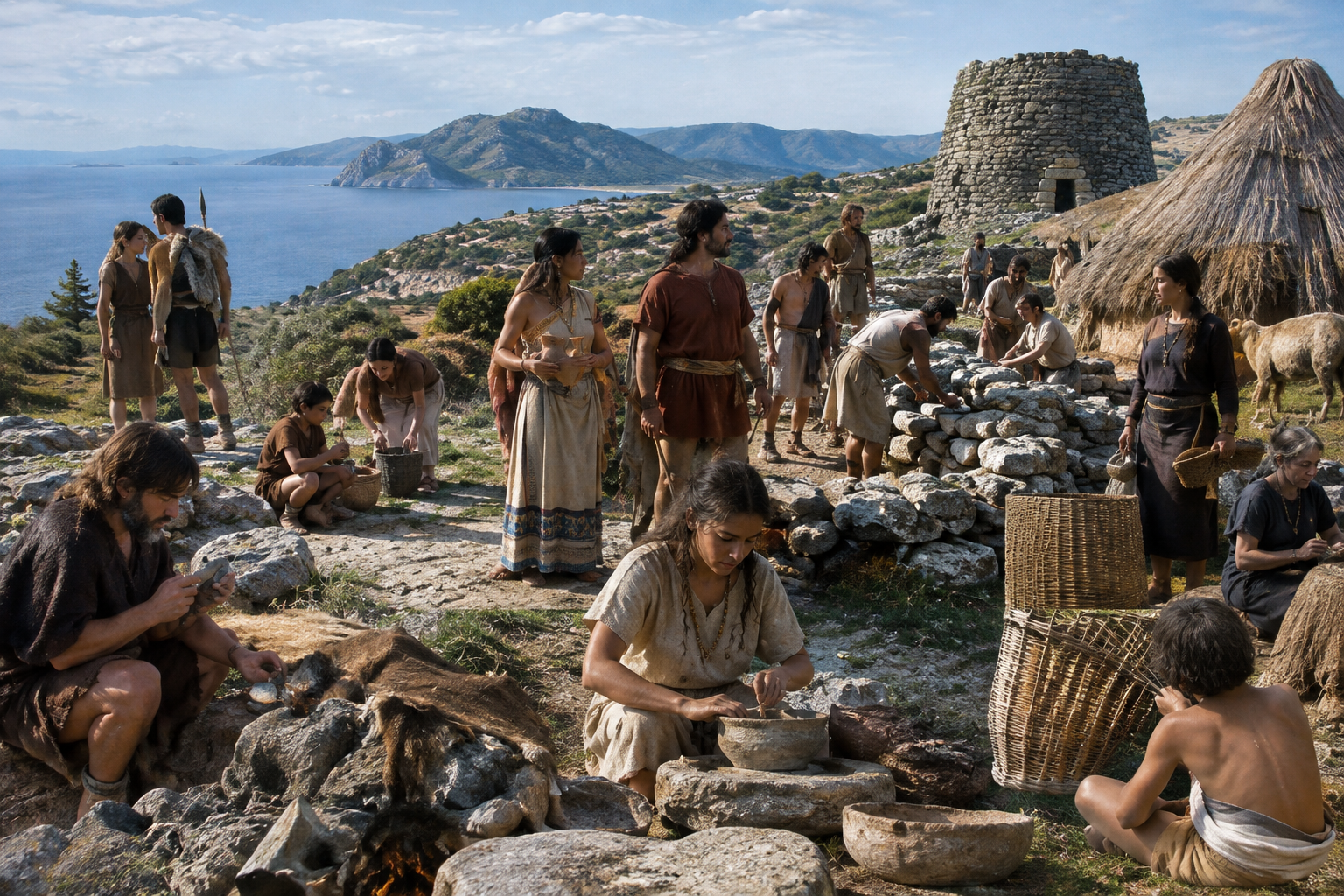
Then the trail moves south. In Iron Age Tuscany, CAM002 from Campiglia dei Foci, Siena, dated to 645 BC, places the lineage in central Italy long after the first farming horizon. This is fascinating because Iron Age Italy was anything but static. Etruscan cities, local Italic groups, trade across the Tyrrhenian, and contacts with the wider Mediterranean all created a densely connected world. G2a2b2a1 here looks less like an exotic newcomer than part of the inherited complexity of peninsular Italy.
Another Italian appearance, VEN012 from Early Medieval Venosa, dated to 600 AD, brings us into the fractured centuries after Rome. Venosa sat in a region shaped by Roman continuity, Christian institutions, and post-imperial political change. Nearby in the broader Roman world we also find R30 from the Central Roman Mausoleo Augusto, dated to 500 AD, and R70 from Anatolian Roman ANAS, dated to 200 AD. Together these do not prove one continuous family line, of course, but they do show that this paternal branch belonged to the movement-filled world of Rome and its aftermath, stretching from Anatolia to Italy.
Follow the Roman Anatolian Connection
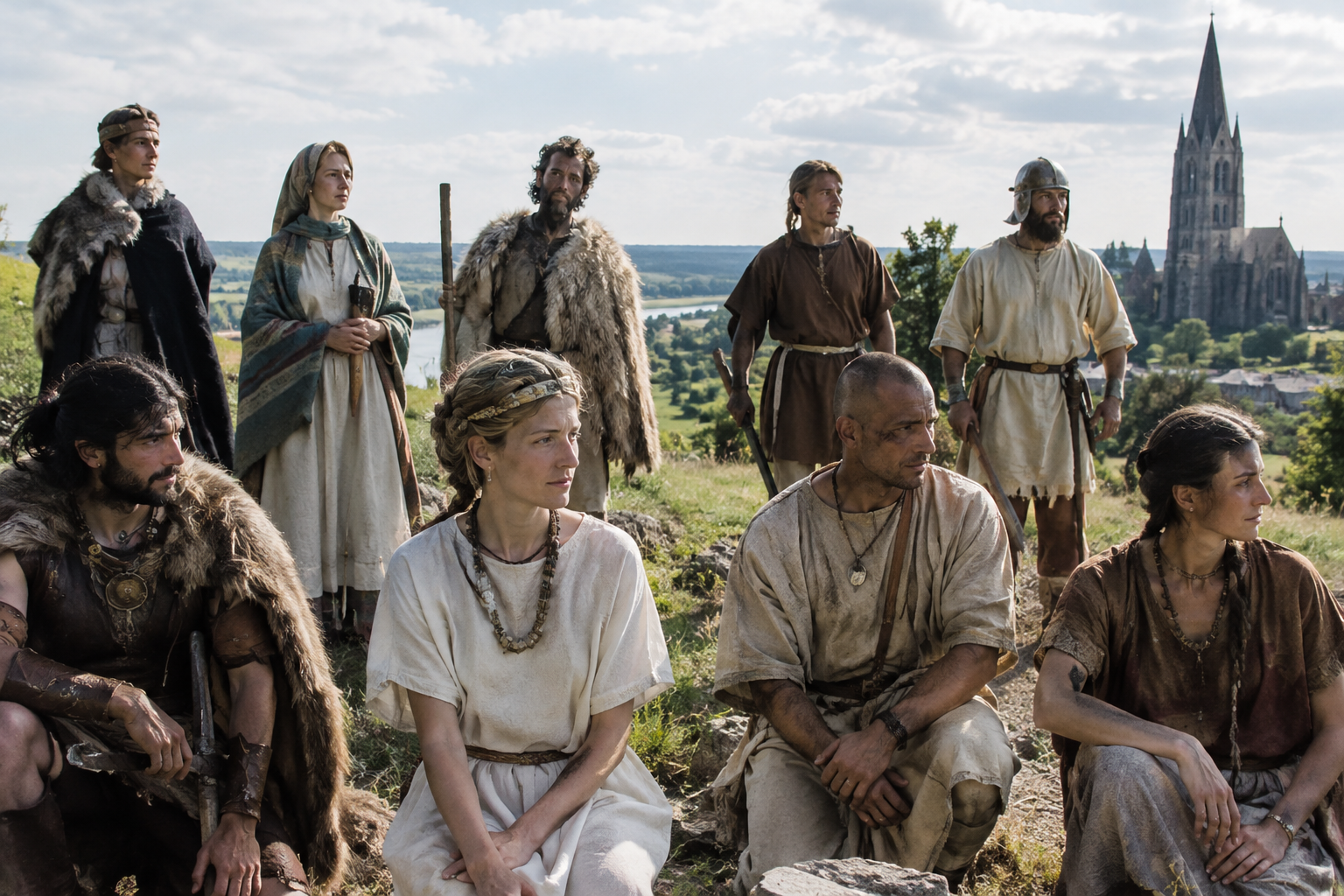
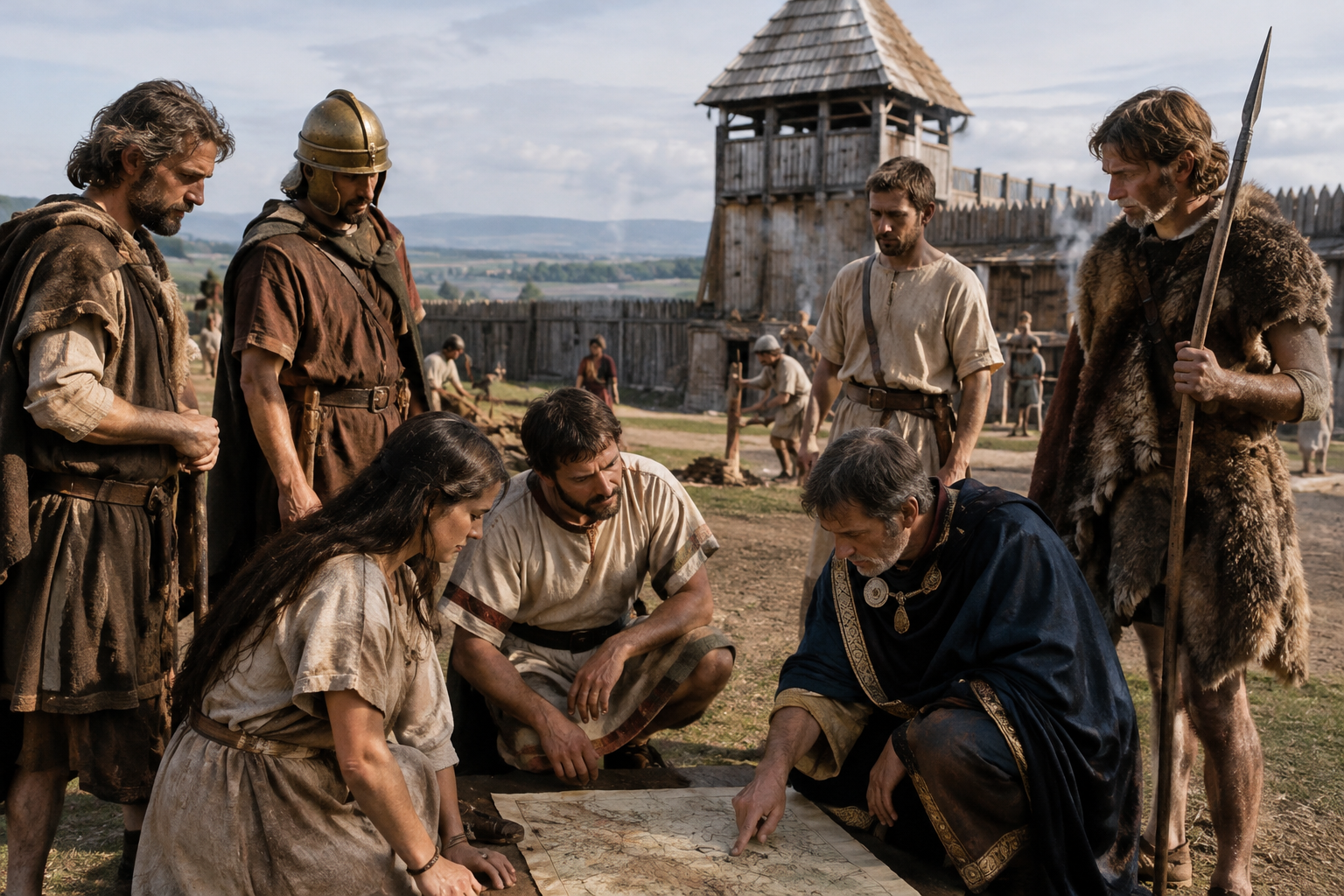
The post-Roman centuries add another twist. In what is now Germany, R11872 from a Migration Era Grave, Hassleben, Thuringia, dated to 450 AD, and DRH034 from a Migration Period Germany Outlier, Deersheim, Saxony-Anhalt, dated to 500 AD, place the lineage in precisely the era when older Roman provincial society, incoming groups, local elites, and military communities were all being reassembled into new political orders. A man carrying G2a2b2a1 in this setting need not fit any tidy label such as "Roman" or "Germanic." That is rather the point. Ancient DNA often shows that these frontier societies were mixtures of locals, migrants, and people whose family histories were already layered long before the grave was dug.
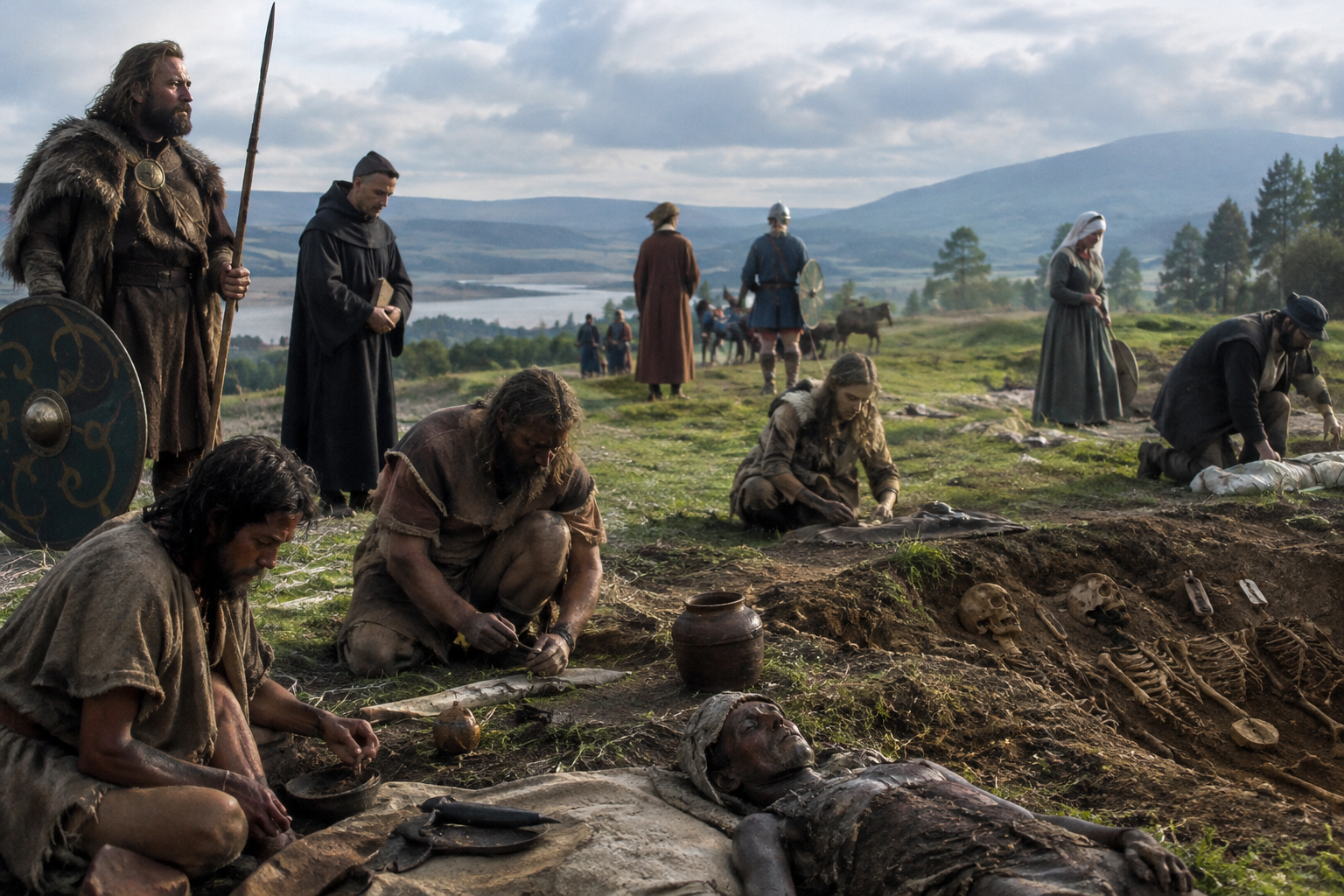
By the High Middle Ages we meet ATP_PSN_46 from Medieval England Cambridge St Johns Hospital, dated to 1250 AD. This is a wonderful reminder that paternal lineages do not live only in warrior graves and princely tombs. They also appear in hospitals, parish cemeteries, and ordinary urban settings. By 1250, England had absorbed prehistoric inheritance, Roman episodes, Anglo-Saxon settlement, Viking movements, and Norman rule. A single Y-line there is not a badge of one conquest, but part of the accumulated male ancestry of medieval society.
And then there is Nubia. I6337 from Kulubnarti Early Makurian Nubia, dated to 700 AD, and I6334 from Kulubnarti Makurian Nubia, dated to 840 AD, are among the most arresting entries in the list. Christian Makuria was tied into Nile networks, Red Sea links, and wider exchanges reaching toward the Mediterranean and Near East. These samples do not mean that G2a2b2a1 was "a Nubian haplogroup" in any simplistic sense. They do show that paternal lines associated in this dataset with European and Mediterranean contexts could also be present in medieval Nubia, which is exactly what one might expect in a connected Afro-Eurasian world.
Explore the German Frontier World
Put all that together and G2a2b2a1 looks less like the signature of one ethnic group than a surviving paternal branch carried through very different societies. Neolithic farmers in France, Iron Age men in Italy, Roman and Anatolian individuals, Migration Period burials in Germany, a hospital burial in medieval Cambridge, and Christian-era Nubians do not form one documented genealogy. They do, however, show how a paternal lineage can persist while languages, states, religions, and identities change around it.
This is where genetics and history complement each other rather beautifully. Written genealogy usually begins late and follows named families. Ancient DNA begins earlier and follows biological lines, whether famous or forgotten. The two methods answer different questions. A haplogroup match can place a modern tester within a deep paternal story, but it cannot by itself prove descent from a particular knight, lord, dynasty, or castle-owning house.
The supplied noble-family field here offers no specific family or castle data to discuss directly, and that in itself is worth stating plainly. Without explicit family names, seats, or documented genetic results, it would be irresponsible to attach G2a2b2a1 to any medieval noble house. Still, the historical settings of the samples make clear the kinds of worlds in which such a lineage later circulated: lordships built over older Roman landscapes, towns growing around churches and hospitals, and regional elites emerging from populations whose paternal ancestry could be much older than their surnames or heraldry.
Discover Medieval Cambridge DNA
What makes G2a2b2a1 so compelling is precisely its refusal to be boxed in. It appears in early farming France, survives into Iron Age and Roman Italy, turns up on the German frontier in the Migration Period, reaches medieval England, and is also found in Makurian Nubia. That is not a simple tale of one people marching from A to B. It is a reminder that paternal lineages can endure through settlement, trade, conquest, conversion, marriage, and everyday continuity.
If this is your Y-DNA haplogroup, or a nearby branch, the real excitement lies in context. You are not being handed a costume identity or a guaranteed noble pedigree. You are being given a clue to one thread of deep paternal history, one that ancient DNA now lets us glimpse in real archaeological individuals such as HBS002, CAM002, R70, DRH034, ATP_PSN_46, and I6334. That is far more interesting than a fantasy coat of arms.
To explore how your DNA compares with ancient populations and archaeological samples, MyTrueAncestry can help place your results into this wider human story. Those comparisons can reveal striking historical connections, while still stopping short of claiming direct descent from any specific ancient person or noble family.
Comments