Haplogroup G

– 5 min read


Haplogroup G has one of those histories that reminds us how misleading modern maps can be. Today it is often a minority Y-chromosome lineage across much of Europe, yet when ancient DNA opened the graves of the first farmers, haplogroup G kept appearing with striking regularity. In other words, if you want to understand the paternal story of the men who helped carry farming from Anatolia into Europe, G is one of the lineages that repeatedly steps into the light.
That matters because Y-DNA traces a direct paternal line only: father to son, back through time. It does not describe a person's whole ancestry, culture, language, or identity. But as a narrow historical thread, it can be extraordinarily revealing. Haplogroup G sits within a wider West Eurasian branch of the Y-chromosome tree, with several downstream lines later found in regions from Anatolia and the Caucasus to the Mediterranean and parts of Europe. Ancient DNA has made it clear that this haplogroup was present in some of the earliest farming communities of the Near East and in the Neolithic expansion into Europe, while later evidence shows it persisting, moving, and reappearing in very different historical settings.
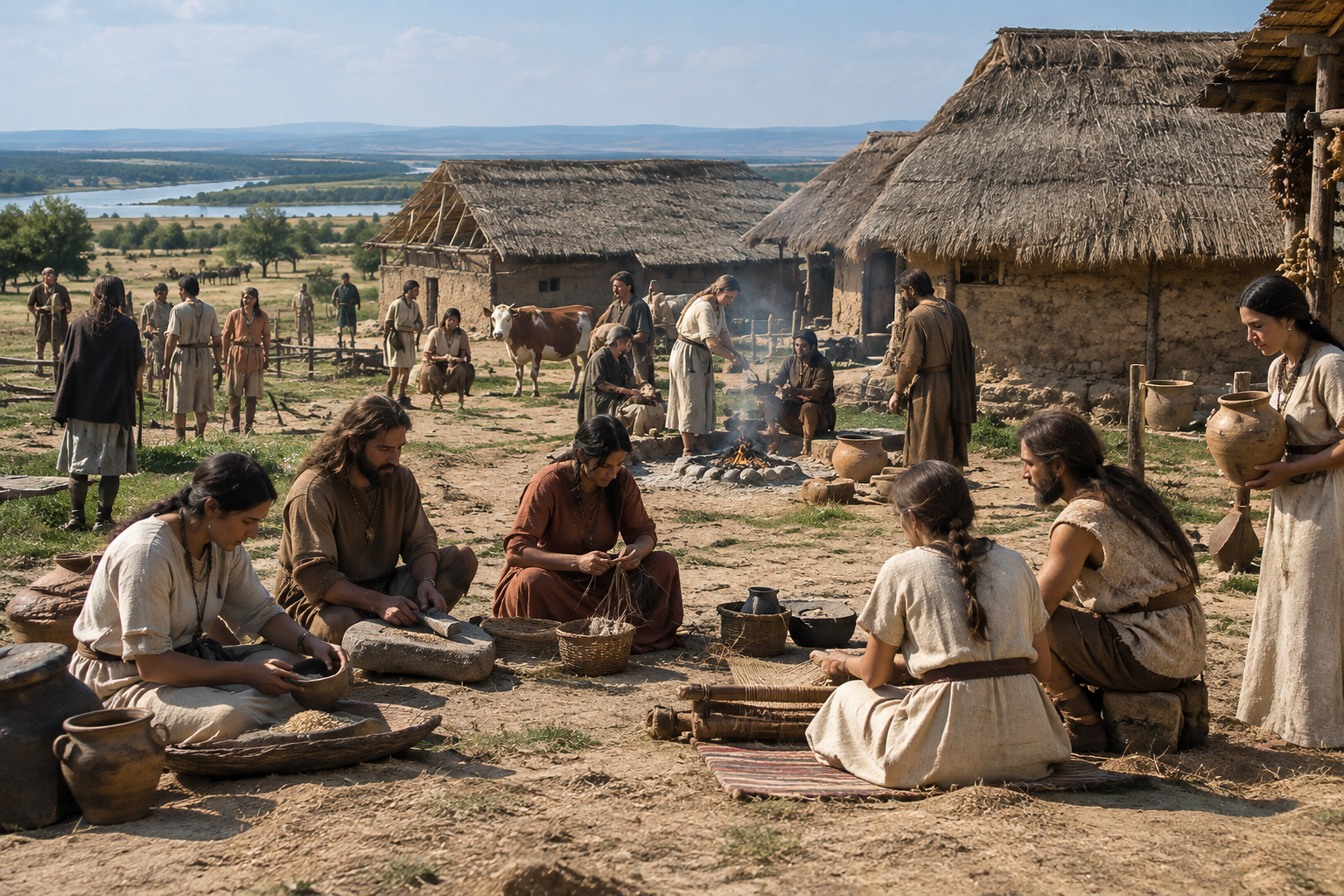
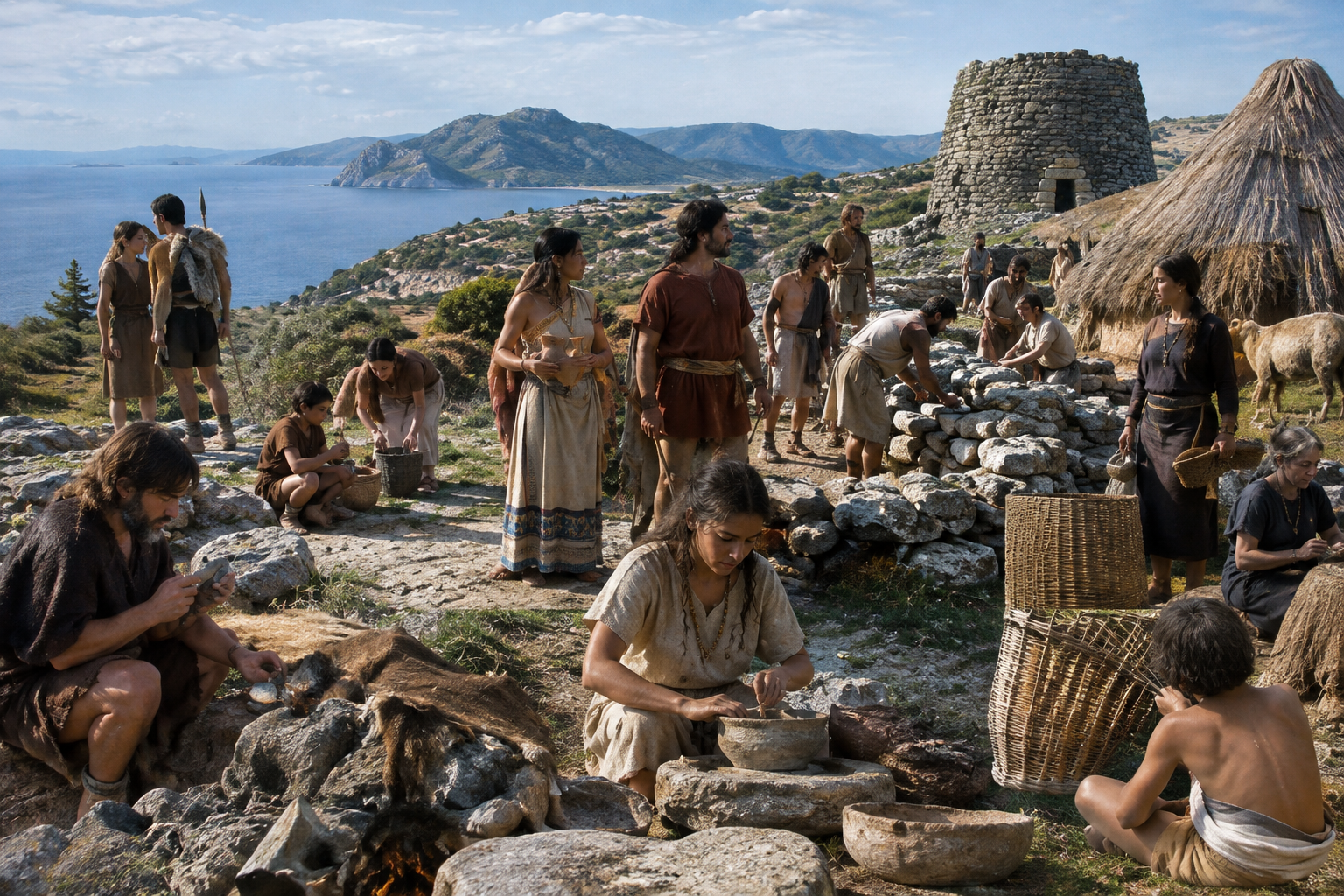
If one wanted a classic stage for the early history of haplogroup G, one could hardly do better than Neolithic Anatolia. At Catalhoyuk, one of the most famous early farming settlements in the world, sample cch173 from 6700 BC places haplogroup G in a community of densely packed mudbrick houses, plastered interiors, and a settled agricultural way of life. This is not just a genetic footnote. It is a glimpse of the sort of society from which some of Europe's first farming populations ultimately emerged.
We can then follow the line westward into Neolithic Europe. At Vedrovice in the Czech lands, sample NEO128 from 5191 BC shows haplogroup G in the world of early European farmers north of the Danube. That is important because it helps anchor G not merely in an Anatolian homeland, but in the demographic spread of farming communities into central Europe. It is one thing to propose movement; it is another to find the paternal signatures in graves along the route.
Explore the Neolithic Expansion
Another Anatolian marker comes from Arslantepe, where sample ART004 from 4568 BC again places haplogroup G in a region that would later become deeply entangled with the rise of complex societies, trade routes, and early states. Together, Catalhoyuk, Vedrovice, and Arslantepe suggest something quite significant: haplogroup G was not confined to one valley or one local tribe, but present across a broad arc of early farming and proto-urban worlds.
The story does not stop with the first farmers. In southeast Anatolia, sample I4616 from Tatika dated to 2100 BC places haplogroup G in the Early Bronze Age, long after the first agricultural spread. By then, the Near East was a world of fortified settlements, metalworking, regional exchange, and growing political hierarchy. Haplogroup G was clearly still part of that landscape.
The Aegean adds another chapter. At the Palace of Nestor in Pylos, sample I13510 from 1330 BC shows haplogroup G in Mycenaean Greece. So too does I13580 from 1250 BC at Phokis, Delphi. That is fascinating not because it proves any simple ethnic label, but because it places this paternal lineage within the elite and sacred geographies of Late Bronze Age Greece. Haplogroup G was not only part of the first farmer horizon; it also appears within the societies that built palaces, maintained warrior aristocracies, and laid the foundations for later Greek memory.
On the Black Sea coast, sample I5249 from Samsun dated to 120 BC shows the lineage still present in northern Anatolia in the Iron Age. This is exactly the sort of long continuity that makes haplogroup G historically interesting. It is not a line that vanishes after prehistory. It remains visible in different settings, under different regimes, among populations that would have understood themselves in very different ways.
Discover Prehistoric Aegean DNA
By the Iron Age and Roman period, haplogroup G appears in places that make any tidy origin story impossible. In Gaul, sample I20812 from Chemin de Coupetz, Marne, France dated to 250 BC shows it in a Celtic world far from Neolithic Anatolia. That does not mean all Gauls carried G, of course, only that this paternal line had become one strand in the population history of Iron Age western Europe.
Roman mobility adds another layer. Sample BBC014 from Imperial Roman Croatia Karlovac Pannonia Savia dated to 275 AD places haplogroup G in a frontier province of the empire. Pannonia was hardly a quiet backwater; it was a military, administrative, and migratory corridor. Men moved through it as soldiers, settlers, officials, traders, and families. A Y-line found there may reflect local continuity, long-distance movement, or both.
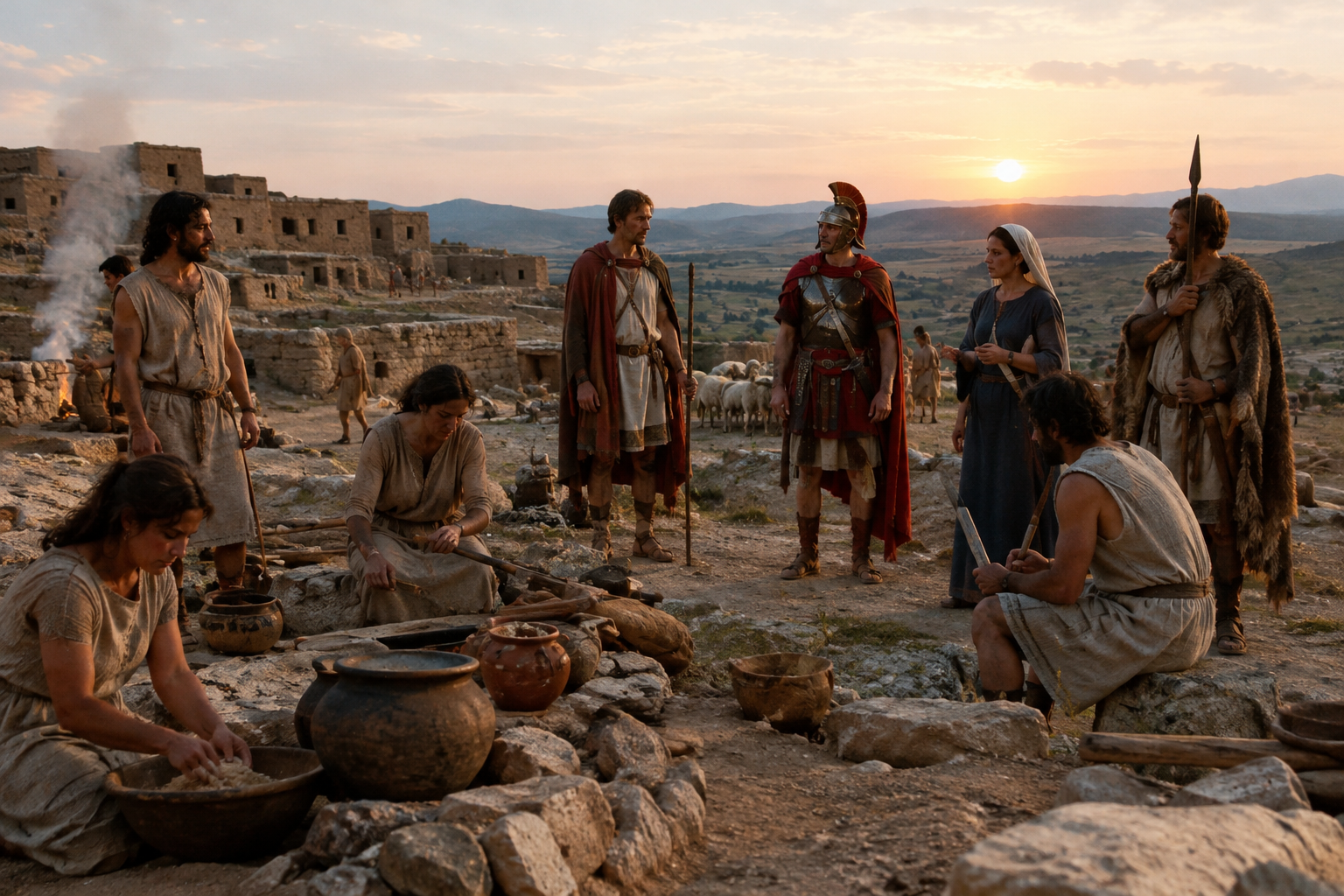
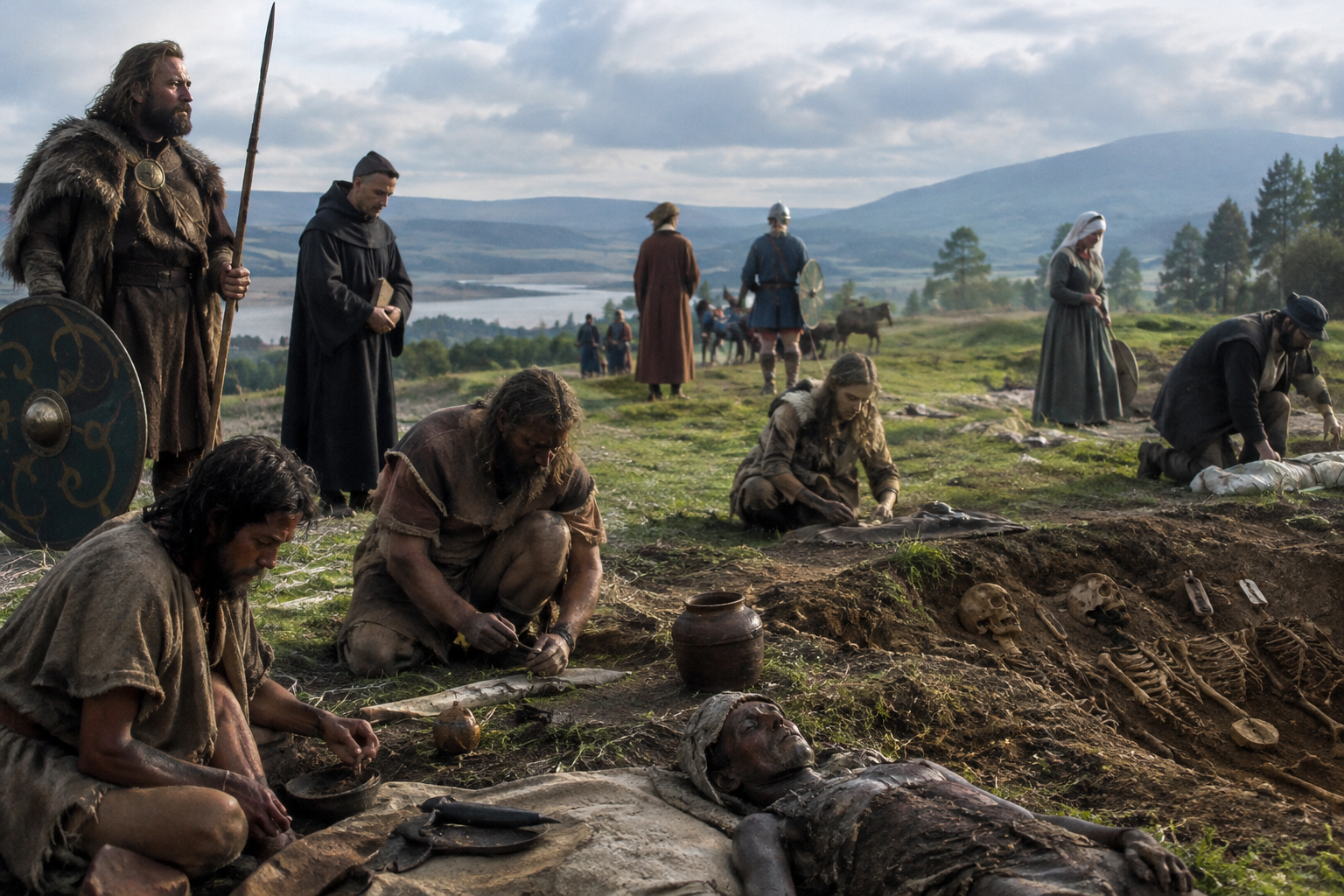
The Gothic and Migration Period evidence is especially revealing. Sample PCA0001 from Gothic Wielbark Poland Kowalewko Oborniki dated to 144 AD and sample RTW013 from Migration Period Germany Rathewitz Saxony-Anhalt dated to 500 AD show haplogroup G in contexts associated with the turbulent centuries of late antiquity. This is a useful corrective to old-fashioned ideas of genetically uniform "tribes." Gothic and post-Roman communities were often mixed, mobile, and socially assembled rather than biologically pure.
So the arc of haplogroup G, as reflected in these samples, runs from early farming villages to Bronze Age Anatolia, from Mycenaean Greece to Celtic France, from Roman Croatia to Gothic Poland and Migration Period Germany. That is not a simple march of one people. It is something more interesting: a paternal lineage participating in many different societies over thousands of years.
This is where genetics becomes most useful when kept on a short leash. Shared haplogroup does not prove direct descent between ancient individuals, and it certainly does not prove that a modern family, noble or otherwise, comes in an unbroken documented line from any one of them. What it can do is show that certain paternal branches persisted in regions that later became historical heartlands of kingdoms, lordships, and aristocratic estates.
That matters because medieval genealogies usually begin with the literate elite, whereas Y-DNA reaches much further back, into periods with no surnames, no charters, and no heraldic self-advertisement. Ancient DNA lets us see lineages before they entered history's written stage. It also reminds us that noble houses emerged from populations already layered by millennia of migration, settlement, and continuity.
In the material supplied here, no specific noble family or castle details are provided alongside haplogroup G, so it would be irresponsible to manufacture them. That in itself is worth saying plainly. A haplogroup article should not pretend to conjure a castle out of thin air. Still, the broader lesson stands: when later noble families rose in places like Anatolia, the Aegean, central Europe, or the Roman frontier, they did so in landscapes where paternal lineages such as G had already been present for a very long time.
Follow the DNA Journey from Anatolia
Haplogroup G is historically compelling because it overturns lazy assumptions. It is not merely "from one place," nor does it belong to one famous civilization. Instead, it appears early among farming communities in Anatolia, moves into Neolithic Europe, remains present in Bronze Age and Iron Age societies, and turns up in Roman and Migration Period burials as the political map of Europe and western Asia changes repeatedly around it.
For anyone carrying haplogroup G today, that does not provide a ready-made identity badge. It does provide something better: context. Your direct paternal line may connect, at a very broad level, to some of the men who lived in the first farming towns, in Mycenaean Greece, in Iron Age Europe, or on the Roman frontier. Not as a proof of personal descent from any named ancient individual, but as part of the deeper human story revealed by ancient DNA.
If you want to explore that story further, MyTrueAncestry lets you compare your DNA with ancient individuals and historical populations from the archaeological record. Those matches can offer remarkable clues about where parts of your ancestry fit into the long human past, while still keeping the important distinction between genetic similarity and proven family-tree descent.

Comments