Haplogroup E1b1b1a1b1a10a

– 5 min read


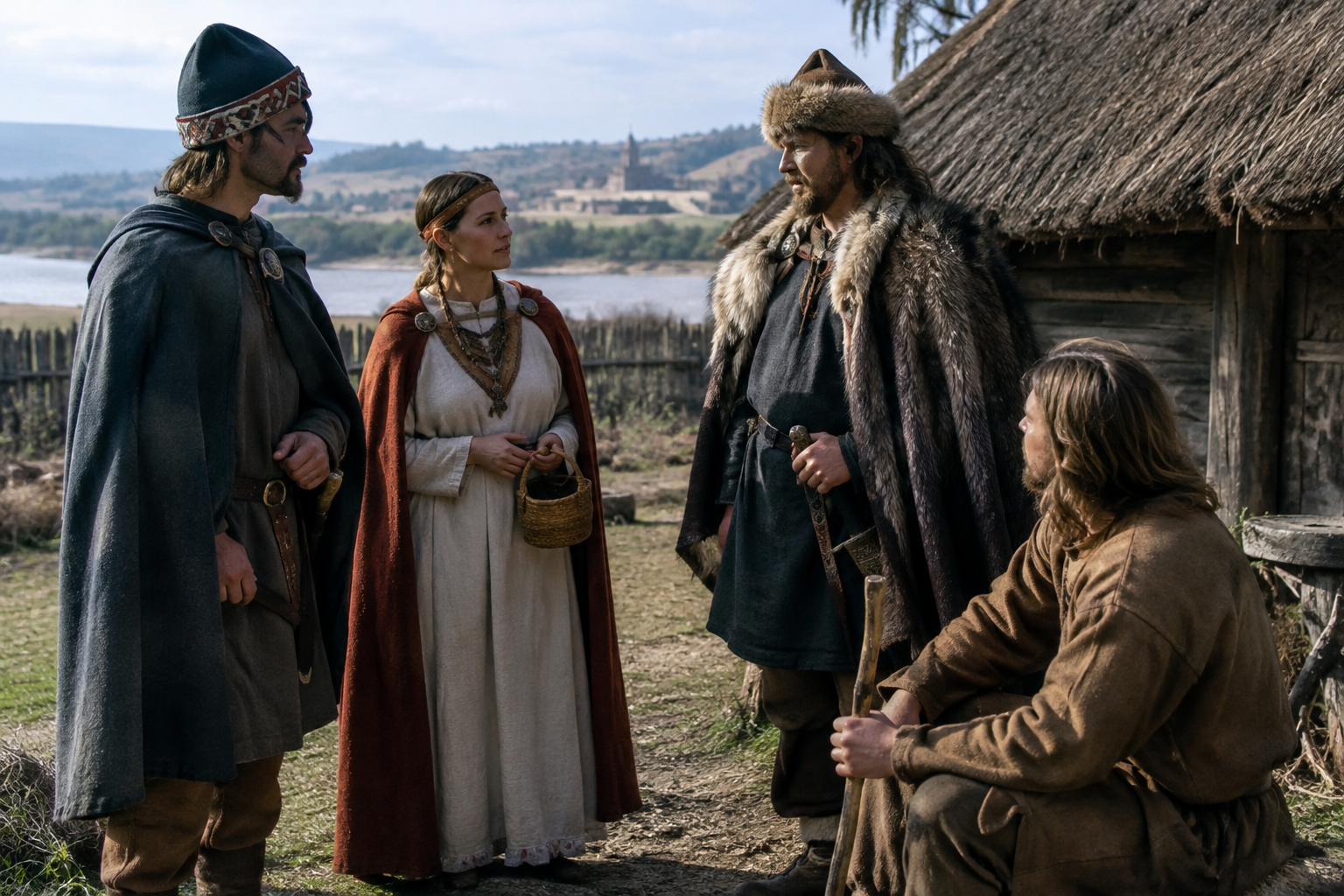
At Csokorgasse in the Vienna Basin, archaeologists uncovered an early medieval cemetery that belonged to a world being remade after Rome. One of the men from that burial ground, sample CSK004, dated to around AD 650, is associated here with the Y-DNA haplogroup E1b1b1a1b1a10a. That is a very narrow paternal label, but the setting around it is broad and historically rich: a crossroads region where former Roman provinces, incoming groups, and local communities overlapped in the centuries after imperial rule had fragmented.
This is what makes E1b1b1a1b1a10a interesting in the ancient record provided here. It does not appear in one neat ethnic box or a single political horizon. Instead, it turns up in late antique and medieval central and eastern Europe: at Vienna, at Masłomęcz in the Gothic horizon of eastern Poland, at Břeclav-Líbivá in the Czech lands, and later at Końskie in medieval Poland. Y-DNA follows one direct paternal line only, not a person's whole ancestry, but even so, these finds suggest a lineage present in several mixed frontier societies rather than confined to one isolated people.
The cemetery at Csokorgasse belongs to a particularly revealing period. By the seventh century, the Vienna Basin was no longer simply a Roman landscape, yet it had not become culturally simple in any new way either. Communities in this region lived amid the remains of imperial infrastructure, long-distance contacts, and new political formations that tied the Middle Danube to both western and southeastern Europe.
Sample CSK004, dated around AD 650, sits within that unsettled but connected world. The importance of the find is not that one grave can tell us everything about the region, but that a paternal line linked here with E1b1b1a1b1a10a was present in an early medieval population at one of Europe's major corridors of movement. Research connected with ancient individuals from Austria and the Vienna Basin has helped show how much mobility and mixture mattered in this zone, even when local burial communities could look archaeologically coherent.
A useful wider backdrop for this kind of evidence is the MyTrueAncestry article on ancient population change in Moravia and nearby regions, where post-Roman and early Slavic-era shifts are discussed in more detail.
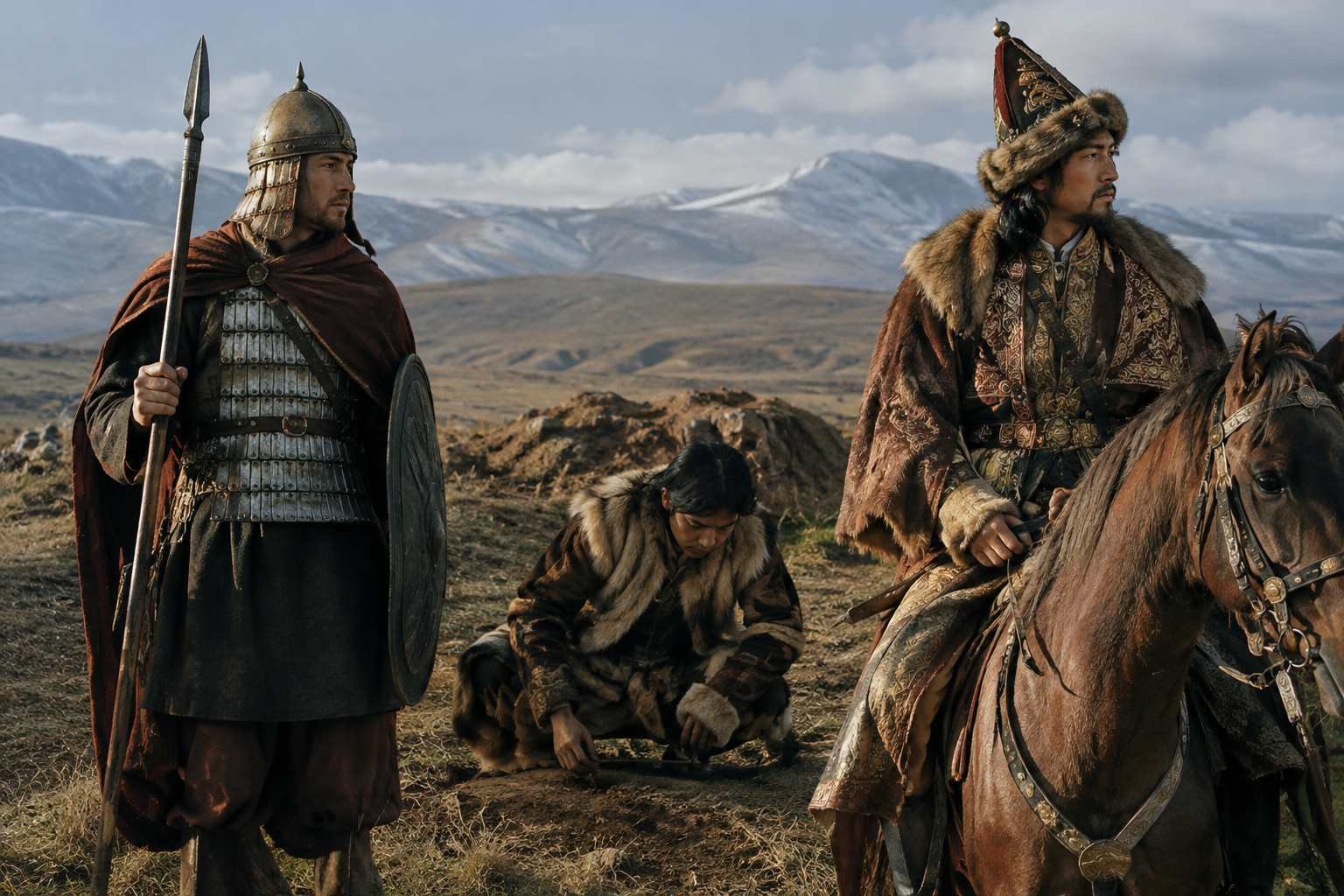
The most immediately striking parallel comes from PCA0110, dated around AD 300 and identified with Goth Maslomecz. Masłomęcz, in eastern Poland, has become one of the best-known case studies for why archaeologists now treat named ancient peoples with caution. A grave may belong to a cemetery associated with the Gothic cultural horizon, but that does not mean every person buried there shared one ancestry, one language, or one paternal origin.
That point matters a great deal for this haplogroup. If E1b1b1a1b1a10a, or a closely related paternal line reported within this branch, appears in a Masłomęcz-associated individual, the finding does not make the haplogroup "Gothic" in any simple sense. What it does show is that the late Roman frontier world in Barbaricum was genetically varied. In fact, an ancient DNA study examining the Masłomęcz community emphasized precisely that broader picture of mixed origins and diversity rather than any tidy tribal purity, as discussed in research on the ancient population.
So Masłomęcz gives this lineage a useful historical setting: not a single origin story, but a place where identity, migration, alliance, and family history could all be more complicated than old textbook labels suggested.
There is a directly relevant companion piece on this same archaeological world:
Cosmopolitan Goths at Masłomęcz
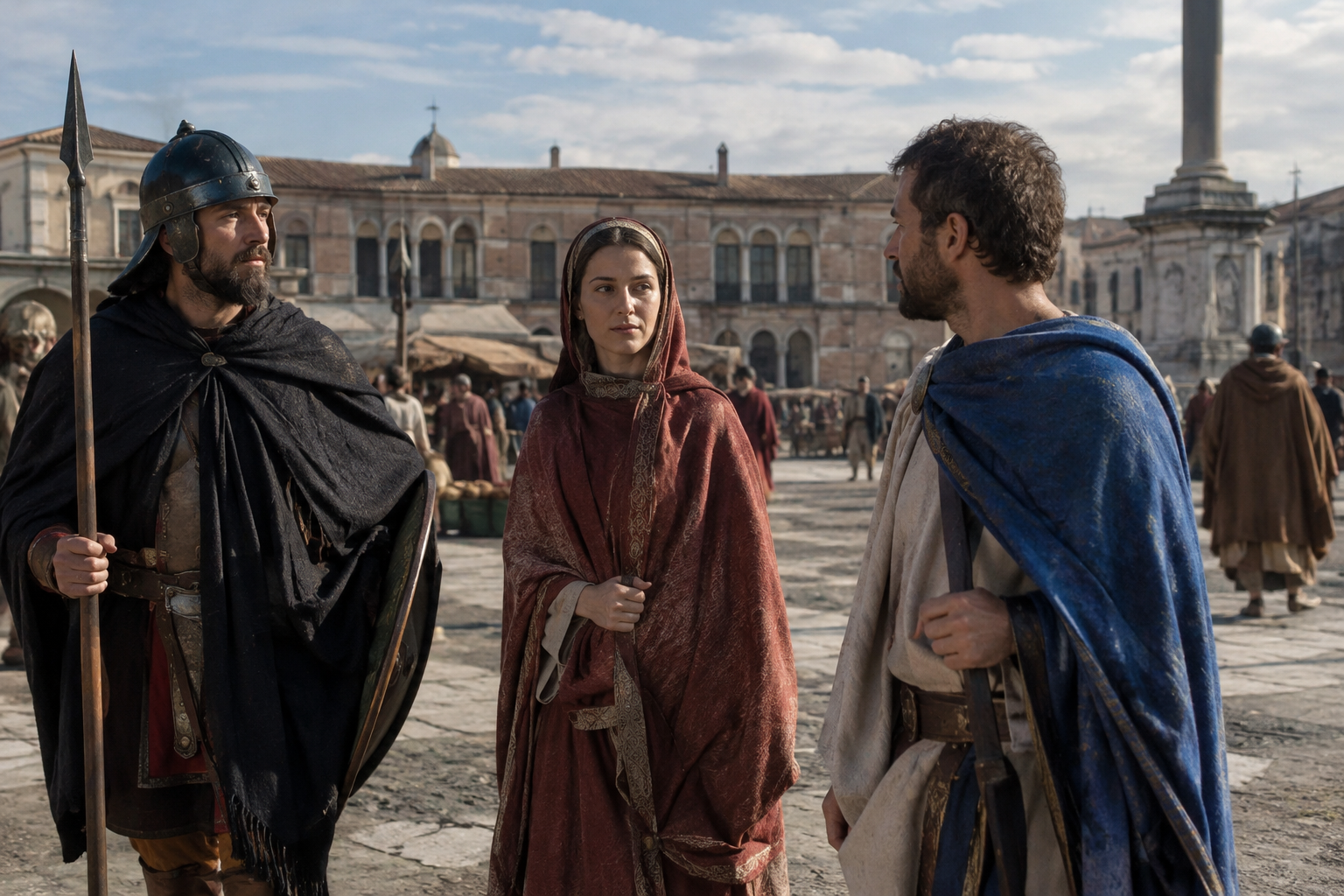
A second early medieval appearance comes from LIB11, dated around AD 450 at Břeclav-Líbivá in the Czech lands. This is a date with real historical weight. The fifth century in the Middle Danube was the age of collapsing Roman power, Hunnic expansion and contraction, shifting client groups, and the reassembly of local societies after imperial systems failed.
In that context, a paternal lineage associated with E1b1b1a1b1a10a at Břeclav-Líbivá is best understood as part of a population mosaic. The site lies in a region where archaeologists and geneticists have repeatedly found evidence for both continuity and incoming influences. A Y-chromosome result alone cannot tell us whether a man spoke a Germanic, Slavic, or some other language, nor whether he thought of himself in the terms later chroniclers used. But it can show that a paternal line persisted in exactly the kind of contact zone where identities were being reworked.
This is also why it is wise to distinguish the precise article haplogroup from its wider parent lineage, E1b1b1a. The parent branch has a much larger and older geographic history. The evidence here is narrower: this specific branch, or a reported association with it, appears in men living in central European contexts of late antiquity and the early Middle Ages.
The latest sample in this set is PCA0306 from Końskie in medieval Poland, dated around AD 1100. By then the world of Masłomęcz and the post-Roman Danube had long vanished. Piast-era polities, Christian institutions, and more stable regional identities had taken shape across much of central Europe. Yet the paternal thread associated with E1b1b1a1b1a10a still appears in the record.
That continuity across very different centuries is perhaps the most useful thing this haplogroup article can say. We are not looking at a lineage tied only to one crisis moment, one migration event, or one named people. Instead, the available ancient samples place it in communities spanning late Roman-era Barbaricum, the Migration Period, the early medieval Danube basin, and medieval Poland.
New work on medieval and earlier populations in Poland has increasingly shown how dynasties, burial communities, and regional populations cannot be reduced to a single paternal story. Still, paternal lines remain valuable because they can reveal persistence beneath changing political labels. For readers interested in that broader Polish context, this related article is worth exploring:
Not, I think, a grand single-route migration tale. The four ancient appearances provided here are spread across several centuries and across regions linked by movement, warfare, settlement, and cultural change. That makes the lineage historically interesting precisely because it shows up in contact zones: the Gothic-associated cemeteries of eastern Poland, the turbulent fifth-century Middle Danube, the early medieval Vienna Basin, and later medieval Poland.
One should be careful not to overclaim from that pattern. The exact terminal placement of ancient Y-DNA can depend on coverage and reporting, and ancient individuals assigned within a broader branch are not automatically proof of a neat genealogical chain to every modern bearer. But the overall picture is still meaningful. A paternal line associated with E1b1b1a1b1a10a was present in central and east-central Europe through periods when populations mixed rather than stood still, a point reinforced by genetic work on diverse post-Roman communities such as those discussed in research published on early medieval burials in the region.
For someone researching this haplogroup today, that is the real takeaway. E1b1b1a1b1a10a does not emerge here as the badge of a single tribe or kingdom. It appears instead as part of the lived demographic complexity of late antique and medieval Europe, where paternal lines could persist while identities, languages, and political worlds changed around them.
A broader regional comparison, especially for the Danube and nearby post-Roman zones, can help place that pattern in context:
Comments