Haplogroup C1a2

– 6 min read


Some Y-DNA haplogroups appear again and again in later historical populations, dynasties, and surnames. C1a2 is interesting for almost the opposite reason. It is one of those paternal lineages that turns up in ancient DNA as a quiet but persistent presence in early farming and prehistoric Mediterranean worlds, while remaining comparatively uncommon today. That alone makes it historically valuable. It offers a glimpse of male lines that were once part of the human landscape of Neolithic Europe and Anatolia, but were later reduced, absorbed, or overshadowed by other expanding paternal lineages.
As with all Y-DNA, C1a2 traces only a direct paternal line: father to father to father. It does not represent a person's whole ancestry, culture, identity, or ethnic background. Still, when the same paternal branch appears in burials spread across early farming settlements, massacre pits, island communities, and Bronze Age Aegean contexts, it becomes a useful thread for reconstructing parts of the past that written history never recorded.
C1a2 belongs within the wider haplogroup C family, a very old branch of the human Y-chromosome tree. But one of the key cautions here is not to confuse the broad history of haplogroup C as a whole with the more specific history of C1a2. For this narrower lineage, the evidence supplied here points above all to early Neolithic and Mediterranean contexts. In other words, the story is not chiefly about steppe conquerors, imperial founders, or one neatly bounded people. It is about early farmers, local communities, and long-term survival in scattered regions.
The earliest provided evidence places this lineage in Northwest Anatolia, a crucial staging ground in the spread of farming into Europe. Two especially important samples are I11949 from Ancient Northwest Anatolia Marmara, dated to 6350 BC, and I1102 from Neolithic Northwest Anatolia Marmara Barcin, dated to 6300 BC. These are precisely the sorts of settings archaeologists look to when tracing how farming populations moved out of Anatolia and into the Balkans and beyond. They do not prove a single migration route all by themselves, but they fit a broader picture in which early agricultural communities carried a variety of paternal lines westward.
That westward movement is echoed in I8105 from Neolithic Serbia Starcevo-Grad, dated to 5300 BC. The Starcevo world belongs to the first farming horizon of southeastern Europe, and this sample helps place C1a2 in the Balkans during the great transformation when cultivation, livestock, new village forms, and new social worlds were spreading across the region.
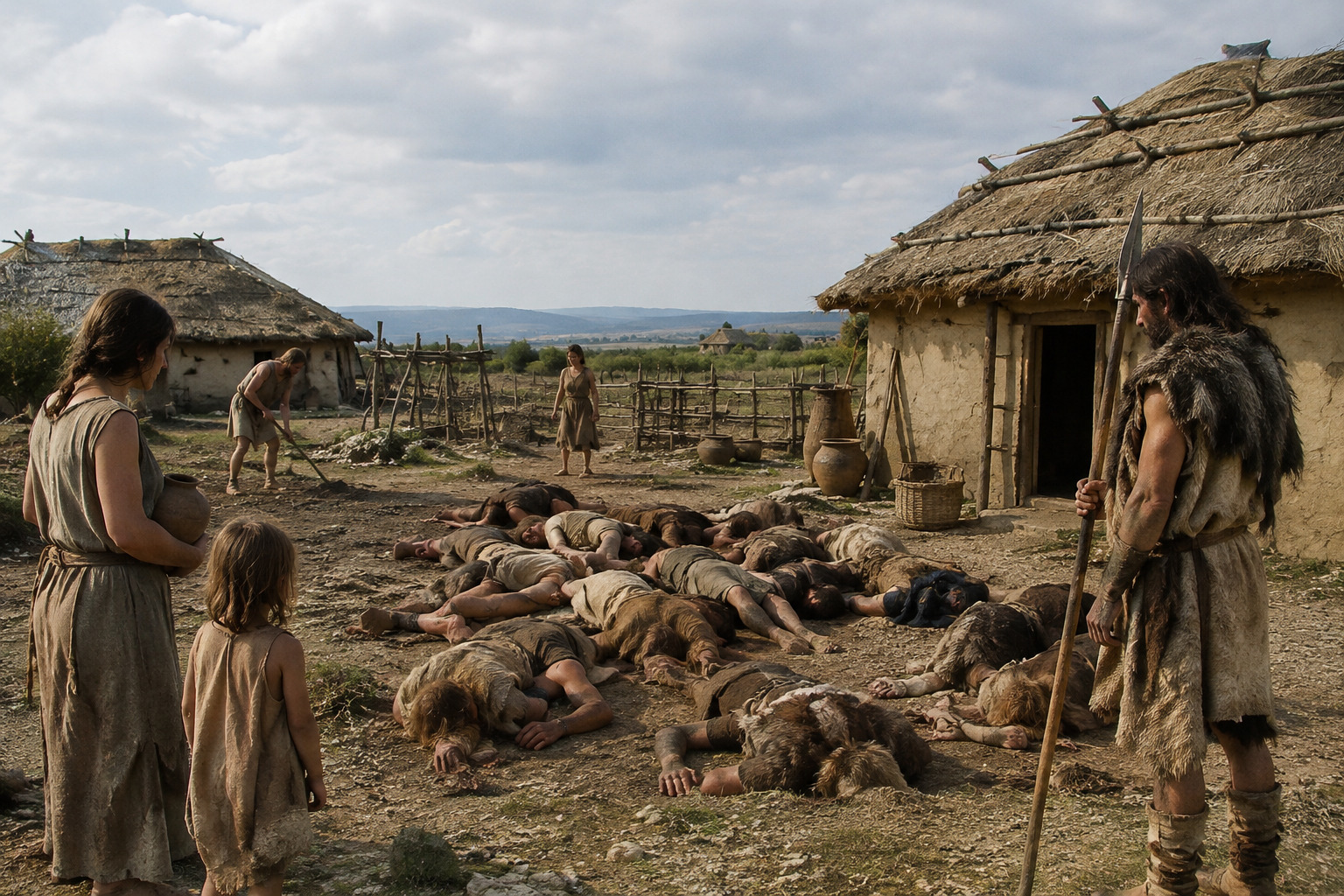
One of the most striking clusters in the dataset comes from Asparn-Schletz in Austria, a site often associated with a Neolithic massacre. Here C1a2 appears not in one isolated burial, but across a substantial group of men: I24897, I24907, I24277, I24028, I24279, I24904, I27805, I27771, I27773, I27787_d, I27772, I24884, I24898, and I5070, dated around 5000 BC to 5209 BC.
That concentration matters. It suggests that in at least one early farming community of Central Europe, this paternal lineage was not marginal at all. It may have been a significant local male line within that settlement or its kin network. We should be careful: shared haplogroups do not automatically mean all these men were close relatives. But taken together, they show C1a2 embedded in the social reality of early European village life.
And what a reality. Asparn-Schletz is not a romantic prehistoric tableau of peaceful farmers tending fields in timeless calm. It is a reminder that the Neolithic brought conflict as well as crops. Ancient DNA here gives us something unusually sobering: not just population movement, but the human cost of unstable frontiers, territorial pressure, or inter-community violence.
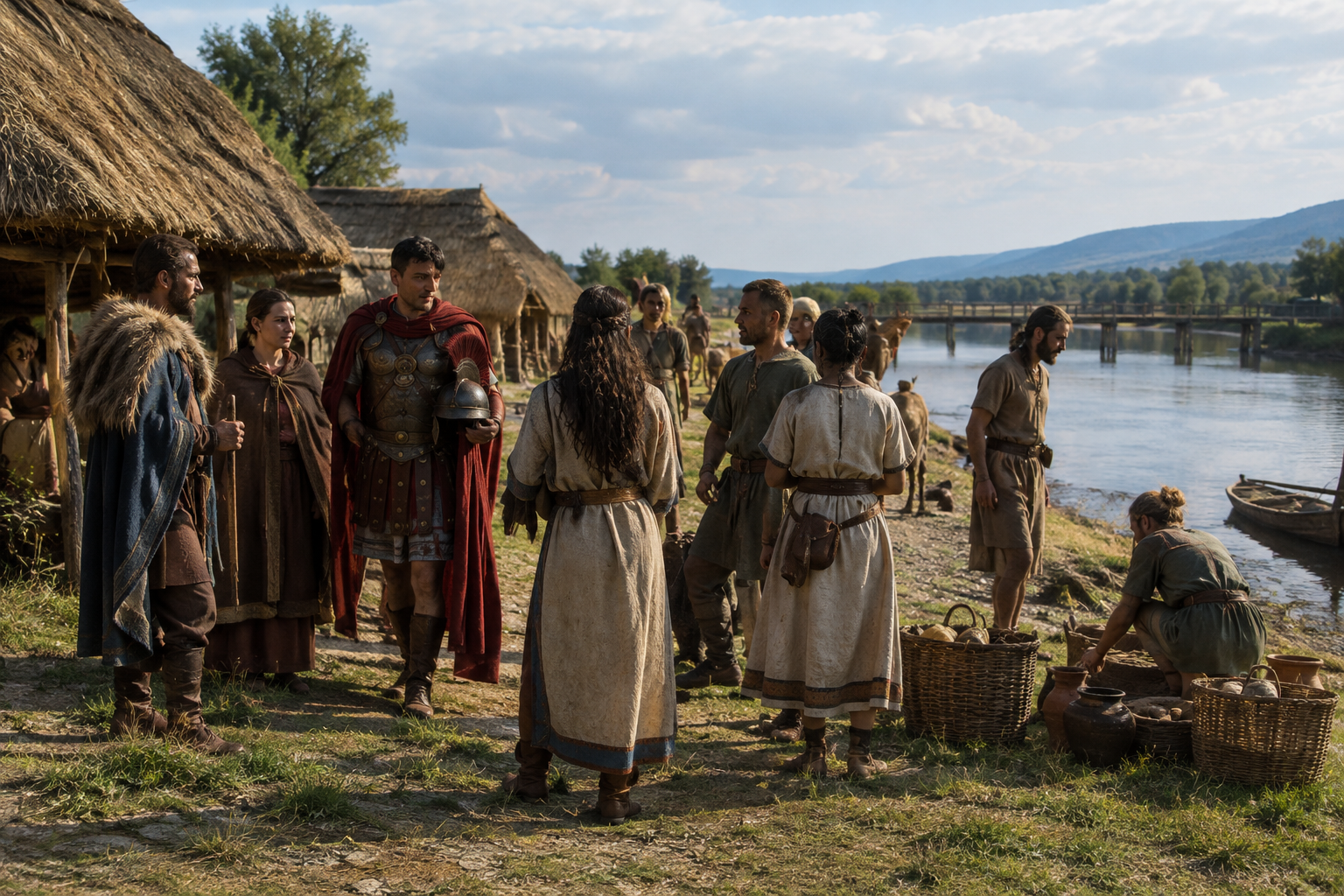
The same wider Neolithic spread is visible farther west in TR67 and TR79 from Neolithic Germany Trebur Grossgartach, both dated to 4800 BC, and in Sch72-15 from Schwindratzheim Neolithic France, dated to 5000 BC. This is a remarkable geographical arc. Anatolia, the Balkans, Austria, Germany, France: C1a2 appears as part of the paternal patchwork of early farming Europe.
Read the 5th Millennium Carpathian Basin Story
If we stopped in Central Europe, we might think C1a2 was simply an early farmer lineage later replaced. But the supplied samples hint at something more complicated. The lineage also appears in Mediterranean settings well after the first wave of Neolithic expansion.
At Catalhoyuk in Anatolia, two Late Neolithic individuals, cch282 and cch300, dated to 5000 BC, show that this paternal line remained present in Anatolia itself. In Neolithic Sicily, sample I4064 dated to 4850 BC places C1a2 on one of the great islands of the Mediterranean. And in Chalcolithic Romania Bodrogkeresztur Urziceni, sample I7136 dated to 3985 BC extends the story into the Copper Age.
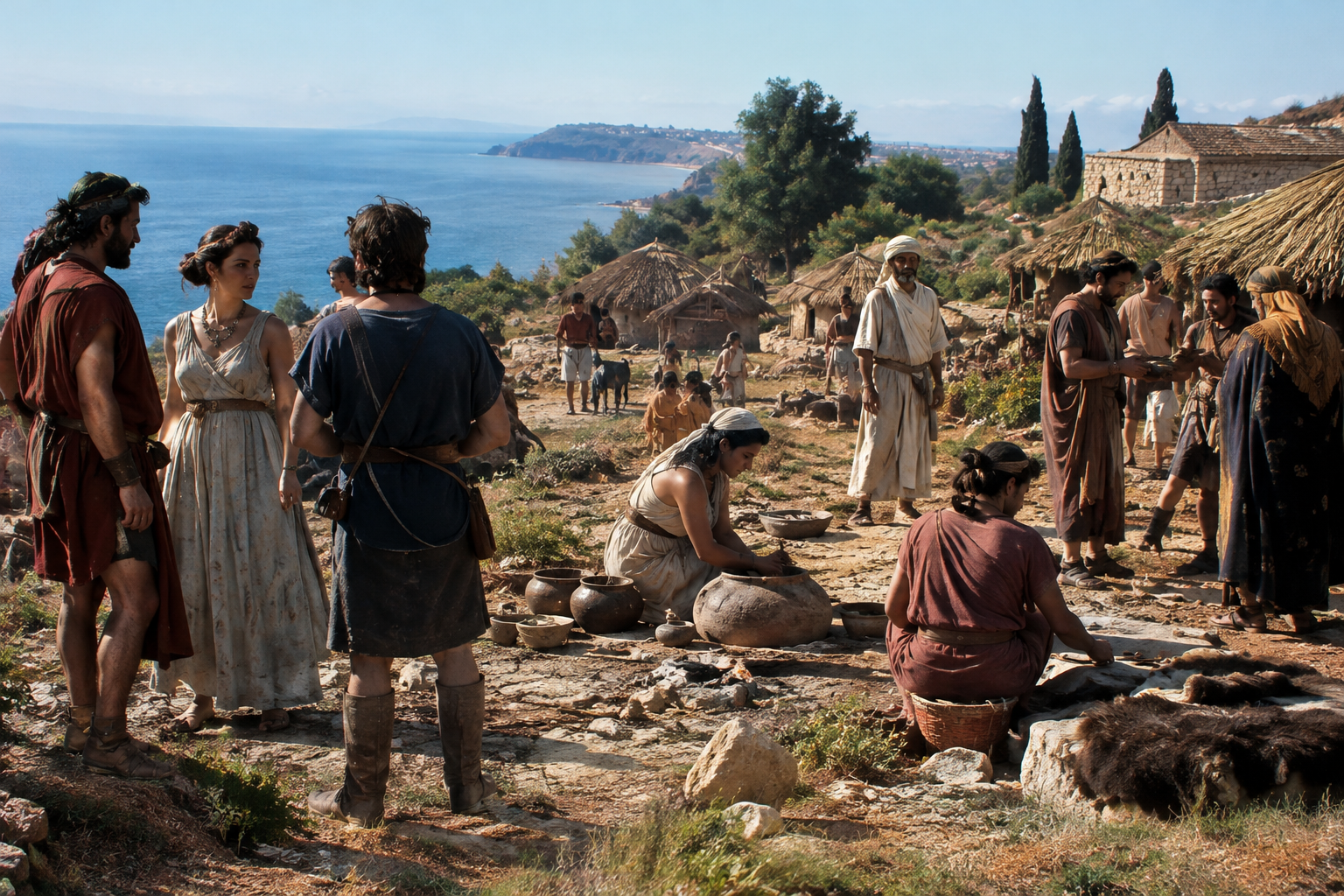
Most intriguing of all, the lineage does not vanish before the Bronze Age. It appears in the Aegean with XAN035 from Minoan Period Crete Chania, dated to 1575 BC, and AID002 from Mycenaean Aidonia Corinthia, dated to 1500 BC. These are not proof of any single uninterrupted elite male dynasty. But they do show that C1a2, or a closely related paternal branch represented in the data, persisted into the world of palaces, maritime exchange, and emerging Greek-speaking societies.
That matters because it warns against overly simple models. Some paternal lines associated with early farmers did not merely disappear. In some regions, especially around the Mediterranean and Aegean, they seem to have endured in local populations through major cultural change.
Discover Prehistoric Aegean DNA
There is one later sample here that opens a particularly interesting window: I10381 from Ancient North Macedonia Triballi Govrlevo-Skopje, dated to 627 BC. By this point we are deep into the Iron Age Balkans, long after the first Neolithic settlers and long before medieval genealogists began writing down noble pedigrees. A sample like this helps show that paternal branches associated with much earlier prehistoric populations could still be present in later regional societies.
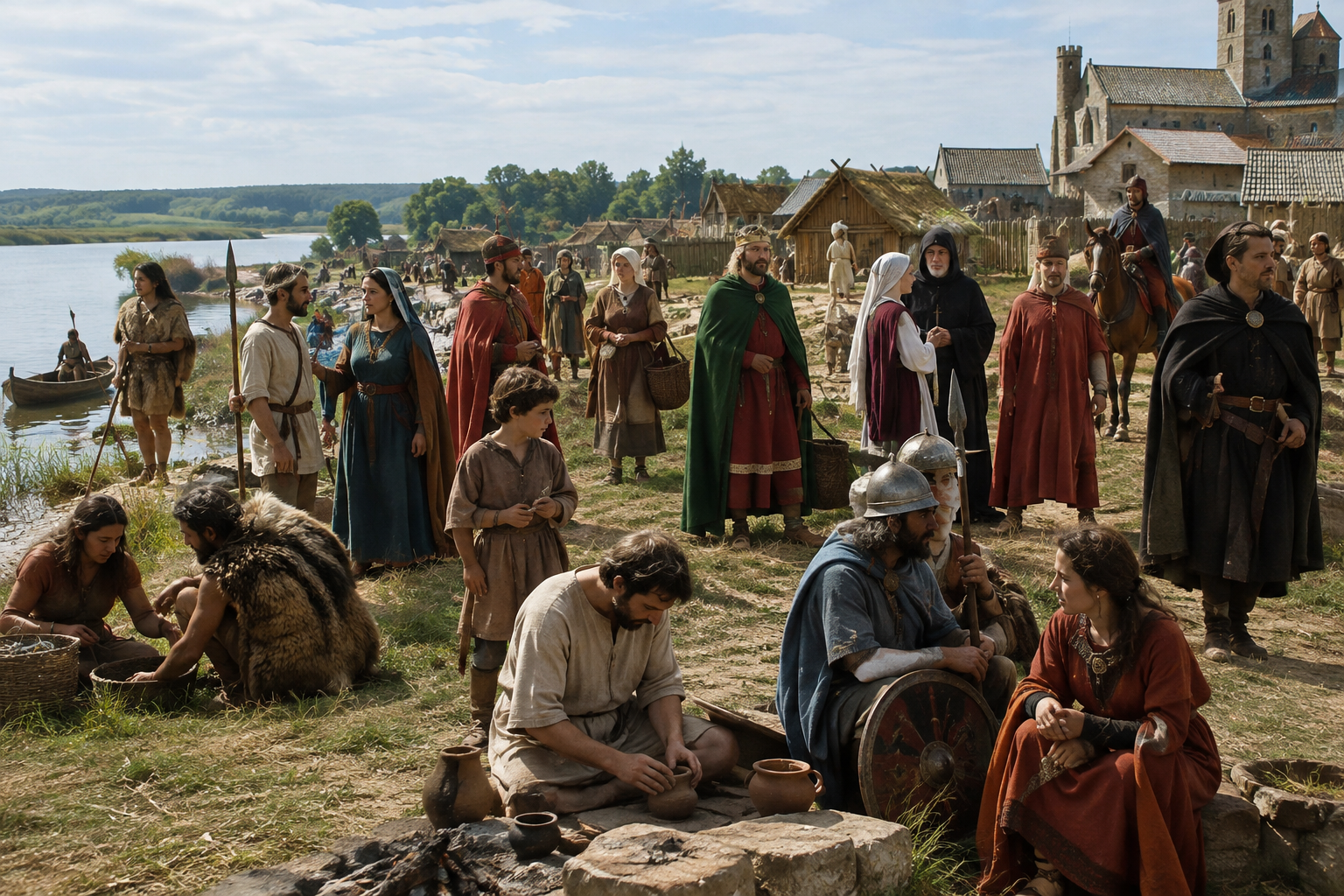
This is exactly where ancient DNA becomes so useful. Written sources tend to begin late, and when they do begin, they mostly record kings, wars, taxes, and saints. They tell us very little about the deeper paternal landscape beneath those societies. A haplogroup like C1a2 lets us see long duration: male lines surviving across vast stretches of time, while languages, burial customs, and political identities shifted around them.
In this case, the supplied field for associated noble families and castles is empty. Oddly enough, that suits C1a2 rather well. This is not a haplogroup that invites easy dynastic storytelling. There is no neat supplied castle to anchor it, no securely documented noble house to claim as its banner-bearer. And that absence is instructive.
Medieval castles preserve memory in stone, but they do not preserve a Y chromosome by themselves. Noble genealogies preserve names, titles, and inheritance, but they are far shallower than the time depth revealed by ancient DNA. For a lineage like C1a2, the historical record is not a roll call of barons. It is a scatter of graves: a village in Austria destroyed in violence, an early farmer in Serbia, a man in Neolithic Sicily, individuals in Minoan Crete and Mycenaean Greece.
So rather than forcing a speculative noble connection, the responsible thing is to say this plainly: if later aristocratic families in parts of the Balkans, Italy, Greece, or Central Europe ever carried branches of C1a2, that would require specific evidence. Geography alone is not enough. Shared broad haplogroup identity is not proof of direct descent.
Explore Ancient Corinth's Genetic Links
C1a2 is historically fascinating because it keeps turning up where the archaeology is most revealing: among early farmers in Anatolia and the Balkans, among Neolithic communities in Central and Western Europe, and later in Mediterranean and Aegean contexts. It suggests a paternal history that is old, regionally varied, and more durable than one might expect from its rarity today.
For anyone who carries C1a2 now, that does not mean descent from a Minoan official, a victim at Asparn-Schletz, or any one ancient farmer whose remains have been tested. What it does mean is that your direct paternal line belongs to a branch with deep roots in the early agricultural world of western Eurasia and with visible survival across several major archaeological horizons.
That is one of the pleasures of archaeogenetics. It does not replace history; it complicates it. It shows that beneath the later kingdoms, noble houses, and famous surnames lies a much older human map, one drawn not in ink but in burials, bones, and chromosomes.
If you want to explore whether your own DNA shows links to ancient individuals like I1102, I8105, I5070, XAN035, or AID002, MyTrueAncestry can help place your results beside the archaeological record. Those matches do not prove direct descent from any specific ancient person or membership in any historical family, but they can offer an unusually vivid perspective on where parts of your ancestry fit into the long human past.
Comments