Haplogroup C1a1

– 5 min read


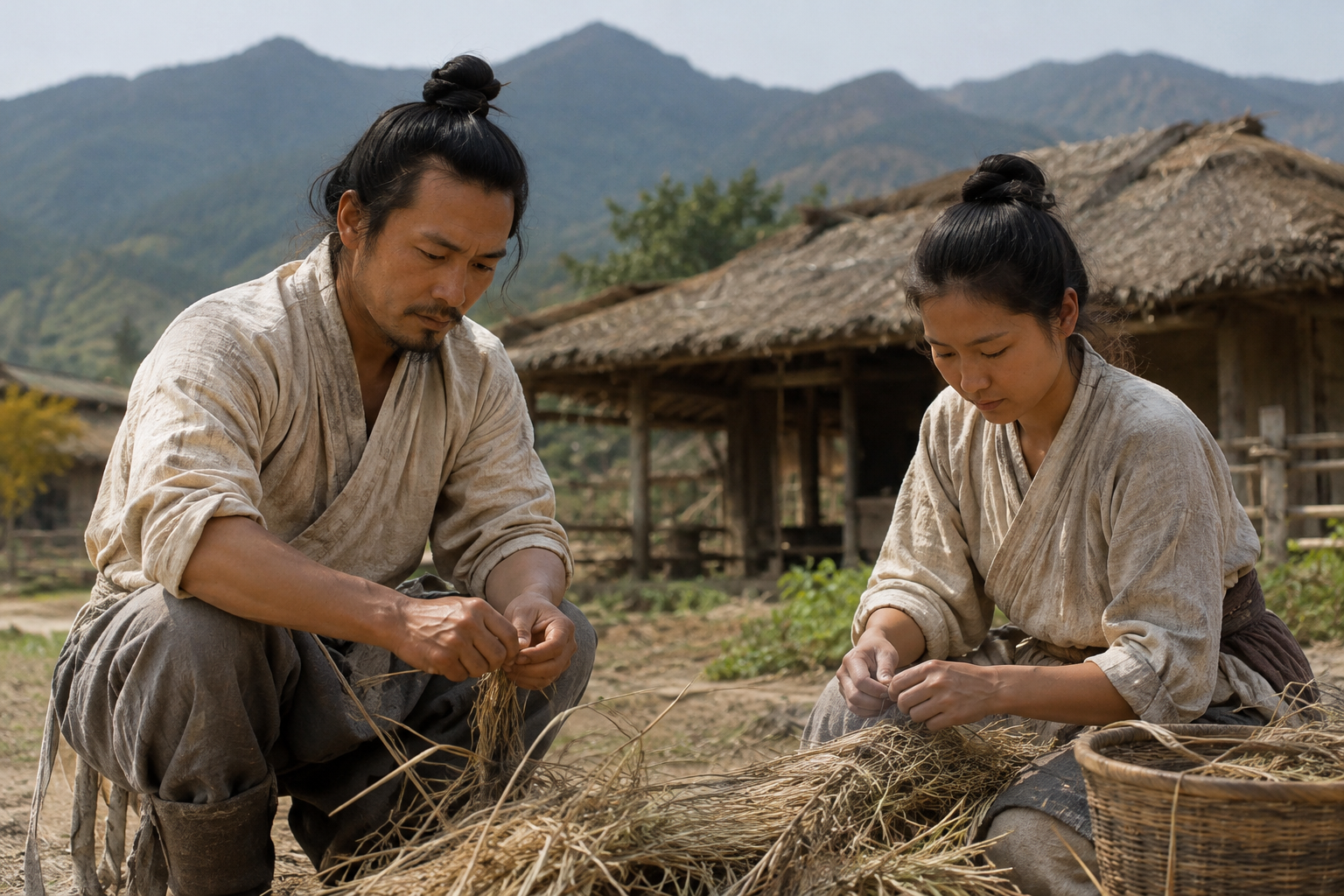
On Yeondae-do, a small island off the southern coast of Korea, two men dated to around 600 BC have become unexpectedly important witnesses to a very old paternal line. Their identifiers, TYD006 and TYD007, are simple enough, but the lineage associated with them is not. Both are linked with Y-DNA haplogroup C1a1, a branch that is rare today and therefore especially striking when it appears in ancient remains from early Korea.
That is the immediate fascination of C1a1 here. It does not tell us everything about these men; Y-DNA traces only one direct paternal line out of the thousands of ancestors any person has. But when the same uncommon lineage turns up in more than one individual at the same archaeological setting, it gives us a valuable glimpse of how some paternal lines persisted locally even as wider populations changed around them.
The Yeondae-do evidence is modest in quantity but rich in implication. We are not dealing with a royal tomb, a named dynasty, or a lavishly documented cemetery. We have two ancient individuals from the same Korean island context, both dated to about 600 BC, and both associated with C1a1. In archaeology, that kind of repetition matters. It suggests that this was not a random one-off appearance of a rare paternal branch.
Southern Korea in the first millennium BC was a landscape of coastal communities, local exchange networks, and emerging regional identities. Islands and peninsulas were not isolated little worlds cut off from history; they were often tied into maritime movement, fishing, trade, and contact across nearby shores. A pair of C1a1-linked men from Yeondae-do therefore raises a sensible historical question: was this lineage part of a small but established local paternal network along the southern coast?
With only these two samples, one must be careful. They do not prove an island dynasty, a closed clan, or a whole population dominated by C1a1. What they do show is that this paternal branch was present in pre-Three Kingdoms Korea and present more than once in the same place. That is already enough to move C1a1 out of the realm of abstract haplogroup maps and into a real archaeological setting with real people.
Haplogroup C is an ancient and widespread Y-chromosome macro-lineage, but its branches have very different histories. That point matters because one of the easiest mistakes in popular genetics is to talk about the whole of haplogroup C as though every sub-branch shared the same route, date, and homeland. C1a1 is a specific branch, and its history must be reconstructed from evidence for that branch or very closely related ones, not from the parent lineage in general.
In broad terms, C1a1 is best known to ancient-DNA enthusiasts because it appears in ancient East Asia and, in other contexts, among Jomon-associated individuals in Japan. That does not mean every C1a1-bearing individual belonged to the same culture, spoke the same language, or formed one coherent people. It means only that a paternal line with deep time depth in East Asia survived in a patchy, uneven way across different regions and periods.
The Yeondae-do men are important because they place that branch in southern Korea in the early first millennium BC. For anyone studying the paternal history of the Korean peninsula, that is a useful anchor point. It suggests that some old East Asian lineages remained in circulation locally even as later historical populations formed through repeated mixture, demographic expansion, and social reorganization.
Around 600 BC, Korea was not yet the neatly bounded historical landscape familiar from later texts about Silla, Baekje, and Goguryeo. This was an earlier world, one in which archaeology often speaks more clearly than written history. Burials, settlement remains, and ancient DNA together show that regional communities already existed, but their identities were still being shaped through long local processes.
That is one reason the Yeondae-do samples deserve attention. Ancient DNA from later Korean contexts sometimes reveals dense kinship structures or strong local continuity, but such patterns do not spring into existence overnight. Two C1a1-linked men on a southern island hint at the sort of local paternal persistence that may have underlain later social formations. Not because they were founders of some later kingdom, which would be pure invention, but because they show one branch already rooted in place centuries before the better documented state-level periods.
More broadly, East Asian archaeogenetics has increasingly shown that paternal histories can be uneven. Some lineages expand dramatically; others survive in small pockets; still others disappear from sampled cemeteries for long stretches and then reappear elsewhere. A recent MyTrueAncestry discussion of ancient Y chromosomes in East Asia captures exactly this larger pattern: coastal and inland worlds often preserved different pieces of the paternal past.
East Asian Y-chromosome migrations
C1a1 inevitably invites comparison with Japan, because that is where the branch has attracted some of the most public attention in ancient DNA. Yet the Korean evidence should not simply be folded into a story imported from elsewhere. Korea was not a passive bridge between mainland and island populations. It had its own demographic history, its own regional variation, and its own long sequence of coastal and inland developments.
Still, the comparison is historically useful. If C1a1 appears in both ancient Korea and ancient Japan, the interesting question is not whether one can be lazily reduced to the other, but how old coastal populations around the Korea Strait and adjacent seas may have shared, exchanged, or retained paternal lineages over very long periods. Maritime geography matters here. The waters between southern Korea and the Japanese archipelago separated communities, certainly, but they also connected them.
That does not justify any simple claim that the Yeondae-do men were migrants to or from Japan, nor that they belonged to a Jomon-derived community. The evidence we have is too thin for that. But it does support a more measured point: C1a1 belonged to the wider human landscape of northeast Asian coastal history, and southern Korea was part of that landscape.
Ancient DNA often advances not through spectacular treasure burials but through repetition. One unusual haplogroup in one individual can be intriguing. The same haplogroup in two men from the same island setting becomes harder to dismiss as a quirk of preservation or sampling. TYD006 and TYD007 therefore matter together more than either would alone.
They also remind us that rare modern lineages can have deeper ancient roots than present-day frequencies suggest. A haplogroup that now appears sparse may once have been more widespread, or at least more regionally significant, before later demographic events thinned it out. Population history is full of such cases. Ancient evidence catches lineages in moments before later expansions, bottlenecks, and replacements altered the picture.
For MyTrueAncestry users with C1a1, that is perhaps the most useful historical takeaway. Your paternal line does not need to have belonged to a massive empire or a historically famous ruling house to be ancient, persistent, and archaeologically meaningful. Sometimes its significance lies precisely in survival: an old branch still visible in the bones of men buried on a southern Korean island more than 2,500 years ago.
C1a1 is not a headline haplogroup because it is everywhere. It is memorable because, when it appears in ancient remains, it often points to deep and complicated layers of East Asian history that later population shifts have partly obscured. On Yeondae-do, TYD006 and TYD007 show that this branch was present in southern Korea around 600 BC, not as an abstraction on a phylogenetic tree, but as the lived paternal ancestry of two men in a real coastal community. For anyone tracing C1a1 today, that is a sober but powerful connection: a reminder that rare lineages can preserve some of the oldest surviving threads in the human story.
Comments