The House of Branciforte
– 3 min read


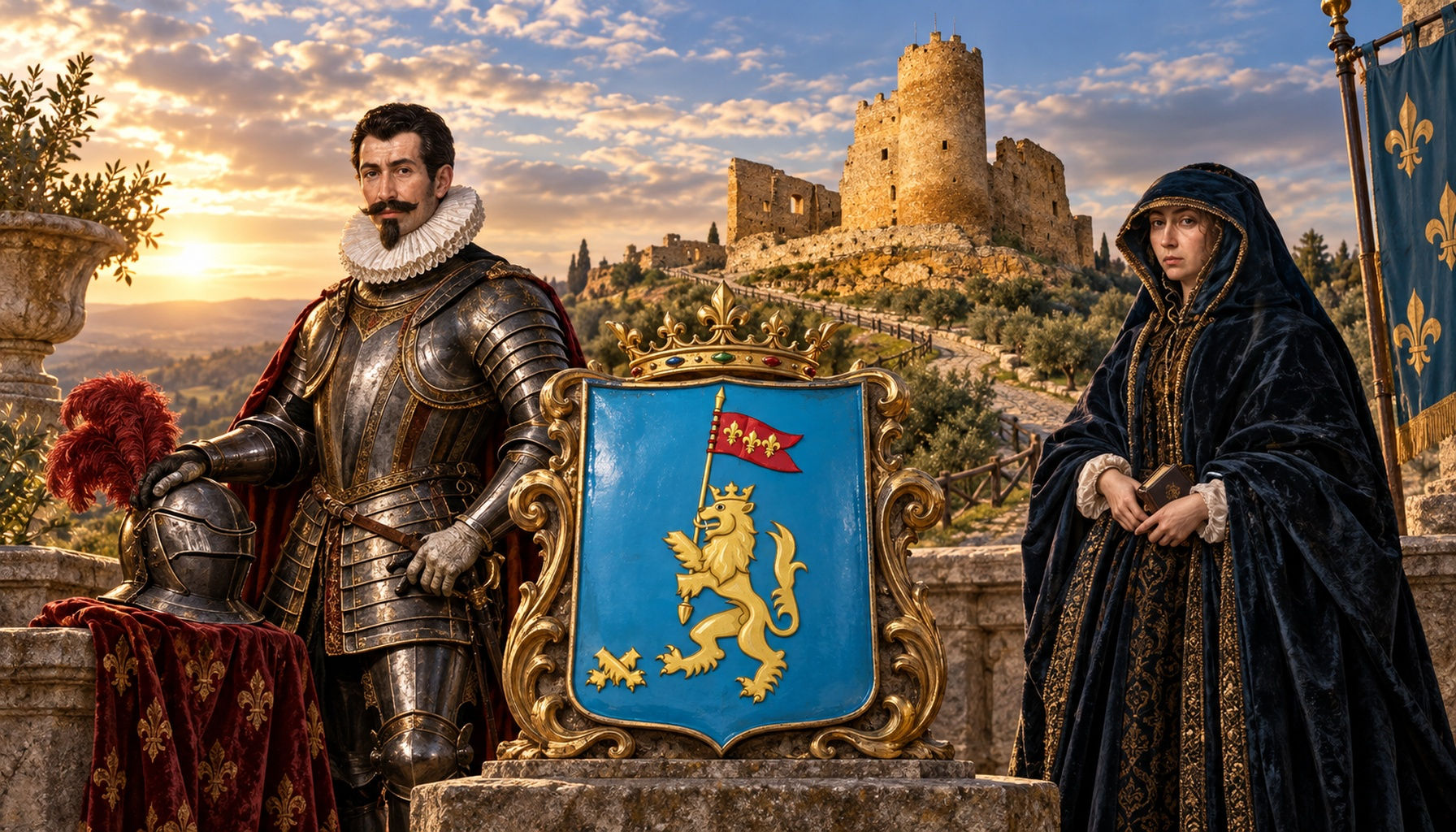
The House of Branciforte was one of the notable noble families of Sicily, especially tied to the inland town and feudal state of Mazzarino, and remembered for the kind of long-lasting aristocratic power that shaped the island for centuries. Their story belongs to that very Sicilian world in which land, fortification, marriage, military obligation, and royal favour all mattered at once. Linked here with the primary family haplogroup A1b1b, the Branciforte name sits within a historical landscape where lineage was not just about blood, but about castles, offices, baronies, and the practical business of ruling people and territory.
In origin and identity, the family became rooted in Sicily under the shifting political order of the medieval Kingdom of Sicily, where local nobles had to navigate the authority of Aragonese, then Spanish, and later Bourbon rulers. The Branciforte rose through exactly those channels open to ambitious aristocrats: landholding, military service, political office, and carefully chosen marriage alliances. Over time, different branches accumulated baronies, counties, and princely dignities, joining the upper ranks of the Sicilian nobility. Figures such as Federico Branciforte, 5th Baron of Mazzarino (1380-1428), Niccolo Branciforte, 6th Baron of Mazzarino (1400-1453), and Giovanni Branciforte, 7th Baron of Mazzarino (1430-1506), show the family in the crucial late medieval generations when feudal control and dynastic continuity were everything. This was not just a family living in Sicily; it was a family helping govern it, estate by estate, alliance by alliance.
If you want one place that anchors the Branciforte story in stone, it is the Castello di Mazzarino. Rising above the town, the castle was the great territorial marker of lordship, the sort of site that announced who held power before a single document was opened. Built in the medieval period and associated with the feudal development of Mazzarino, it occupies a strategic height and preserves the feel of a fortress-palace suited to a noble house that needed both defence and display. The remains include substantial masonry and the commanding outline of a stronghold that once watched over the surrounding countryside, fields, roads, and dependants. In other words, this was not decorative architecture. It was feudal authority made visible. The castle is still a known historic monument today and can be visited, at least externally and as part of the historic fabric of Mazzarino, making it a tangible stop for anyone tracing the Branciforte world on the ground.
Read about Genetic Diversity in Medieval Sicily
From a DNA perspective, the Branciforte family is tagged here with haplogroup A1b1b. That does not mean we can claim direct descent from named ancient individuals, and we should be careful about that. What we can say is that A1b1b-linked or related ancient samples appear across a surprisingly wide and interesting spread of time and place, reminding us how deep and tangled human ancestry really is. Among those linked examples are Iron Age Italy with the Piceni sample from Sirolo Numana near Ancona (PSD4), Roman era Sardinia at Tharros (I22114), Ancient Carthage outlier Tunisia (I28503), post-Reconquista Granada (I7426), Nazari period Andalusia (I8145), and Medieval Taifa of Valencia (I12646). There are also medieval and migration-period examples from Hungary, Germany, England, Belgium, Poland, Scandinavia, Bulgaria, and Gothic contexts such as Maslomecz and the grave at Han Krum Village. Going further back, A1b1b-linked samples appear in Neolithic Germany and Belgium, and even in much deeper contexts outside Europe, including Oakhurst and Ballito Bay in southern Africa. The point is not that the Branciforte were somehow all these things at once, but that a haplogroup label opens a window onto an immense human past, far older than any one Sicilian noble house.
Explore Medieval Sicily's Multi-Faith Genetic History
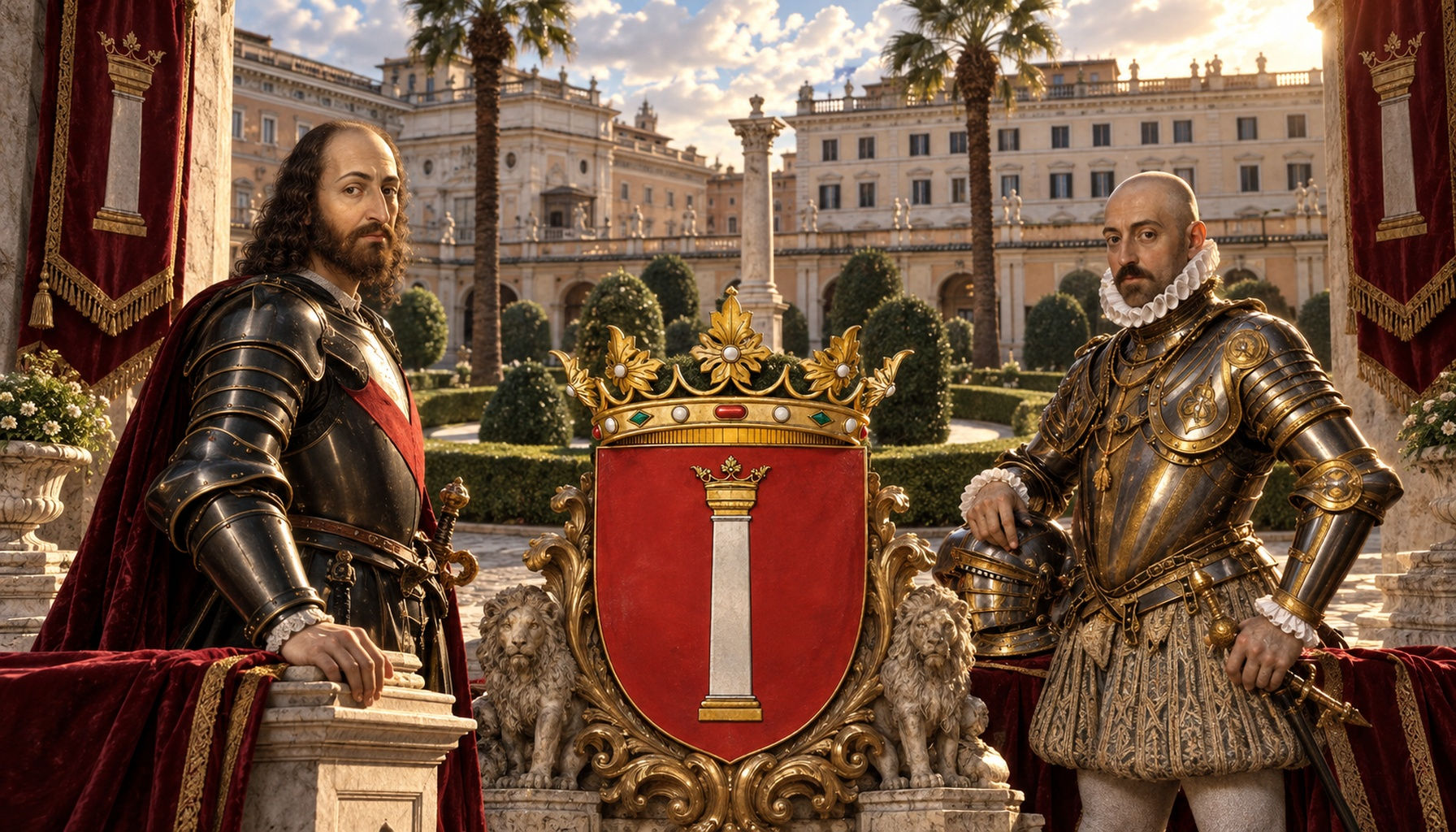
The House of Branciforte offers a vivid example of how Sicilian nobility worked in practice: feudal estates, military reputation, royal service, heraldic identity, and the stubborn importance of place. If your own family story reaches into Sicily, southern Italy, or the wider Mediterranean, it is worth asking what older layers may lie behind the surname record. Upload your DNA to MyTrueAncestry to see whether you match the House of Branciforte or any of the related ancient A1b1b-linked samples, and to place your own ancestry into the deeper historical map.
Comments