House Rohan
– 2 min read


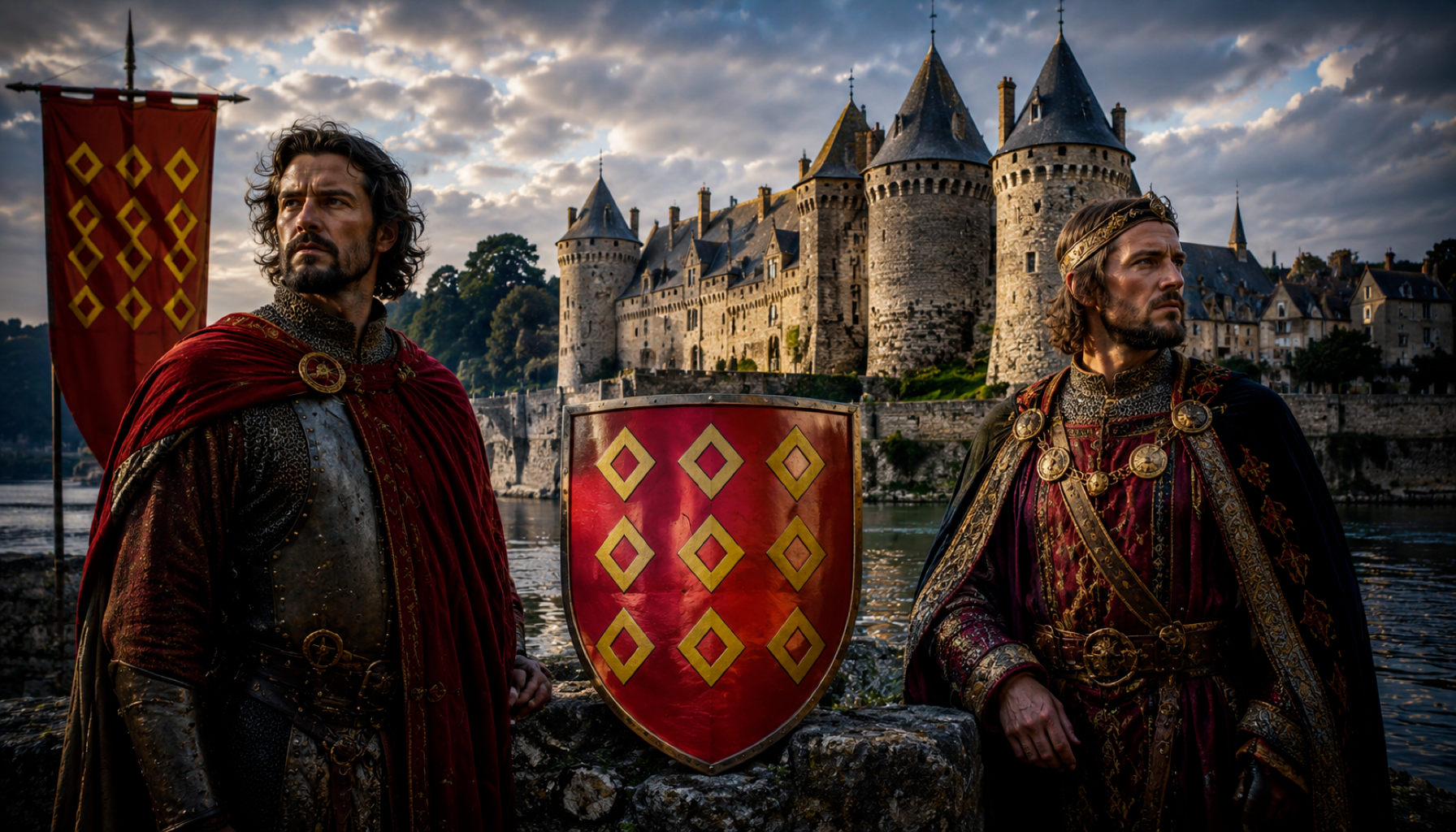
House Rohan was one of the great noble families of Brittany and later of France, a dynasty that began in the Breton west and rose into the highest ranks of aristocratic society. Rooted in the lands around Rohan and Josselin, the family built its reputation through lordship, castle power, marriage alliances, military service, and a carefully guarded sense of ancient lineage. In genetic tagging terms, the primary family haplogroup linked here is R1a1a1b1a1a1c2, a line also seen in a number of medieval and earlier European samples. Haplogroup: R1a1a1b1a1a1c2.
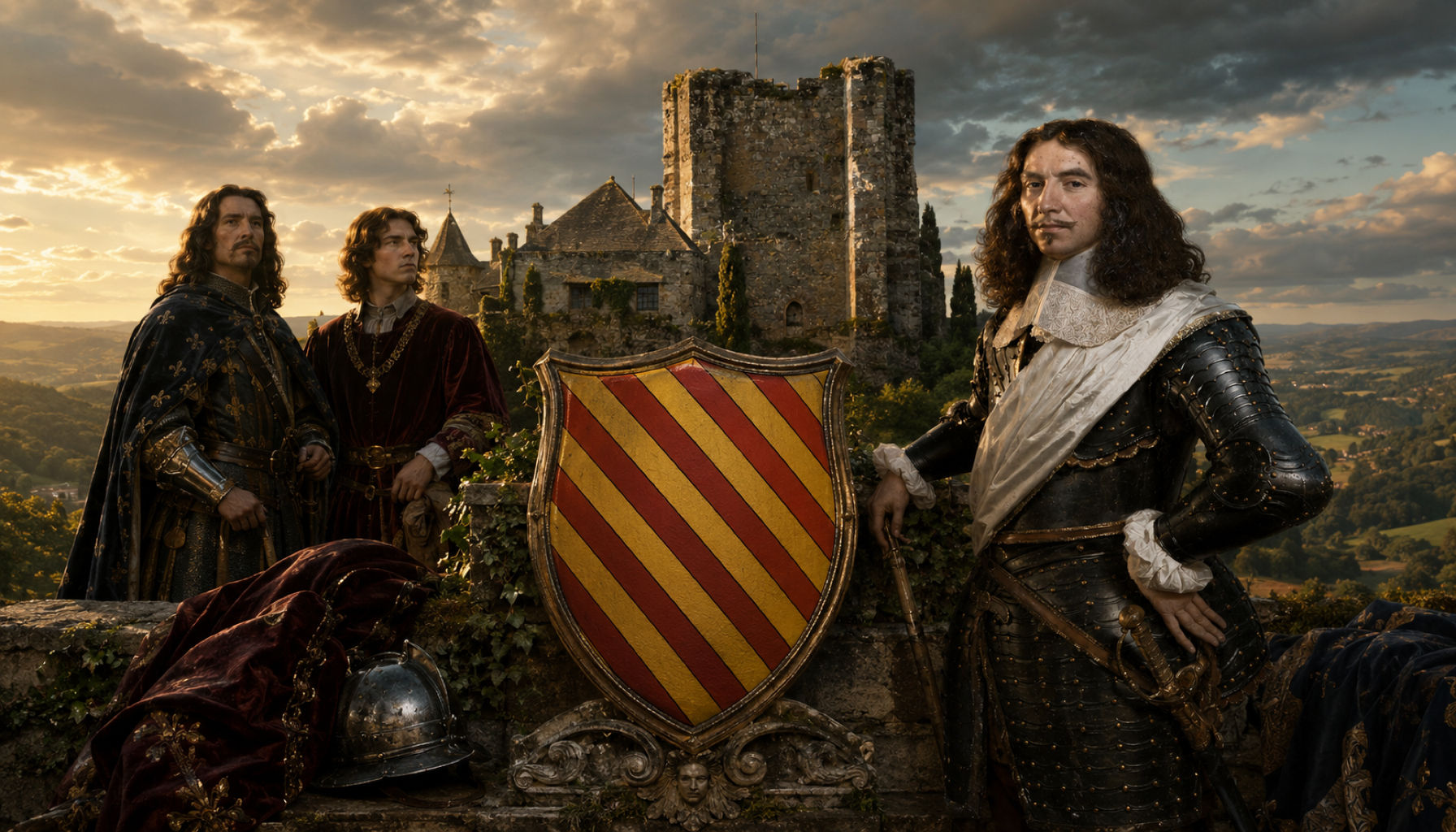
The Rohans emerged from the feudal world of medieval Brittany, where regional lords were not merely landowners but political actors in a landscape of rival castles, church patronage, and ducal power. From this Breton foundation they developed into a house of exceptional prestige, with princely status, famous heraldry, and influence at court in France. Their story is a classic example of how a regional lineage could turn local authority into national importance. Among the early named figures is Alan I, Viscount of Rohan, recorded in 1116, one of the men who helps place the family firmly into the documentary record of high medieval Brittany. Over time, the Rohans became associated with the old French noble ideal: rank, ancestry, service, and the public memory preserved in arms, estates, and titles.
The great location anchor of the family is Josselin Castle in Brittany, one of the most evocative strongholds associated with the Rohans. Set above the River Oust, the site began as a medieval fortress founded in the early 11th century by the Viscount of Porhoet, and it later became one of the chief seats of the Rohan family. Its history reflects the turbulence of Breton and French politics: fortified, contested, partly dismantled in the late medieval period, and later reshaped with more elegant residential elements, it combines the look of a feudal castle with the refinement of a noble residence. The surviving facade with its towers is especially striking, and the interior tradition of portraits, decor, and family memory makes it more than a ruin: it is a living monument to aristocratic continuity. Yes, it can still be visited, and that matters, because Josselin is not just a backdrop to the Rohan story but one of the clearest physical expressions of how lineage, place, and power were tied together in Brittany.
From a DNA-history point of view, the R1a1a1b1a1a1c2 haplogroup tag links House Rohan to a broader web of related ancient and medieval paternal lines rather than proving direct descent from any specific excavated individual. Among relevant linked samples are Medieval Poland Early Kingdom of Poland PCA0166, Medieval Piast Dynasty Poland Plonsk Masovia PCA0328, Piast Dynasty Lubusz-Greater Poland Border Santok Lad PCA0386 and PCA0387, Piast Dynasty Greater Poland Lad PCA0203, Medieval Kingdom of Poland Piast Dynasty Zielonka Poznan PCA0572, Piast Non-Masovian Dynasty Prince PCA0574, Piast Masovian Dynasty Prince PCA0573, Medieval Poland Obalczkowo Wielkopolska PCA0222, Medieval Poland Piast Dynasty Lad PCA0205 and PCA0197, Bronze Age Poland Lublin Brodzica Trzciniec poz554, Stora Kronan shipwreck Battle of Oland Sweden kro002, Iron Age Komarom-Esztergom Hungary I25524, Viking Age Gotland Kopparsvik Sweden VK452, Viking Age Gotland Frojel Sweden VK438, Viking Age Staraya Ladoga VK408, Elite Viking Grave Cedynia VK212, and Iron Age Boii Tribe Singen am Hohentwiel MX265. What this suggests, in broad historical terms, is that the Rohan haplogroup sits within a paternal lineage with deep roots across parts of central, eastern, and northern Europe, later appearing in medieval elite and noble contexts as well.
If you want to see how your own DNA might connect with lineages linked to noble houses such as the Rohans, upload your DNA to MyTrueAncestry and explore the ancient matches for yourself.
Comments