Haplogroup T1a1a1b2b1

– 4 min read


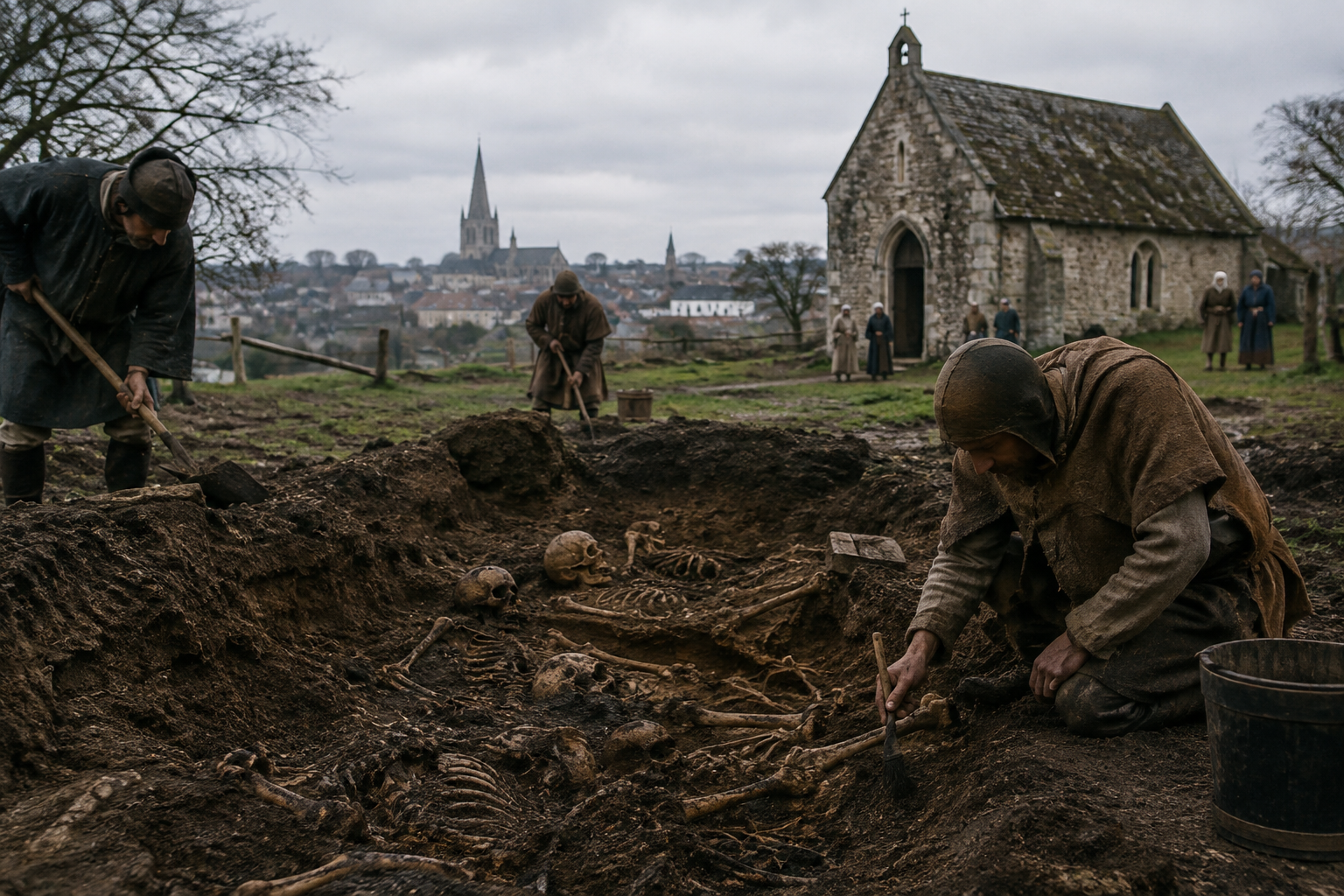
In 1190 AD, a group of Jewish men, women, and children died violently in Norwich and were later thrown into a well at Chapelfield. One of the men recovered from that mass grave, sample SB696, has been associated here with the Y-DNA haplogroup T1a1a1b2b1. It is a stark, specific find: not a wandering prehistory puzzle, but a named medieval place, a known year, and a community caught in one of the best documented eruptions of anti-Jewish violence in England.
That makes this lineage especially interesting. Haplogroup T is a relatively uncommon Y-chromosome branch in much of northern Europe, and Y-DNA traces only one direct paternal line rather than a person's whole ancestry. But when a branch like T1a1a1b2b1 turns up in a medieval English Jewish context, it reminds us that the genetic history of Britain was never simply "local" in the narrow sense. Urban England, especially its Jewish communities, sat inside wider networks of migration, marriage, trade, scholarship, and persecution.
The Norwich well burial has become important not only because of the violence attached to it, but because it gives us one of the clearest ancient DNA snapshots of a medieval Ashkenazi group in England. The dead are usually linked to the wave of attacks on Jews that followed the coronation of Richard I, when anti-Jewish hostility broke into open massacre in several English towns.
SB696 belongs to that historical setting. The significance of the sample is not that it proves a grand migration on its own, but that it anchors a paternal lineage in a very precise social world: an urban Jewish minority living under royal protection, economically useful to the crown, yet also acutely vulnerable to mob violence and local resentment.
An ancient DNA study examining these burials brought the Norwich dead into wider discussion of medieval Jewish population history and disease genetics: research on the Chapelfield Well community. Even without squeezing too much from one Y-chromosome result, the site matters because it places a rare paternal branch inside a historically documented catastrophe.
The article haplogroup is T1a1a1b2b1, a very specific sub-branch within the broader Y-DNA haplogroup T. That distinction matters. A wider haplogroup can have a broad geographic spread accumulated over many thousands of years, while a narrow terminal branch may reflect much more recent paternal clustering that cannot simply be read off from the parent lineage's ancient history.
So one should resist the usual temptations. SB696 does not mean that all medieval English Jews belonged to this branch; still less does it identify a single ethnic essence, social rank, or homeland. What it does show is that a paternal line now classed as T1a1a1b2b1 was present among the medieval Ashkenazi population of Norwich in the late twelfth century.
That is already valuable. Medieval Ashkenazi history is often told through charters, taxation records, expulsions, and rabbinic texts. Genetics adds something different: a glimpse of the actual men buried in those events, and of the diversity carried in their direct paternal lines.
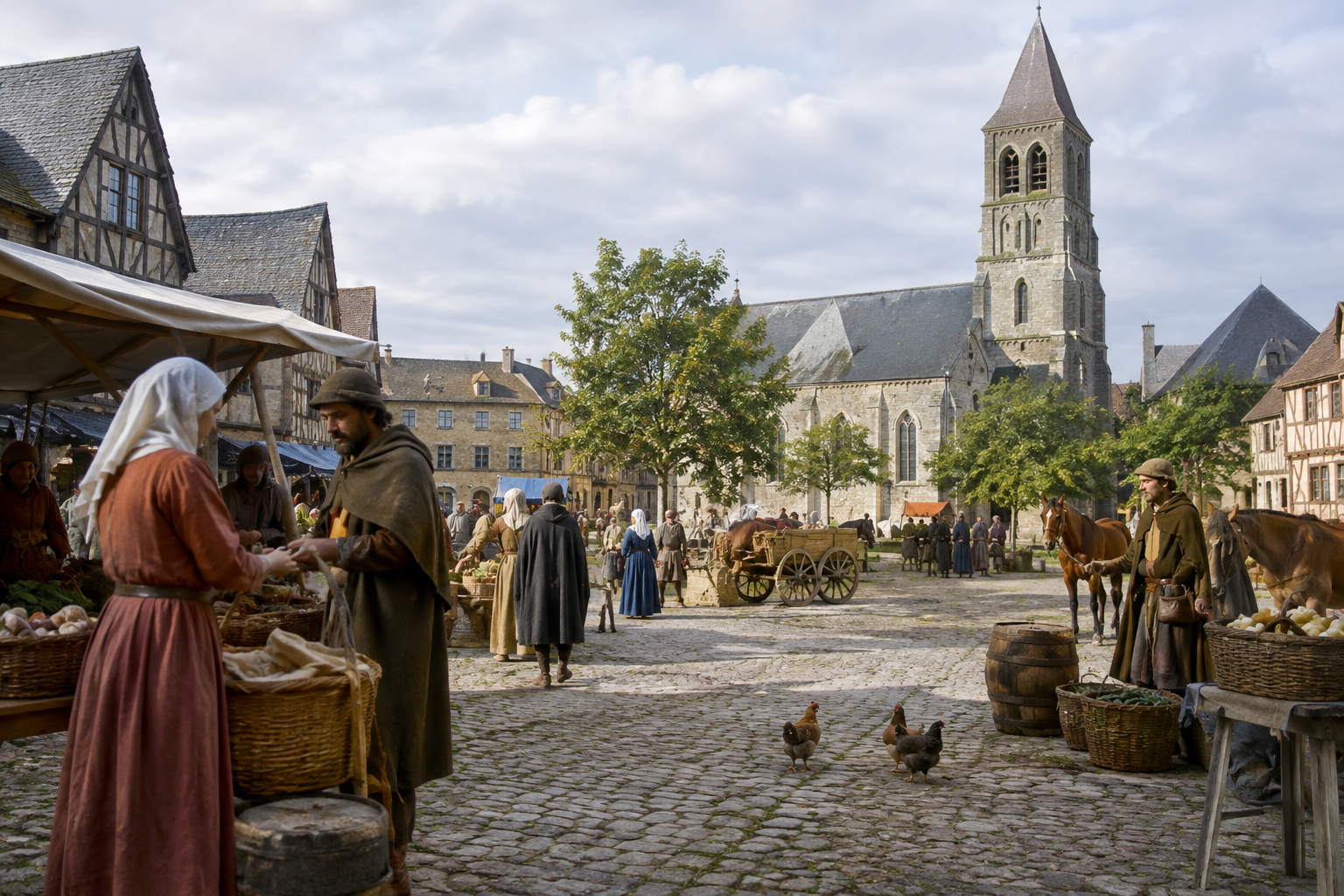
It is easy to imagine Jewish life in medieval England as a small island story. In fact, it was connected to northern France, the Rhineland, and beyond. The first substantial Jewish communities in England after the Norman Conquest arrived within a larger cross-Channel world, moving under aristocratic and royal patronage and settling in towns where credit, commerce, and administration were expanding.
Norwich was one of those towns. By the twelfth century it was a major regional center, with a cathedral, a castle, and a thriving urban economy. Its Jewish community formed part of that world while remaining legally and socially distinct. A lineage like T1a1a1b2b1 appearing there fits that wider picture of mobility and connection far better than any simple idea of a closed, purely local English population.
That is one of the most useful lessons of archaeogenetics: lineages travel not just with conquering armies or mass migrations, but with merchants, moneylenders, scholars, craftsmen, marriage networks, and displaced minorities. In medieval Europe, Jewish communities were often among the most visibly transregional groups of all.
Roman and Early Medieval Britain DNA
There is also something methodologically important about Chapelfield Well. Ordinary medieval cemeteries often reflect established ritual order: people buried in expected places, under expected rules. A mass grave in a well is the opposite. It records a rupture, when a community was denied normal burial and pushed outside the social order that usually structured the dead.
That gives SB696 and the other Norwich individuals unusual historical force. They are not anonymous "medieval English" remains in a general sense. They belong to a moment when Christian England's treatment of its Jewish minority became brutally visible in the archaeological record.
For the study of paternal ancestry, this matters because lineages do not survive in an abstract map. They survive, or fail to survive, through real historical pressures: expulsions, massacres, forced movement, endogamy, and the rebuilding of families after catastrophe. The Y-chromosome preserves one narrow line through all that upheaval.
A branch such as T1a1a1b2b1 stands out in Britain precisely because it is not one of the most common paternal signatures associated with the island's better known later prehistoric and early medieval populations. That contrast can be helpful, provided we keep the categories straight. The presence of this branch in Norwich does not rewrite the dominant paternal history of England; it sharpens our view of a particular minority community within it.
And that sharpening effect is exactly what ancient DNA has been doing across medieval Europe. Instead of one tidy map for one people, we increasingly see overlapping populations with different legal status, religions, marriage habits, and family histories living in the same towns. The Norwich Jews are one powerful example of that layered urban past.
If your paternal line falls under T1a1a1b2b1, the Norwich evidence offers a historically grounded clue rather than a neat identity label. It shows that this branch was present in a medieval Ashkenazi context in England by 1190 AD, in a community tied into the wider Jewish networks of northern Europe. That does not prove that every modern carrier shares Jewish ancestry in the recent genealogical sense, but it does make medieval Jewish population history one serious context to consider when tracing this line.
In other words, the most distinctive thing about this haplogroup here is not remote antiquity but documented medieval presence: one man, SB696, from a persecuted community in Norwich, whose Y-chromosome still lets us glimpse the paternal threads running through Ashkenazi history in England.


Comments