Haplogroup R1b1a1b1a1a2e
– 5 min read


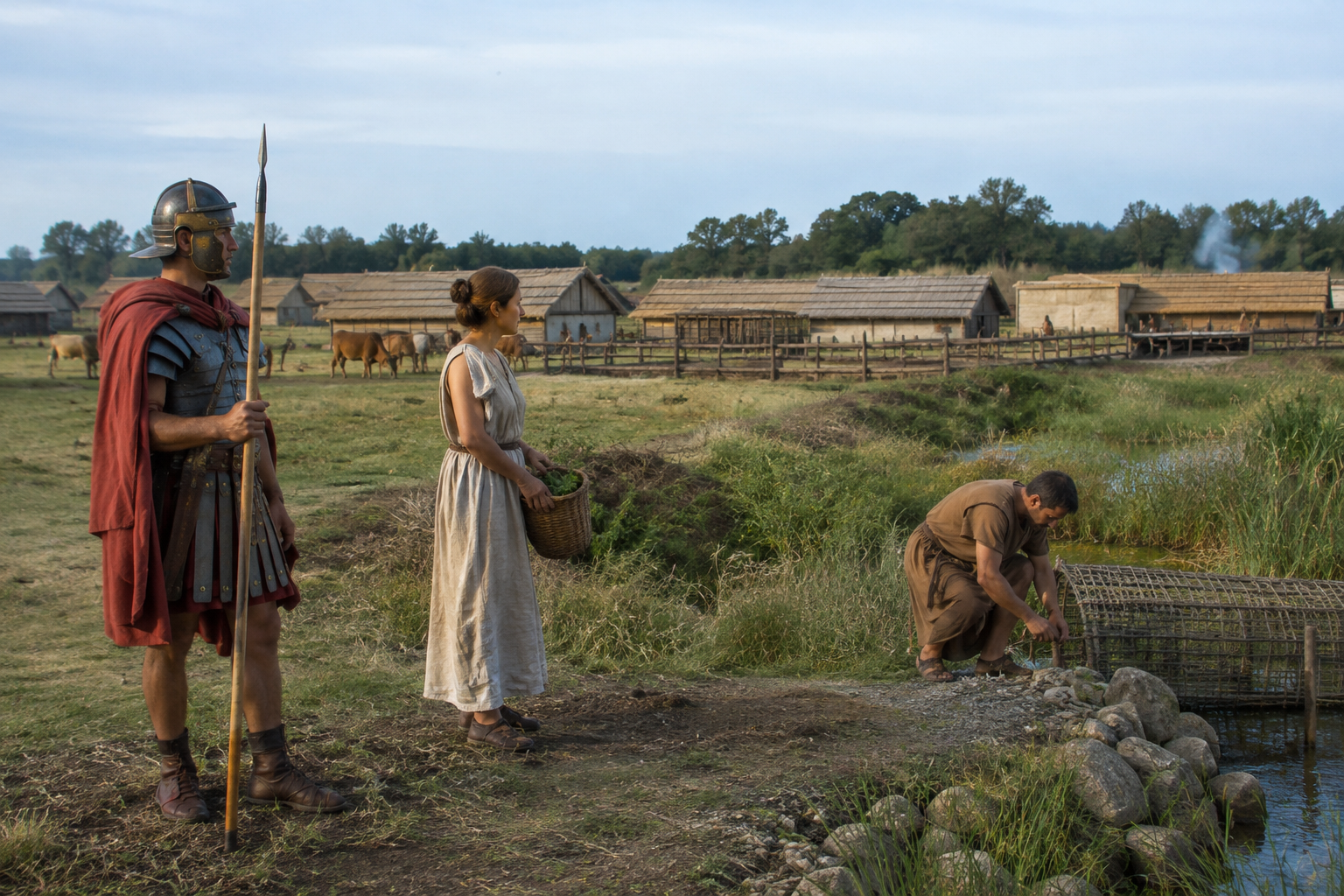
At Fenstanton in Cambridgeshire, archaeologists recovered the remains of a man dated to around AD 100 and identified in the dataset as FEN012. On its own, that may sound like one more Roman-period burial from Britain. But genetically this individual is especially useful, because he has been associated here with the Y-DNA haplogroup R1b1a1b1a1a2e, a very specific paternal line found within the wider and extremely common European branch R1b.
That narrow label matters. Y-DNA follows one direct male line only: father to son to son across many generations. It does not describe a person's whole ancestry, social identity, or language. What FEN012 offers, then, is not a neat ethnic badge, but a small, well-dated glimpse of one paternal lineage present in Roman Britain, in a landscape already shaped by centuries of movement, conquest, trade, and local continuity.
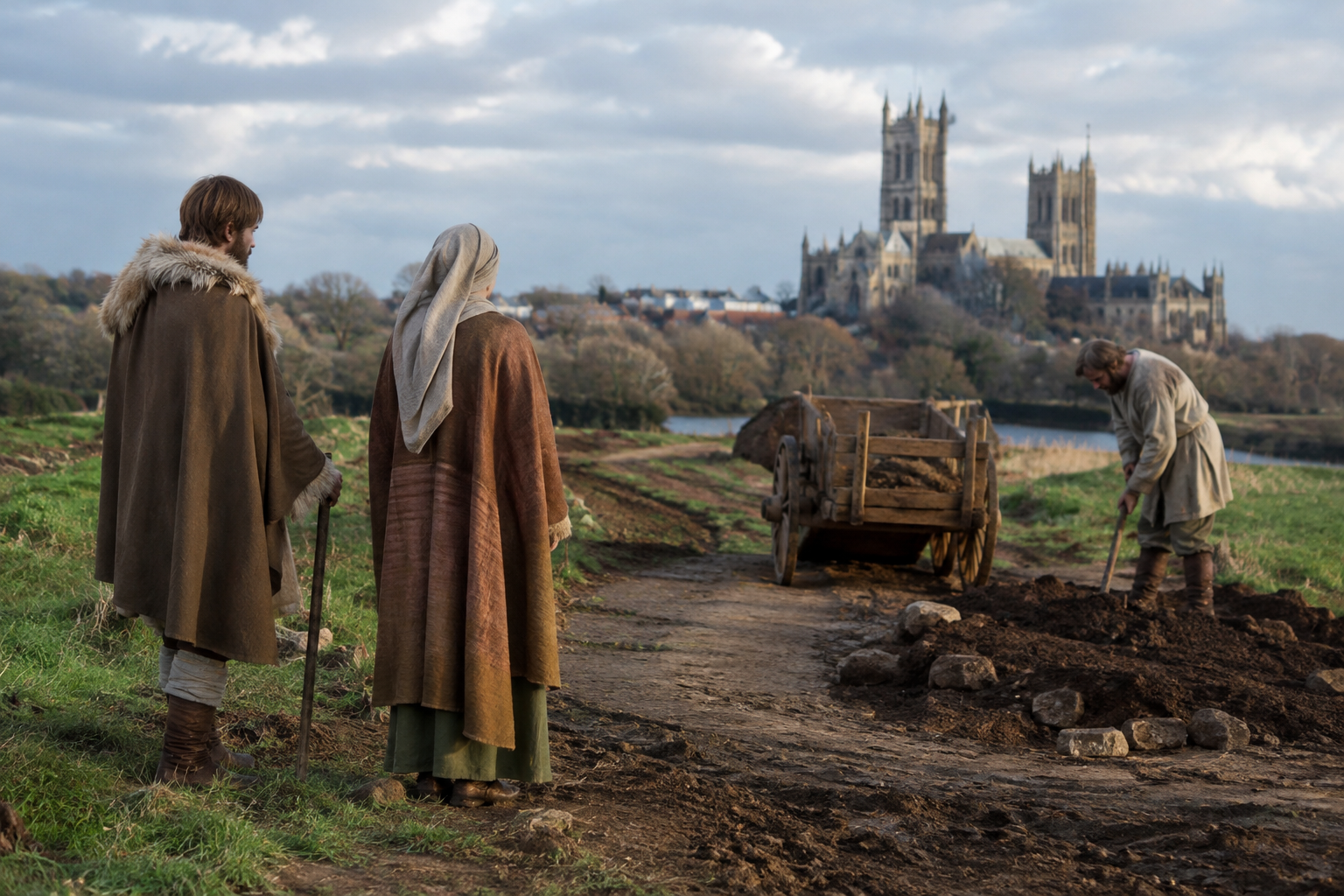
Fenstanton lies in a region that became deeply entangled with Roman rule after the conquest of Britain. Cambridgeshire was not a remote edge of empire in any simple sense. It sat within a dense world of roads, farms, small settlements, market exchange, and military-administrative connections linking the eastern lowlands to the rest of Roman Britain.
In that setting, FEN012 is valuable precisely because he is ordinary enough to be historically revealing. A male line assigned here to R1b1a1b1a1a2e appears in an individual living in the early Roman centuries, at a time when Britain was neither genetically sealed off nor wholly replaced by incomers. The Roman period repeatedly shows us this combination: local roots, regional variation, and selective mobility all at once.
An ancient DNA study on Roman and early medieval Britain has helped clarify that complexity, showing that some communities in Britain retained substantial local continuity while others absorbed migrants from different parts of Europe and beyond. That wider context is important when thinking about a Cambridgeshire man such as FEN012: research on genomic history in Roman and early medieval Britain points to a world where ancestry and identity did not map neatly onto one another.
The haplogroup name R1b1a1b1a1a2e places this lineage deep inside the broader R1b family tree. That broader family is widespread in western Europe today and appears in many ancient contexts, especially after major Bronze Age population changes. But one must be careful here: the history of a huge parent branch cannot simply be pasted onto a much narrower descendant line.
So the responsible way to read FEN012 is modestly. We can say that a man associated with this specific paternal branch was present in Roman-era Fenstanton. We cannot, from this single sample alone, declare where that exact subclade first formed, which language its carriers spoke, or whether this individual's paternal ancestors had been in Britain for centuries or had arrived more recently within the Roman world.
That may sound cautious, but in fact it is the interesting part. Ancient DNA is most powerful when it pins a lineage to a real place and period. Here, R1b1a1b1a1a2e is no longer an abstract code on a testing screen; it is anchored to Roman Cambridgeshire, to one excavated individual, and to the social world of provincial Britain.
One of the habits we have to resist with Roman Britain is speaking as if the island had a single biological profile before Rome and another after it. The evidence is much messier and much more human than that. Some cemeteries show people with ancestry profiles consistent with long local histories in Britain. Others include individuals whose ancestry points toward continental Europe, the Mediterranean, or more distant provinces.
That broader pattern makes Fenstanton significant even when only one sample is named here. FEN012 reminds us that eastern England in the Roman period was part of a connected zone, not a sealed village landscape. A paternal lineage such as R1b1a1b1a1a2e could sit within a population shaped by older British ancestry, newer continental ties, or both.
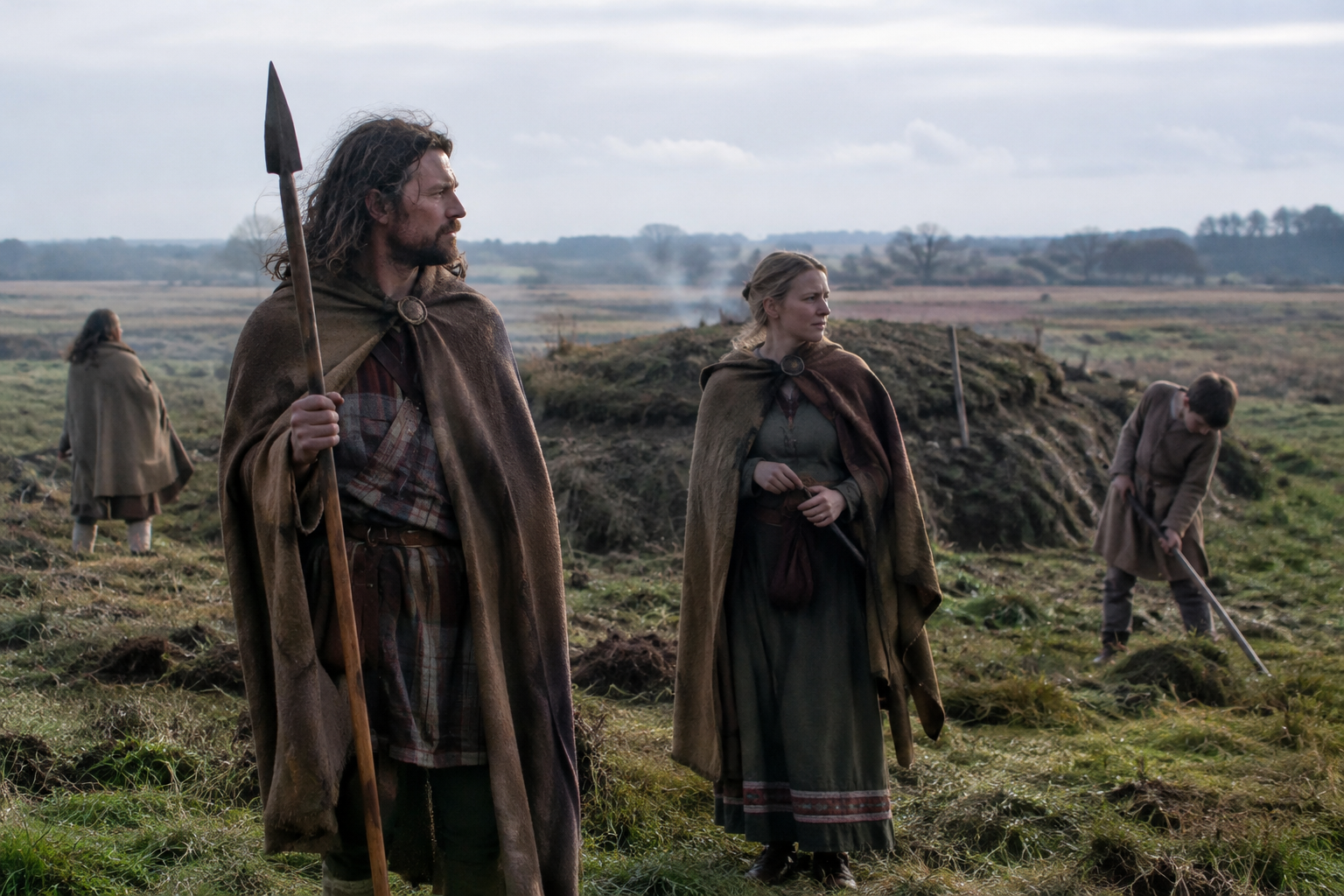
Cambridgeshire is especially evocative in this respect because the county has produced evidence from many different periods of population change and continuity. Roman occupation did not wipe the slate clean. It overlaid existing communities with new institutions, new economic pressures, and new opportunities for movement. The people buried in its cemeteries belong to that entangled history, not to a simple before-and-after story.
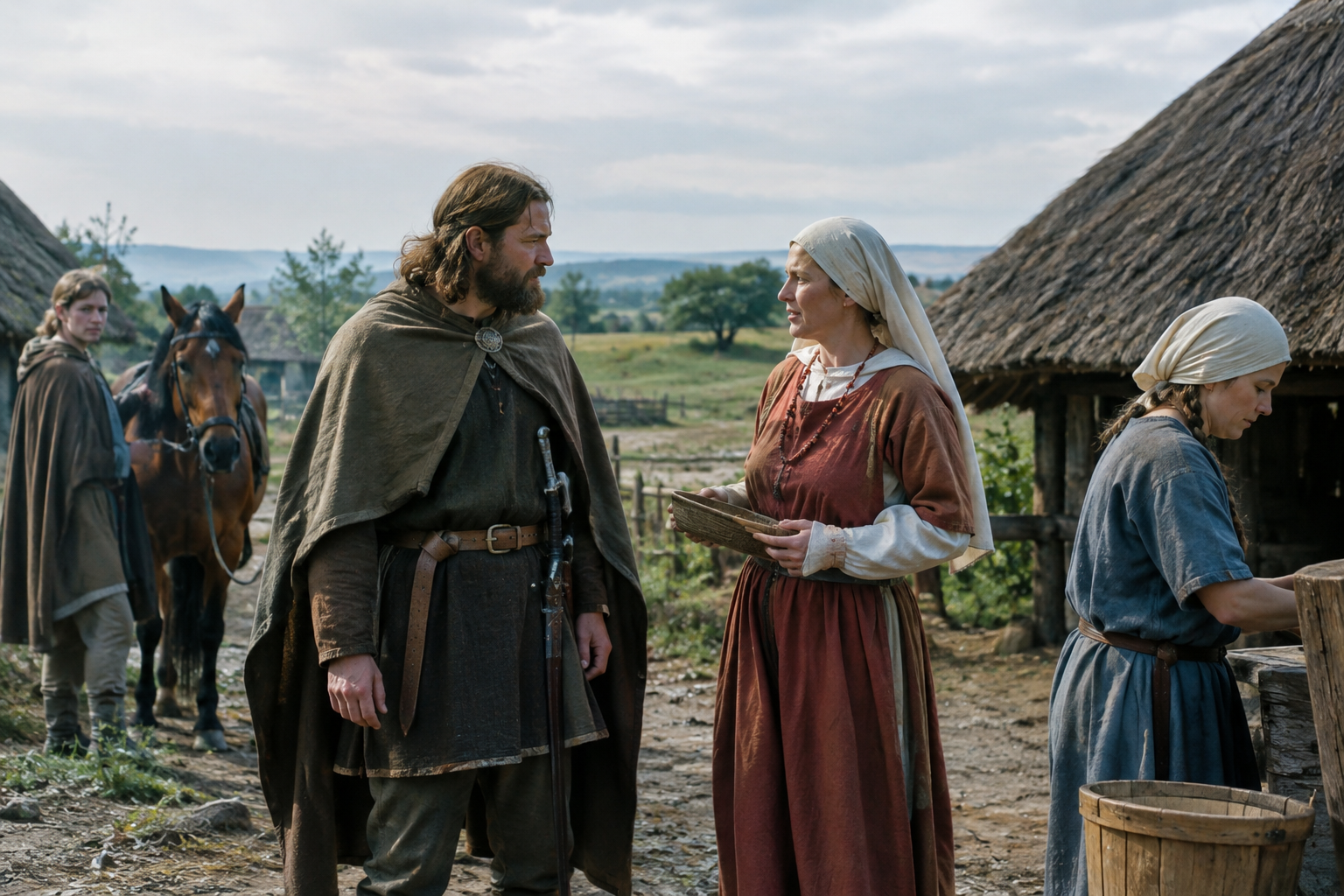
What sort of life-world might have surrounded a man like FEN012? Without inventing personal details, we can still say something solid about his historical setting. Around AD 100, Roman Britain was in the phase of consolidation: towns were developing, villas and farmsteads were embedded in the countryside, and regional exchange linked rural districts to military and urban centers.
That matters for Y-DNA because paternal lines do not move by magic; they move through households, recruitment, marriage, inheritance, and settlement. A branch like R1b1a1b1a1a2e may have been carried by men whose families had deep roots in Britain, or by men whose fathers or grandfathers came from across the Channel, or by descendants of older prehistoric expansions that long predated Rome. Roman archaeology gives us the stage on which such lineages persisted and mixed, even when it cannot script every family biography.
This is where genetic evidence becomes most illuminating when used with restraint. The point is not to turn one burial into a tribal emblem. The point is to see how a specific paternal signature survived within the ordinary machinery of empire: farming, settlement, roads, taxation, army supply, and local community life.
There is only one ancient individual listed here, and that imposes limits. Yet single finds can still be historically useful when they are securely placed in time and space. FEN012 gives this haplogroup a documented foothold in Roman-era eastern England, and that is already more informative than broad modern distribution maps on their own.
It also illustrates a larger point about ancient DNA in Britain. The Roman centuries did not produce a uniform replacement of male lines, nor do they present an untouched indigenous core. Instead, site by site, we find a shifting balance of continuity and connection. A lineage associated with R1b1a1b1a1a2e fits perfectly well within that pattern: specific, local, and historically open-ended.
For readers exploring their own paternal ancestry, this is often the most useful kind of evidence. Not a fantasy pedigree, but a real man from a real place, buried in a Roman provincial landscape, whose Y-chromosome line can still be discussed today. That is how archaeology turns a haplogroup from a code into history.
R1b1a1b1a1a2e is a narrow paternal branch, and the strongest ancient anchor provided here is FEN012 from Fenstanton, around AD 100. That does not make the lineage uniquely Roman, uniquely British, or uniquely anything else. What it does provide is a firm reminder that this paternal line formed part of the lived population of Roman Britain, in a county where continuity and mobility were both part of everyday history. For anyone carrying this haplogroup today, Fenstanton offers something valuable: not myth, but evidence.
Comments