Haplogroup R1b1a1b1a1a2c1a3a2a1b1a1b

– 5 min read


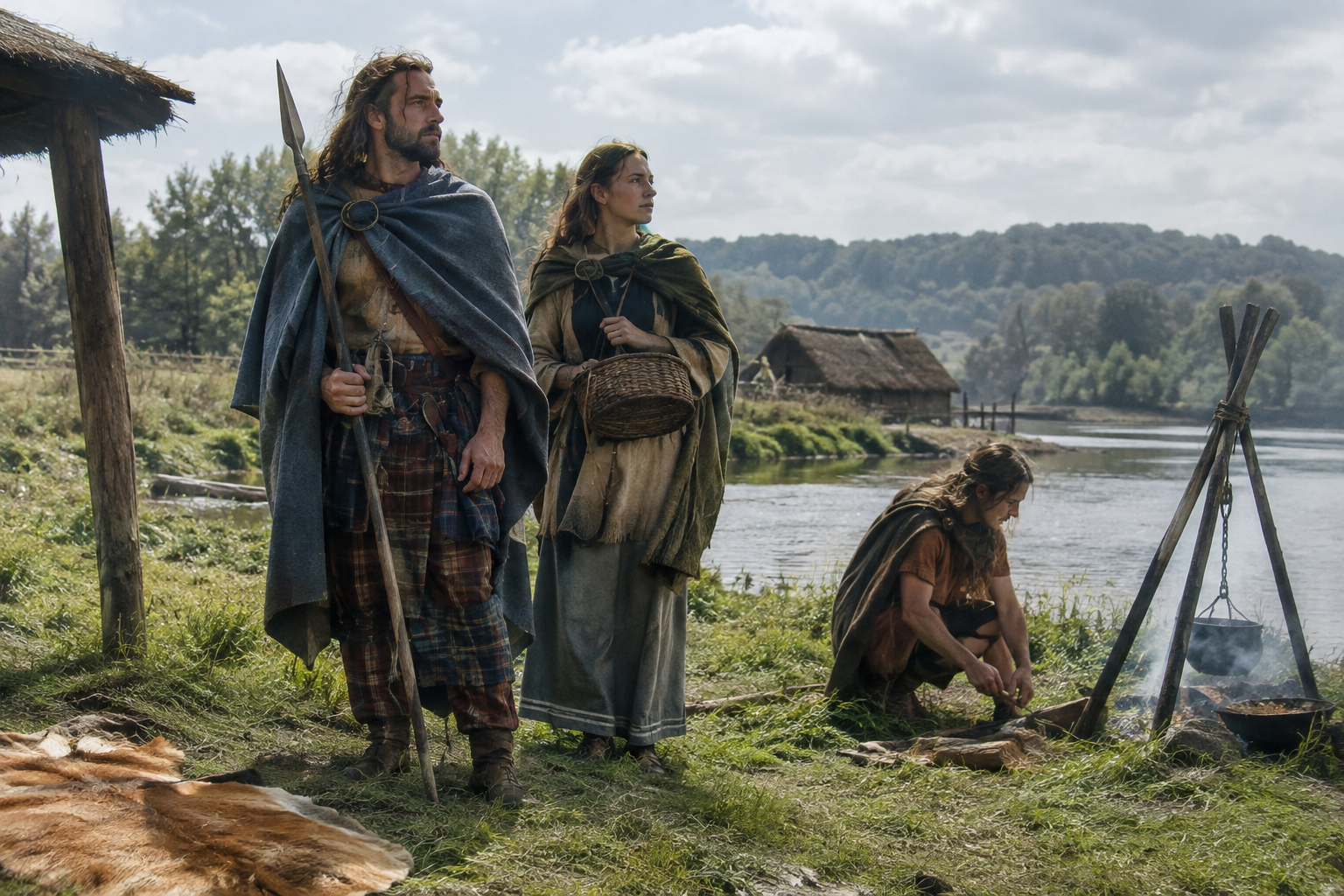
At Barbuise-les-Graves de Frécul in the Aube region of France, one Iron Age male sample stands out for anyone tracing a paternal line deep into European prehistory: GDF1348, dated to around 400 BC and described as Gallic. That is already enough to make him interesting. He places the very specific Y-DNA line R1b1a1b1a1a2c1a3a2a1b1a1b in northern France during the later Iron Age, in a landscape of farming communities, local power, and expanding contacts across Celtic Europe.
There is a useful discipline in starting with a single man and a single site. Y-DNA follows one direct paternal line only, not the whole of a person's ancestry, but that narrow thread can still be historically revealing. In this case, the thread leads into Iron Age Gaul rather than into legend, and that is far more valuable.
The site name matters. Barbuise lies in the Champagne area of northeastern France, a region that sat between several important zones of later Iron Age Europe: the Paris Basin, the upper Seine, the Rhine world, and the routes leading southward into the heart of Gaul. By around 400 BC, this was not an isolated countryside. It was part of a busy human geography in which styles, metalwork, ideas, and people moved across considerable distances.
Sample GDF1348 is identified as an ancient Gallic individual from this setting. That label should be handled with care: "Gallic" is a broad historical term for Iron Age populations of what is now France and nearby regions, not a claim that one chromosome can define an ethnicity. Still, the sample places this paternal branch in a region long associated with communities that classical writers would later describe as Gauls.
An ancient DNA study examining prehistoric and historic individuals from France has helped clarify how such regional populations fit into longer patterns of continuity and change. For the broader archaeological and genetic background to French ancient populations, see this research on ancient DNA from France.
R1b1a1b1a1a2c1a3a2a1b1a1b is an extremely fine-grained label within the wider R1b family, one of the best-known Y-DNA groupings in western Europe. But it is important not to smudge the scales of evidence. The grand story of R1b across Eurasia and Europe stretches back much earlier than the Iron Age, while this article's branch is a much narrower twig on that large paternal tree.
So what can be said responsibly? First, this lineage was present in an Iron Age man in northern France. Second, that places the branch within a historical world where later Celtic-speaking societies are archaeologically visible. Third, it does not mean every man in Iron Age Gaul carried that branch, nor that everyone with the branch today descends from a single famous tribe or chieftain.
This is one of the pleasures of ancient DNA when used carefully: it cuts through the temptation to tell overly neat stories. A modern tester with this haplogroup is not being handed a costume and a helmet. They are being shown that one direct paternal line had a documented foothold in Iron Age France.
The department of Aube sits in a part of France that often looks deceptively quiet on the map. In prehistory and antiquity, however, it occupied a useful middle position. Rivers and overland routes linked it to the Seine basin and beyond, and this mattered in a later Iron Age world shaped by exchange networks, local aristocracies, and regional identities.
That makes GDF1348 more than a dot on a distribution map. He belongs to the human background of a region that participated in the making of Gaul before Roman conquest. By the 5th and 4th centuries BC, communities across temperate Europe were not sealed units. Archaeology repeatedly shows contact, mobility, and selective adoption of new fashions and practices, even where local traditions remained strong.
For a paternal lineage, that kind of setting is crucial. Y-DNA branches can spread through simple local continuity, but also through marriage networks, small-scale migration, political dominance, or the founding of new family lines within a community. A single sample cannot choose between those mechanisms. What it can do is pin the lineage to a real place and time.
One of the most useful corrections offered by archaeogenetics is that named historical peoples were rarely biologically uniform. "Gaul" was a mosaic of polities, client networks, and regional traditions long before Julius Caesar turned it into a literary and military category. The inhabitants of Iron Age France shared some cultural patterns, but they were not clones of one another, genetically or politically.
That is why a sample like GDF1348 matters. It contributes to the growing picture that Iron Age western Europe was structured but varied: local in many daily realities, connected in wider cultural terms, and genetically mixed at levels that do not always line up neatly with tribal names in classical texts.
Recent MyTrueAncestry coverage of how genomes illuminate the spread of Celtic-related populations and languages provides helpful wider context here. The key point is not that genes automatically equal language, but that ancient DNA can show which population movements are plausible companions to cultural change and which are not.
The deeper background to this French Iron Age lineage almost certainly lies in much earlier demographic processes, especially those that shaped western and central Europe after the Bronze Age. Yet the evidence in hand should keep us modest. We can say that by around 400 BC this branch was established in Gaul; we should not pretend that one sample alone maps its full prehistoric route into France.
That said, the broad pattern fits a wider European story in which many later Iron Age paternal lines descend from lineages already widespread in the Bronze Age. In other words, GDF1348 is less likely to represent an exotic intrusion than a branch embedded in the long making of western European populations. The interesting question is not whether he was "really European" - plainly he was - but how particular paternal lines persisted, divided, and localized over centuries.
For readers interested in the larger western European backdrop, especially how paternal histories intersect with Bell Beaker and later developments in nearby regions, this related discussion is worth exploring.
Bell Beaker and the Lower Rhine
If your paternal line belongs to R1b1a1b1a1a2c1a3a2a1b1a1b, the most solid historical clue here is not a royal house or a romantic migration legend. It is an excavated Iron Age man from Barbuise-les-Graves de Frécul in France, sample GDF1348, living in a Gallic context around 400 BC. That places your direct male line, or a very close neighboring branch, within the documented human landscape of later prehistoric northern France.
That is a small claim, but a powerful one. Ancient DNA is at its best when it anchors ancestry in real people rather than vague origin myths. In this case, the anchor is an Iron Age burial in Gaul, and that is already a remarkable inheritance.






Comments