Haplogroup R1b1a1b1a1a2c1a3a2a1b1a

– 6 min read


Some Y-DNA haplogroups arrive with trumpets: broad, famous branches that dominate discussions of European prehistory. Others are more like a name scratched in the margin of a manuscript - highly specific, easy to overlook, but capable of opening a remarkably long historical conversation. The lineage R1b1a1b1a1a2c1a3a2a1b1a belongs in that second category. It is a very narrow paternal branch within the much larger R1b tree, and that matters because the narrower the branch, the more careful we must be about what we claim for it.
Y-DNA haplogroups trace one line only: the direct paternal line, father to father to father. They do not describe a person's whole ancestry, culture, identity, or family history. But they are still extraordinarily useful. They let us follow one thread through the past, and sometimes that thread runs from prehistoric population movements to Iron Age burials, and then onward into the landscapes of medieval lordship, castles, and clan memory.
This subclade sits deep within haplogroup R1b, one of the major paternal lineages found across much of western Europe today. Broadly speaking, branches of R1b became especially important in later European prehistory and are often discussed in connection with Bronze Age and post-Bronze Age population change. But it would be misleading to dump the whole story of R1b onto a branch as specific as R1b1a1b1a1a2c1a3a2a1b1a. A fine-grained lineage like this represents only one twig on a very large tree.
What we can say responsibly is that such a lineage belongs to a paternal family of branches that became established in western Europe over long stretches of later prehistory and history. Its significance lies not in grand claims about one "people," but in the way it may connect local and regional histories across time: Iron Age communities in Gaul, later populations across Atlantic Europe, and perhaps the paternal backgrounds that later appeared among medieval families in Ireland and Britain.
Explore Celtic origins through ancient DNA
The most vivid anchor in the evidence supplied here is an ancient individual from Iron Age France: GDF1348, identified as Ancient Individual:Gallic Tribe Aube Barbuise les Greves de Frecul France Year:400 BC ID:GDF1348.
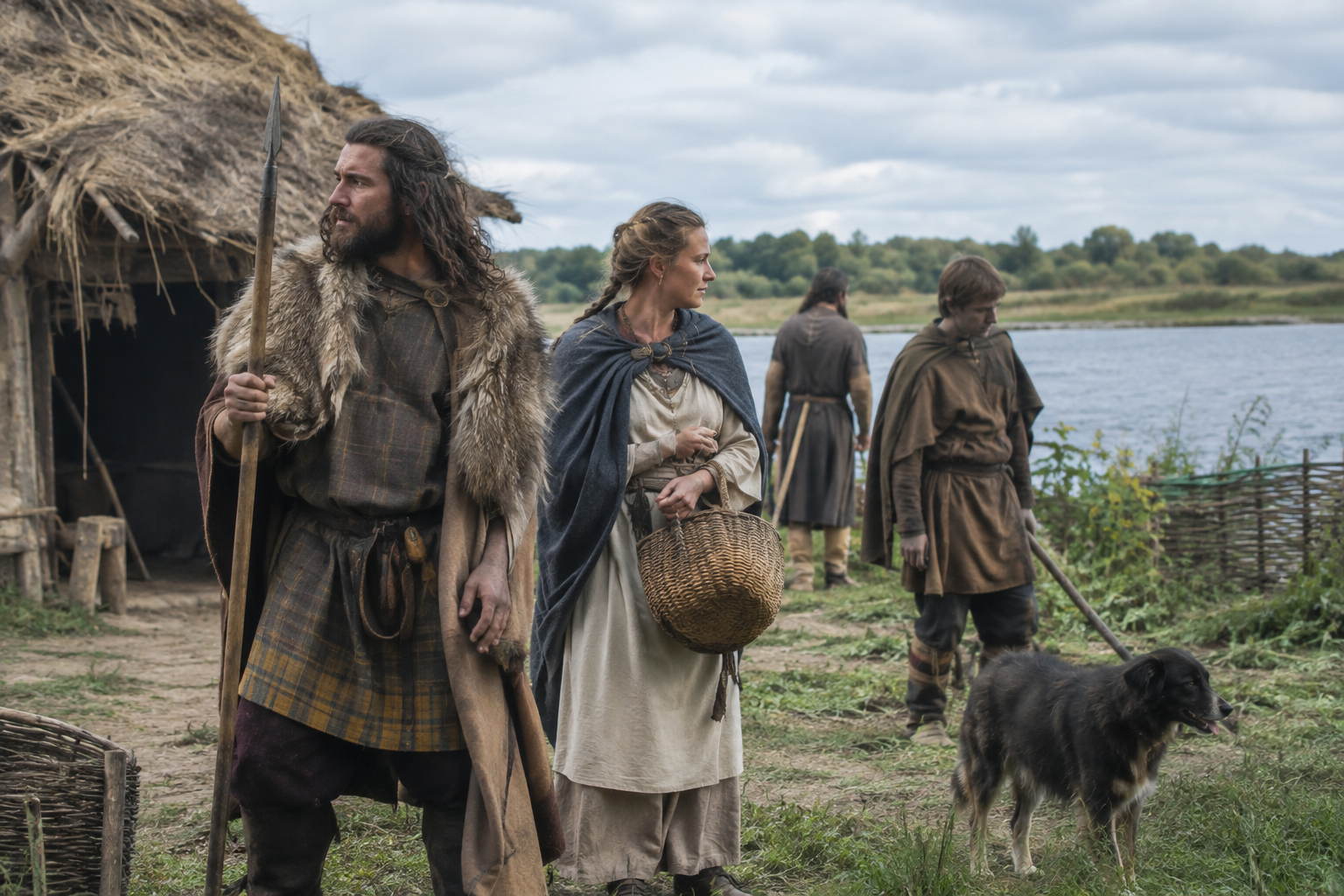
That is already enough to make the sample arresting. Here we are in northern France, in the world of the late Iron Age, among communities we would broadly describe as Gallic. This was not some dim prologue to history. It was a landscape of farms, burial grounds, exchange networks, warrior elites, and regional identities, long before Caesar turned Gaul into Roman prose. A sample like GDF1348 matters because it places a paternal lineage of this general family in a recognizably Iron Age western European setting.
We should be careful, though. An ancient sample from a Gallic context does not prove that every later carrier of a related branch was "Celtic," nor does it prove direct descent into any medieval surname group. What it does provide is a firm archaeological setting: by 400 BC, a lineage within this paternal neighborhood was present in Iron Age France. That helps us think historically about how such lines may have moved, persisted, or diversified in western Europe.
France is especially important here because it sits at a crossroads between Atlantic Europe, the Channel world, and the routes leading toward Britain and Ireland. If later branches of related paternal lines turn up in the British Isles, that need not imply a single migration event. It could reflect long processes of prehistoric movement, regional continuity, elite mobility, and repeated contact across the sea.
Discover Iron Age Celtic mobility
How do we move from a Gallic burial in France to medieval Ireland without writing fantasy? By resisting the temptation to turn shared haplogroups into family trees. Genetics, archaeology, and written history are different kinds of evidence. They can illuminate one another, but they are not interchangeable.
The historical importance of a lineage like R1b1a1b1a1a2c1a3a2a1b1a is that it belongs to a paternal landscape long associated, in broad terms, with western Europe. That makes later appearances in Ireland historically plausible in a regional sense, especially given the dense prehistoric and historic links tying Ireland to Britain and the continental Atlantic zone. But "plausible in a regional sense" is not the same thing as "proven descent."
This is precisely where ancient DNA is so useful. Traditional genealogy usually begins where documents begin. Ancient DNA begins earlier, with burials, bones, and excavation reports. It can show that certain paternal branches were already present in regions that later became associated with particular kingdoms, languages, or clan territories. The result is not a neat line from one named man to another, but a richer map of human continuity and change.
Readers interested in how such patterns played out around Roman and post-Roman western Europe may also enjoy the broader regional perspective offered in Roman Hispania's Lasting Genetic Legacy, which explores how population history complicates simple labels of origin.
The supplied family associations bring us into the medieval and early modern Irish landscape, where surnames, castles, and local power leave a far clearer documentary trail than prehistoric paternal lines ever can. Two names stand out here: Clan Collins and Clan Crowley. Their appearance beside this haplogroup should be treated as a historical association, not as proof that every bearer of those surnames belonged to this exact Y-DNA branch.
For Clan Collins, the great landmark is Shanid Castle in County Limerick. Shanid stands on the site of an earlier ringfort, which is exactly the sort of detail that reminds us how often medieval lordship reused older landscapes rather than creating new ones from scratch. After the Norman invasion, the site became the chief stronghold of the FitzMaurice family, probably in the late 12th or early 13th century, when a motte and bailey was first raised there. The later stone keep still dominates the hill. From this base, the lords of Shanid controlled a large part of west Limerick in the medieval period.
It is a telling place for a haplogroup article because Shanid embodies layered history: pre-Norman fortification, Norman castle-building, and contested power between settlers and Gaelic Irish rulers. A paternal lineage associated with families in this world would have existed not in isolation, but in a landscape of conquest, alliance, adaptation, and intermarriage.
Clan Crowley, meanwhile, is linked here with Crowley Castle in County Leitrim, a late medieval Irish tower house probably built in the fifteenth or early sixteenth century by the MacDermot family or their local allies. This was a different architectural world from the large earlier Norman fortress. Tower houses were compact, practical, and unmistakably lordly. They were not royal castles in miniature so much as the everyday fortifications of local power in Gaelic Ireland.
The surviving roofless shell still speaks of a borderland sort of politics: rival kin groups, shifting loyalties, occasional raiding, and the social importance of stone residences that were both defensive and symbolic. Later upheavals, especially the Tudor conquest and the violent transformations of the seventeenth century, changed landholding and broke many such local worlds apart.
That is why castles matter in articles like this. Not because masonry can prove a haplogroup, of course it cannot, but because strongholds preserve the geography of kinship and power. They show where families held ground, where identities were remembered, and where later surname traditions became rooted.
Explore the history of Clan Crowley
The real fascination of R1b1a1b1a1a2c1a3a2a1b1a lies in scale. On the one hand, it is tiny: one very specific paternal branch. On the other, it opens onto enormous historical questions. How did paternal lineages spread through Iron Age Europe? How much continuity survived Roman expansion, medieval lordship, and early modern upheaval? How often do family traditions preserve regional truth even when they cannot preserve an exact genetic chain?
The sample GDF1348 from 400 BC France gives us one firm ancient glimpse. Shanid Castle and Crowley Castle give us much later landscapes in which paternal identity, territory, and memory still mattered intensely. Between them lies a long stretch of history that no single record type can explain on its own. Archaeology gives us burial grounds. Genetics gives us lineages. Castles and chronicles give us names and places. Put together carefully, they make the past more complicated, but also more human.
If this lineage appears in your own results, the most sensible conclusion is not that you are "from" one ancient tribe or one noble house. It is that your direct paternal line belongs to a branch with deep historical roots in the wider story of western Europe, and that ancient DNA is beginning to show us some of the places where related lines were living long before modern surnames existed.
To understand how ancient DNA is transforming that bigger picture, readers may also enjoy Ancient DNA and the Rise of Archaeogenetics, which sets out how these discoveries are changing the writing of history itself.
Upload your DNA to MyTrueAncestry to explore whether your paternal ancestry shows links to ancient individuals such as GDF1348, or to the broader historical populations discussed here. Those matches can offer striking new perspectives on your past, even when they do not prove direct descent from any particular ancient person, clan, or castle-owning family.






Comments