Haplogroup R1b1a1b1a1a2c1a1h

– 4 min read


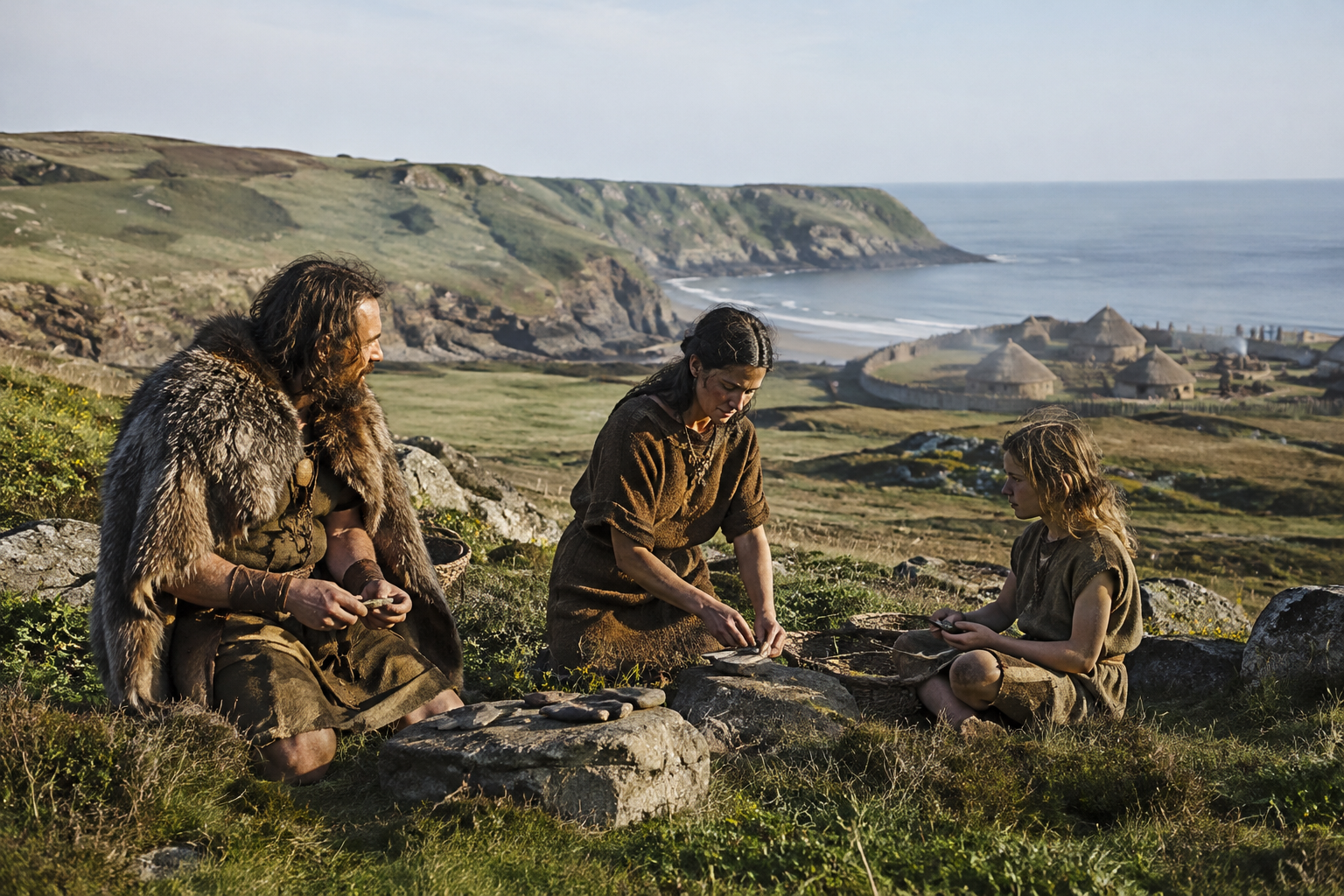
On the Gower Peninsula in south Wales, one Late Bronze Age man has become an unexpectedly useful witness to the deep history of a paternal line. He is known simply as I16488, dated to around 1105 BC and identified from West Glamorgan on the Gower. For anyone interested in the Y-DNA haplogroup R1b1a1b1a1a2c1a1h, that single burial matters because it places this lineage, or a reported association with it, in prehistoric western Britain rather than only in the later historical landscapes of Wales.
That is already enough to make him interesting. The Bronze Age in Britain was not some static age of barrows and metalwork frozen in amber. It was a period of movement, local continuity, new connections, and changing social worlds. A Y-chromosome line traces only one direct paternal thread among thousands of ancestors, but when a branch such as R1b1a1b1a1a2c1a1h appears in an ancient Welsh individual, it gives that thread a firm archaeological foothold.
The Gower Peninsula is one of those landscapes where archaeology seems almost built into the ground: caves, burial places, settlement traces, and the long afterlife of human use along the coast of southwest Britain. Sample I16488 belongs to that broader prehistoric setting. The date, around 1105 BC, places him in the Late Bronze Age, when communities in Britain were living in a world of established farming, metal exchange, and regional identities that had already been shaped by many centuries of earlier migration and mixture.
What we can say carefully is this: I16488 anchors the haplogroup R1b1a1b1a1a2c1a1h in Bronze Age Wales. What we should not do is turn one man into a whole people. He does not stand for every household on the Gower, still less for all Bronze Age Britons. But he is direct evidence that this paternal branch was present in western Britain well before Roman rule, medieval kingdoms, or modern surnames.
A major ancient DNA study of prehistoric Britain, published in Nature, helped sharpen this bigger picture by showing just how dynamic the island's population history was after the Beaker period. The importance of I16488 sits within that wider frame: Late Bronze Age Wales was part of a living network, not an isolated edge of Europe.
Bronze Age Britain in the west
The haplogroup name here is very narrow: R1b1a1b1a1a2c1a1h. That matters. R1b is a huge paternal family tree with many branches spread across Europe and beyond, and it has a long and complicated history. A precise twig on that tree should not be given the entire biography of the much larger trunk.
So the safest reading is modest and useful. This branch belongs within the larger R1b world that became very prominent in Bronze Age western Europe, but the specific subclade in this article must be treated on its own evidence. In practice, that means I16488 gives us a documented ancient occurrence in Wales, while broader claims about exact place of origin, language, or ethnic identity would need more ancient samples and more direct resolution than we have here.
That distinction is especially important in Britain, where people often want Y-DNA to settle questions about being "Celtic," "Welsh," or descended from one named historical tribe. Genetics does not work so neatly. A paternal lineage can persist through enormous cultural change. The man on the Gower lived long before written Welsh genealogy, yet his line may still echo in later populations simply because male lines can endure even as languages, loyalties, and political borders alter around them.
It is tempting to imagine prehistoric Wales as remote. Archaeology keeps correcting that idea. By the later second millennium BC, western Britain was tied into exchange systems that moved metal, objects, ideas, and probably people around the Irish Sea and beyond. Coastal peninsulas like Gower were not dead ends. They were contact zones.
That makes the presence of a branch like R1b1a1b1a1a2c1a1h more historically interesting. A paternal line found there could represent local continuity from earlier Bronze Age populations, movement within Britain, or links across the western seaways. The evidence we have does not let us choose neatly among those possibilities, but it does place this lineage in a region where mobility and rootedness likely coexisted.
In that sense, the value of I16488 is not just genealogical. He helps remind us that prehistoric Wales was part of a broader Atlantic-facing world. Ancient DNA is particularly good at puncturing old maps of "core" and "fringe." The Gower sample belongs to a western peninsula, yes, but one tied into a far larger human story.
There is an understandable urge to leap straight from a Bronze Age burial to later Welsh families, dynasties, or modern surnames. Historians have to be stricter than that. Without documented medieval or early modern paternal lines tied genetically to this exact branch, such claims would be guesswork dressed up as heritage.
Yet the broader historical question is still worth asking. How much continuity is there between prehistoric western Britain and the populations of later Wales? Ancient DNA increasingly suggests that in many parts of Britain, local populations preserved substantial ancestry through later periods, even while absorbing newcomers at different times. That does not mean one unbroken clan marched from 1105 BC to the present. It means some family lines, among many others, could persist across very long stretches of time.
For someone carrying R1b1a1b1a1a2c1a1h today, I16488 offers a sober but evocative possibility: part of your direct paternal history may belong to the same long western British landscape that later produced the kingdoms, saints, poets, and lineages of Wales. The DNA alone cannot write the intervening family tree. But it does place one branch of that tree in the ground of prehistoric Wales.
Ancient DNA articles often celebrate spectacular datasets, and fair enough. But archaeology is also built from stubbornly specific individuals. I16488 is one of them. A single Late Bronze Age man from the Gower Peninsula cannot explain the whole history of R1b1a1b1a1a2c1a1h, but he can do something more solid: prove that this paternal branch, or a very close reported assignment to it, was present in Wales more than three thousand years ago.
That is the real value of this haplogroup story. It is not a tale of instant tribal labels or prestige ancestry. It is a glimpse of continuity through change: one paternal line visible in the archaeological record of western Britain, in a period when the societies of Wales were already old, connected, and evolving. For modern testers, that is often the most meaningful result of all: not certainty about every ancestor, but one direct line placed convincingly in a real ancient landscape.






Comments