Haplogroup R1b1a1b1a1a1c2b2a1b1a1

– 5 min read


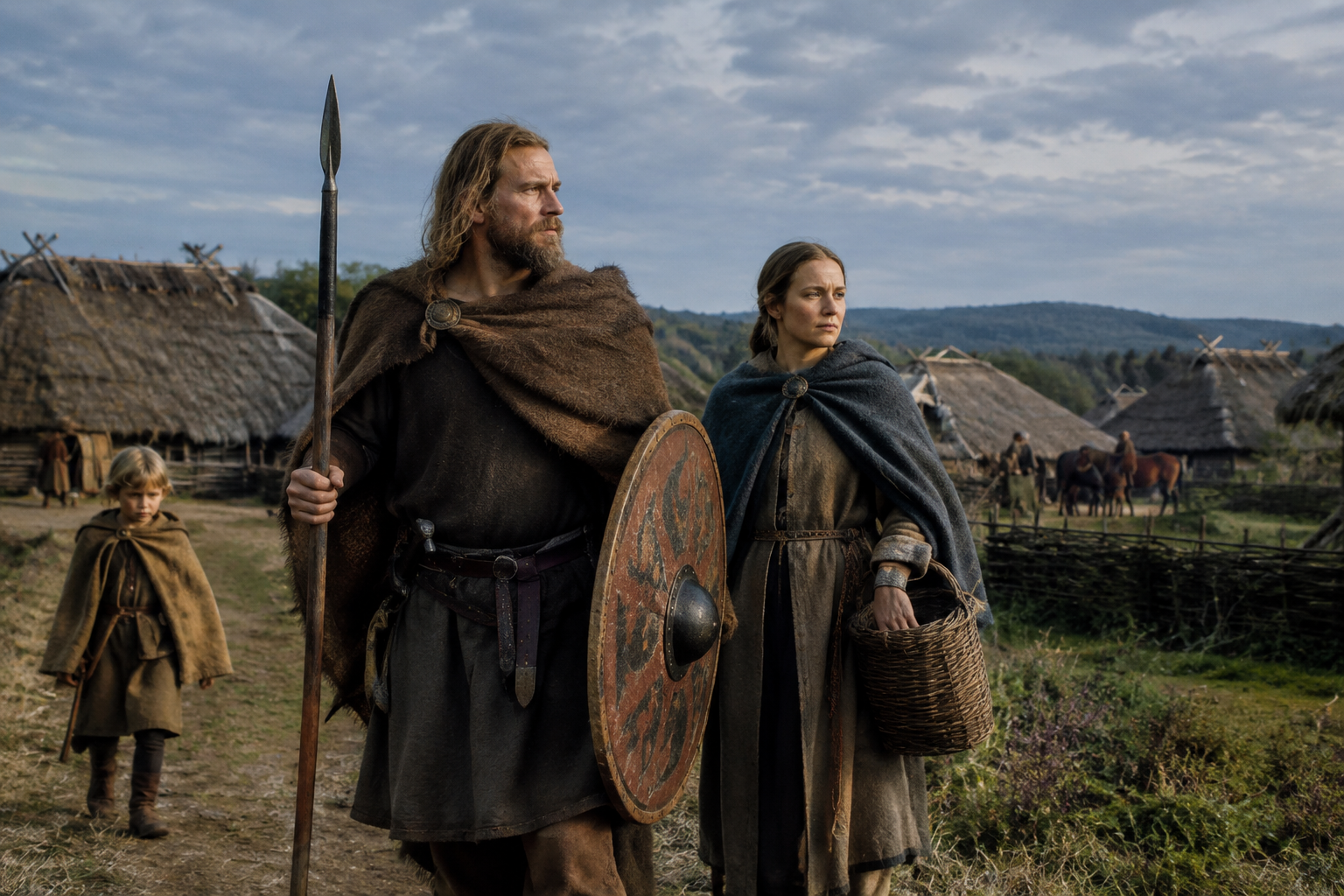
At Deersheim in Saxony-Anhalt, one man from around AD 500 has become a small but telling witness to the unsettled centuries after Rome's western empire fell. He is identified as DRH010 and associated with the Thuringii, a people known from early medieval central Germany. For anyone interested in the Y-DNA haplogroup R1b1a1b1a1a1c2b2a1b1a1, that matters because it places this very narrow paternal line, or a reported association with it, in a real archaeological setting rather than in a modern surname chart or a speculative migration map.
That is the first thing worth saying plainly. Y-DNA follows one direct male line only: father to son to son. It does not define a whole person, still less an entire tribe. But when a lineage appears in a securely dated early medieval burial from the Elbe-Saale region, it gives us a proper historical frame. Instead of abstract ancestry, we are looking at a man who lived in the world of collapsing Roman frontiers, rising post-imperial kingdoms, and shifting Germanic identities.
Deersheim lies in a part of Germany that became historically important in the centuries around AD 500. This was a borderland of sorts: not a Roman province in the old sense, but not a remote backwater either. Communities here were drawn into long-distance political change, whether through trade, warfare, alliance, or migration. A burial associated with the Thuringii sits squarely in that historical landscape.
Sample DRH010 is dated broadly to about AD 500. That is already enough to make the find interesting. This was the period in which the Thuringian kingdom emerged in central Germany before its defeat by the Franks in the sixth century. The label "Thuringii" is historical and regional, not a genetic type, but it tells us that this paternal line was present among people living in the early medieval societies of central Europe, where older local populations and newer political groupings were being folded together.
An ancient DNA study connected with this material is linked through this research archive entry, which provides the scientific context for the sequencing project. Even without overstating details that are not explicitly given here, the key point stands: this haplogroup is anchored to an excavated individual from a specific place and period.
Germanic languages and genomics
The formidable-looking label R1b1a1b1a1a1c2b2a1b1a1 belongs to the larger R1b family, one of the major Y-chromosome groupings in western Eurasia. But it would be a mistake to treat the history of the whole R1b tree as if it automatically explained this one twig. Broad statements about Bronze Age expansions or modern national frequencies may apply to parent branches; they do not by themselves tell us the precise story of this much narrower line.
What the Deersheim evidence does give us is something more disciplined and, in its way, more valuable. It shows that a paternal line reported under this branch was present in an early medieval community of central Germany. That is not the same as saying the branch originated there, nor that every later bearer descends from the same local group. But it does place the lineage within the human reality of post-Roman Europe, where identities were made in cemeteries, settlements, alliances, and families rather than in neat textbook blocks.
For members of the MyTrueAncestry community, this is often the most useful scale of interpretation. Deep ancestry tells you that a branch belongs to an immense prehistoric story. A sample like DRH010 tells you that one strand of that story remained alive in a particular historical world, among people negotiating the aftermath of empire.
The centuries around AD 500 are often lazily described as a time of invading peoples sweeping across Europe in tidy ethnic packages. Archaeology and ancient DNA have made that picture much harder to sustain. Early medieval cemeteries across the former Roman frontier and its neighboring regions increasingly show that communities could be biologically mixed, locally rooted, and politically new all at once.
That is why a Thuringian-context sample matters beyond its single Y-line. He lived in a region where local Iron Age and Roman-period populations had already experienced centuries of contact with imperial power, military recruitment, exchange, and small-scale movement. By the time the Thuringian kingdom appears in written sources, the people living there were not the product of one moment of migration but of generations of interaction.
This is precisely the kind of wider setting explored in MyTrueAncestry's post on the frontier zone between imperial and post-imperial Europe.
Roman-barbarian frontier blending
Seen in that light, R1b1a1b1a1a1c2b2a1b1a1 is not a badge of a single people. It is better understood as one paternal thread passing through a society that was already historically layered. The man buried at Deersheim may have identified with his kin, his local community, a regional elite, or a wider political formation we call Thuringian. His Y-chromosome captures only one of those inherited threads, but it captures it clearly enough to connect present-day testers with this early medieval world.
Readers sometimes assume that a haplogroup article needs a long list of ancient burials to say anything worthwhile. In fact, a single well-placed sample can be historically revealing, provided we do not ask it to do too much. DRH010 does not prove the full distribution of this branch, nor the social rank of its bearers, nor an unbroken chain to any later dynasty. What it does provide is chronological and geographic traction.
There is a great difference between a lineage that is merely modern and one that appears in an excavated burial from a known historical horizon. Deersheim gives us the latter. It allows us to say that this paternal branch was part of the male-line diversity present in central Germany at the start of the early Middle Ages, in a region critical to the formation of later medieval Europe.
That also makes the find relevant to bigger discussions about how Germanic-speaking populations spread and changed. Language, political identity, and paternal lineage do not map perfectly onto one another, but ancient genomes have become indispensable in tracing the social worlds through which languages and identities moved.
If your direct paternal line falls under R1b1a1b1a1a1c2b2a1b1a1, the Deersheim individual offers a sober but evocative point of reference. Not a legendary founder, not a promised royal descent, but a documented man from early medieval Saxony-Anhalt, living in a Thuringian context around AD 500. That is exactly the kind of anchor ancient DNA does best: it places a living lineage in a real landscape of cemeteries, kingdoms, and historical transition.
For many researchers, that is enough to change the feel of ancestry altogether. The branch stops being just a code in a testing panel and becomes part of the lived history of central Europe in the age after Rome.
Ancient DNA in post-Roman Britain
The clearest insight from haplogroup R1b1a1b1a1a1c2b2a1b1a1, as documented here, is its presence in an early medieval burial from Deersheim, in the orbit of the Thuringii around AD 500. That does not reduce the lineage to one ethnicity or one migration story. It does, however, place this paternal branch firmly בתוך the historical reshaping of central Europe, where post-Roman communities were building new identities out of older populations and new political realities.
Comments