Haplogroup E1b1a1a1a1c2c
– 4 min read


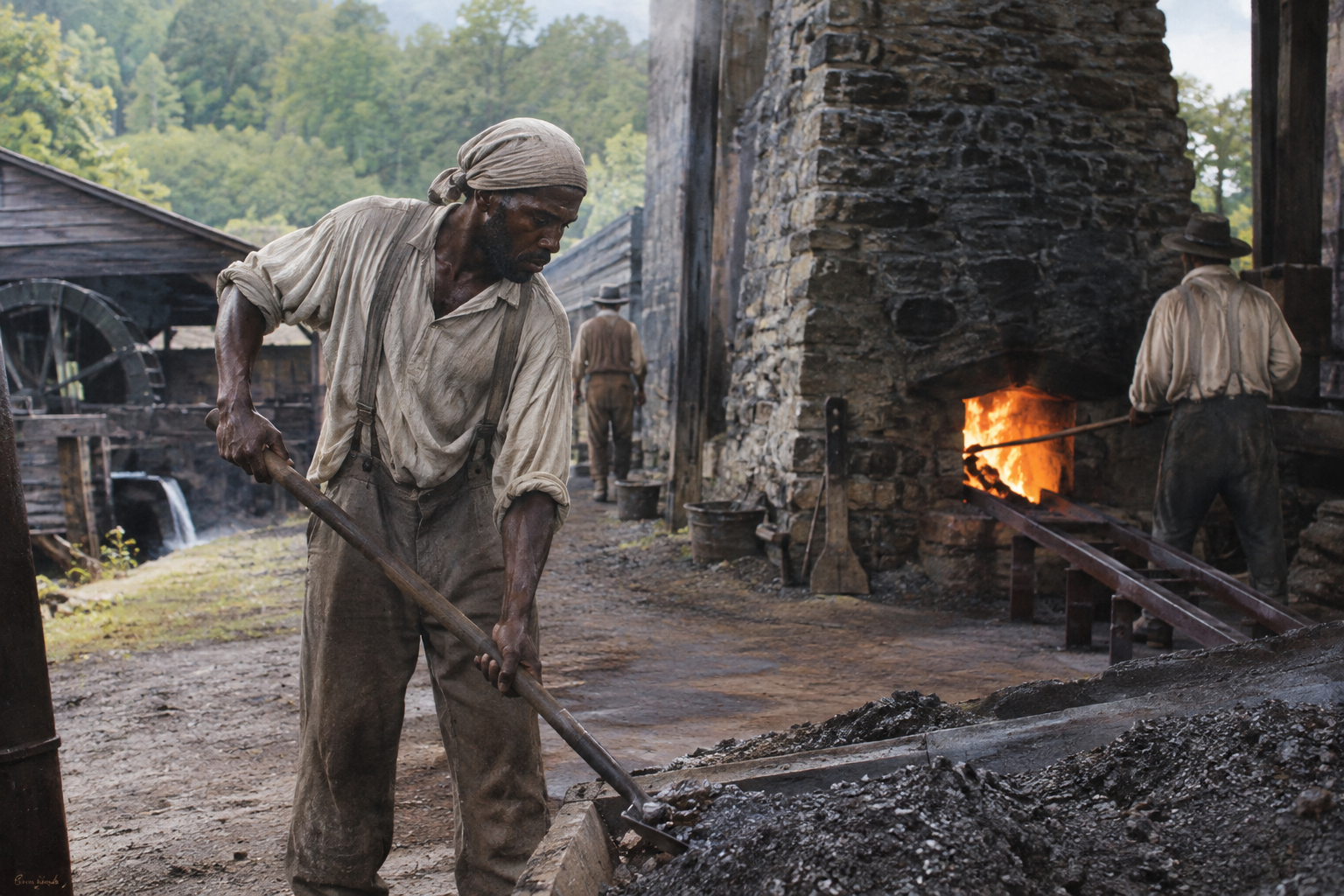
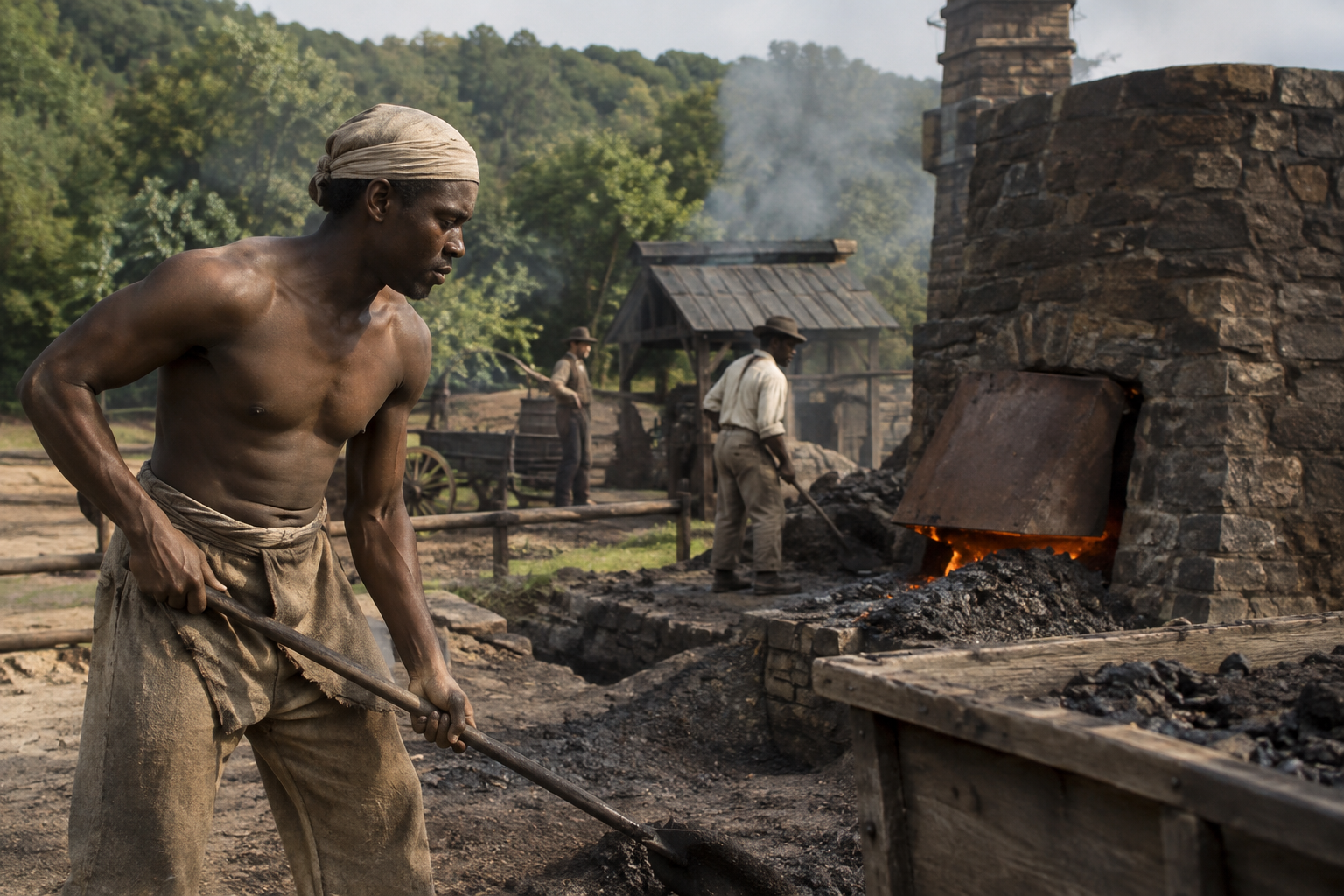
At the Catoctin iron-working furnace in antebellum Maryland, one excavated individual is identified simply and starkly: Enslaved Laborer Catoctin Iron-Working Furnace Antebellum Maryland, sample I8095, dated around 1810 AD. That plain record tells us quite a lot. It places a man in one of the industrial landscapes of the early United States, and it ties the Y-DNA haplogroup E1b1a1a1a1c2c to a life shaped not by distant prehistory alone, but by slavery, forced labor, and the violent remaking of African family histories in the Atlantic world.
That makes this lineage especially important to discuss carefully. E1b1a1a1a1c2c is a very specific branch within the wider haplogroup E1b1a, a major paternal lineage strongly associated with African population history, especially in West and West-Central Africa. Y-DNA traces one direct paternal line only, so it does not define a person's whole ancestry or identity. But in a case like I8095, that one line can still illuminate a very large historical story: how African male lineages survived enslavement, transport, plantation economies, and the erasures of the archive.
Catoctin Furnace in Maryland was an industrial site, not a palace, monastery, or elite cemetery. Its importance lies precisely there. Iron furnaces depended on hard labor, and in the late 18th and early 19th centuries that labor often included enslaved Africans and African Americans. Archaeology at such sites has been steadily changing public history by restoring named and unnamed workers to the story of American industry.
Sample I8095 belongs to that world. The date, around 1810 AD, places him in the mature phase of the early American republic, when slavery and industrial development were not opposites but partners. The paternal lineage E1b1a1a1a1c2c therefore appears here not as an abstract label on a map, but as evidence carried by a man whose life unfolded inside a furnace community built on coercion.
A genetic study connected with this historical setting is available at https://www.biorxiv.org/content/10.1101/2022.06.12.495320v1. Even without overclaiming details beyond the sample information at hand, the broader value of such work is clear: it helps recover biological relationships and ancestry histories for people who were very often denied full documentation in written records.
The temptation with a detailed haplogroup name is to treat it like a ready-made migration story. That would be a mistake. What we can say responsibly is that E1b1a1a1a1c2c belongs to a deeply African paternal framework, and that branches within E1b1a became especially widespread in parts of sub-Saharan Africa over the long course of later prehistory and history.
What we cannot do from this single Maryland sample is assign one exact ethnic identity, one embarkation port, or one neatly charted route across the Atlantic. Enslaved people brought into British North America came from many regions, often through complicated chains of capture, sale, and forced transport. A narrow terminal branch may point to a more precise paternal history in future comparative work, but the historical setting must remain broader unless stronger evidence is available.
That caution matters because the archive of slavery is full of false simplifications. Genetic data can restore connections, but it does not turn every lineage into a one-word identity. For descendants researching E1b1a1a1a1c2c, the most secure starting point is that this is a paternal line with African roots that persisted through one of the harshest demographic upheavals in modern history.
Catoctin Furnace also reminds us that African-descended people were central to early American industry. Popular memory often imagines slavery mainly through tobacco, rice, cotton, and sugar. Yet furnaces, foundries, transport networks, and skilled industrial labor were part of the same world. A man such as I8095 was living at the intersection of Atlantic slavery and American industrialization.
That is one reason this sample matters beyond haplogroup classification. E1b1a1a1a1c2c survives in the bones of a worker from a furnace complex, showing how African paternal lines were carried into places where national stories once preferred to celebrate technology and enterprise without looking too closely at the labor system underneath them. Archaeology has been especially powerful in these settings because it can recover people whom ledgers and official histories reduced to property or numbers.
There is only one ancient sample listed here, and that scarcity is part of the story too. African-descended communities in the Americas have long been underrepresented in archaeogenetic research, not least because of the ethical, historical, and political sensitivities involved. Each well-contextualized individual sample therefore carries unusual weight, especially when treated with restraint.
I8095 does not stand for all enslaved men in Maryland, still less for all carriers of E1b1a1a1a1c2c. But he does show that this paternal branch was present in an enslaved labor population at an American industrial site in the early 19th century. That is a concrete historical finding. It connects a modern tester's paternal line not merely to a continent-scale origin, but to the lived reality of the African diaspora in North America.
There is an interesting parallel here with other studies showing that ancient and historical DNA can reveal diverse origins in communities that older narratives once treated as uniform. MyTrueAncestry readers who enjoy that broader theme may want to compare this with work on diverse origins at a 7th-century Madrid burial site, where genetics likewise complicates simple historical labels.
For many haplogroup articles, the challenge is not to overdramatize. Here, the drama is already in the history. A man associated with E1b1a1a1a1c2c was buried from a furnace community in slaveholding Maryland around 1810 AD. His lineage had crossed the Atlantic because people were forced across it. That is the proper historical frame.
And yet there is another side to the finding. However broken the records, the paternal line endured. It endured capture, transport, sale, renaming, and exploitation. In that sense, E1b1a1a1a1c2c is not only a marker of origin but also a record of survival, preserved where documentary history was often designed to forget.
The most distinctive thing about E1b1a1a1a1c2c in the present evidence is not a royal claim or an ancient warrior tale. It is its appearance in the remains of an enslaved laborer at Catoctin Furnace, where archaeogenetics helps return individuality to people long pushed to the margins of written history. For someone researching this paternal line today, the strongest supported insight is that it belongs within the broad history of African ancestry and that, in at least one documented case, it is tied directly to the early African American experience under slavery in industrial Maryland.

Comments