Haplogroup R1b1a1b1a1a1c2a1c
– 4 min read


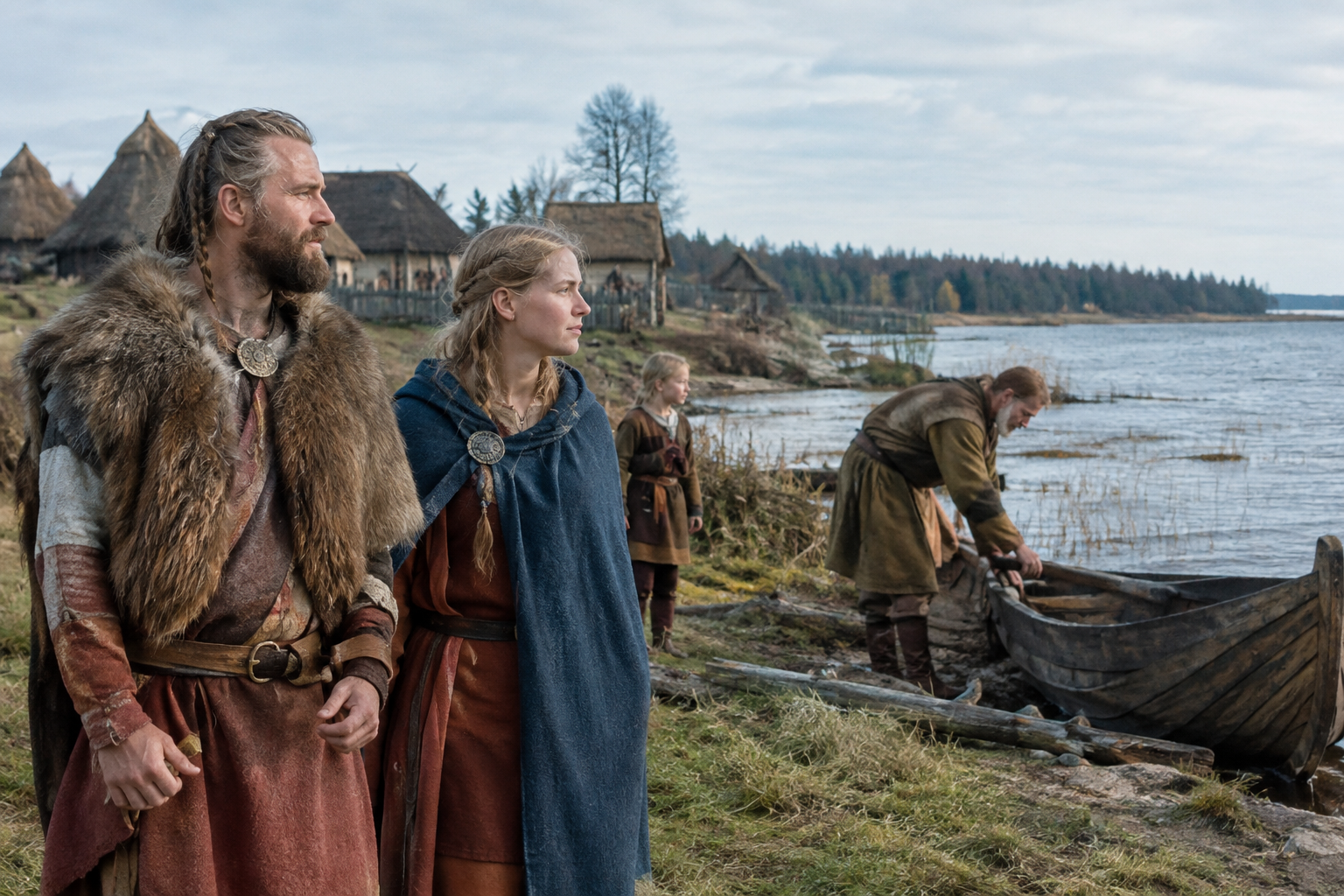
At Haeven in Mecklenburg-Vorpommern, one ancient male labeled HVN006 offers a small but intriguing glimpse into the paternal history behind the Y-DNA branch R1b1a1b1a1a1c2a1c. He is dated to around AD 250 and identified with a Longobard context, placing him in the centuries before the Lombards became one of the most consequential migrant peoples of post-Roman Europe.
That date matters. Around the third century AD, northern Europe was not a neat map of fixed tribes waiting for later chroniclers to name them. It was a shifting frontier world of local communities, expanding alliances, and long-distance contacts. A Y-chromosome lineage such as R1b1a1b1a1a1c2a1c traces only one direct paternal line, not a person's whole ancestry, but when it appears in an ancient individual like HVN006 it becomes a useful historical marker: one thread in the larger fabric of Germanic-period population history.
The archaeological importance of Haeven lies less in spectacle than in timing and placement. Mecklenburg-Vorpommern sits in the southern Baltic world, a region deeply involved in the cultural and demographic changes that shaped Late Roman and Migration Period Europe. A male from this setting, carrying the branch associated here with R1b1a1b1a1a1c2a1c, belongs to a northern landscape that would later feed into the movements of groups remembered in written sources as Lombards, Goths, and other Germanic-speaking peoples.
We should be careful here. A burial in a Longobard-associated context does not mean that every detail of later Lombard identity was already fixed in AD 250, nor that one man can stand for an entire people. But HVN006 does place this paternal line in exactly the kind of north-central European zone where ethnogenesis, mobility, and regional interaction were reshaping communities long before the Lombards entered Italy.
A broader ancient DNA discussion of these northern European movements can be found in this genetic study of early medieval migration and population formation. Even where a paper is focused on Anglo-Saxon England rather than the Lombards specifically, it is part of the same larger scholarly effort to understand how movements around the North Sea and southern Baltic altered the genetic landscape of early medieval Europe.
Germanic Languages and Genomics
The haplogroup name itself is very narrow: R1b1a1b1a1a1c2a1c. That is not the same thing as the much broader parent haplogroup R1b, one of the major Y-chromosome lineages in western Eurasia. It would be a mistake to pour the entire prehistory of R1b into this one small twig of the tree. Ancient DNA works best when we keep the scale straight.
What we can say is more modest, and more useful. This branch appears here in a man from the southern Baltic zone in the Roman-period north. That gives the lineage a secure archaeological foothold in a region central to later Germanic expansions. For someone researching paternal ancestry today, that does not prove descent from a named Lombard warrior, still less from a famous dynasty. It does, however, place this line within a historical world that mattered enormously for the making of medieval Europe.
There is a tendency in popular history to begin the story of the Lombards only when they arrive dramatically in Italy in the sixth century. Archaeology insists on a longer view. Before any march southward, there were centuries of development in central and northern Europe: burial customs changing, trade routes thickening, military contacts with Rome increasing, and local elites negotiating new identities.
HVN006 belongs to that earlier chapter. Mecklenburg-Vorpommern was not a remote edge but part of a connected corridor between the Elbe region, the Baltic coast, and the interior of central Europe. In such places, paternal lineages could persist locally, spread through kin groups, or move with small migrating bands. The value of a sample like HVN006 is precisely that it anchors the haplogroup in this formative environment rather than in a later, already mythologized phase of Lombard history.
One of the most useful lessons from archaeogenetics is that historical peoples were rarely biologically uniform. Labels such as Lombard, Gothic, or Anglo-Saxon describe social and political formations as much as they do ancestry. Communities could absorb newcomers, reorganize themselves, and carry old lineages into new cultural settings.
That is why a single Y-line matters best when set beside archaeology and history. In HVN006, the direct paternal line associated with R1b1a1b1a1a1c2a1c does not define a whole ethnicity. Instead, it shows that this paternal branch was present among men living in a northern European milieu linked to the emergence of Germanic-speaking migration-period groups. The old habit of imagining tribes as biologically pure blocks has not survived contact with the evidence.
This wider point has emerged repeatedly in MyTrueAncestry's coverage of migration-period Europe, especially where ancient cemeteries reveal communities of mixed background rather than tidy ethnic packages.
Mixed Origins of Gothic Communities
If a branch like R1b1a1b1a1a1c2a1c appears in a third-century northern context, the obvious historical interest is not simply where it was found, but what kind of world followed. Over the next few centuries, groups from the European north and northeast moved, merged, and settled across former Roman territories. Some entered imperial service, some established kingdoms, and some disappeared into broader regional populations.
That does not mean we can draw a straight genealogical line from HVN006 to every later bearer of the branch. Yet the sample fits a pattern familiar from migration-period research: northern European paternal lines participating in the human reshuffling that linked the Baltic, the North Sea, the Rhine frontier, and eventually parts of the former Roman West. In that sense, HVN006 belongs to a historical prelude rather than an isolated local footnote.
For readers interested in how these northern movements played out in later Britain, especially through ancient genomics rather than old origin myths, there is a useful comparison in work on early medieval English population formation.
Roman and Early Medieval Britain
The most distinctive thing about R1b1a1b1a1a1c2a1c here is not a grand claim of conquest or royal descent. It is that this very specific paternal branch is tied, through HVN006, to the southern Baltic world of around AD 250, in a Longobard-associated setting before the great upheavals of late antiquity reached their better-known phases. For anyone exploring this haplogroup today, that is a meaningful clue: your direct paternal line is connected, at least in one ancient case, to the north European societies that helped shape the post-Roman world.






Comments