Haplogroup R1a1a1b1a2b3a1c2

– 5 min read


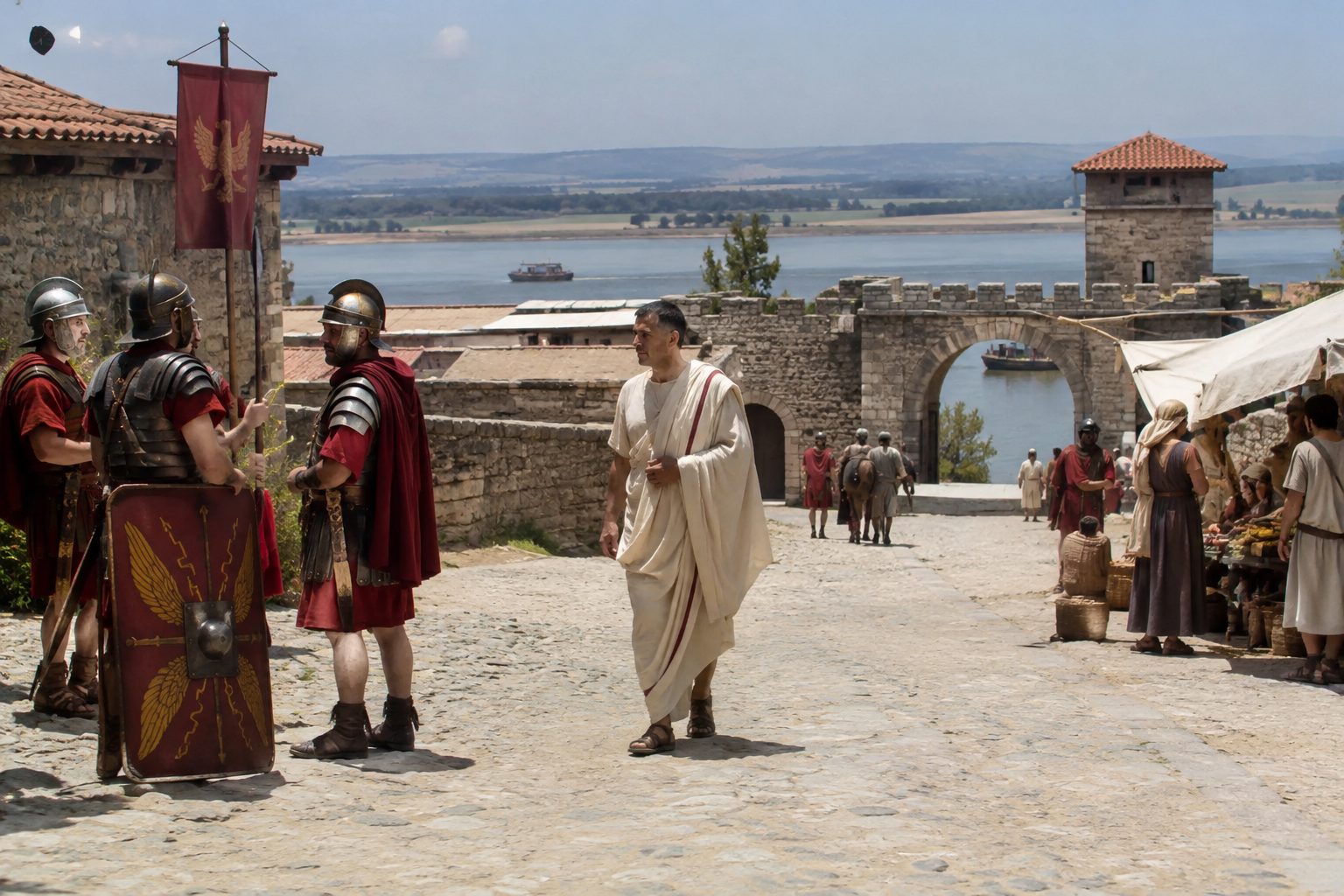
At Viminacium in Serbia, once one of the great Roman cities of the Danube frontier, an ancient man labeled R6759 carries an intriguing paternal marker for anyone interested in the haplogroup R1a1a1b1a2b3a1c2. He is dated to around AD 150, squarely within the Imperial Roman period, and that date matters. Viminacium was not a quiet provincial backwater. It was a legionary center, a capital of Moesia Superior, and a place where soldiers, traders, migrants, administrators, and local families met in daily life.
That makes a Y-chromosome finding here especially interesting. Y-DNA follows one direct paternal line only, not a person's whole ancestry, but in a place like Viminacium even a single paternal lineage can illuminate the human traffic moving through the Roman Balkans. In this case, the branch named in this article is a very narrow subclade beneath the much broader and widely distributed R1a family. The ancient sample gives us a firm archaeological anchor in a real Roman city rather than a vague story about "steppe ancestry" or "ancient warriors."
Viminacium stood near the confluence of major roads and the Danube military zone, in what is now Serbia. In the second century AD it was both a fortress world and an urban one: legionary presence, civilian settlement, workshops, cemeteries, and imperial administration all packed into the same historical landscape. If you want a place where paternal lineages could arrive from several directions and then settle into local society, this is exactly that kind of site.
Sample R6759 belongs to that world. With the information at hand, it is safest to describe him as an Imperial Roman era individual from Viminacium associated with the branch discussed here, rather than spinning a grand personal biography. We are not told his profession, status, grave goods, or whether he was locally born. But the setting alone is revealing: this was a population crossroads inside the Roman Empire, where ancestry and identity did not line up neatly with one language, one legal status, or one origin.
A genetic study centered on this broad archaeological context is linked here as research on ancient individuals from the Viminacium region. Even without overstating any one result, the larger importance is clear enough. Roman frontier communities in the Balkans were not sealed populations. They were porous, mobile, and often surprisingly mixed.
The exact label R1a1a1b1a2b3a1c2 is extremely specific. That is both useful and limiting. Useful, because it reminds us that Y-DNA can distinguish a very narrow paternal thread from the enormous umbrella of haplogroup R1a. Limiting, because the broader history of R1a across Eurasia cannot simply be pasted onto this exact branch without direct evidence.
That distinction is worth making plainly. A man from Roman Viminacium carrying a narrow R1a-derived lineage does not automatically become "a Slav," "a Sarmatian," "a Germanic mercenary," or any other tidy ethnic label. The Roman Balkans were full of people whose ancestors had arrived in different centuries under very different circumstances. Some served in the army, some traded, some farmed, some were born in the city itself. A paternal lineage can mark connection; it cannot by itself assign language or identity.
Still, the find is valuable because it places this branch in a documented urban and imperial setting in the middle Danube zone by the second century AD. That is a harder, more historically meaningful observation than any number of speculative maps with arrows sweeping across Eurasia.
The Balkans under Rome were not simply conquered territories frozen into place. They were reshaped by recruitment, veteran settlement, taxation, trade, slavery, marriage, and local adaptation. Cities like Viminacium became magnets for movement. The Danube frontier in particular linked the Mediterranean world to inland Europe and to populations beyond the imperial border.
That is one reason a lineage such as R1a1a1b1a2b3a1c2 appearing in Viminacium is so historically resonant. It fits a world in which paternal lines from farther north or east could become part of a thoroughly Roman provincial population without losing their deep biological history. Romanization was not genetic replacement. Often it was administrative, military, legal, and cultural layering over already complex populations.
This picture aligns with a growing body of ancient DNA work showing that Roman-era communities could be strikingly heterogeneous. Some regions retained substantial local continuity; others show clear new arrivals; many show both at once. The Balkans are especially important because they sit at the hinge between Central Europe, the steppe-facing zones, and the eastern Mediterranean.
Croatia's Shifting Paternal Lineages
Readers sometimes expect ancient DNA to work like a census. It does not. One individual is not a population, and one Y-line is not a whole society. But one well-placed sample can still be highly informative when the archaeological setting is strong. R6759 is one of those cases.
He comes from a major Roman city at a known time and in a region central to the empire's frontier history. That means his Y-DNA does not float free of context. It belongs to a documented social world shaped by imperial power, local continuity, and constant movement. In practical terms, this gives members of the MyTrueAncestry community a tangible historical waypoint for this paternal branch: not an abstract origin myth, but a man living in the machinery of the Roman Danube.
It also nudges us away from older, simpler models of ancestry. The old habit was to imagine peoples as solid blocks marching from one map-color to another. Ancient DNA keeps spoiling that idea. In real cemeteries, especially in imperial zones, we find individuals whose lineages reflect generations of mixing, mobility, and local settlement.
The wider R1a family appears across a vast stretch of Eurasia in many different periods, so any attempt to explain this particular branch must stay modest. What the Viminacium evidence supports is presence in the Roman Balkans by around AD 150. That is already significant because the middle Danube was a major corridor through which lineages could circulate long before, during, and after Roman rule.
Seen in that light, R6759 belongs to a larger historical pattern: frontier provinces as contact zones rather than margins. The Danube separated Rome from non-Roman polities, yes, but it also connected them. Goods crossed it, soldiers crossed it, families crossed it, and sometimes the line between "inside" and "outside" was blurrier in lived experience than it looks on a map.
Several recent MyTrueAncestry pieces touch this same wider story from different angles, whether through the Balkans, Gothic-era communities, or other Roman-border populations.
Gothic Communities in Bulgaria
There is also a useful comparison in work on Roman provincial genetics farther west. The details differ from region to region, but the basic lesson is similar: Roman rule often brought people together without erasing local ancestry altogether.
Roman Hispania's Genetic Legacy
So what can someone with haplogroup R1a1a1b1a2b3a1c2 responsibly take from this? Not a promise of descent from one named Roman, and not a shortcut to a single ethnic identity. What this evidence does offer is something more historically grounded: your paternal line, or a very close branch to it, is represented in an Imperial Roman setting at Viminacium, one of the Balkans' most important frontier cities.
That is a vivid sort of anchor. It places this lineage in a world of forts, towns, roads, and river traffic, where the Roman Empire depended on the movement of people as much as on the movement of armies. For a paternal branch this specific, even one securely placed ancient individual can be a meaningful signpost.






Comments