Haplogroup R1a1a1b1a2b3a1a

– 5 min read


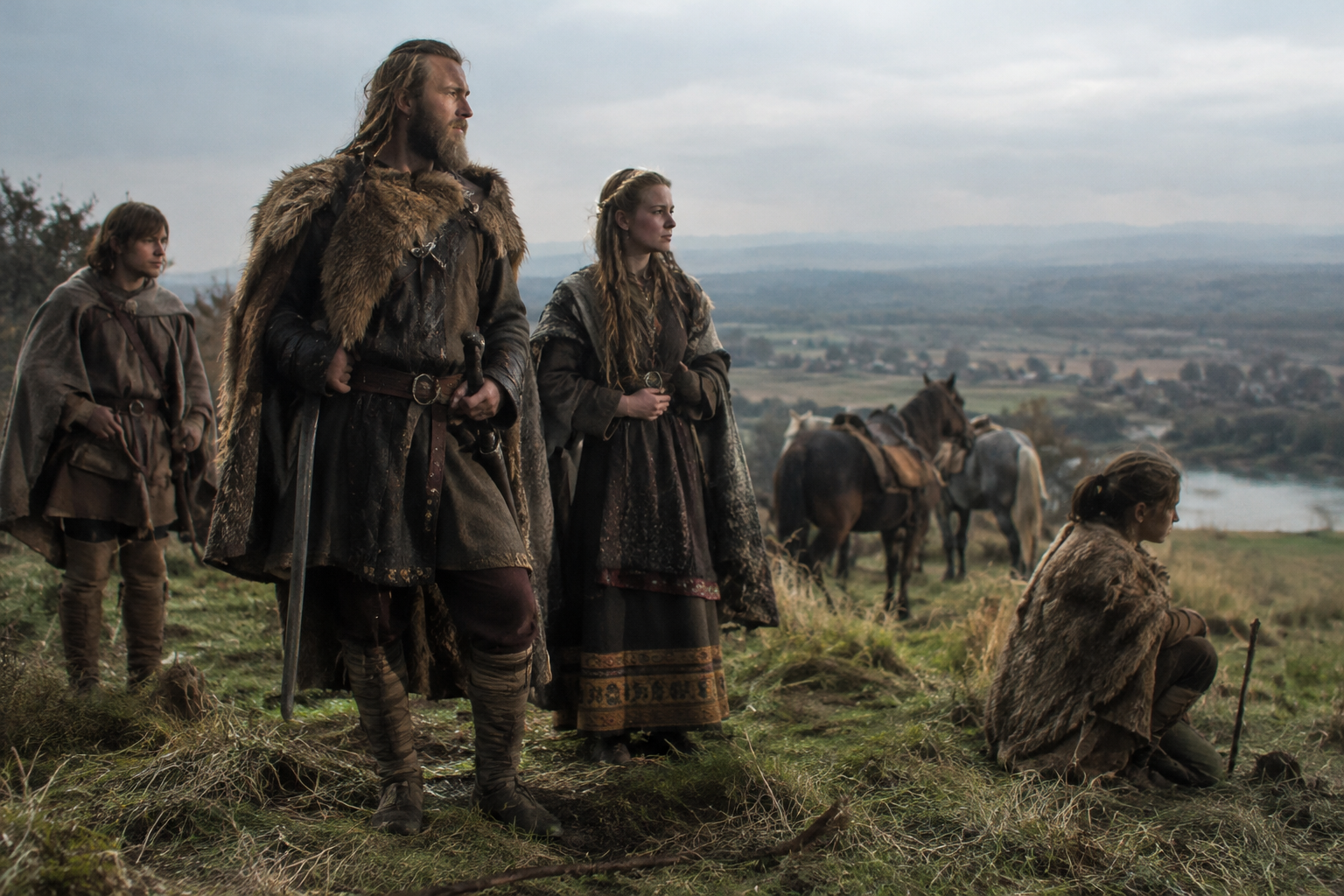
At Sandorfalva-Eperjes Ivotavak in Hungary, one ancient male known as SEI-1, dated to around AD 400, brings an unexpectedly sharp human focus to a famously turbulent age. He is associated with a Gothic context in the Carpathian Basin, a world usually described through collapsing frontiers, Roman diplomacy, and migrating war bands. Yet what reaches us through ancient DNA is not a legend or a tribe on the move, but one paternal line: R1a1a1b1a2b3a1a.
That long label matters because it is very specific. It sits within the broader and much older R1a family of Y-DNA lineages, but it should not be mistaken for the whole of R1a's vast history across Eurasia. Y-DNA follows one direct male line only, father to son, and in a case like SEI-1 it gives us a narrow but valuable thread running through the much messier social fabric of the Migration Period.
The setting of SEI-1 is important. Around AD 400, the Carpathian Basin was not a tidy ethnic map with neatly bounded peoples. It was a contact zone: late Roman power still mattered, steppe influences were gathering, and groups identified by archaeologists or historians as Goths were part of a wider rearrangement of communities across Central and Eastern Europe.
In that context, a Y-chromosome assignment linked to R1a1a1b1a2b3a1a is interesting not because it "proves" a Gothic essence, but because it places one paternal line inside a documented archaeological horizon associated with Gothic-period populations in Hungary. Research on post-Roman communities in the region has repeatedly shown that these groups were not biologically uniform. They were made up of people with different ancestries, different family histories, and often different geographic origins, even when buried within related cultural frameworks. A broader ancient DNA study of this era in the Carpathian Basin can be found here.
That is one of the most useful correctives provided by ancient genomics. Older writing about Goths often treated them as if they were a single people in a single biological sense. The archaeology, and now the genetics, point instead to communities that could share material culture, political loyalties, and historical labels without sharing one simple origin story.
There is a temptation with a lineage name as precise as R1a1a1b1a2b3a1a to imagine that every part of its journey is already mapped. Usually it is not. A fine-grained Y-DNA label identifies a branch on the paternal tree, but the historical meaning of that branch depends on where and when it turns up in securely dated archaeological remains.
Here, the strongest evidence is the presence of this lineage in an ancient individual from a Gothic-period setting in Hungary. That does not mean the branch was uniquely Gothic, that all Gothic men carried it, or that a modern tester with this haplogroup descends from SEI-1's community in any simple documentary way. What it does suggest is that this paternal line participated in the population world of late Roman and early Migration Period Central Europe.
This matters especially for R1a branches because the parent haplogroup appears in many different historical settings, from Bronze Age steppe-linked expansions to later Slavic, Germanic, and other medieval populations. The narrower subclade in this article must therefore be kept tied to actual evidence rather than broad reputation. In this case, the evidence is not a sweeping map of Eurasia. It is one ancient man in a very specific frontier society.
If SEI-1 stands out, it is partly because Gothic archaeology has become one of the best examples of why identity in late antiquity cannot be reduced to bloodline. Communities labelled Gothic by historians were often mobile, politically adaptive, and entangled with Rome. They recruited, absorbed, and reassembled people. That is precisely why an ancient Y-line from a Gothic context is historically interesting: it belongs to a mixed and changing world, not to a sealed biological tribe.
Recent MyTrueAncestry coverage has returned to this point from different angles. Studies of late antique Gothic groups in southeastern Europe have emphasized diversity rather than uniformity, and that broader picture fits well with how SEI-1 should be understood: as one paternal strand inside a coalition society. The ancient genome does not erase the Gothic label, but it makes it more historically realistic.
Gothic Communities in Bulgaria
The same lesson appears in work on Gothic-associated cemeteries farther north and east. Instead of a single "Gothic type," researchers have found communities containing a range of ancestry profiles and paternal lines. That does not make the Gothic historical tradition meaningless; rather, it shows that Gothic identity, like Roman identity, was something people lived and negotiated in society, not something locked to one chromosome.
Hungary in late antiquity is one of the great laboratories of European population history. Long before the medieval Hungarian kingdom, the basin had already seen centuries of movement and mixture: Roman provincial populations, incoming groups from the north and east, and later the political shockwaves of Hunnic expansion. A single burial from around AD 400 belongs to that larger story of contact and reassembly.
That is why SEI-1 is more revealing than a bare haplogroup code might suggest. A lineage such as R1a1a1b1a2b3a1a appearing here tells us that this branch was present in a frontier region where alliances shifted quickly and communities were being remade. It belongs to the human infrastructure of the age: families, fathers, sons, and local groups living through imperial breakdown.
This also helps explain why ancient DNA from Hungary so often complicates tidy narratives. The basin was not merely a destination for one people after another. It was a place where populations met, mingled, and sometimes persisted beneath changing political names. Seen in that light, the paternal signal from SEI-1 is not just about migration. It is about settlement, adaptation, and belonging within a contested landscape.
It is easy to dismiss a single ancient individual as too little evidence. In one sense, that caution is right: one man cannot stand for all Goths, all Hungarians, or all carriers of R1a1a1b1a2b3a1a. But archaeology is often built from precisely such fragments, patiently placed in context.
SEI-1 matters because he anchors this lineage in a documented time and place: Gothic-period Hungary, around AD 400. That anchor is far more useful than mythic origin stories or vague online claims. It gives modern carriers of this paternal branch a historically grounded glimpse of where one related line was living during one of Europe's great turning points.
The most distinctive thing about R1a1a1b1a2b3a1a, on the evidence here, is not royal glamour or a neat migration slogan. It is that this paternal line appears in an ancient man from a Gothic context in the late Roman Carpathian Basin, a region where identities were layered and movement was constant. For someone researching this haplogroup today, that offers a sober but exciting possibility: one branch of your direct paternal line may belong to the same broad historical world that linked Goths, frontier communities, and the reshaping of Central Europe at the end of antiquity.


Comments