Haplogroup R1a1a1b1a1a1c1a3a

– 4 min read


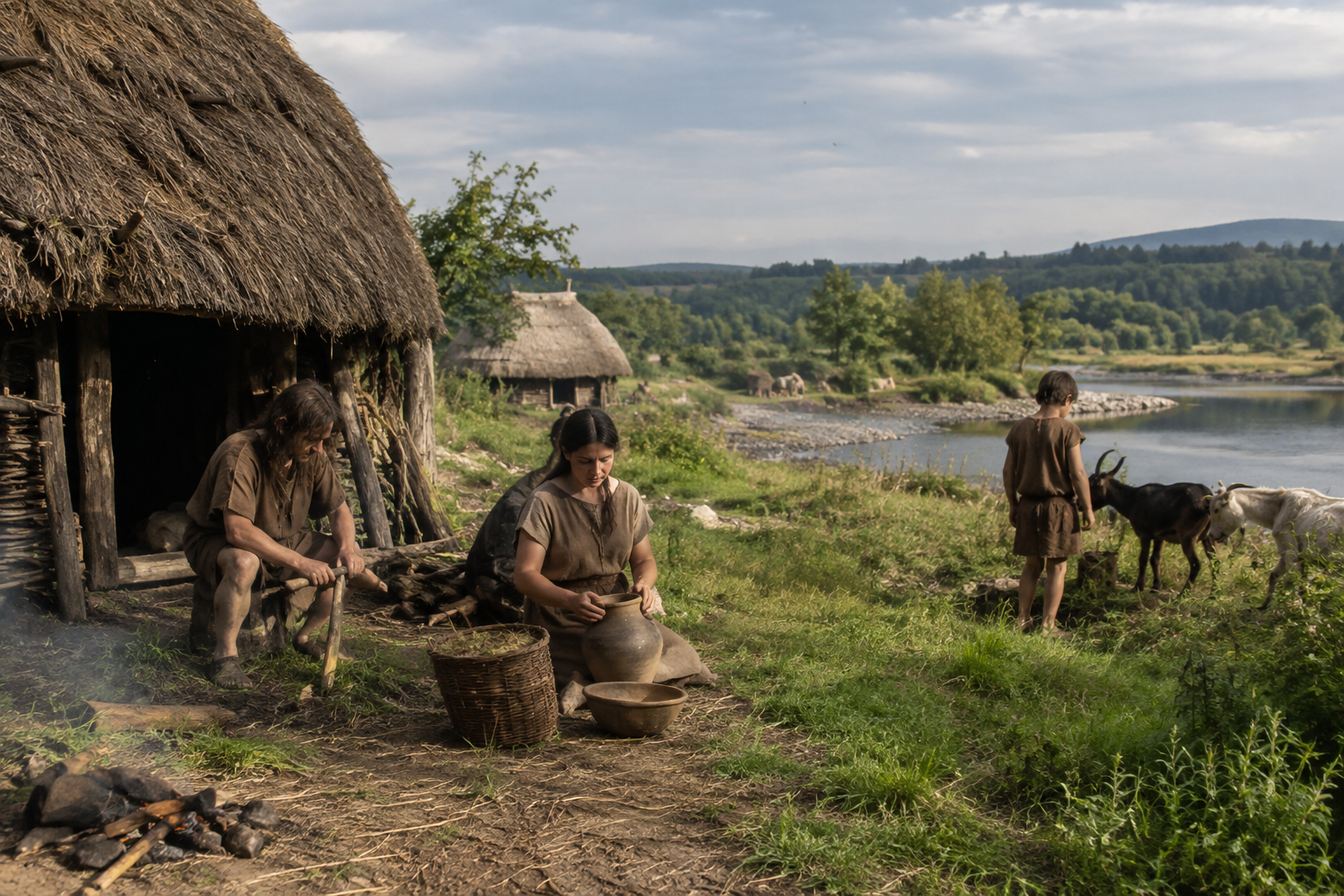
In Iron Age Central Bohemia, at Prague-Jinonice, one excavated individual offers a very precise little window into paternal ancestry: sample I13780, dated to around 300 BC. He is the kind of find archaeologists value because he is specific in both time and place. He belonged to a community living in a region that sat between major cultural worlds of later prehistoric Europe, where contacts, mobility, and local continuity all mattered.
For people exploring the Y-DNA haplogroup R1a1a1b1a1a1c1a3a, this sample is important because it anchors that paternal line, or a reported association with it, in Iron Age Bohemia. That does not tell us everything about the man, still less about an entire people. Y-DNA follows one direct male line only. But even one well-placed ancient result can show where a lineage was present in a documented archaeological landscape, and in this case the landscape is a fascinating one.
Bohemia in the centuries before the Roman Empire was no backwater. It was a crossroads. Routes through the Elbe and Danube worlds connected Central Europe to the Alps, the Carpathian Basin, and regions farther north and east. A man buried near Prague around 300 BC was living in a zone shaped by exchange, shifting identities, and long local histories.
That matters because haplogroups do not move by themselves. People do. And people in Iron Age Bohemia lived in communities that were part of broad cultural networks while also remaining intensely local. Sample I13780 is therefore most useful not as a mascot for a tribe or language, but as evidence that this paternal branch had a place within the male ancestry of Central Europe at this date.
A major ancient DNA study of European population history brought together evidence from precisely these kinds of burials and regions, helping show how Iron Age populations often combined deep regional continuity with changing cultural connections over time. See the research here: https://www.nature.com/articles/s41586-021-04287-4.
Central Europe and Celtic origins
The haplogroup name here is extremely narrow: R1a1a1b1a1a1c1a3a. That is not the same thing as talking loosely about all of R1a, a very broad Y-chromosome family with a long and complicated history across Eurasia. Broad R1a patterns stretch across enormous distances and many periods. This article's branch is much more specific, and the evidence here places it in at least one ancient man from Iron Age Bohemia.
This distinction is worth making because it is very easy to let a famous parent haplogroup swallow the real story. Once a lineage is broken down into smaller subclades, the historical picture often becomes more local, more contingent, and more interesting. A sub-branch may have spread with one cluster of families, persisted quietly in one region, or turned up in several neighboring zones without ever representing a whole culture.
So the proper historical question is not, "What were all men of this haplogroup?" It is, "In what communities do we actually find it?" For R1a1a1b1a1a1c1a3a, the present ancient evidence supplied here points firmly toward Iron Age Central Europe, and specifically Central Bohemia.
Central Bohemia has a habit of appearing in big European stories. It lies in a region shaped over many centuries by movements of people, the spread of metalworking traditions, changing settlement systems, and the rise of the large social worlds archaeologists label Hallstatt and La Tene. By 300 BC, communities in this region were part of an Iron Age Europe that was anything but isolated.
That wider setting helps explain why a Y-lineage in Prague-Jinonice cannot be reduced to a simple ethnic label. Archaeology can often identify cultural practices, material styles, and regional connections; genetics can identify ancestry patterns and kin links; historical language belongs to yet another category. One ancient Y-chromosome result is most powerful when it is kept tied to the burial ground and the period we actually know.
Still, there is a clear historical payoff. If your paternal line belongs to R1a1a1b1a1a1c1a3a, I13780 shows that this lineage, or a very closely associated reported branch, was already present in Central Bohemia in the Iron Age. That is a concrete fact, and it places your direct male line within one of the most important interaction zones of prehistoric Europe.
No single burial begins a lineage. By the time of I13780, Central Europe had already passed through millennia of demographic change. Earlier prehistoric expansions had introduced and reshaped many paternal lines, including branches of R1a, across wide parts of the continent. By the Iron Age, what we see is not a first arrival but a later chapter: lineages living inside established regional populations.
That is one reason Iron Age samples are so valuable. They show which male lines were still present after the great upheavals of the Bronze Age. Rather than treating Central Europe as a corridor people merely passed through, these burials remind us that it was also a homeland, a place where ancestry settled, mixed, and persisted.
Bohemia is especially good for this kind of question because it stands between several later centers of historical development. A lineage present there around 300 BC might later appear in populations connected to Germanic-, Celtic-, or Slavic-speaking worlds, not because Y-DNA determines language, but because the same region remained important across successive historical eras.
One of the most interesting things about ancient DNA is that even sparse evidence can sharpen a map. I13780 does not give us a dynasty, a named tribe, or a heroic biography. What he gives us is better than romance: a securely ancient male line in a real archaeological context. That is how serious population history is built.
As more Iron Age and early medieval burials from Central Europe are studied, lineages like R1a1a1b1a1a1c1a3a may become easier to track through time. We may learn whether this branch was concentrated in a narrow regional pocket, spread across neighboring populations, or linked to later demographic changes in the centuries around the Roman period and after. For now, Prague-Jinonice remains an important anchor point.
Ancient DNA and Moravian shifts
The most distinctive thing we can say about R1a1a1b1a1a1c1a3a from the evidence here is that this paternal line is not floating in abstraction. It is grounded in an actual Iron Age individual from Central Bohemia, sample I13780, living around 300 BC in a region central to later European history. For someone researching a direct paternal line, that is a meaningful clue: your ancestry may connect, through one male branch, to the long-settled and highly connected societies of Iron Age Central Europe.






Comments