Haplogroup I1a1b2a
– 5 min read


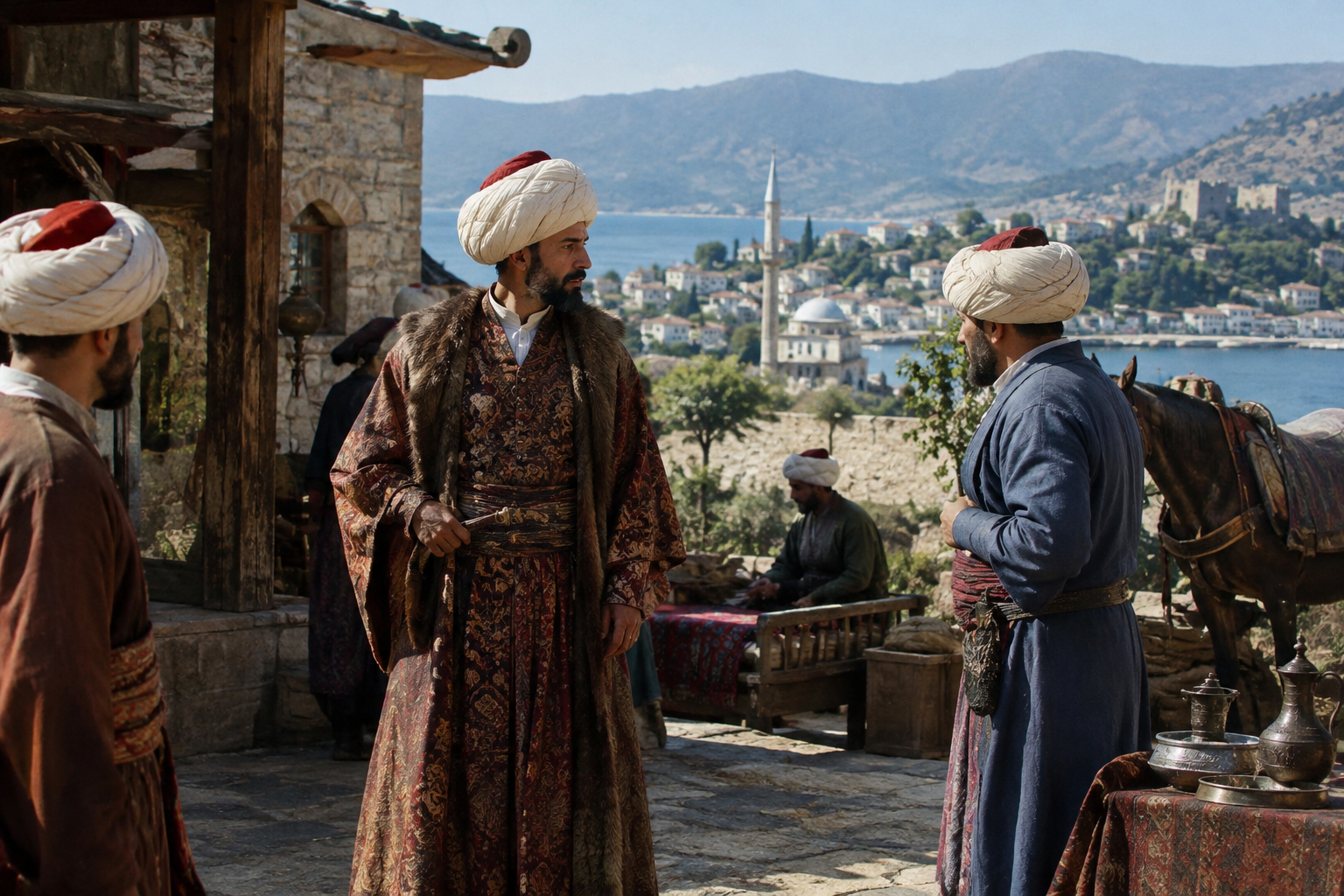
One of the more arresting clues for haplogroup I1a1b2a comes not from a Viking ship burial or an early medieval cemetery in the North, but from Ottoman-period southwestern Turkey. The sample I20571, dated to 1531 AD, was recovered at Yatagan in Mugla, in the Aegean zone of modern Turkey. On the face of it, that is already interesting: a paternal line best known as part of the broader I1 family, which has deep associations with northern Europe, appearing in a sixteenth-century Ottoman context.
That does not turn one man into a migration map, and it certainly does not make Y-DNA an ethnic label. But it does give us something concrete to think with. Y-DNA follows one direct paternal line only, and sample I20571 shows that a branch reported here as I1a1b2a had reached, or persisted in, the eastern Mediterranean by the early modern period. In historical terms, Mugla was no backwater. It sat inside a region shaped for centuries by Greek, Byzantine, Turkic, and wider Mediterranean connections.
The wider haplogroup I1 is most famously associated with northern Europe, especially Scandinavia and regions influenced by Germanic migrations. That wider story is useful background, but it must be handled carefully. A narrower branch such as I1a1b2a is not automatically entitled to every sweeping claim ever made about I1 as a whole.
What makes I20571 valuable is precisely that it anchors the discussion in a documented person, place, and date. By 1531 AD, the Ottoman world was a vast imperial system linking the Balkans, Anatolia, the Aegean, the Black Sea, the Levant, and beyond. A paternal line with deeper roots further north or northwest could enter that world through many ordinary historical processes: soldiering, trade, slavery, conversion, resettlement, marriage, or older Byzantine and post-Byzantine population layers.
That is one of the enduring lessons of ancient DNA. Lineages travel in ways that political maps and tidy ethnic labels often fail to capture.
Southwestern Anatolia has a long and crowded history. Long before the Ottomans, this coast and its inland valleys belonged to the worlds of classical Caria, Hellenistic kingdoms, Rome, and Byzantium. Ports, market towns, upland routes, and military corridors tied the region to the Aegean islands and the wider Mediterranean. So when a northern-associated Y-chromosome branch appears here in the sixteenth century, it fits a landscape that had been mixing populations for a very long time.
The Ottoman setting matters too. Early modern empires were not genetically neat containers. Men moved through them as cavalrymen, sailors, artisans, tax officials, migrants, captives, and converts. Some paternal lines arrived recently; others may have been present in Anatolia or the Aegean for centuries before the Ottoman state took shape. With only this sample in hand, we should resist choosing one route too confidently.
Research on the region's population history has increasingly shown that the eastern Mediterranean was not sealed off from Europe, nor Europe from Anatolia. A major ancient DNA study of the broader Mediterranean world, published in Science, helped underline just how mobile and interconnected these societies could be across long stretches of time. That broader pattern gives sensible context for finding a lineage like I1a1b2a in Ottoman Mugla, even if it does not by itself prove the exact biography of I20571.
If we are trying to imagine how an I1-related paternal line might end up in western Anatolia, several historical layers deserve attention. The first is the long movement of people associated with late Roman and early medieval Europe. Germanic-speaking groups, mercenaries, federates, and migrants did not remain in the North. Some passed through the Balkans; some entered imperial armies; some settled in territories much further south.
The second layer is the Byzantine and post-Byzantine Aegean. This was a maritime zone, not a border wall. Scandinavians are visible in Byzantine history through the Varangian Guard, and northern or eastern European individuals could be absorbed into imperial service, trade networks, and local populations over generations. It would be absurd to claim that sample I20571 was somehow a direct "Varangian" on genetic grounds alone. But the wider historical environment certainly allows for northern paternal lines to become part of Aegean society.
Then there is the Ottoman layer itself. Ottoman Anatolia and the Balkans were full of population movement: frontier settlement, military recruitment, enslavement, relocation policies, and circulation through ports and garrisons. In that world, a lineage like I1a1b2a need not be surprising at all. What is surprising is only how often older popular histories imagined regions as biologically separate when, in fact, they were deeply entangled.
Because the evidence here is sparse, the discipline lies in saying enough, but not too much. I20571 is a real data point from a real place and date. It supports the presence of a paternal line reported within the article's branch, I1a1b2a, in Ottoman-period Mugla. That alone is worth notice, because it places this haplogroup in a setting far from the branch's usual popular associations.
What it does not do is identify the man's spoken language, community identity, religion, legal status, or recent family origin. He may have belonged to a family established locally for many generations, or descended from a more recent arrival somewhere within the Ottoman sphere. Nor can one sample stand for all Mugla, all Ottomans, or all men carrying related I1 lineages.
Still, single finds matter. Archaeology is full of cases where one burial, one grave cluster, or one genome forces us to ask better questions. Here the better question is not "Was this man really northern European?" but "How did paternal lines circulate through the connected worlds of the Aegean and Anatolia?" That is a much more historical question, and a much more interesting one.
Popular imagination tends to trap haplogroups inside modern maps. I1 becomes "Scandinavian," full stop, as though centuries of warfare, service, exchange, conversion, and marriage never happened. The find from Yatagan quietly undermines that simplification. By the sixteenth century, the eastern Mediterranean contained lineages with many different histories behind them, some local, some imported, and many impossible to reduce to a single label.
Ancient DNA studies from other regions have repeatedly shown the same thing: medieval and post-medieval societies were often more mixed than older national stories allowed. That is why it helps to read isolated Y-chromosome results alongside broader archaeological work on mobility and regional change.
For someone researching a present-day paternal line in I1a1b2a, the most responsible takeaway is not a promise of one dramatic homeland, but a reminder of historical range. This branch sits within a wider paternal family often linked to northern Europe, yet the sample from Ottoman Mugla shows that such lineages could also be woven into the Aegean world by the early modern era. The past was messier, more mobile, and far more cosmopolitan than tidy origin stories suggest.
That is the real value of I20571. He is not a mascot for a nation or a tribe. He is evidence that one paternal line had become part of the human landscape of southwestern Turkey in 1531 AD - and that even a narrow haplogroup branch can open onto the large, complicated history of empires, coastlines, and movement.






Comments