Haplogroup G2a2b2a1a1b1a1a2

– 5 min read


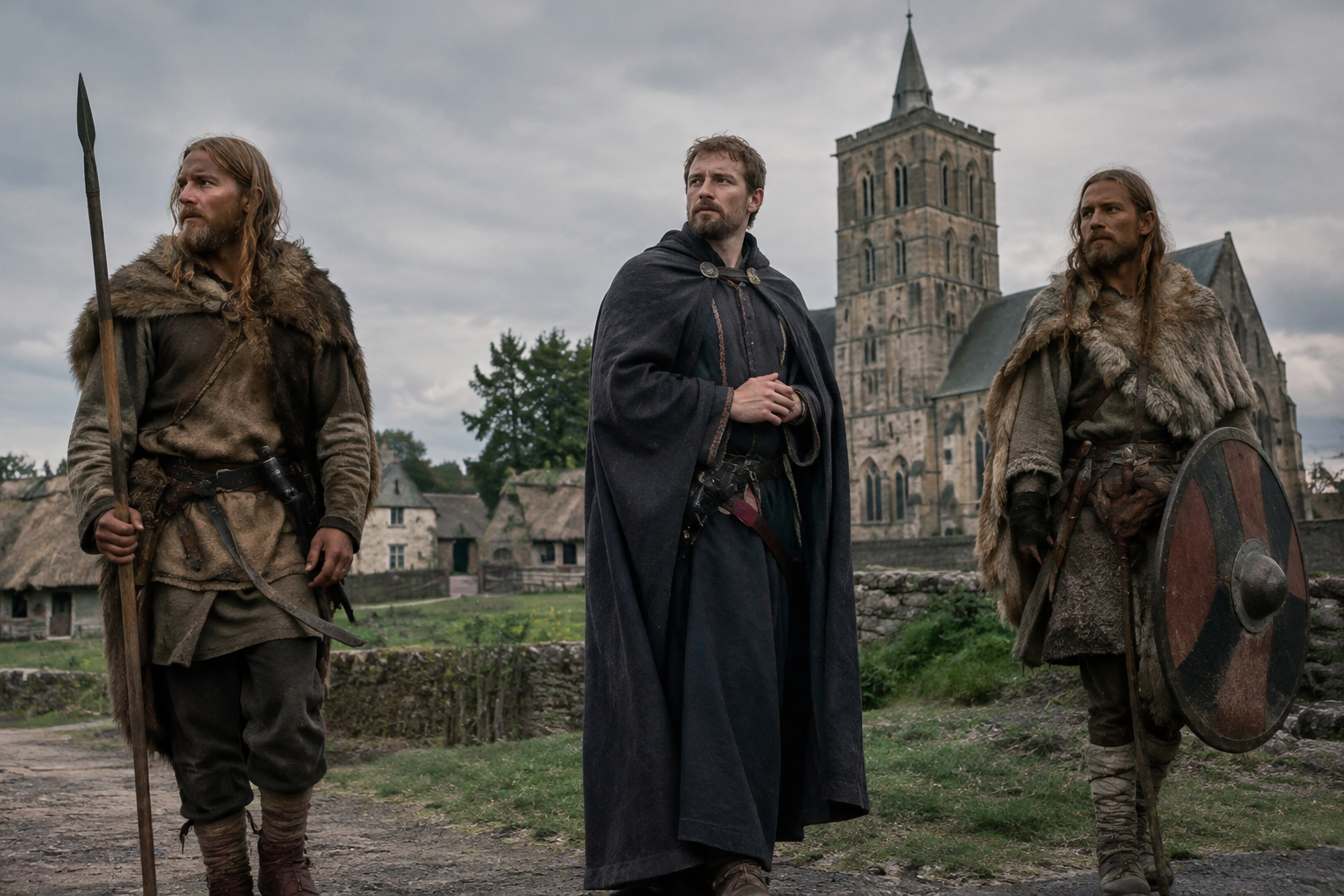
At Kowalewko in Pomerania, archaeologists uncovered an Iron Age cemetery linked to the Wielbark cultural horizon, a world that sat on the southern Baltic coast during the first centuries AD. Among the men from this cemetery is sample PCA0036, dated to around AD 115. He matters here because he anchors the Y-DNA haplogroup G2a2b2a1a1b1a1a2 in a very specific setting: not in a vague story about "ancient Europe", but in an excavated burial ground tied to a real community living in Roman-period northern Poland.
That alone is interesting, because G lineages are often associated in the public imagination with much earlier Neolithic farmers. Yet this much narrower branch appears here in a later, mobile, culturally mixed landscape. Y-DNA traces one direct paternal line only, not a person's whole ancestry, but when the same lineage appears in both Iron Age Pomerania and medieval Belgium, it gives us a small but suggestive thread running through very different European worlds.
The best starting point is the Kowalewko cemetery itself. The site belongs to the Wielbark cultural sphere, which is archaeologically important because it lies in a region long discussed in connection with population movement around the Baltic during the Roman Iron Age. Sample PCA0036, dated around AD 115, places this paternal branch in that milieu with unusual clarity.
A second man from the same broad region strengthens the pattern: PCA0027, listed from Iron Age Pomerania at Kowalewko and associated with the Rugii, dated around AD 100. That tribal label should be handled carefully. Archaeology, genetics, and names preserved in later texts are not the same thing, and a grave in Pomerania does not automatically prove personal ethnic identity. Still, the pairing of PCA0036 and PCA0027 shows that this was not a one-off appearance of the lineage in the southern Baltic zone.
What makes Kowalewko so valuable is not romance but context. Cemeteries like this let us see lineages as part of communities rather than isolated curiosities. A research paper on the site and its population history is linked here: https://www.nature.com/articles/s41598-018-20705-6. Even without pushing beyond the evidence, the site shows that this paternal branch was present in an Iron Age society often discussed in relation to contacts across the Baltic and toward the Roman frontier.
Goths as a multi-ethnic community
The haplogroup in this article is G2a2b2a1a1b1a1a2, a very fine-grained paternal label. That matters because the broader haplogroup G has a deep and complicated history across West Eurasia, but the appearance of this exact subclade in the ancient record is much narrower. It would be wrong to collapse the whole parent branch into a single migration story and then lay that story directly over these two graves in Pomerania.
What we can say is more modest and more useful. By the early second century AD, a paternal line reported as belonging to this branch was present in the Baltic-side world of Kowalewko. That places the lineage within the human traffic of Iron Age north-central Europe, where local continuity, marriage networks, and longer-distance movement all played their part.
This is why ancient DNA is most powerful when it stays close to the ground. Not "a people" in the abstract, but PCA0036 and PCA0027 in a real cemetery, at a real time, in a region that mattered historically. That is a much firmer footing than grand claims about tribes marching neatly from one map to another.
The other striking appearance of this lineage comes much later and much farther west: ST1039 from Sint-Truiden Onze-Lieve-Vrouwekerk in medieval Belgium, dated around AD 900 and described as an outsider. That word, "outsider", is the sort of term that deserves attention. It suggests that the individual stood out in some way within the burial population, though not necessarily for a single simple reason.
Now the story becomes properly historical. Around AD 900, Sint-Truiden was part of a developing medieval landscape shaped by Christian institutions, local lordship, and growing settlement networks in the Low Countries. Finding the same Y-lineage here does not mean a straight genealogical line can be drawn from Kowalewko to Belgium across eight centuries. But it does show that this paternal branch was not confined to one Iron Age pocket. It reappears in a very different social world: early medieval, ecclesiastical, and western.
Research on medieval Sint-Truiden and its population structure has explored how urbanization and local genetic patterns interacted in that community. A relevant ancient DNA study is linked here: https://genomebiology.biomedcentral.com/articles/10.1186/s13059-025-03580-z. For this haplogroup, ST1039 expands the map decisively. We are no longer just in the Baltic sphere; we are in the Carolingian and post-Carolingian west.
Three samples are not a dynasty, and they are certainly not a whole population. But repetition matters in ancient DNA, especially for a narrow paternal branch. Here the repeated appearances form a small, coherent pattern: two men in Iron Age Pomerania around AD 100-115, and one man in medieval Belgium around AD 900.
That pattern suggests durability rather than spectacle. Some paternal lines flare brightly in one cemetery and vanish from the record we happen to have. Others turn up in widely separated places and periods, reminding us that European history was built from many such threads: local families, shifting frontiers, traders, migrants, soldiers, converts, settlers, and their descendants. G2a2b2a1a1b1a1a2 seems, at least from this evidence, to belong to that second kind of story.
There is also a useful corrective here to older habits of thought. Archaeologists once leaned heavily on culture labels as if pottery, burial custom, language, and ancestry all travelled together in a single package. These three men warn against that. One branch can be present in a Roman-period Baltic cemetery and later in a Christian burial context in the Low Countries without obliging us to invent a single ethnic explanation.
Cosmopolitan Goths in Barbaricum
It is worth pausing over the geography of the earliest finds. Pomerania was not a remote backwater in the first and second centuries AD. It sat in a corridor of exchange linking the Baltic coast, the Vistula basin, and the wider networks of Roman Europe. Amber, contacts, and movement across sea and land all helped make this a connected frontier zone.
That does not tell us where the branch originated, and the evidence here is far too thin for that. But it does explain why Kowalewko is such a revealing place to find it. A paternal lineage preserved in this cemetery was part of a region where identities were being made and remade through contact, rather than sealed off in isolation.
For readers interested in the wider early medieval Baltic setting, another useful comparison is this post on Baltic connections in early medieval Finland, which shows how connected these northern regions could be even when their archaeological signatures looked distinct.
Baltic connections in early medieval Finland
The most distinctive thing about G2a2b2a1a1b1a1a2 in the present evidence is its appearance in two very different historical settings: Iron Age Pomerania on the Baltic and early medieval Sint-Truiden in Belgium. That does not hand anyone a ready-made tribal badge or a neat family legend. What it does offer is something better grounded: a paternal line already moving through, or at least present within, important European contact zones long before modern surnames.
If this is your haplogroup, the ancient evidence points toward a branch with documented roots in Roman-period north-central Europe and later presence in the medieval west. It is a small record, but a vivid one: a Baltic cemetery, an early medieval church site, and a lineage that turns up where archaeology meets mobility.






Comments