Haplogroup E1b1b1a1

– 6 min read


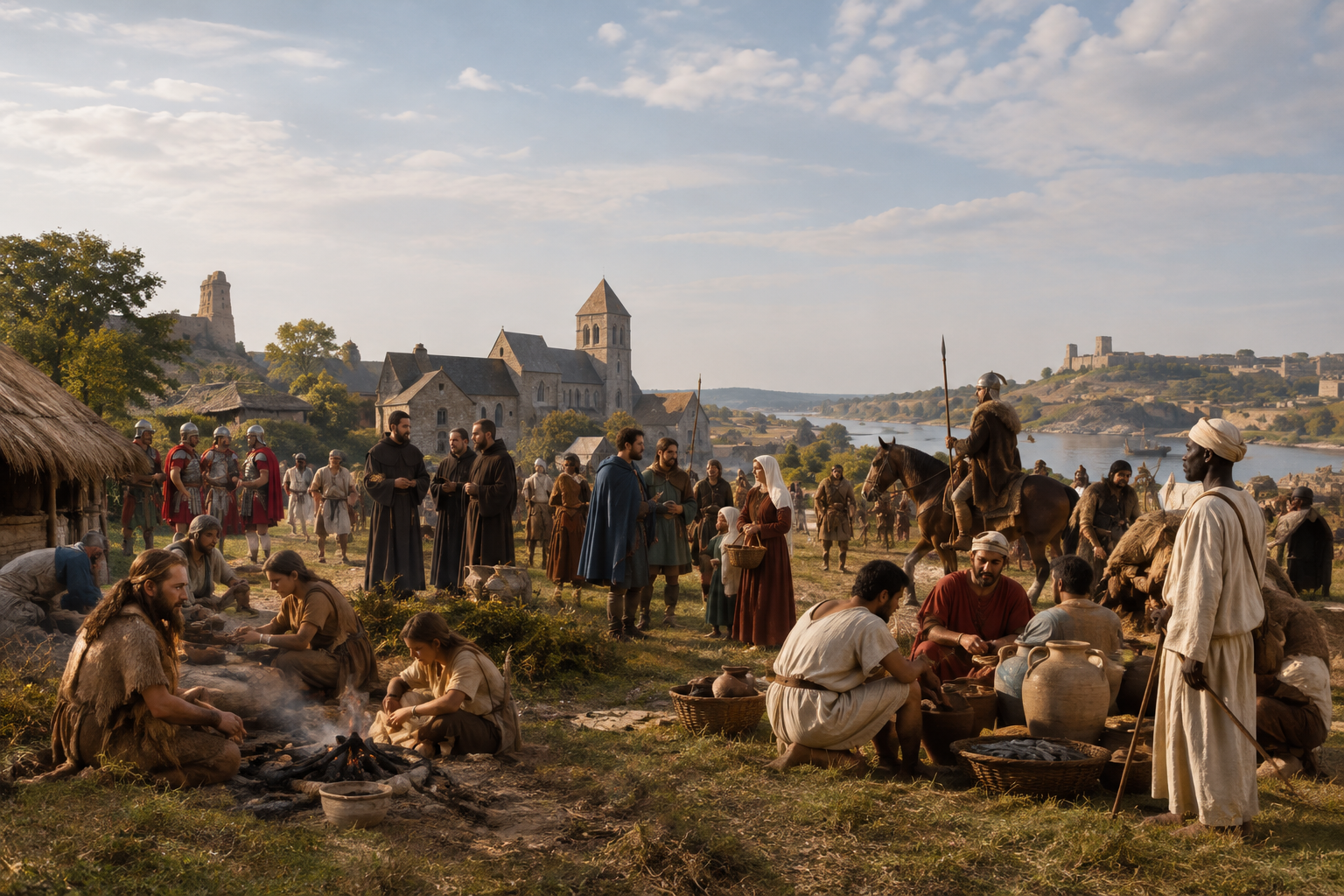
There is something wonderfully awkward, in the best historical sense, about haplogroup E1b1b1a1. It refuses to sit neatly inside modern national boxes. Instead, it appears across a broad sweep of the Mediterranean, the Balkans, parts of Africa, and later medieval Europe, turning up in contexts that remind us how mobile men, families, soldiers, traders, monks, and farmers could be long before passports and nation-states. That is precisely why it is interesting.
Y-DNA haplogroups like E1b1b1a1 trace one very specific line of descent: the direct paternal line, from father to son to son again. They do not describe a person's whole ancestry, culture, or identity. Still, they are powerful historical tools. Within the wider Y-chromosome tree, E1b1b1a1 belongs to haplogroup E1b1b, a major branch with deep importance in the history of the Mediterranean world, northeast Africa, and southeast Europe. For this more specific branch, ancient DNA is especially useful because it shows not a single people, but a long and rather untidy history of movement, settlement, and continuity.
One of the great temptations in genetic history is to demand a single birthplace and a simple migration arrow on a map. Human history is rarely so obliging. E1b1b lineages are widely associated in broad terms with the Mediterranean world and nearby regions, and some branches are closely tied to the spread of early farming into Europe as well as later movement around the Balkans and Mediterranean coasts. But for a narrower lineage such as E1b1b1a1, caution matters. We should not simply pour the whole history of the parent haplogroup into this one sub-branch.
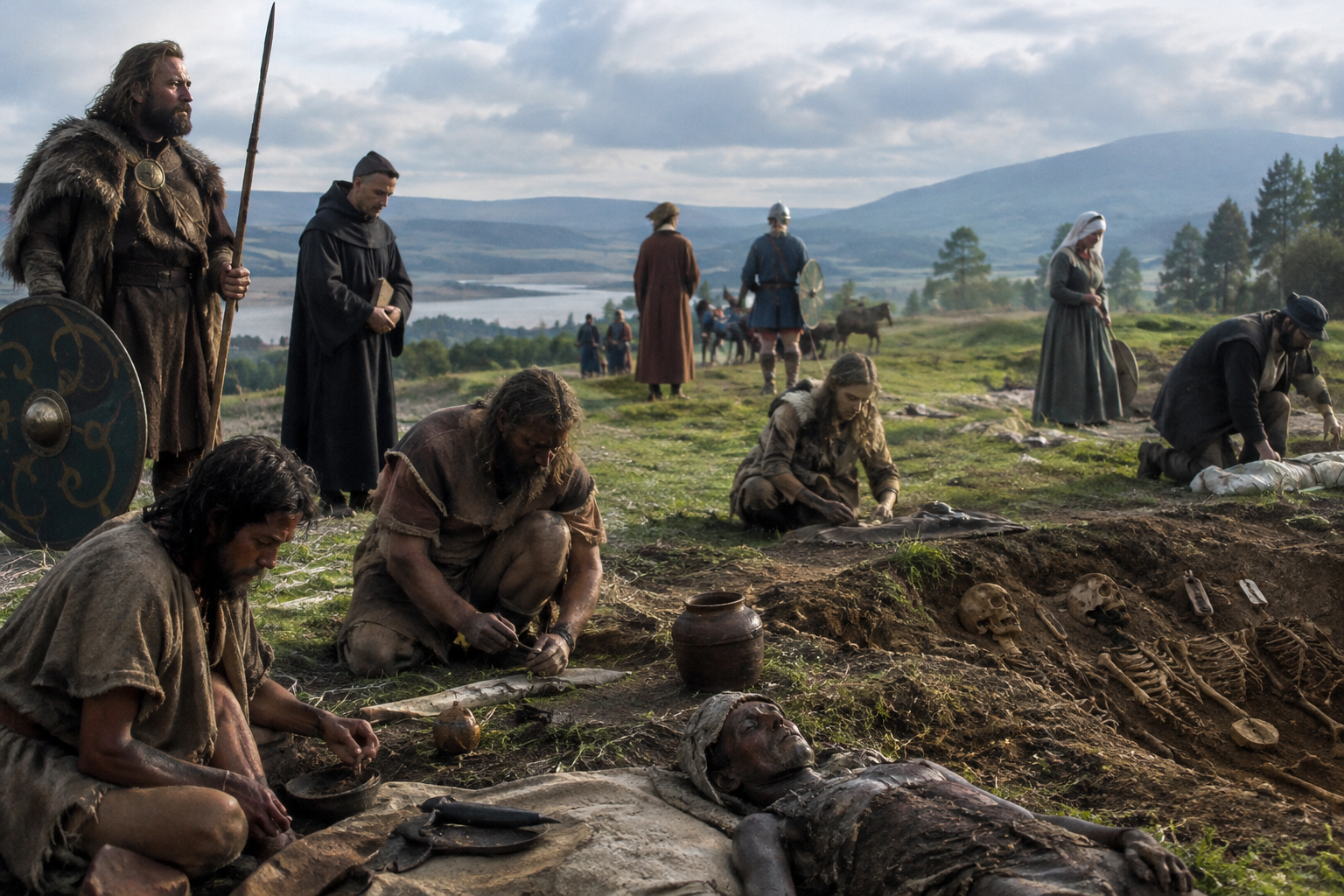
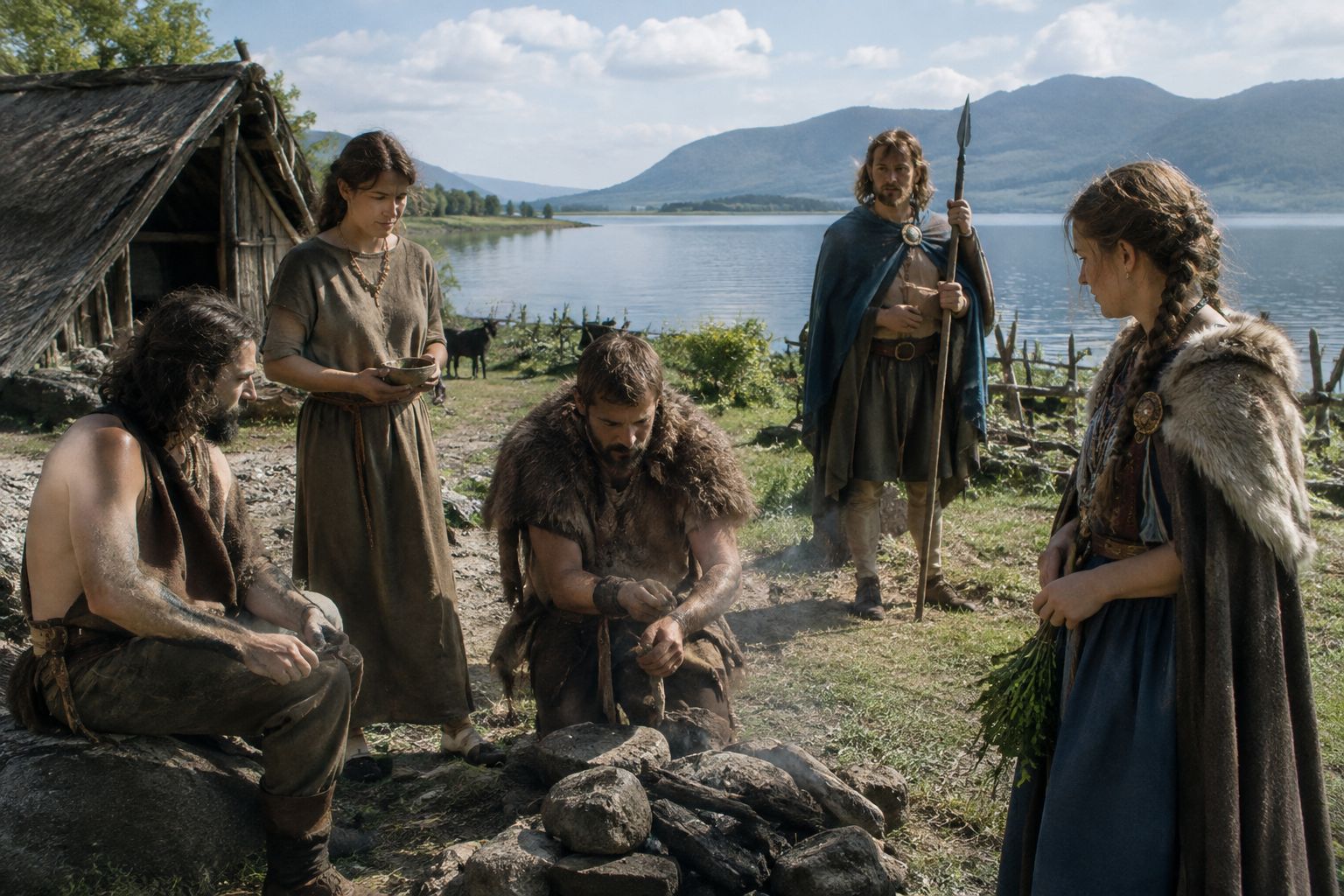
Even so, the ancient record does offer clues. A striking early appearance comes from I27776, from the Neolithic Massacre Austria Asparn Schletz, dated to 5000 BC. Asparn-Schletz is one of those haunting early farming sites that reminds us the Neolithic was not just about peaceful village life and tidy textbooks about agriculture. It could also be violent. The presence of this paternal line in a Neolithic Austrian context suggests that branches related to E1b1b1a1 were already part of the human landscape of early farming Europe.
That matters because it places this lineage in Europe very early, not as some late medieval novelty, but as part of a much older story. It also fits a broader archaeological picture in which early European farmers did not all carry the same paternal lines. The first farming communities were genetically varied, and their descendants were shaped by local continuity, regional mixing, and later migrations.
By the first millennium BC, E1b1b1a1 appears in settings that feel unmistakably Mediterranean. Two samples from ancient Thrace stand out: I19490 from Thracian Kapitan Andreevo Bulgaria and I19487 from Thracian Svilengrad Haskovo Bulgaria, both dated to 800 BC. These finds place the lineage in the southeastern Balkans, a region that has long been important for understanding the movement of people between Anatolia, the Aegean, and Europe.
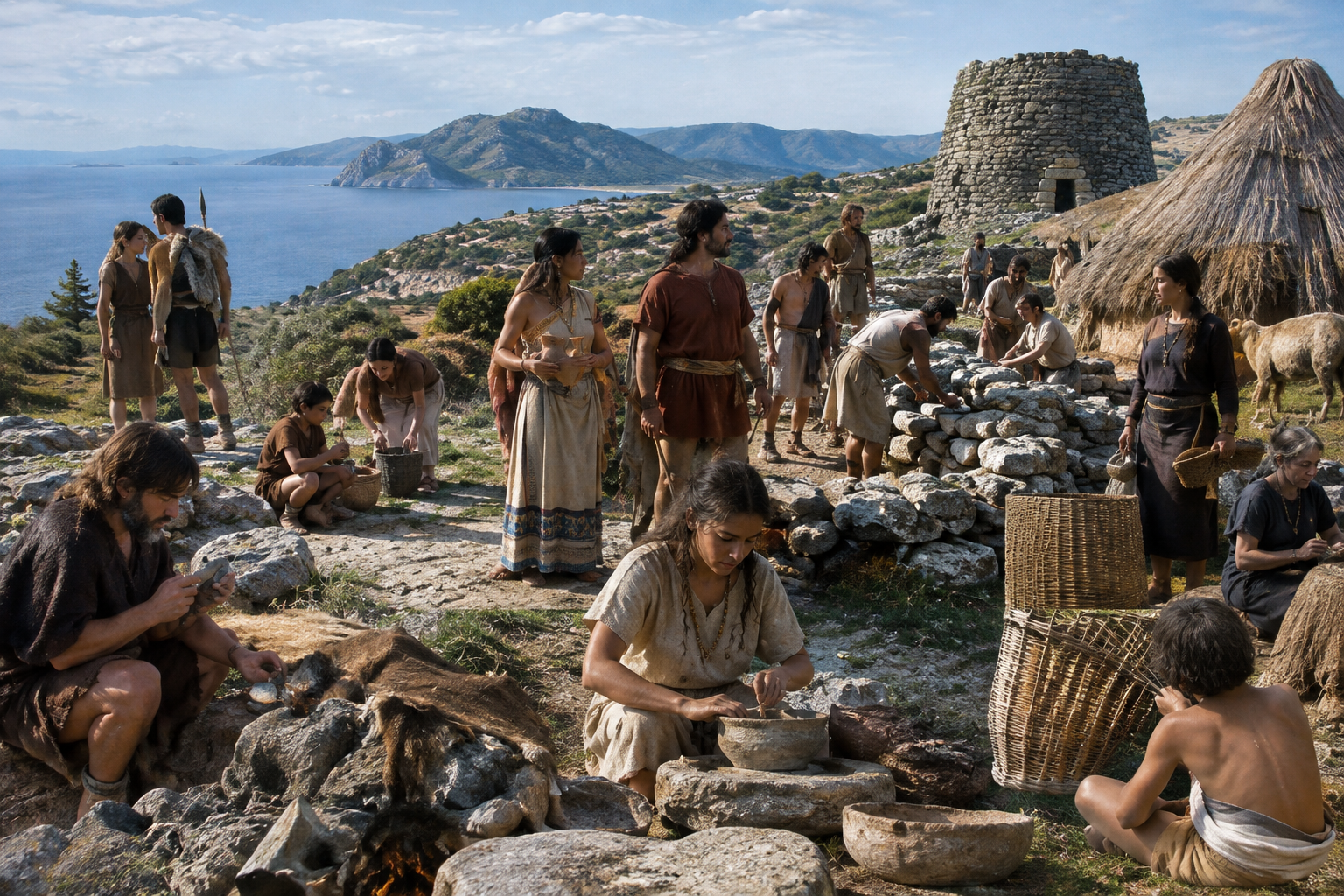
Then the line turns up farther west in explicitly maritime worlds. I22118, from Hellenic-Carthago Italy Sardinia Tharros, dated to 639 BC, sits in one of the Mediterranean's great crossroads: Sardinia. Tharros was connected to Phoenician and later Carthaginian networks, and its archaeological setting makes a good reminder that the sea connected rather than divided ancient populations.
The western trail continues with I18202 from Punic Spain Almera Cuevas del Almazora Villaricos, dated to 280 BC. Villaricos was part of the Punic sphere in Iberia, and this sample is a useful warning against simplistic ideas of isolated Iron Age peoples. Men carrying this paternal line could be found in communities tied into trade, empire, and colonization around the western Mediterranean.
Put these Balkan and western Mediterranean samples together, and a pattern emerges. E1b1b1a1 was not confined to one corner of the map. It moved - or persisted - across regions linked by commerce, colonization, and political power. Not proof of one grand migration, but evidence of repeated historical entanglements.
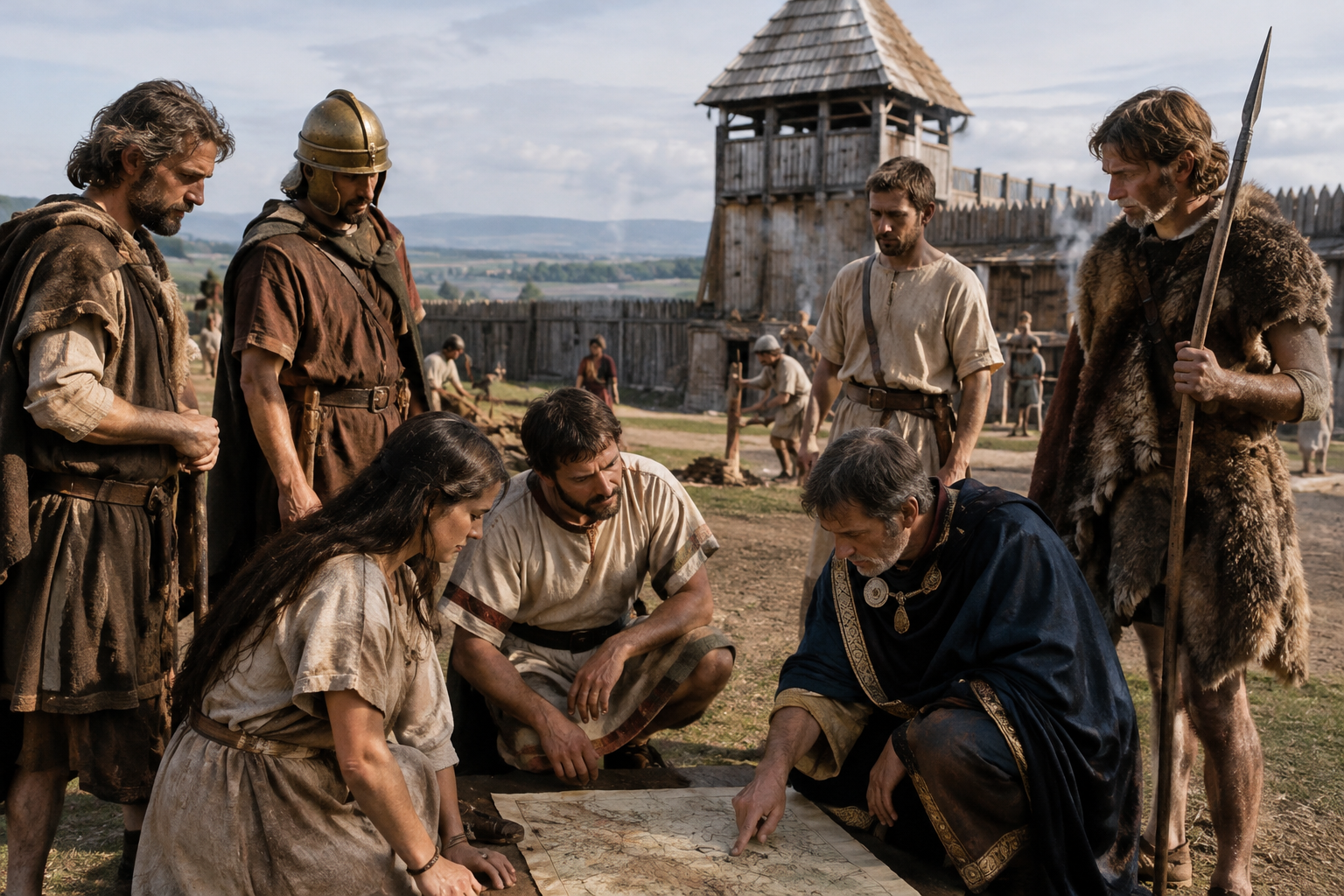
The Roman period sharpens the picture. In Hispania, two imperial-era samples carry the story forward: I29535 from Imperial Roman Spain Tarragona La Selva del Camp Barranc de Sales, dated to 300 AD, and I20391 from Imperial Roman Spain Girona Sarria de Ter Pla de lHorta, dated to 350 AD. Here we are firmly in the world of Roman roads, military service, estate agriculture, cities, and movement on a scale the ancient world had rarely seen before.
This does not mean every bearer of the haplogroup in Roman Spain was a migrant from the same homeland. Some may represent local paternal continuity from earlier Mediterranean populations; others may reflect mobility within the empire. That ambiguity is not a weakness. It is the history. Rome was full of people whose family stories did not begin where they were buried.
The same lesson appears farther east. In the Carpathian Basin, RKF223 from Migration Period Hungary Rakoczifalva, dated to 650 AD, and RKF214 from Late Avar Period Outlier Hungary Rakoczifalva Szolnok, dated to 750 AD, show the lineage in an early medieval frontier zone where post-Roman, steppe, and local European populations all met. The word outlier attached to RKF214 is especially suggestive: not everybody in such cemeteries fitted a single biological or cultural mold.
And then there is I19143 from Kulubnarti Makurian Nubia, dated to 825 AD. This is perhaps the most salutary sample of all. Medieval Nubia was Christian, literate, connected to the Nile world, and hardly a historical footnote. Its inclusion reminds us that paternal lineages do not respect the tidy mental boundaries modern readers often impose between "European," "Mediterranean," and "African" history.
By the High Middle Ages, E1b1b1a1 appears in places many readers may find surprising. In England, several medieval burials carry the lineage: ATP_PSN_438 from Medieval England Cambridge St Johns Hospital dated to 1200 AD, ATP_PSN_703 from Late Medieval England All Saints dated to 1150 AD, and two from Medieval England Augustinian Friars, ATP_PSN_508 and ATP_PSN_515, both dated to 1290 AD.
These are not kings in golden tombs. They are, in a way, better than that: ordinary and semi-ordinary people embedded in real medieval institutions - hospital, parish, friary. They show that this paternal line had become part of the lived population history of England. Whether through much earlier Roman-era movement, medieval migration, trade, clerical mobility, or older continental connections, the line was there.
Farther east, PCA0558 from Medieval Piast Era Poland Silesia Milicz, dated to 1100 AD, places the lineage in Piast-period Poland. Again, one must not leap from shared haplogroup to dynastic descent. But it does place this paternal branch within the same historical landscape in which early Polish state formation, frontier lordship, and church expansion were taking shape.
In this case, the supplied field for associated noble families and castles is empty, and that is actually worth saying plainly. It means we should resist the usual seductive leap from an ancient or medieval Y-line to a named noble house with a convenient castle on a hill.
That restraint is part of doing this history properly. A haplogroup can be historically associated with a region in which noble families later flourished, but that does not prove those families carried the lineage, still less that all branches of a surname or dynasty did. Written genealogies, adoptions, non-paternal events, cadet lines, and simple lack of testing all complicate the matter.
What castles and great houses do preserve, however, is the geography of memory. If E1b1b1a1 appears in medieval England, Poland, Hungary, Iberia, Sardinia, Thrace, and Nubia, then it belongs to the same broad human world from which castles, monasteries, lordships, and dynasties emerged. Genetics gives us the buried men; history gives us the institutions around them. Each is incomplete without the other.
The real fascination of E1b1b1a1 lies in its spread across very different settings: a Neolithic massacre site in Austria, Thracian Bulgaria, Punic and Roman Iberia, Sardinia, early medieval Hungary, Christian Nubia, and medieval England and Poland. That is not the biography of a single people. It is the record of a paternal lineage moving through, or persisting within, many societies over thousands of years.
And this is why ancient DNA has changed the conversation. Traditional genealogy usually begins with documents and often with the fortunate classes. Ancient DNA starts somewhere else entirely: in cemeteries, frontier settlements, mass graves, friaries, and forgotten hospitals. It often tells us less about famous names and more about the real demographic machinery of history.
If you want to see how these deep paternal threads connect with ancient individuals and historical populations, MyTrueAncestry lets you explore exactly that kind of evidence. Your DNA match to an ancient sample or population will not prove descent from a king, monk, or noble house, but it may place your ancestry in the same remarkable historical worlds they inhabited.
Comments