Clan Armstrong
– 3 min read


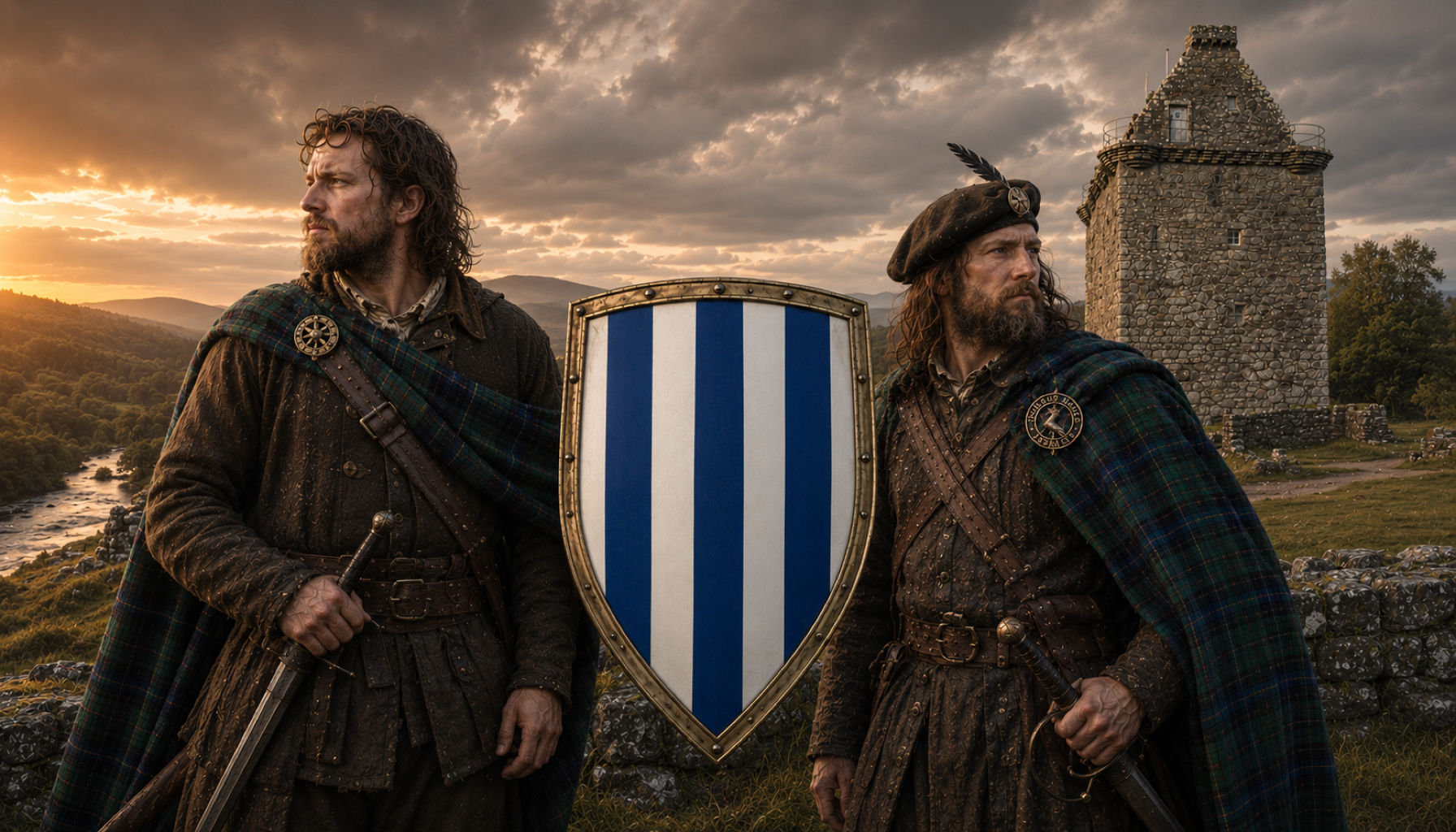
Clan Armstrong was one of the great Lowland Scottish riding families of the Border country, rooted above all in Liddesdale, Eskdale, and the western marches where Scotland and England pressed uneasily against one another for centuries. In historical memory, the Armstrongs were not a neat courtly clan standing politely under royal command. They were a hard frontier kin-group whose strength came from blood ties, horses, tower houses, local alliances, and an extraordinary ability to survive in a landscape of feuds, raids, reprisals, and shifting loyalties. Their famous motto, Invictus maneo, "I remain unvanquished," suits them perfectly. Haplogroup tags linked with the family include R1b1a1b1a1a2, which is also the primary family haplogroup associated here.
The Armstrong story belongs to that very distinctive Border world of the late medieval and early modern centuries, where crown authority often looked impressive on parchment and rather weaker on the ground. The family seems to have taken shape in the Debatable and defended lands of the Anglo-Scottish frontier, where surnames became military communities as much as family names. The Armstrongs built a formidable reputation as Border reivers, feared raiders and equally formidable defenders, and they became one of the best-known surnames in the marches. Named figures connected with the wider Armstrong story include leading members of the Lowland Scottish Clan Armstrong itself, whose chiefs and captains dominate Border tradition, and in a much later and very different age, Neil Armstrong, whose surname carried this old Border name into global modern fame. One should not casually collapse all Armstrongs into a single documented line, but the name undeniably carries a strong historical charge.
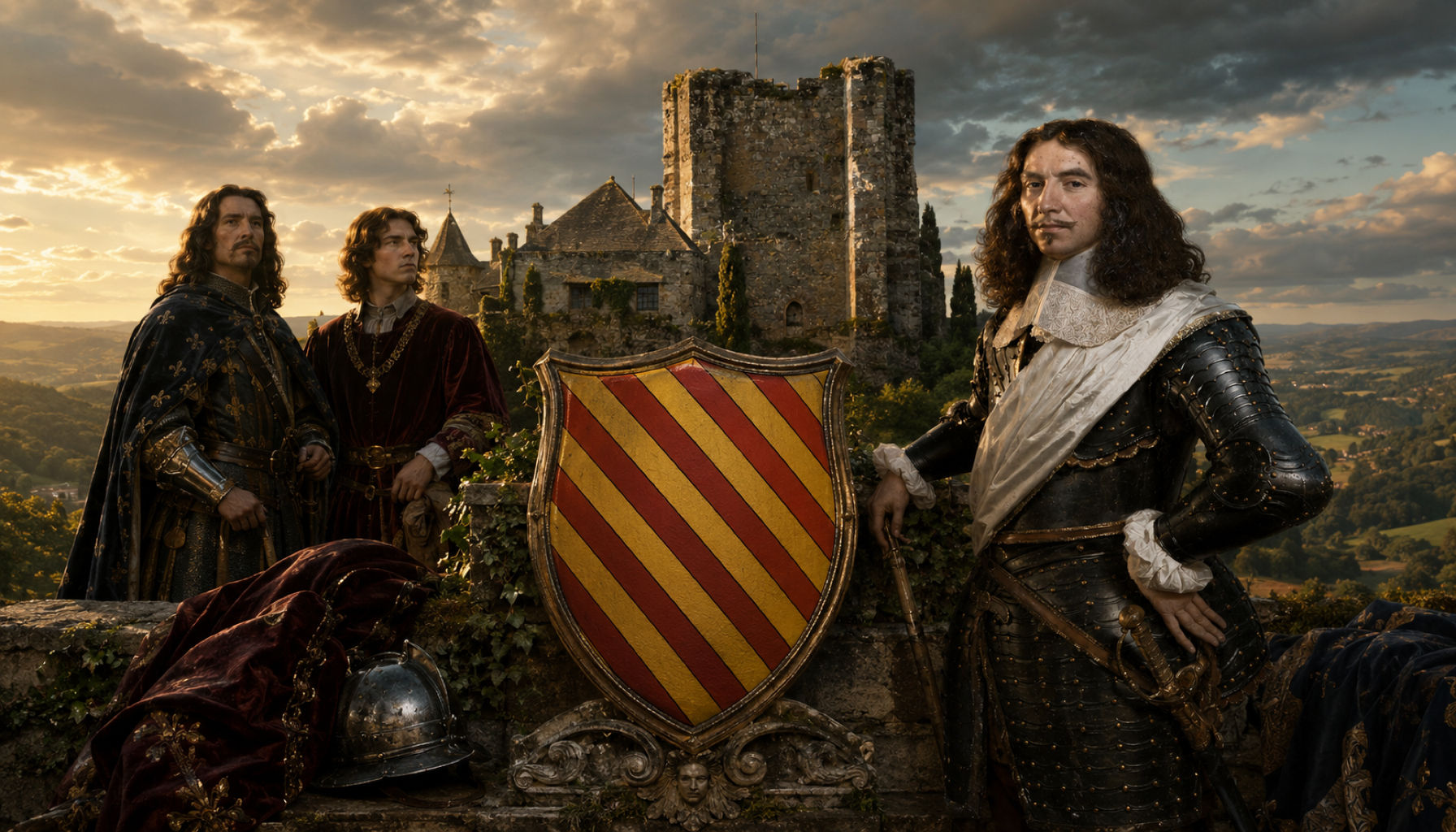
The geographic heart of Clan Armstrong is the valley country around Liddesdale in the Scottish Borders, especially near the River Liddel and the old frontier zone facing Cumberland and Northumberland. This was not an incidental backdrop. It was the making of the family. The Armstrongs were closely associated with strongholds such as Gilnockie Tower, near Canonbie in Dumfriesshire, long remembered as one of the clan's best-known seats and linked in tradition with Johnnie Armstrong of Gilnockie, perhaps the most famous Armstrong of all, executed by James V in 1530 in one of those classic moments when a king attempted to show the Borders who was master. The wider Armstrong country also touched Eskdale and the western march, an area of broken ground, rivers, mosses, and riding routes ideal for both pursuit and escape. Gilnockie Tower still exists and can be visited today, which gives the modern visitor a rare chance to stand in a landscape that still feels unmistakably Border: beautiful, exposed, and full of the memory of old violence.
From a DNA perspective, the haplogroup linked here with Clan Armstrong, R1b1a1b1a1a2, belongs to a broad and very well-attested western European paternal landscape that appears across many ancient contexts. That does not prove direct descent from any one ancient individual, and it should not be presented that way, but it does place the Armstrong-associated line within a deep network of related or linked ancient samples stretching across Celtic, Roman, medieval, and prehistoric Europe. Examples include Elite Celtic Burial Germany Magdalenenberg Villingen-Schweningen (MBG013), Elite Prince Celtic Germany Eberdingen-Hochdorf Biegel (HOC001), Gallo-Celtic Switzerland Pont de Cornaux-Les-Sauges (3439), Roman Era England Northwest Cambridgeshire Eddington (NWC009), Roman Era Fenstanton Cambridgeshire (FEN012), Roman Era Cambridge Vicars Farm (VIC016), Roman Era High Class Burial Cambridgeshire Arbury Wooden Coffin (ARB003), Pict Era Scotland Black Isle Rosemarkie Cave (KD001), Pict Era Orkney Knowe of Skea Westray (KD004), Early Medieval Pict Era Scotland Lundin Links Cemetery (LUN004), Bronze Age North Yorkshire Britain West Heslerton (KD041), Iron Age Hillfort Broxmouth East Lothian Scotland (I16504), Celtic Durotriges England Duropolis Winterborne Kingston samples such as WBK103, WBK106, WBK17, WBK192, WBK10, WBK105, WBK39, WBK13, and WBK23, as well as medieval-era examples from Northern Spain Las Gobas including ldo046, ldo039, ldo052, ldo242, and ldo040. Taken together, these linked results suggest a paternal background with deep roots in the Atlantic and northwestern European world, entirely at home in the long human story behind later Border surnames.
If you carry the Armstrong surname, have Border ancestry, or simply want to see how your DNA may connect to the wider ancient world behind families like this, upload your DNA to MyTrueAncestry and explore the deeper story.
Comments