The House Gernet

– 3 min read


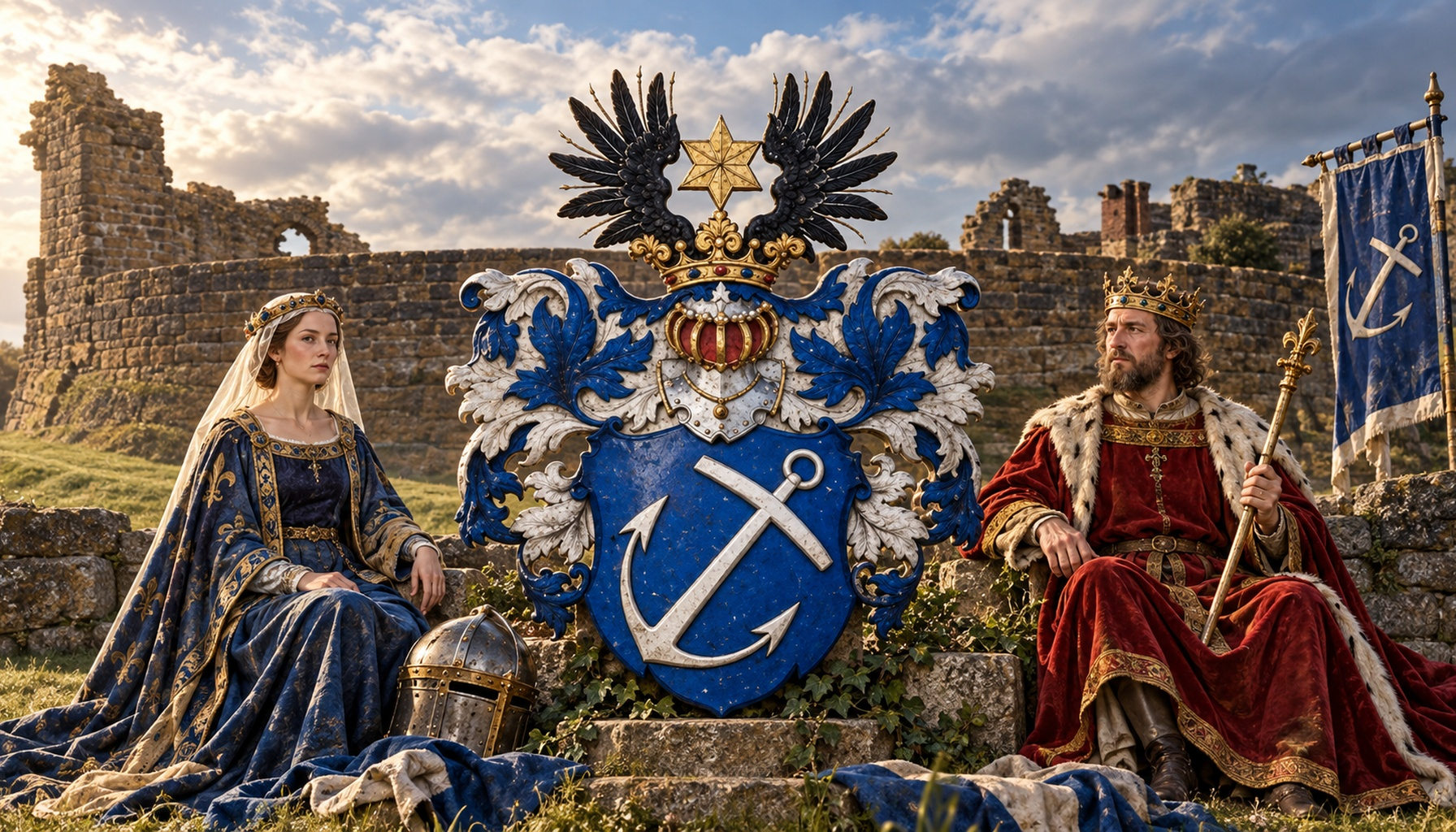
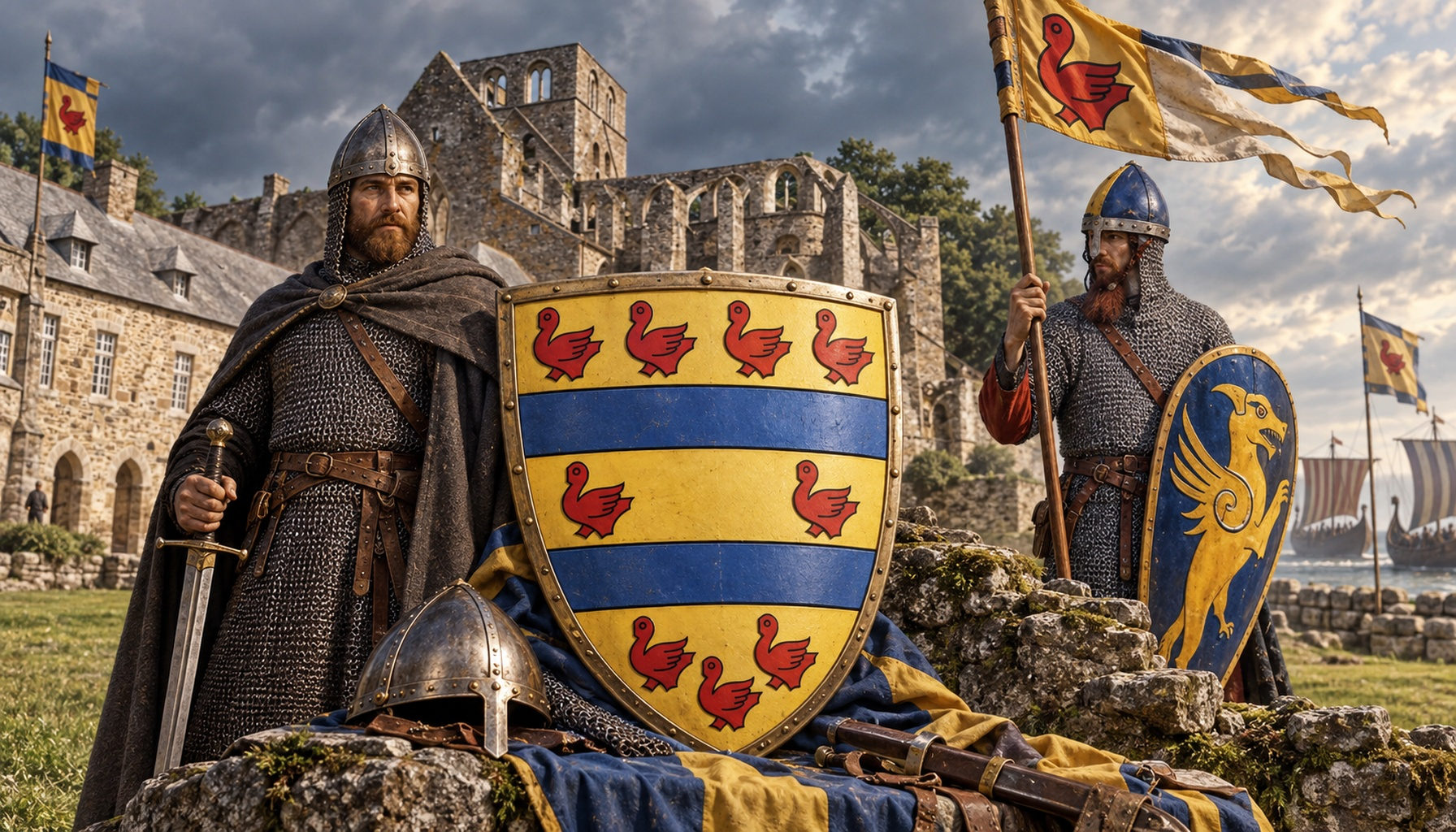
The House Gernet was a medieval Anglo-Norman landed family rooted above all in Lancashire, and particularly associated with the manor of Halton near Lancaster. Established in northern England in the generations after the Norman Conquest, the Gernets belonged to that very important stratum of society that was not quite ducal splendour and not merely local obscurity either. They were men of estate, service, office, and continuity: the sort of family that helped make Norman rule actually work on the ground. Their primary linked Y-DNA haplogroup is tagged here as R1b1a1b1a1a2a1a1, a branch widely represented across western Europe.
What makes the Gernets interesting is precisely that they show us how medieval power often operated in practice. Their status rested not on spectacular royal blood or towering comital rank, but on holding land steadily, serving kings and lords, and exercising hereditary responsibilities tied to forests, manors, and regional administration. In a northern frontier society where lordship, military obligation, and estate management all overlapped, the Gernets were one of those families who turned service into permanence. Among the better-known figures are Vivian Gernet of Halton (1080-1140), Benedict Gernet of Halton (1136-1206), and Roger Gernet of Halton (1173-1252), each representing a generation in which family identity and local authority were reinforced through possession, duty, and memory.
Read more about the House of de Lacy
The great location anchor for the family is Halton, overlooking the River Lune and commanding an important route near Lancaster. Halton Castle, set on a hill above the village, began as a Norman motte-and-bailey fortification and was later rebuilt in stone, becoming a significant stronghold in the region. Its position was not accidental. This was a landscape where control of movement, oversight of estates, and defensive readiness all mattered, especially in the politically sensitive north-west of medieval England. The castle came to be linked with the Honour of Lancaster and with the wider machinery of Anglo-Norman lordship, making it exactly the sort of place where a family like the Gernets could thrive as hereditary local powers under greater lords and ultimately the crown.
Today, Halton Castle survives in ruin, but it remains a striking historic site and can still be visited from the outside, with public access to the area around the remains being reasonably well supported. Even as a ruin, it tells its story rather well. You can still sense the logic of the place: height, visibility, command, and the stubborn physical presence of lordship in stone. For the House Gernet, Halton was not just an address. It was the stage on which family continuity, feudal obligation, and regional authority were acted out across generations.
From a DNA perspective, the Gernet family is here linked with haplogroup R1b1a1b1a1a2a1a1. That does not mean any ancient individual can be claimed as a direct ancestor of the family, and it is important not to overstate the evidence. What it does mean is that a number of ancient and historic samples fall within related paternal territory and help sketch the wider population background into which an Anglo-Norman family like the Gernets fits. Among these linked samples are Medieval Northern Spain Las Gobas (ldo049), Medieval England Cherry Hinton (ATP_PSN_950), Iron Age East Yorkshire individuals from Wetwang Slack including I36973, I36818, I36789, I36796, I36808, I31511, I36748, and I30991, Bronze Age Dorset Down Farm Pond Barrow (dfb003), Pocklington samples I21699 and I21645, Melton I28773, Anglo-Saxon Sedgeford individuals SED018, SED020, and SED021, Viking Age and post-Viking examples from Ribe, Bogovej, and Hedeby, and a spread of Iberian, Frankish, Gaulish, Sicilian, Sardinian, and central European cases such as EV8, I21858, I21859, I21964, I14185, I20522, and I6470. Taken together, these linked samples suggest a long and very western European paternal story, stretching across Bronze Age, Iron Age, Roman, early medieval, and medieval contexts.
That broader pattern matters because Anglo-Norman families in England were not biologically created from scratch in 1066. They emerged from populations already shaped by deep movements across Atlantic and western Europe, and then entered a medieval world of conquest, settlement, marriage, service, and local consolidation. In other words, the Gernets belong to a historical moment, but their genetic background sits within a much longer European continuum.
If you are researching the House Gernet, Lancashire roots, Halton, or the wider Anglo-Norman world, DNA can add another layer to the story. Upload your DNA to MyTrueAncestry to see whether you match the House Gernet profile or related ancient DNA samples linked to haplogroup R1b1a1b1a1a2a1a1 and the broader populations of medieval Britain and western Europe.
Comments