Haplogroup T1a1a1b2b2b1a

– 6 min read


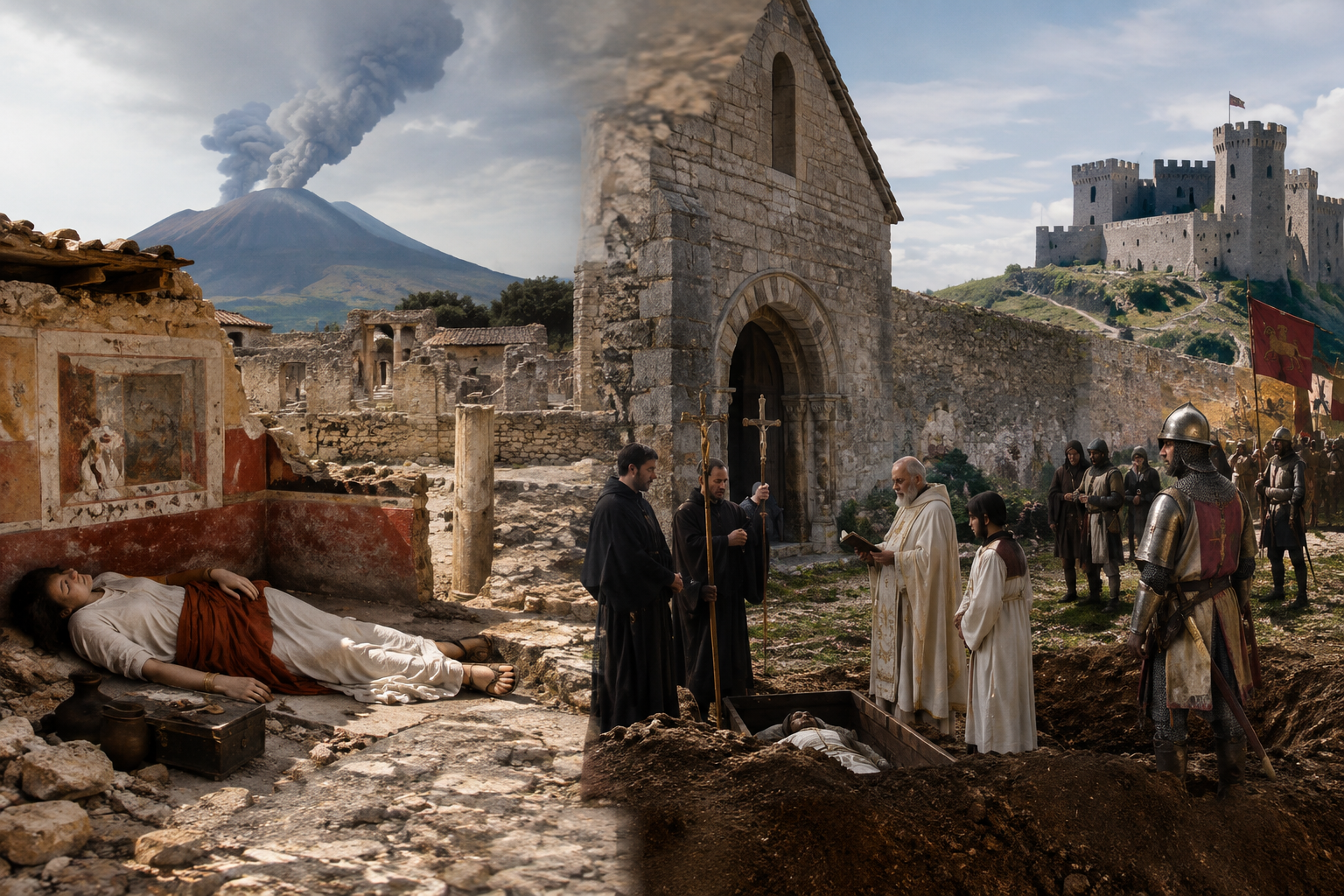
Some Y-chromosome lineages announce themselves with great armies, famous kings, or tidy national stories. Haplogroup T1a1a1b2b2b1a does not really behave so obligingly. Its interest lies precisely in the opposite: it points us toward ports, crossroads, mixed communities, and the sort of historical movement that written sources often notice only in fragments. This is a paternal line that reminds us how much of the past traveled not only by conquest, but by trade, service, marriage, faith, and simple human mobility.
It is also a useful reminder of what Y-DNA can and cannot do. A Y-DNA haplogroup traces one direct paternal line only: father to father to father. It does not represent a person's whole ancestry, culture, language, or identity. For a very specific branch such as T1a1a1b2b2b1a, caution matters even more. We can place it within the wider Y-chromosome tree under haplogroup T, a lineage with long-standing associations in parts of the Near East, northeast Africa, the Mediterranean, and adjoining regions, but we should not lazily pour the entire history of broad haplogroup T into this narrow subclade as if they were interchangeable. What ancient DNA gives us instead is something more interesting: a set of snapshots showing where related paternal lines turned up in real historical settings.
In broad terms, haplogroup T has often been discussed in connection with populations of the Near East and surrounding zones, later appearing across parts of the Mediterranean world and beyond. That broad distribution makes historical sense. The eastern Mediterranean, the Levant, Arabia, the Nile corridor, and the sea lanes linking them were never sealed compartments. They were crowded, quarrelsome, commercial worlds. Men moved as merchants, soldiers, sailors, pilgrims, craftsmen, captives, administrators, and settlers.
For a downstream branch like T1a1a1b2b2b1a, the safest historical reading is not to claim a single dramatic migration, but to see it as part of those long networks of contact. The evidence supplied here pulls our eye toward Roman Italy, Norman Sicily, medieval England, and the Gulf world remembered at Qalat al-Bahrain. That is not a neat ethnic map. It is a map of connectivity.
One of the most striking anchors for this story is I3685, identified as a Roman Pompeii Vesuvius Victim House of the Golden Bracelet Year:79 AD. Pompeii is useful not because it was typical, but because it was so vividly preserved. The eruption froze a Roman town in an instant, and ancient DNA from victims there helps show what kind of people lived in that intensely connected imperial setting.
A paternal lineage like this appearing in Pompeii sits comfortably within what we know of the Roman world: Italy was not genetically isolated, and Roman urban life drew in people from across the Mediterranean. Ports in Campania were tied to trade with the eastern Mediterranean, North Africa, and the wider imperial economy. So a Y-line turning up in Pompeii need not signal one recent migration or one specific ethnic label. It signals something more Roman than that: circulation.
And Pompeii is especially valuable because the archaeological context is so human. This was no abstract population dot on a chart, but a man caught in a catastrophe in 79 AD, in a house archaeologists can name, in a city whose streets, shrines, kitchens, and graffiti still speak. When a haplogroup appears in that setting, it stops being merely a code and becomes part of lived history.
Readers interested in how Roman-era genetics worked across the western Mediterranean may also enjoy Roman Hispania's Lasting Genetic Legacy, which explores another region shaped by imperial movement and settlement.
If Pompeii shows this paternal background in the Roman world, medieval Sicily shows how stubbornly complicated the Mediterranean remained. Two samples are especially telling: SAVBN10a and SAVBN10b, both listed as Norman Sicily Catania Sant Agata La Vetere Christian Burial Year:1133 AD. Even before one says anything genetic, that description already does a lot of work. Sicily in the Norman period was not simply "Norman" in the narrow northern sense. It was a place where Latin Christian, Greek, Arab, and older local histories all overlapped.
Catania, on the eastern coast of Sicily, stood in precisely the sort of world where paternal lines from different historical layers might continue side by side. A Christian burial in 1133 AD does not erase earlier ancestry, nor does a Norman political framework mean everyone buried there came from Normandy. Medieval Sicily was one of Europe's great zones of admixture, administration, and negotiation. The presence of related Y-line evidence there suits that history remarkably well.
So these Sicilian samples should not be treated as proof that this specific haplogroup was "Norman" in origin. Rather, they show that men carrying such paternal lines were part of the population of Norman-ruled Sicily. That is a subtler, and more historically truthful, conclusion.
For a fuller look at exactly this sort of complex island history, the MyTrueAncestry community has an excellent companion read in Medieval Sicily's Multi-Faith Genetic History.
The fourth sample, S3011, is listed as Norman Invasion Medieval Lincolnshire Lincoln Castle Year:1100 AD. Here the setting shifts from Mediterranean port societies to one of the classic monuments of Norman power in England. Lincoln Castle was part fortress, part administrative machine, part statement in stone that a new ruling order had arrived.
Yet even castles, for all their swagger, were not inhabited by genetic caricatures called "Normans." Garrisons, clergy, servants, craftsmen, local tenants, and migrants all moved through these places. A haplogroup found in this context is therefore important not because it proves a noble pedigree, but because it shows how varied the human material of the Norman world could be. The Norman realm linked England, Normandy, southern Italy, and Sicily. Seen together with the Sicilian samples, Lincoln becomes part of a larger map of movement stretching from the central Mediterranean to eastern England.
That broader Norman picture is worth exploring in its own right, especially in Norman Conquest DNA: Viking, Saxon and French Ancestry in a Rural Surrey Community.
The supplied noble and castle material takes us to a rather different stronghold: Qalat al-Bahrain on Bahrain Island, associated here with the House of Khalifa. And what a site it is. This is not merely a fort, but a layered mound built up over roughly four thousand years, from about 2300 BC to the 18th century AD. In other words, it is the sort of place that makes any simplistic ancestry story look faintly ridiculous.
Qalat al-Bahrain preserves the story of ancient Dilmun, a trading hub linking Mesopotamia, the Indus region, and Arabia. Archaeology there has uncovered seals, pottery, evidence of copper working, burials, temples, houses, workshops, and successive fortifications. The stone fort visible today mostly belongs to the Portuguese period in the 16th century, but beneath it lie earlier phases under Kassite, Greek, Parthian, Sasanian, and Islamic rule. The site is now recognized as a UNESCO World Heritage Site.
Why does this matter for a haplogroup article? Because if you want to imagine the sort of historical environments in which paternal lineages like T1a1a1b2b2b1a could persist, diversify, and travel, a Gulf entrepot is ideal. Bahrain was never just one thing. It was a hinge between worlds. The House of Khalifa belongs to the later political history of that island, but the fort and tell beneath it preserve a much longer truth: ruling houses come and go, yet the routes of exchange that sustain them often run for millennia.
That does not prove a direct paternal link between any ancient inhabitant of Dilmun, the House of Khalifa, and the ancient individuals listed above. It does, however, place the family and its stronghold within a wider historical zone where haplogroup T and its branches are contextually at home: the connected landscapes of the Gulf and Near East.
Readers interested in that broader regional background may want to continue with Ancient DNA from Bakr Awa: Tracing Population Change in Bronze and Iron Age Mesopotamia, which illuminates another key part of the same larger world.
Put the evidence together and a sensible picture emerges. T1a1a1b2b2b1a belongs to a paternal background whose story is best read through mobility across the Mediterranean and Near Eastern worlds, not through a single tribe or a single dynasty. The samples from Pompeii, Catania, and Lincolnshire span Roman urban life, medieval Sicily, and Norman England. Qalat al-Bahrain adds a deep regional counterpoint from the Gulf, where trade and layered settlement shaped human history over thousands of years.
Ancient DNA is so valuable here because it is not bound by the prejudices of medieval chroniclers or the silences of family legend. Castles, forts, and noble houses preserve memory in stone and text; genetics preserves a different kind of record in the body itself. Sometimes the two line up neatly. More often, as in this case, they reveal a past far more mixed and mobile than later identities would suggest.
So if this haplogroup appears in your results, the most responsible conclusion is not that you "are Roman," "are Norman," or descend from a named ruling house. It is that one of your direct paternal lines belongs to a lineage that turns up in some very revealing historical settings: a Roman victim at Pompeii, Christian burials in Norman Sicily, and medieval Lincoln under Norman rule, with wider historical context in the Gulf world of Bahrain.
That is already quite a story.
MyTrueAncestry lets you compare your DNA with ancient individuals and historical populations from archaeology. Those matches can offer striking clues about where parts of your ancestry fit into the human past, while still stopping short of claiming direct descent from a specific ancient person or noble family. If the story of T1a1a1b2b2b1a has caught your imagination, this is exactly the kind of lineage that becomes more interesting when placed beside real ancient samples.






Comments