Haplogroup R1b1a1b1a1a2c1a4d1

– 6 min read


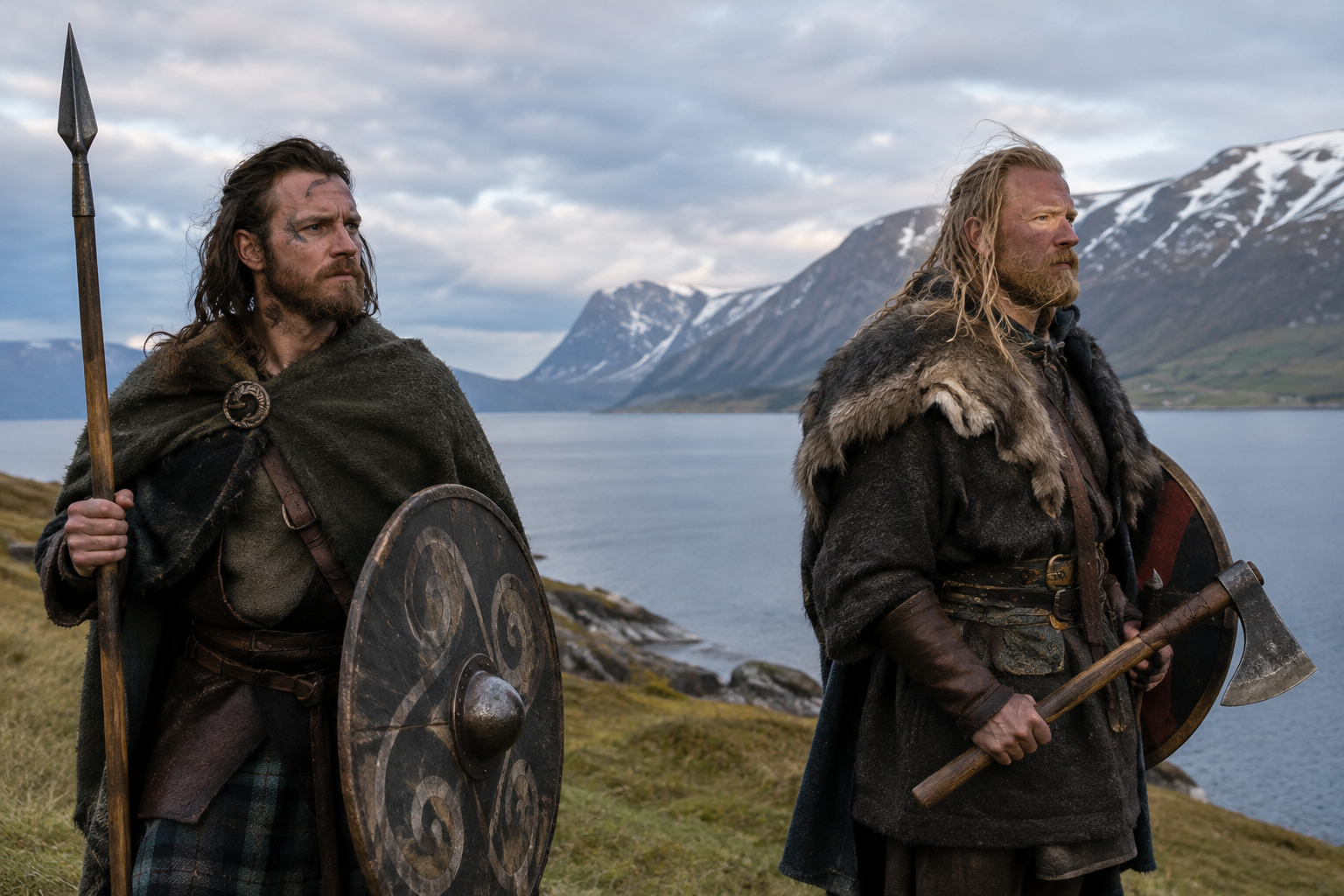
Some Y-chromosome lineages are easy to describe in broad strokes. This one is not. Haplogroup R1b1a1b1a1a2c1a4d1 sits far down the branching tree of paternal ancestry, a very specific twig on the much larger R1b lineage that has played a major role in the deep history of western Europe. That is precisely what makes it interesting. The narrower the branch, the more it reminds us that history is not made of vague continental categories, but of real paternal lines carried by real men through changing worlds of farms, warbands, kingdoms, sea routes, and lordships.
It is also worth saying at the outset what a Y-DNA haplogroup can and cannot do. A Y-haplogroup traces one direct paternal line only: father to father to father. It does not describe a person's whole ancestry, culture, language, or identity. Still, when ancient DNA places related paternal branches in archaeological graves, it gives us something wonderfully concrete: a way to watch one strand of male-line ancestry move through time, without pretending that genetics explains everything.
R1b1a1b1a1a2c1a4d1 belongs within the wider R1b family, one of the best-known Y-chromosome groupings in Europe. The broader history of R1b includes major prehistoric expansions, especially in later prehistory and the Bronze Age, but we must be careful not to pour that whole large story straight into one tiny downstream subclade. For a branch as specific as R1b1a1b1a1a2c1a4d1, the responsible approach is more modest: to place it within the larger western European paternal landscape, and then ask what the available ancient and medieval clues suggest about where related lines were turning up.
In that sense, the supplied evidence points us toward the Atlantic and North Sea worlds: Iron Age eastern England, Viking Age northern Norway, medieval Somerset, and the Irish west. That does not prove a single uninterrupted chain of descent. It does, however, place this haplogroup in a historical arena where Celtic-speaking communities, later Scandinavian voyagers, and medieval regional lordships all left their mark.
Readers interested in the larger background to these paternal lineages may want to explore how archaeogenetics opened up this entire field.
One of the most evocative anchors here is I37127, described as Celtic Parisi Iron Age England East Yorkshire Wetwang Slack Year:225 BC ID:I37127. Wetwang Slack is one of those places that instantly pulls archaeology out of abstraction. This is not merely "Iron Age Britain" in the textbook sense, but a very particular burial landscape in East Yorkshire, associated with the Arras culture and with communities often linked to the ancient Parisi.
The Parisi are interesting partly because they show how regional Iron Age Britain really was. Even within what modern people casually call "the Celts," local identities mattered, burial customs mattered, and landscapes mattered. East Yorkshire's square barrows and chariot burials have long attracted attention because they hint at status, martial display, and local elite identities. A sample like I37127 places a paternal line from within that world into sharper focus.
What does that prove about R1b1a1b1a1a2c1a4d1 itself? Not direct descent from a named tribe into later families, certainly not. But it does show that related paternal ancestry was present in Iron Age eastern Britain, inside a society that was both local and connected, distinctive and yet part of a wider northwestern European zone.
For more on how ancient DNA is reshaping our picture of Iron Age Britain, this community article is an excellent companion.
If I37127 plants one foot in Iron Age Britain, VK528 takes us into a very different setting: Viking Age Sword Axe Warrior Troms Norway Year:800 AD ID:VK528. The label alone tells a story of status and weaponry. Troms, in northern Norway, belonged to a maritime frontier where travel, raiding, exchange, and local power all depended on the sea. A sword-and-axe burial is not just about violence; it is about social identity, mobility, and belonging in the Viking Age.
This matters because the Viking world was not sealed off from the British Isles. Quite the reverse. Norway, the North Atlantic, the Irish Sea, and Britain formed an intensely connected zone in the early medieval centuries. A paternal branch found in both Iron Age Britain and Viking Age Scandinavia does not let us draw a neat arrow from A to B. Yet it does fit a broader historical reality in which men, families, and warbands moved repeatedly across these waters.
The temptation, of course, is to force a tidy ethnic label onto the haplogroup: Celtic, Norse, British, Gaelic. But the evidence is more interesting than that. These were overlapping worlds. The same broad paternal background could appear among people with different languages, loyalties, and ways of life across the centuries.
If you want to follow that maritime and genetic context further, this article makes a useful next step.
Now we move from burial grounds to castles and clan memory, and here one must tread carefully. A clan or noble house associated with a haplogroup is not thereby genetically proven in every branch, every generation, or every claimant. Medieval pedigrees, adoptions, illegitimacy, cadet lines, and sheer documentary fog all complicate the matter. But regional associations still matter, because they show where later historical memory gathered around landscapes that had often been important for centuries.
The first of the supplied examples is Clan Cameron and Tor Castle in Somerset, England. The description is wonderfully unsentimental: really the ruins of a fortified tower house, begun around the early 12th century and altered later in the medieval period. It stood as a small but defensible residence in a world of local lords, Norman and later English power struggles, feuding, and daily administration. In other words, this was not one of the gigantic fairy-tale castles of tourist imagination. It was a working fragment of power in a contested countryside.
That is exactly why it belongs in the story. A haplogroup like R1b1a1b1a1a2c1a4d1 is best imagined not only in heroic prehistory but in the ordinary machinery of local male lineage: landholding, inheritance, military obligation, household authority. Tor Castle, even as a ruin, hints at how paternal lines became embedded in actual places.
The second case, Clan MacPhee and Dun Eibhinn, or the Fort of Eyvind, shifts us west to the Aran Islands off County Galway. Here the setting is older and starker: an Iron Age promontory fort on a cliff edge, guarded by stone walls and the Atlantic itself. The Irish name, meaning Eyvind's Fort, links the place in tradition to a Norse figure. Whether that memory preserves one man, one episode, or simply a later storytelling habit, it captures something historically real enough: the Viking Age reached deep into Ireland's western seaways.
Dun Eibhinn is therefore a splendid symbol for the meeting of periods. It is an Iron Age site with medieval memory attached, and Norse echoes layered over an older local stronghold. That makes it a fitting companion to the genetic evidence from both East Yorkshire and Troms. Not proof of descent, no. But a reminder that the same broad northern and Atlantic zones kept reusing the same strategic landscapes across many centuries.
Readers drawn to the clan side of this story may enjoy exploring one of the family histories directly connected to this material.
So what can we reasonably say about haplogroup R1b1a1b1a1a2c1a4d1? It belongs to a paternal framework deeply at home in western Europe, while the specific clues supplied here place related lines in settings tied to Iron Age Britain, Viking Age Scandinavia, and medieval Atlantic lordship. The old tribal burial ground at Wetwang Slack, the armed burial in Troms, the ruined tower house in Somerset, and the cliff-edge fort on the Aran Islands all show different social worlds. Yet they belong to neighboring historical theaters, linked by sea, migration, warfare, and long regional continuity.
This is also a neat illustration of why ancient DNA and written genealogy do different jobs. Genealogy names fathers and heirs where records survive. Ancient DNA reaches behind the documents, into periods with no surnames and no family trees preserved on parchment. When the two meet, the result is not always certainty. Often it is something better: a more honest picture of how lineages persist, branch, vanish, and reappear in new historical settings.
If this combination of archaeology, clans, and paternal ancestry appeals, another related clan article is worth a look here.
MyTrueAncestry lets you explore that long view for yourself. By comparing your DNA with ancient samples and historical populations, you may discover striking connections to the kinds of worlds represented by I37127 at Wetwang Slack or VK528 in Viking Age Troms. Those matches do not by themselves prove direct descent from any ancient individual or noble family, but they can open a remarkably vivid window onto your deeper past.






Comments