Haplogroup R1b1a1b1a1a2c1a2a2a1a1a

– 6 min read


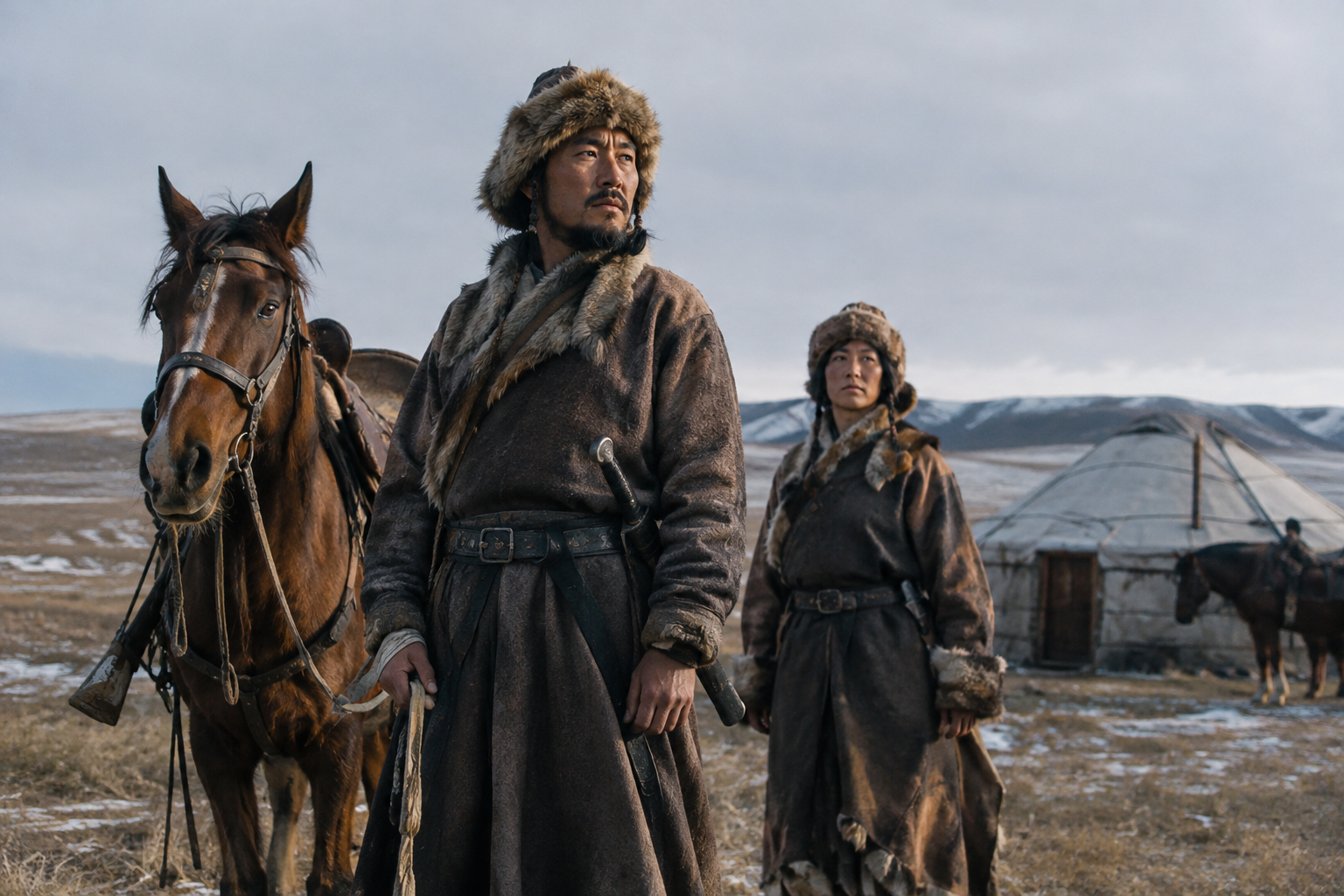
Some Y-chromosome lineages come with a comfortable historical script. They sit where we expect them to sit, in the places where later records also turn up. But haplogroup R1b1a1b1a1a2c1a2a2a1a1a is interesting precisely because it resists that sort of tidy storytelling. It belongs to the wider R1b family, one of the major paternal lineages of Eurasia, yet the specific evidence supplied here places us not in Atlantic Europe, but in the world of the Mongolian steppe in late antiquity. That is a useful reminder that Y-DNA history is not a national badge, and certainly not a simple ethnic label. It is a record of one direct paternal line among countless ancestors.
That is worth saying plainly at the outset. A Y-DNA haplogroup traces the line from father to father to father, and only that line. It does not describe a person's whole ancestry, culture, language, or identity. Even so, it can be remarkably revealing. When a lineage turns up in an ancient burial, it gives us a hard archaeological foothold: one man, in one place, at one point in time. From there, history becomes less about myth and more about patterns of movement, survival, and local continuity.
The first challenge with a very specific branch like R1b1a1b1a1a2c1a2a2a1a1a is scale. The wider R1b tree has an enormous geographical spread and a deep history across Eurasia. But it would be misleading to lift the entire story of broad R1b and pin it directly onto this far narrower subclade. What we can say responsibly is that this lineage sits within a paternal family whose branches have been important in many parts of Eurasia, and that ancient DNA is steadily showing just how varied those branches were in time and place.
In practice, that means we should think less in terms of a single "people of haplogroup R1b" and more in terms of different male lines appearing in different historical settings. Some branches became prominent in western Europe. Others appear in steppe or Inner Asian contexts. This subclade, based on the evidence provided here, invites us to look eastward, to mobile societies whose histories were shaped by pasture, horses, clan alliances, and political worlds that could stretch across astonishing distances.
For readers who want a broader grounding in how ancient DNA has transformed this kind of question, MyTrueAncestry has a useful overview in its community article on archaeogenetics.
Explore Ancient DNA and Archaeogenetics
The key ancient sample supplied for this haplogroup is RISE603, identified as Iron Age Mongolian Steppes Kam-Tyttugem Year:400 AD. That is a compact description, but it opens quite a large historical landscape. By around 400 AD, the steppe world was no quiet backwater. It was a zone of political collapse, regrouping, migration, and new confederations. Empires on the edge of the steppe worried constantly about what might emerge from it, because steppe societies could move quickly, recruit widely, and reshape whole regions.
The location matters. The Mongolian steppe was not simply a homeland in the static sense. It was a corridor, a meeting ground, and a workshop of power. Lineages there could persist locally, but they could also travel with herders, mounted warriors, camp followers, and ruling groups whose influence radiated far beyond any one burial ground. A paternal lineage found in such a context should therefore be read as evidence of presence, not as proof that everyone in the region belonged to the same branch or that all later bearers of similar R1b lineages descended from this individual.
Still, RISE603 is valuable precisely because it places this branch in a real human setting. Here was a man buried in the world of the late Iron Age or late antique Mongolian steppe, carrying a paternal line within the wider R1b family. That complicates older habits of treating R1b as though it belonged only to western European history. Ancient DNA has been steadily dismantling those neat maps.
If you want to follow that wider steppe context, one especially relevant MyTrueAncestry article is the community post on the genetic history of the Mongolian steppe.
Discover Ancient DNA of the Mongolian Steppe
At first glance, late antique Mongolia and the Scottish Borders seem to have nothing to do with one another. And in any direct genealogical sense, we must be careful: a shared or associated haplogroup is not proof that an ancient man from the steppe was the ancestor of a Scottish clan. That would be far too large a leap. Yet there is a reason these stories belong in the same article. Y-DNA lets us compare different layers of the past that written records usually keep apart.
The supplied historical family is Clan Little, associated with The Tower of Clan Little, also called Meikle Little Tower, in Dumfries and Galloway in southwest Scotland. This was a 16th-century fortified tower house, the seat of a Border family living in one of the most unsettled regions of Britain. The Borders were not the polished, tartan-framed Highlands of tourist fantasy. They were a hard frontier, where raids, reprisals, cattle theft, shifting loyalties, and kin-based violence shaped everyday life.
Meikle Little Tower, with its thick walls and defensible form, belongs to that world exactly. It was not merely a family home. It was a machine for survival. In the Anglo-Scottish frontier zone, local power rested on land, yes, but also on whether your kin could hold out when neighbours turned enemies and when yesterday's ally came riding over the hill after dark. The architecture tells the tale: compact, fortified, practical, built for endurance rather than display.
That makes Clan Little historically interesting in a way that fits a Y-DNA article rather well. Paternal lineages mattered intensely in such societies, not because DNA was known, of course, but because descent, name, inheritance, and armed support were often imagined through the male line. Genetics does not replace that history, but it adds a new dimension to it. It reminds us that behind later surnames and clan identities lay much older biological lineages, some of them local, some introduced, some impossible to trace neatly through documents alone.
For another look at a Border clan shaped by that same rough political landscape, readers may want to compare Clan Little with the neighbouring reiving world of Clan Armstrong.
Read About a Border Reiver Clan
So how should we connect RISE603 and Clan Little? Not by pretending we have a direct family tree running from the Mongolian steppe to Dumfries and Galloway. We do not. Not by claiming that a single haplogroup establishes noble descent. It does not. And certainly not by imagining that one castle somehow proves one genetic signature. Castles preserve memory, status, and territory; they do not preserve a verified Y-chromosome pedigree.
What we can say is more subtle, and in truth more interesting. Ancient DNA reveals that paternal lineages now associated with very different modern populations often had wider and more complex past distributions than once assumed. It also shows that medieval and early modern societies, including the Scottish Borders, were built on ancestry layers far older than the historical records of clans and surnames. A haplogroup offers one thread through that long story.
In that sense, Meikle Little Tower becomes a fine historical counterpoint to the grave of RISE603. One is a late antique burial on the Mongolian steppe; the other a ruined 16th-century Scottish stronghold. Between them lies a vast stretch of time and space, and no simple line of descent can be drawn. But together they show how paternal history can surface in very different forms: once in bone and burial, later in stone and surname.
Readers interested in how Britain's genetic landscape changed between Roman and early medieval times may also enjoy this broader MyTrueAncestry article on post-Roman Britain.
Explore Ancient DNA in Post-Roman Britain
The value of studying R1b1a1b1a1a2c1a2a2a1a1a lies not in forcing it into a single national story, but in allowing it to remain historically awkward. It belongs within the broad R1b family, yes, but the supplied evidence points us toward Inner Asia and the Mongolian steppe at a historically charged moment around 400 AD. That alone is enough to challenge lazy assumptions about where paternal lineages "ought" to be found.
And when we set that ancient evidence beside the later world of Clan Little and Meikle Little Tower, we are reminded of something rather fundamental. Written genealogy usually begins late and serves the needs of the powerful. Ancient DNA works differently. It reaches behind charters, behind heraldry, behind ruined tower houses, and gives us glimpses of older male-line histories that no chronicler ever wrote down.
For a further clan-based comparison from Scotland's historical landscape, the MyTrueAncestry community article on Clan Johnstone is another worthwhile companion to this Border story.
Explore Another Scottish Border Lineage
If your own Y-DNA or autosomal results point toward ancient populations, the most rewarding approach is not to hunt for a fantasy pedigree, but to explore the real historical worlds your DNA may touch: steppe burials, frontier societies, ruined towers, and the long movement of families across continents and centuries. MyTrueAncestry can help you compare your DNA with ancient individuals and historical populations, offering clues that are historically fascinating even when they do not prove direct descent from any one ancient person or noble house.
Upload your DNA and see whether your ancestry connects with ancient samples like RISE603, with medieval populations, or with the deeper paternal histories behind later clans and kingdoms.






Comments