Haplogroup R1b1a1b1a1a2b1c2b1

– 5 min read


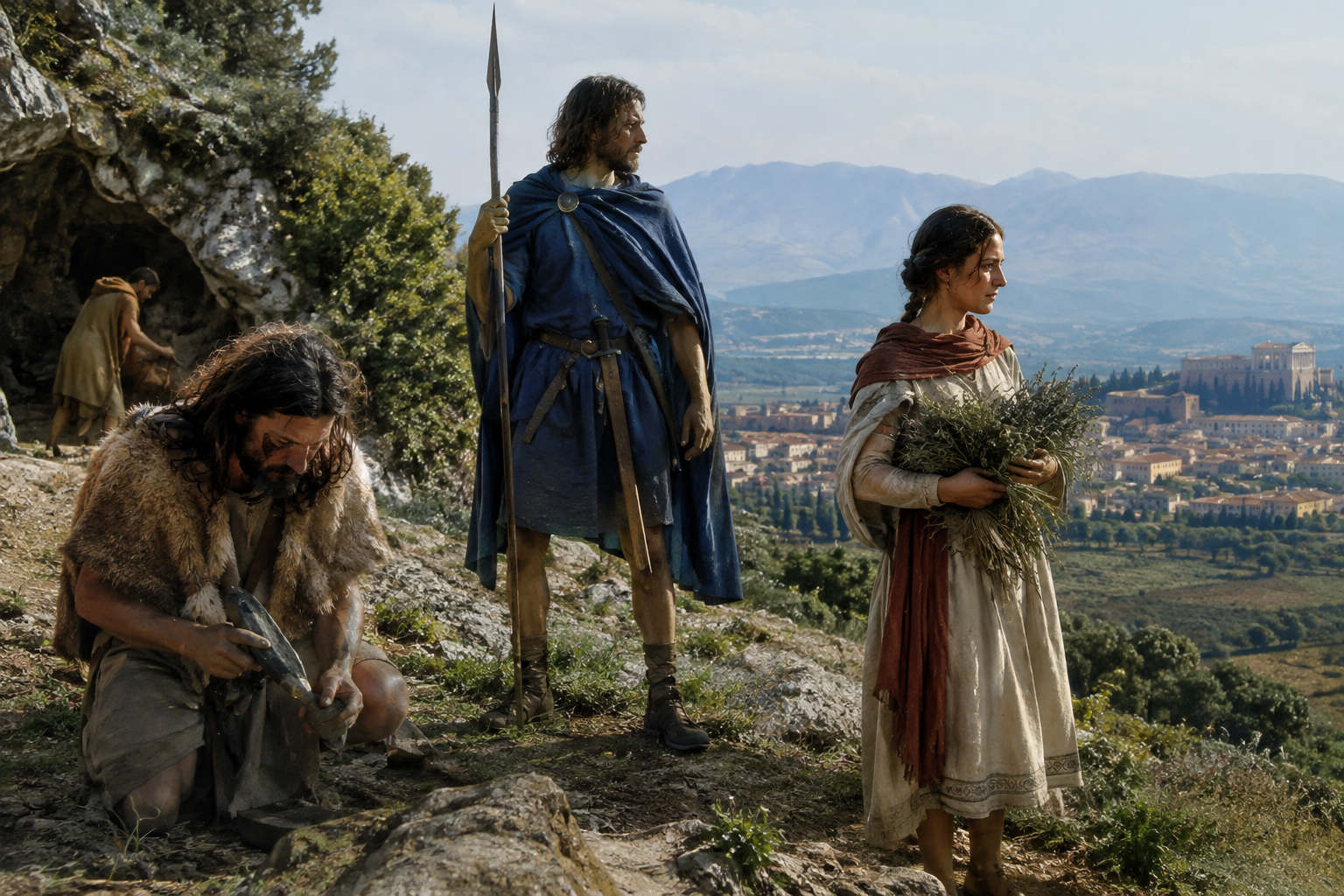
At Verona's Seminario Vescovile, one ancient male identified as 3196n has been linked to the Y-DNA haplogroup R1b1a1b1a1a2b1c2b1 and dated to around 300 BC. That places him in the late Iron Age of northern Italy, in a landscape where Celtic-speaking groups, local Italic communities, and expanding Roman power were all uncomfortably close neighbors. The fascination here is not that one man carried a particular paternal line, but that this line appears in an archaeological setting tied to the Gallic Cenomani of the Verona region.
A second much earlier case comes from BRC003 at Grottuna dei Covoloni del Broion in Italy, dated to about 1452 BC and described as belonging to a Heneti or Venetic-related Italic context. Taken together, these two finds do not give us a simple tribal pedigree. They do, however, show a paternal branch associated with northern and northeastern Italy across a very long span of time, from the Bronze Age into the Iron Age. As always with Y-DNA, this traces one direct male line only, not the whole ancestry or identity of the men involved.
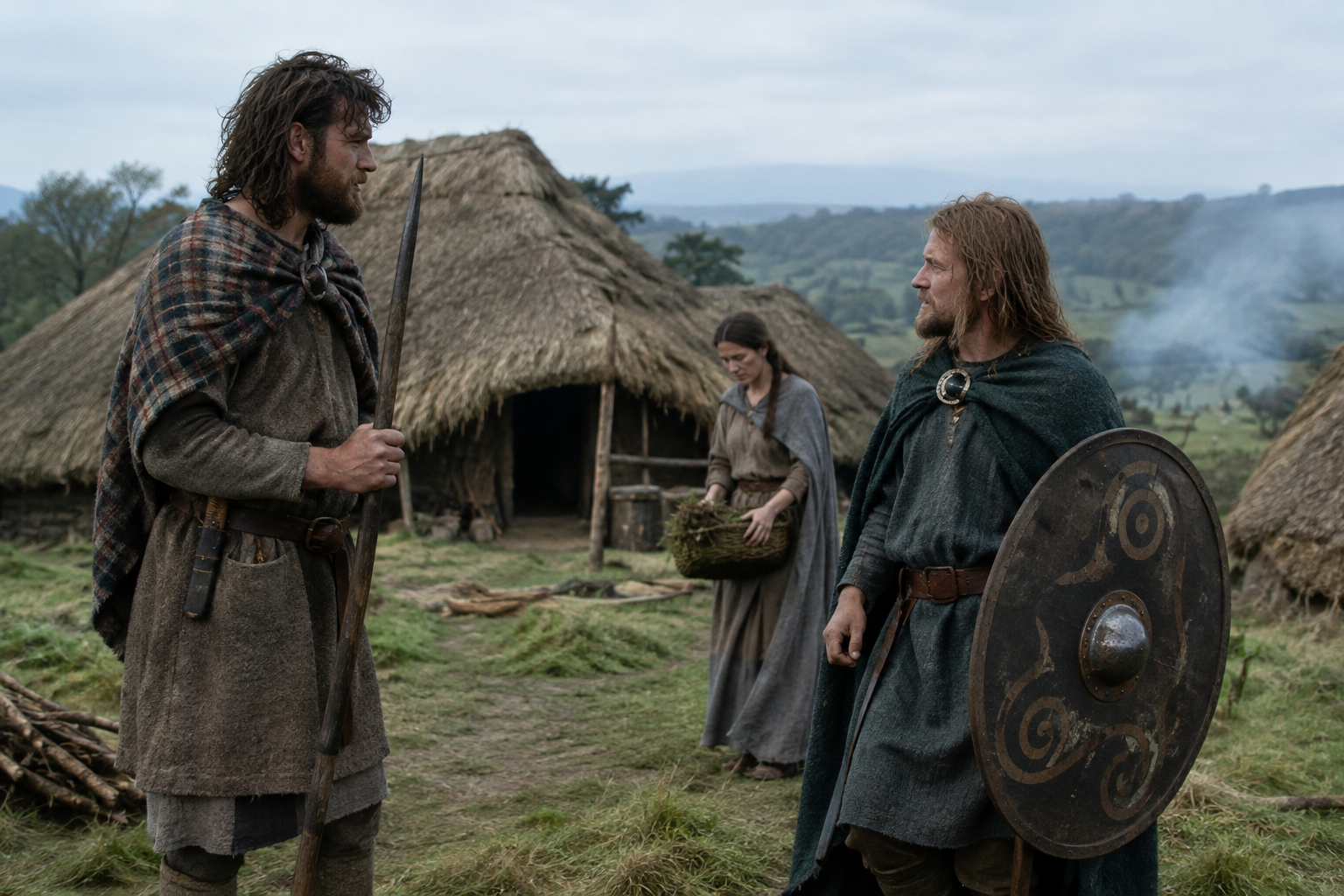
The Verona sample 3196n is the clearest historical hook because the date and setting sit in a remarkably busy chapter of Italian history. Around 300 BC, the Po Valley was not some vague prehistoric backdrop. It was a region of towns, exchange routes, mixed populations, and political pressure, especially as Rome pushed north and Celtic-speaking groups were established across much of Cisalpine Gaul.
The Cenomani are known from classical sources as one of the peoples settled in this part of northern Italy. That does not mean every man buried in the area can be reduced to a neat ethnic label, but it does make 3196n important evidence for the paternal diversity present in that world. A lineage assigned here to R1b1a1b1a1a2b1c2b1 fits broadly with the larger R1b family that is frequently encountered in later prehistoric and Iron Age western Europe, yet the value of this sample lies in its precise archaeological context: late Iron Age Verona, not an abstract map of Europe.
Research published on ancient individuals from the region has helped sharpen the genetic picture of Iron Age and Roman Italy, including northern communities and their local variation. For readers interested in wider Italian context, MyTrueAncestry has also explored related evidence in Amiternum and other parts of the peninsula.
The branch name R1b1a1b1a1a2b1c2b1 is extremely specific. In practical terms, that means it is a fine twig on the much larger Y-chromosome tree. The wider R1b umbrella has a deep and complicated history across Eurasia and Europe, but it would be a mistake to pour all of that broad history directly into this narrow subclade without sample-by-sample evidence.
That caution matters especially in Iron Age Italy. Cultural labels such as Cenomani, Veneti, Etruscan, or Roman describe language, politics, archaeology, or historical identity; they are not synonymous with a single Y-DNA line. One paternal lineage can persist through cultural change, migration, language shift, alliance, and intermarriage. So the significance of R1b1a1b1a1a2b1c2b1 here is not that it "belongs" to one people forever, but that it can now be placed in documented ancient settings in Italy.
The earlier sample, BRC003, comes from Grottuna dei Covoloni del Broion and is dated to about 1452 BC, in the Bronze Age. This is a very different world from Iron Age Verona. Northern Italy at this time contained a patchwork of regional societies long before Roman conquest and long before later classical authors began classifying peoples in the way we know from written history.
The description connecting BRC003 with a Heneti or Venetic-related Italic setting is intriguing because the ancient Veneti of northeastern Italy are among the most discussed populations of the region. Yet here again, the evidence needs to be handled carefully. A Bronze Age burial in this zone tells us that the paternal line later associated with R1b1a1b1a1a2b1c2b1 was present in northeastern Italy well before the better-documented political geography of the first millennium BC.
An ancient DNA study examining prehistoric Italian populations, published in Current Biology, has been particularly important in showing how Italy's population history involved both continuity and change across the Bronze and Iron Ages. That is exactly the sort of framework needed for BRC003: not a heroic founder story, but a reminder that paternal lines can endure within populations that themselves are gradually reshaped by contact and mobility.
Putting BRC003 and 3196n side by side, the first thing to notice is the gap: more than a thousand years separate them. That gap is historically useful. It prevents us from pretending that one was the ancestor of the other in any direct, documentable sense, but it also highlights something archaeologically important. A paternal branch connected with this haplogroup appears in northern Italian contexts before and after major cultural transformations.
Between roughly 1450 BC and 300 BC, northern Italy saw shifts in settlement systems, exchange networks, metalworking traditions, and external contacts. New cultural horizons emerged; older ones changed or disappeared; connections with the Alpine world, central Europe, and the peninsula intensified. If the same narrow paternal branch shows up in both a Bronze Age northeastern context and an Iron Age Veronese one, that suggests durability of some male lines across centuries of social change.
Durability, though, is not the same as isolation. Ancient populations were rarely static little boxes. The northern Italian plain and adjoining hill country were among the most connected zones in later prehistoric Europe. The value of this haplogroup is therefore best understood as evidence of presence through change, rather than proof of a single unmixed people marching unchanged across time.
The geography matters. Verona sits near routes linking the Po Valley to the Alps and beyond, while the Broion area belongs to the northeastern Italian sphere, another zone shaped by movement and contact. These are not random dots. They belong to a wider corridor where influences from central Europe, the Adriatic, and the Italian interior overlapped.
That broader picture fits well with other genetic work on Italy and adjacent regions, where local continuity often coexists with new ancestry inputs and changing cultural labels. Readers who want a parallel case from the western Roman world may find it useful to compare this with the peninsula-wide patterns discussed in Roman Hispania's Lasting Genetic Legacy, where genetics also complicates any simple story of identity.
For Italy itself, another helpful comparison is the work on Iron Age Umbrians, which shows how local communities can be investigated through a combination of archaeology, diet, mobility, and genetics rather than through lineage alone.
For someone researching R1b1a1b1a1a2b1c2b1 today, these Italian samples suggest a paternal line with documented ancient footholds in northern and northeastern Italy, at least in the Bronze Age and again in the late Iron Age. That is already quite a lot. It places the lineage in real archaeological landscapes rather than in vague claims about "Celts" or "Italics" as if those were genetic units.
The most distinctive insight is the timespan. This is a branch tied not to one dazzling royal pedigree or one dramatic burial, but to the long continuity of male lines in a region repeatedly transformed by trade, migration, and political upheaval. In other words, it is the sort of haplogroup story archaeology tells best: local, layered, and more interesting than a simple origin myth.
Comments