Haplogroup R1b1a1b1a1a1a1
– 5 min read


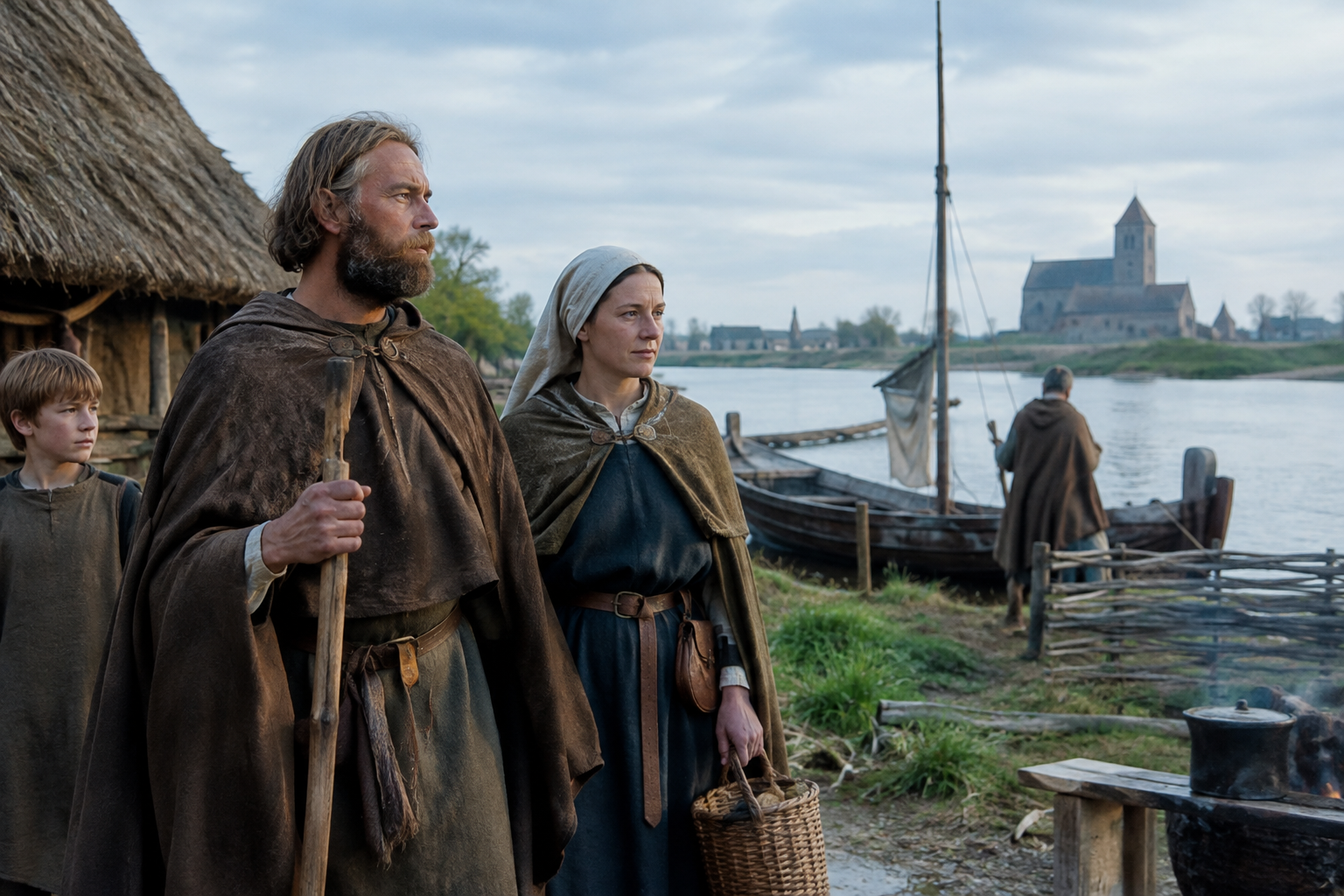
In around AD 910, a man now identified as sample GRO012 was buried in Groningen in the northern Netherlands. On paper that can look like a tiny data point: one early medieval individual, one cemetery, one Y-chromosome assignment. But in historical terms it places the haplogroup R1b1a1b1a1a1a1 in a very interesting landscape indeed: the North Sea world of the late Carolingian age, where old regional populations, Christian institutions, trading contacts, and the aftershocks of Migration-Period movements all met.
That matters because Y-DNA follows one direct paternal line only. It does not tell us everything about a man's ancestry, language, or identity. Yet a securely placed early medieval carrier such as GRO012 gives this branch a real archaeological foothold. Instead of talking vaguely about "Northwest Europe," we can begin with a specific place and period where this lineage is actually attested.
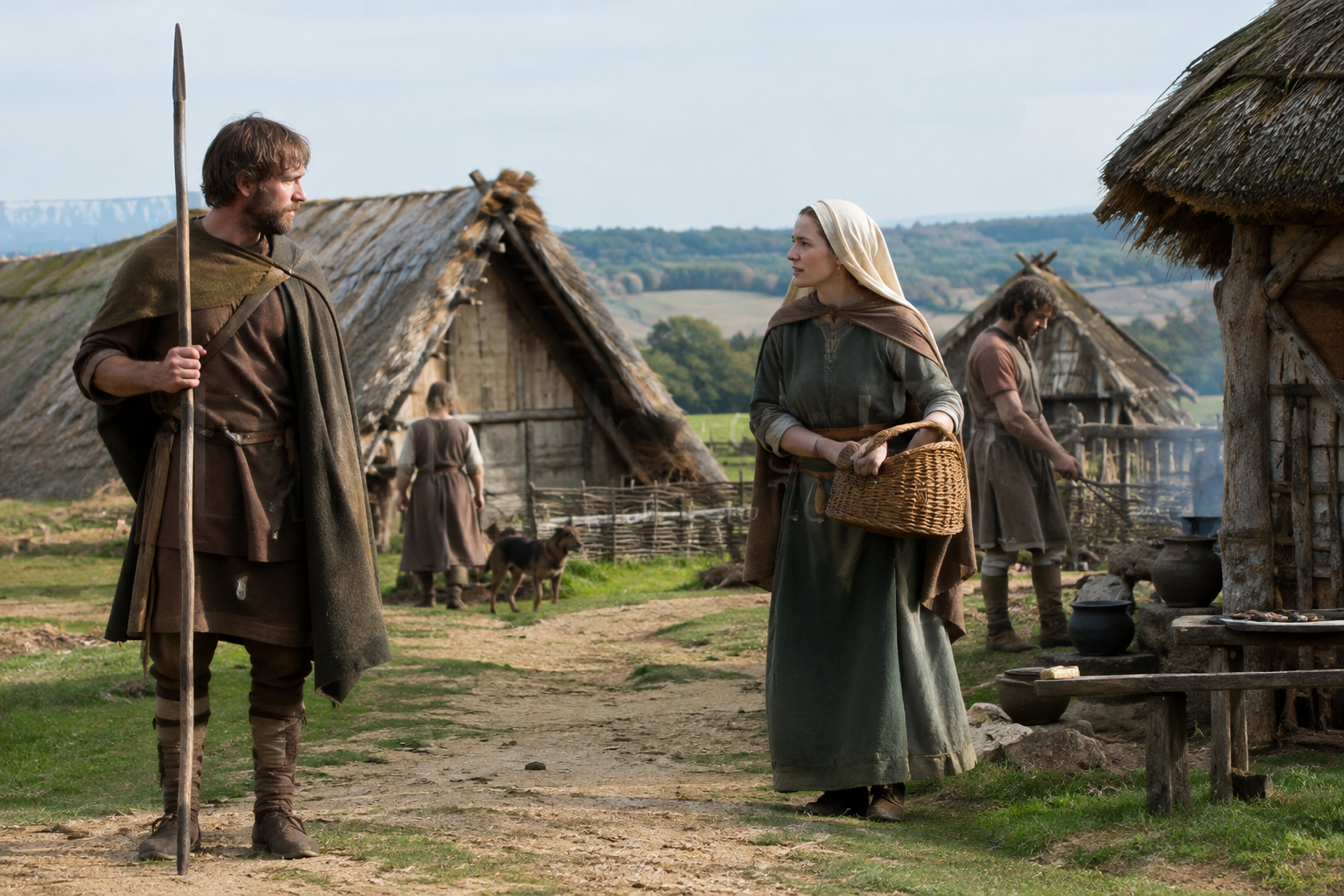
By the early 10th century, Groningen stood in a frontier-like coastal zone shaped by marshlands, river access, and North Sea exchange. This was not a remote backwater. Northern Netherlands communities were tied into wider networks linking Frisia, Saxon regions, the lower Rhine, and the coastal world stretching toward England and Scandinavia.
That is the proper setting for GRO012. A paternal lineage found here belongs to a region with deep continuity, but also long exposure to movement and mixing. The Carolingian label is important: it places the individual after the great transformations of late antiquity, after the formation of early medieval polities, and in a period when coastal populations of the Low Countries were already part of the world that chroniclers would recognize as Frisian, Saxon, or broadly Germanic in cultural terms.
Research on early medieval populations around the North Sea has helped clarify just how connected this zone was. An ancient DNA study examining related population history in this wider setting can be found here: https://www.researchgate.net/publication/363736520_The_Anglo-Saxon_migration_and_the_formation_of_the_early_English_gene_pool. Even without forcing GRO012 into a larger claim than the evidence allows, the broader picture is useful: the southern North Sea coast was one of the major engines of population formation in early medieval northwestern Europe.
Germanic languages and genomics
The haplogroup name here is very narrow and very specific: R1b1a1b1a1a1a1. It sits inside the much larger R1b family, one of the best-known Y-chromosome groupings in western Europe. But it would be a mistake to pour the entire prehistory of R1b into this one smaller branch. A subclade is not a synonym for all of its parent lineages.
What we can say is more disciplined, and in the end more interesting. GRO012 shows that this paternal branch, or a reported assignment associated with it, appears in the early medieval northern Netherlands. That makes the lineage relevant to the historical populations of the southern North Sea basin: the same broad maritime world implicated in post-Roman mobility, the spread of related Germanic speech communities, and the making of later Dutch, Frisian, English, and Low German populations.
For someone researching this haplogroup today, that is a useful distinction. The evidence does not pinpoint a single "tribe," nor does it prove descent from any named medieval family. What it does provide is a grounded association with a real archaeological horizon in the Low Countries, one that sits at a crossroads of continuity and movement.
It is tempting to imagine coastlines as edges. In early medieval history they are often the opposite. The sea between the Netherlands, northern Germany, Denmark, and eastern Britain functioned less as a barrier than as a route - for merchants, raiders, settlers, clergy, craftspeople, and families. A lineage found in Groningen therefore belongs to a historical geography larger than any modern national map.
This is where archaeology and genetics complement one another rather well. Archaeology shows the material links of the North Sea zone; ancient DNA helps reveal how much actual population movement accompanied those links. In that sense, GRO012 is valuable not because he stands for an entire people, but because he anchors one paternal line inside this famously mobile coastal world.
That wider setting also helps explain why haplogroups in the region can turn up in discussions of Anglo-Saxon England. Movements from the continental North Sea coast into Britain are one of the central demographic stories of the 5th to 7th centuries, and their effects lasted long after the migrations themselves.
Ancient Y-DNA articles sometimes have the opposite problem from ordinary history: far too much grand narrative, far too little person. GRO012 gives us the person, or at least the individual trace. He lived in a period when the Carolingian world was fragmenting, regional lordships were hardening, and the northern Low Countries remained tied to both inland and maritime spheres.
That date, around AD 910, is especially useful because it is late enough to belong to a documented medieval order, but early enough to preserve a view before later demographic churn obscures the picture. In other words, GRO012 is not a prehistoric abstraction and not yet a modern population sample. He stands in that middle zone where archaeogenetics is often at its most revealing.
There is also a regional point worth stressing. Groningen lies within the broader Rhine-Meuse-North Sea interaction zone, an area repeatedly highlighted in archaeological and genetic work as crucial to the making of northwestern European populations across later prehistory and the early Middle Ages.
Lower Rhine-Meuse deep history
One ancient sample cannot by itself map the whole history of a lineage. Still, some samples are strategically placed, and GRO012 is one of them. A paternal branch present in early medieval Groningen belongs to a region that fed into later Dutch and Frisian history and sat in constant dialogue with England, the German coast, and Scandinavia.
That makes this haplogroup particularly resonant for users whose family histories cluster around the North Sea rim. The most responsible reading is not that all later carriers descend from one medieval Dutch man, still less that they belong to a single ethnic story. Rather, the evidence suggests that this branch had a place in the populations of the early medieval coastal Low Countries, a setting central to the demographic reshaping of northwestern Europe.
And that is really the attraction of a sample like GRO012. He reminds us that a Y-chromosome label is not just a string of letters and numbers. In the right archaeological context, it becomes part of a lived historical world - in this case, the marshes, waterways, and sea-lanes of the Carolingian north.
North Sea migrations to Britain
If your paternal line falls under R1b1a1b1a1a1a1, the clearest ancient signal here is an early medieval foothold in Groningen, in the northern Netherlands, around AD 910. That does not hand you a ready-made ethnic badge or a noble pedigree. What it does offer is something better: a historically plausible setting in the southern North Sea world, one of the great contact zones of medieval Europe, where local continuity and long-distance mobility went hand in hand.


Comments