Haplogroup N1a1a1a1a3

– 5 min read


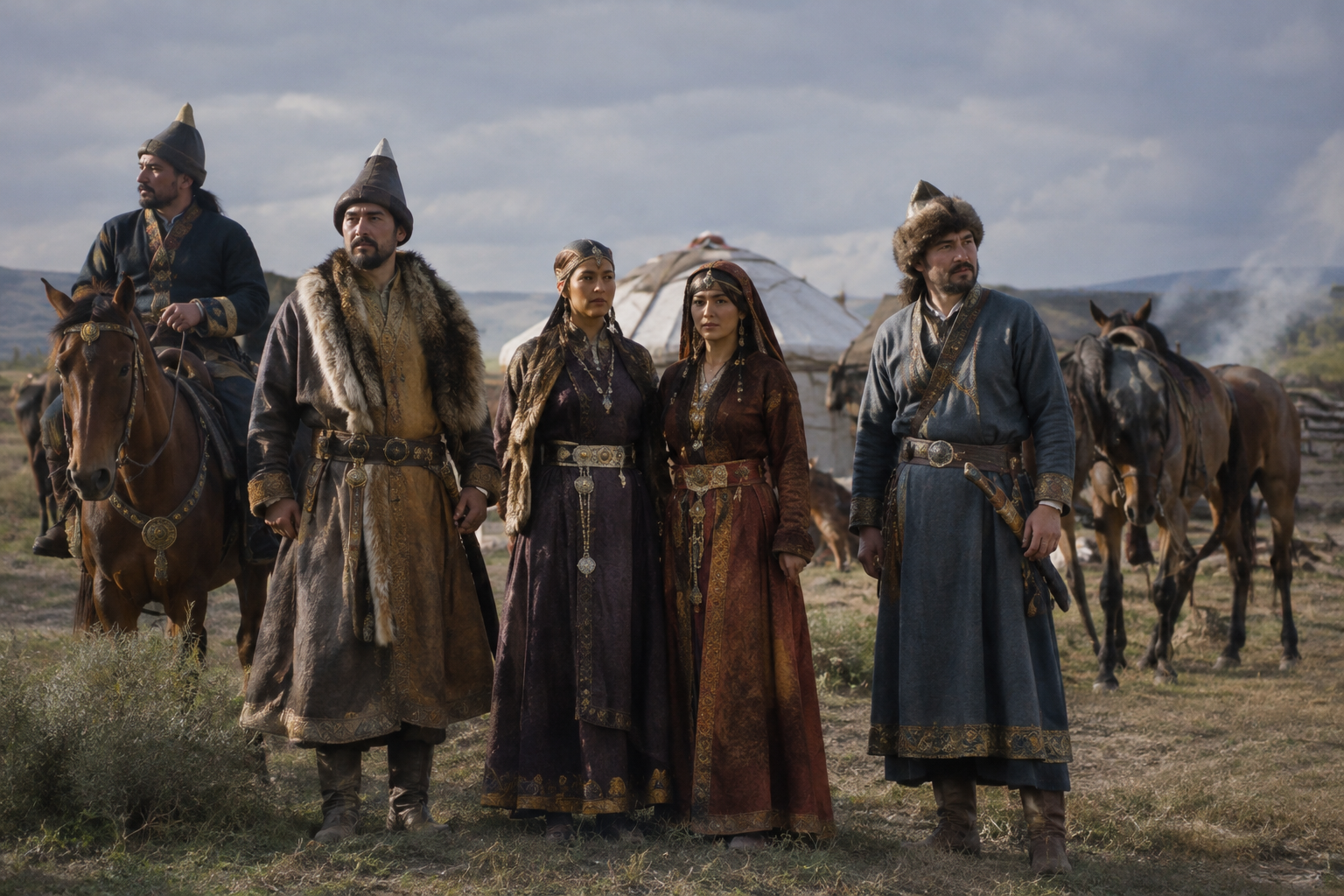
At Kunpeszer in Hungary, an early seventh-century elite Avar grave identified as KUP003 has become one of the clearest signposts for the Y-DNA haplogroup N1a1a1a1a3 in the early medieval Carpathian Basin. The date, around AD 609, places this man in the first generations of Avar power in the region, when a new ruling group had established itself in the former Roman frontier zone and was reshaping the political map of central Europe.
What makes KUP003 especially interesting is that he is not an isolated case. The same paternal branch is also reported from several other Avar-period burials in Hungary: SzOper81_GE from Szegvár-Oromdűlő, dated around AD 630; KFPper31_GE and KFPper6_GE from elite graves at Kunpeszer-Felsőpeszér, dated around AD 640 and AD 645; SzKper51_GE, an Avar rider from Székkutas-Kápolnadűlő, around AD 640; and KVper3369_GE from an elite Avar burial at Kiskőrös-Vághóhíd, around AD 690. Taken together, these finds make N1a1a1a1a3 less a stray curiosity than a recurring paternal signal within parts of the Avar-period elite world.
Y-DNA follows one direct paternal line only: father to son, and so on back through time. That does not define a person's whole ancestry, language, or identity, but it can be very useful when several men from related historical settings share the same branch. In this case, the pattern matters because N lineages are often discussed in connection with northern Eurasia and eastern steppe-linked populations, and the Avar evidence shows one such branch appearing repeatedly in prestigious burials west of the great Eurasian steppe.
It is important, though, not to overreach. The article haplogroup here is the precise branch N1a1a1a1a3, and that is narrower than the wider parent haplogroup N. One should not casually transfer every story ever told about haplogroup N onto this subclade. What the Hungarian Avar samples show, more carefully, is that a specific paternal line associated with the broader N family was present among some high-status men in the seventh-century Carpathian Basin.
An ancient DNA study examining Avar-period and related steppe-connected populations in the region helped bring this picture into focus, especially by showing how eastern-linked paternal lines could cluster among elite burials rather than being spread evenly through all communities. For that broader context, see this research on Y-chromosome haplogroups from Hun, Avar, and conquering Hungarian period nomadic people of the Carpathian Basin.
Kunpeszer matters because it gives us more than a lone burial. Alongside KUP003, two later elite graves from nearby Kunpeszer-Felsőpeszér, KFPper31_GE and KFPper6_GE, dated to about AD 640 and AD 645, are also associated with N1a1a1a1a3. Archaeologically, this is a useful reminder that early Avar Hungary was not just a flat map of identical communities. Certain cemeteries and burial groups seem to preserve the traces of a leadership stratum whose paternal lines may have been more tightly structured than those of the wider population.
That does not automatically mean these men were close relatives in the everyday sense, nor that one cemetery equals one dynasty. But when the same Y-line keeps turning up in elite graves from the same regional cluster, historians are entitled to take notice. At the very least, it suggests continuity of a male line, or of several related male lines, within circles of power.
Kunpeszer also helps with chronology. These burials sit in the decades after the Avars established themselves in the Carpathian Basin in the late sixth century. So the repeated appearance of this paternal branch is not a late medieval survival or an accidental intrusion. It belongs squarely to the formative Avar period, when new political identities were still being assembled out of migrating groups, local populations, and inherited steppe traditions.
The case becomes stronger when we move beyond Kunpeszer. SzOper81_GE from Szegvár-Oromdűlő, dated around AD 630, and SzKper51_GE from Székkutas-Kápolnadűlő, dated around AD 640 and described as an Avar rider, show the same paternal signal in other Avar-period settings of the Great Hungarian Plain. That widens the frame considerably. We are no longer looking at one burial ground preserving one local male lineage, but at a broader social horizon in which the same paternal branch appears in more than one place.
The rider burial at Székkutas is especially evocative, even if one resists the temptation to embroider the evidence. The label alone places the man within the mounted world so characteristic of steppe-derived prestige and warfare. Without inventing grave goods or biography, one can still say that this is the sort of archaeological context in which paternal continuity among status-bearing males becomes historically meaningful.
These sites also remind us that the Avar Khaganate was not an ethnic monolith. It was a political formation. Men buried as Avars in seventh-century Hungary could carry different ancestries and different life histories, while still participating in the same ruling culture. The recurrence of N1a1a1a1a3 does not erase that diversity; rather, it identifies one strand within it.
The sample KVper3369_GE from Kiskőrös-Vághóhíd, dated around AD 690, pushes the story later into the seventh century. That matters because it hints at persistence. If the earlier Kunpeszer and Szegvár men belong to the first waves of Avar authority in the basin, the Kiskőrös individual belongs to a world in which that authority had already matured and stabilized.
So the significance of N1a1a1a1a3 here is not simply that it arrived. It seems, on present evidence, to have remained visible among high-status burials across several decades. In historical terms, that can suggest lasting paternal continuity inside some elite networks, though not necessarily a single uninterrupted ruling house.
A wider genomic study of the region's migration-period and early medieval populations has emphasized how the Carpathian Basin repeatedly absorbed people from different directions while still preserving distinct elite profiles in certain cemeteries. For readers interested in that broader framework, see this ancient population study published by Cell, which helped clarify how mobility and social hierarchy intersected in the region's genetic record.
There is a historical reason these graves attract so much attention. The Avars arrived in central Europe as a steppe power, and both written sources and archaeology place great weight on hierarchy, mounted warfare, and elite display. When a paternal branch such as N1a1a1a1a3 is repeatedly found in men identified archaeologically as elite or high-status Avars, it becomes part of a larger question: how far did political power travel with kin groups, and how far was it built by incorporating new followers locally?
The honest answer is that the Y-chromosome alone cannot settle that argument. But it can tell us something quite solid. In this case, it points to a paternal line with eastern Eurasian associations that was not merely passing through. It was embedded, for at least part of the seventh century, in the male elite of Avar Hungary.
That is also why these samples are so valuable for personal ancestry research. A modern man with N1a1a1a1a3 should not imagine a direct paper-trail link to a known Avar noble. Yet he can say that this branch is documented in a historically important early medieval context: among elite Avar-period burials in Hungary, especially at sites such as Kunpeszer, Szegvár, Székkutas, and Kiskőrös.
The distinctive thing about N1a1a1a1a3 is not that it can be spun into a grand tale of all Eurasia, but that it appears repeatedly in one sharply defined archaeological setting: elite Avar-period Hungary in the seventh century AD. KUP003 at Kunpeszer opens the door, and the other graves keep it open. For someone tracing this paternal line today, that is a meaningful historical anchor - not a mythic origin story, but a real cluster of ancient men who stood near the center of power in the Avar Carpathian Basin.






Comments