Haplogroup N1a1a1a1a1a2a1a
– 4 min read


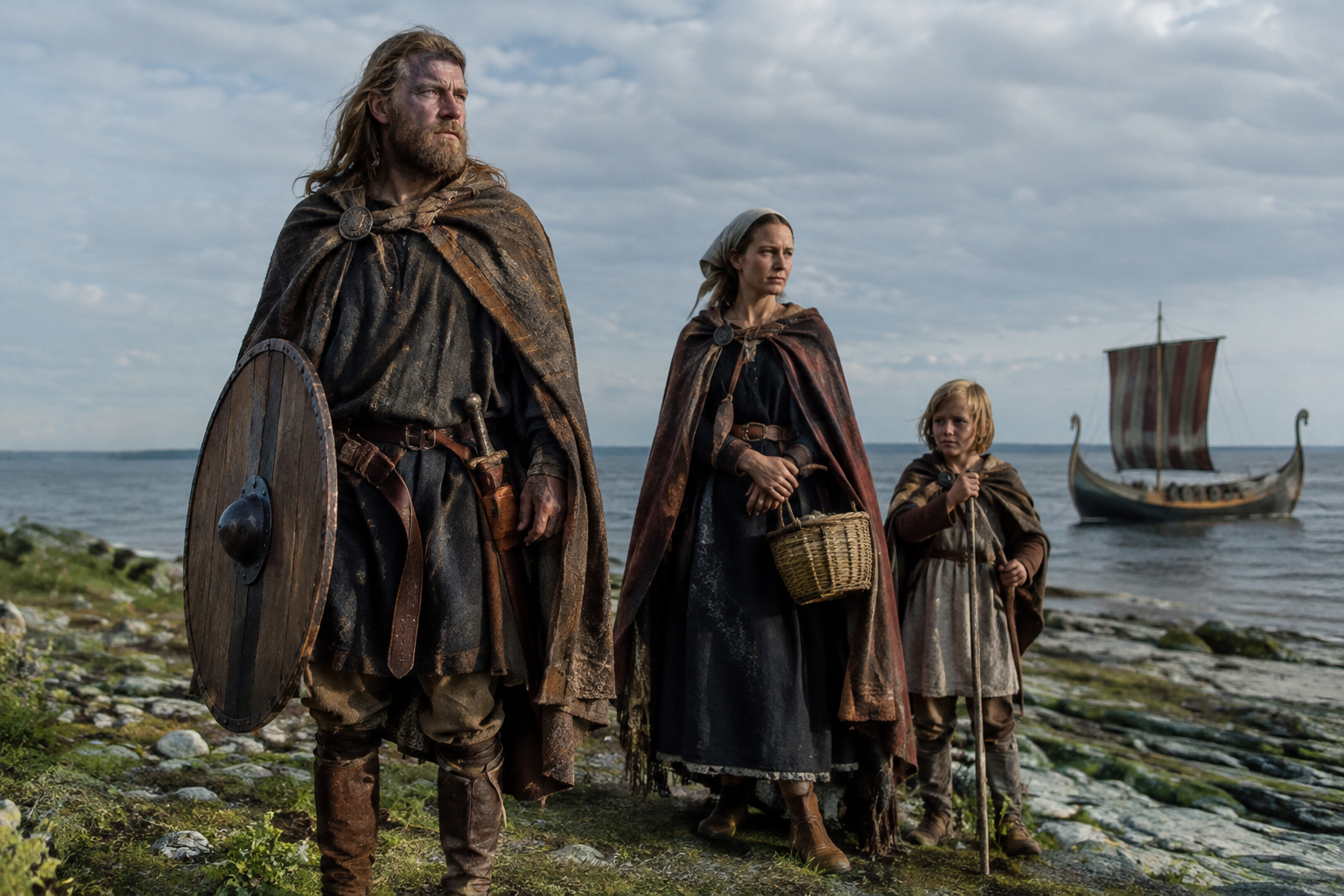
At Fröjel on the island of Gotland, one Viking Age man offers a small but arresting glimpse into a paternal line that is not usually the first one people imagine when they think of Scandinavia. The ancient individual identified as VK461, dated to around AD 975, is associated here with the Y-DNA haplogroup N1a1a1a1a1a2a1a. That is a very narrow branch name, and the first thing to say is that such a label traces only one direct male line out of countless ancestors. Even so, one line can still tell us something important about contact, movement, and family history in the Viking world.
Fröjel matters because Gotland was not a remote backwater. It sat in the middle of Baltic exchange, with ships, traders, craftspeople, and travellers moving through its harbours and settlements. So when a lineage like N1a1a1a1a1a2a1a appears in a Viking Age Gotland context, the interest lies not in fantasy about a single "tribe", but in what it says about the mixed and mobile character of the eastern Scandinavian world.
Gotland is one of those places that keeps turning up in archaeology because it was so well positioned. In the Viking Age, the island linked Scandinavia with the eastern Baltic and beyond. Fröjel, on Gotland's western side, is especially well known as a site tied to trade, craft production, and maritime networks. A man buried there around the late 10th century was living in a society that looked both west toward Scandinavia and east across the Baltic Sea.
That setting gives sample VK461 its real significance. A paternal lineage assigned to N1a1a1a1a1a2a1a in this context suggests that Viking Age communities on Gotland could include male lines with deeper connections outside the more familiar western Scandinavian Y-DNA patterns. This does not make VK461 an outsider in any simple sense. By AD 975, such lineages could already have been part of the social fabric of Baltic communities for generations.
The branch name is formidable, but the broader point is simpler. Haplogroup N is a major Y-chromosome lineage with an important history across northern Eurasia, especially in regions connected with Uralic-speaking and northeastern European populations. The exact subclade here, N1a1a1a1a1a2a1a, is much narrower than that broad parent group, and one should be careful not to pour the whole history of haplogroup N into this single twig of the tree.
Still, the presence of such a branch in Viking Age Gotland fits a pattern archaeologists and geneticists increasingly see in the Baltic zone: this was a contact region, not a sealed ethnic box. Trade routes, marriage networks, seasonal movement, military service, and settlement around the Baltic all helped bring together people whose paternal lines had quite different deeper histories.
A preprint study of Viking Age population history, linked with this sample record, helped draw attention to just how varied these northern communities could be: research on ancient Viking Age genomes. Even without overclaiming the exact details of every lineage assignment, the broader lesson is clear enough. Viking Age identity was cultural and historical, not reducible to one chromosome branch.
If one were looking for a Scandinavian setting where an unusual paternal lineage might appear, Gotland would be a good bet. The island's importance in Baltic exchange is written into its archaeology. Goods, styles, and contacts connected Gotland not only to mainland Sweden and Denmark, but to Finland, the eastern Baltic, and routes stretching toward the rivers of northern and eastern Europe.
That matters because haplogroup N and some of its sub-branches are more often discussed in connection with northeastern Europe and populations around the Baltic-Finnic and wider Uralic world than with the classic image of Viking Norway. One ancient man from Fröjel cannot prove a migration event on his own, but he fits neatly into a historical landscape where eastern connections were normal. The Viking world, especially in the Baltic, was a web of sea lanes and kin ties, not a neat map of isolated peoples.
Baltic links in early medieval Finland
There is a persistent popular habit of treating "Viking DNA" as though it ought to come in one standard northern package. Ancient DNA has been very good at spoiling that tidy story. Viking Age communities included local continuity, recent migrants, mixed families, and people whose ancestors had arrived by quite different routes. A Y-line such as N1a1a1a1a1a2a1a in Gotland belongs in that more complicated picture.
It is also worth stressing that the paternal line does not tell us what language VK461 spoke, what name he used, or how he understood himself. Those are historical questions answered through archaeology, texts, and context as much as genetics. But Y-DNA can show that the men buried within a recognisably Viking Age society did not all descend from the same old Scandinavian male stock. Some lineages point to wider northern Eurasian connections that had become part of Baltic history long before the end of the first millennium AD.
Fröjel's importance is not only that it gives us a single sample ID. It gives us a setting. This was an island community plugged into exchange systems that tied together Sweden, the eastern Baltic, and routes further east. In that environment, paternal diversity is historically unsurprising, even if any particular subclade remains rare or striking to modern testers.
The late 10th century is an especially interesting moment for such evidence. Scandinavian societies were changing politically and religiously, long-distance networks were well established, and Baltic interaction was intense. A lineage like N1a1a1a1a1a2a1a appearing in VK461 is therefore best understood not as an anomaly in a pure population, but as a sign of how interconnected that world already was.
Germanic spread and ancient genomics
For someone who carries N1a1a1a1a1a2a1a today, VK461 from Viking Age Fröjel is not a promise of direct descent from one named islander. It is something subtler, and in some ways better: a real ancient foothold for this paternal branch in the Baltic Scandinavian world around AD 975. The strongest historical takeaway is that this lineage can belong quite comfortably within a Viking Age setting shaped by trade, mobility, and eastern connections.
So the value of this evidence is not in reducing identity to one line, but in placing that line in a recognisable human landscape: a Gotland linked to ships, exchange, and a remarkably mixed northern world.






Comments