Haplogroup I2c1a1

– 5 min read


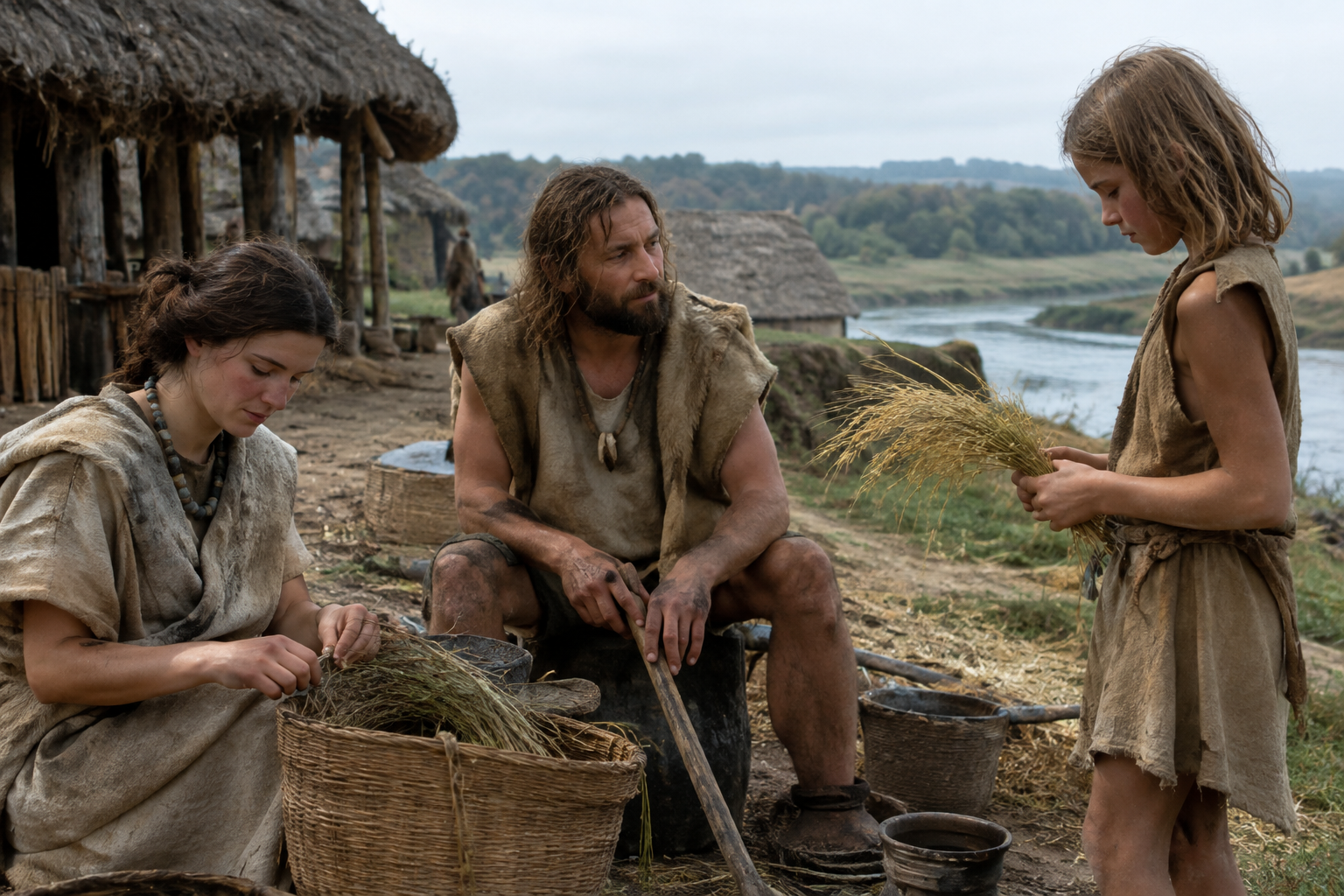
At Altendorf in Baden-Wuerttemberg, three men dated to around 3050 BC - AD140, AD165, and AD198 - place the Y-DNA haplogroup I2c1a1 in a very specific archaeological setting: the world of later Neolithic farming communities in southern Germany. That matters because haplogroups are often discussed as if they drift through time in the abstract. Here, by contrast, we can pin this branch to named ancient individuals from a real settlement landscape, in a region central to the making of prehistoric Europe.
The intriguing part is not that one isolated burial carried this lineage, but that several men from the same broad place and period did. Even with sparse sample descriptions, that repetition suggests that I2c1a1 was part of the paternal mix present among settled communities in Neolithic southwest Germany. Y-DNA follows one direct male line only, not the whole ancestry of a person, but in archaeology that single line can still illuminate how communities were structured and how old European lineages persisted inside farming societies.
The three relevant samples all come from Altendorf in Baden-Wuerttemberg: AD140 and AD165 are described as Altendorf LBK, while AD198 is listed simply as Altendorf, all around 3050 BC. That combination immediately requires a little care. The famous Linearbandkeramik, or LBK, belongs earlier in the Neolithic than a date around 3050 BC would usually suggest, so the label may reflect a local site tradition, a broader cultural attribution in a database, or a shorthand that does not capture the full chronological nuance of the excavation history. The safest point is the strongest one: these are Neolithic men from southern Germany, and they are associated here with I2c1a1.
Altendorf sits in one of the classic corridors of early and middle European farming. Southern Germany was not some quiet edge zone; it was one of the key places where incoming farming traditions, long-settled local populations, and later Neolithic social changes interacted over many centuries. In that setting, a paternal lineage such as I2c1a1 becomes interesting not because it can be made to stand for a whole people, but because it reminds us that Neolithic communities were genetically mixed and historically layered.
An ancient DNA study of these populations has been circulated through research on central European ancient genomes, and while one should not overclaim beyond the accessible sample information, the broader scholarly picture is clear enough: Neolithic Europe was not genetically static. Communities changed, merged, and persisted in ways that archaeology alone only partly reveals.
Neolithic France and ancient DNA
I2c1a1 is a narrow branch within the wider haplogroup I, one of the old Y-chromosome families of Europe. That wider parent lineage has deep prehistoric roots on the continent, but it would be careless to transfer every broad statement about haplogroup I, or even about I2 as a whole, directly onto I2c1a1. The value of the Altendorf evidence is that it anchors this exact branch, or at least these reported assignments to it, in a concrete Neolithic context.
That distinction matters for family historians. A man with I2c1a1 today is not "from" Altendorf in any simple sense, nor is he automatically descended from a single named archaeological culture. What the evidence does suggest is that this paternal line was present among farming-era populations in central Europe more than five thousand years ago, and that it survived within communities that were already the product of earlier admixture and local continuity.
Ancient DNA headlines often favour spectacular single finds: a prince, a warrior, an unusual grave. But for understanding a haplogroup, a cluster can be more revealing than a celebrity skeleton. AD140, AD165, and AD198 do not need royal trappings to be historically valuable. Together they show recurrence, and recurrence is often the archaeologist's best friend.
If only one sample at Altendorf carried I2c1a1, we might treat it as an isolated thread. With three men from the same broad site and date, we are looking at a pattern worth noticing. That still does not prove a dynasty, a close paternal pedigree, or even a single household. Yet it does make it harder to dismiss the lineage as a stray arrival with no local footprint.
This is also a useful reminder that ancient settlements were not sealed communities with one male line each. Even within one site, several paternal lineages could coexist. The significance of I2c1a1 at Altendorf is therefore not exclusivity, but presence: a durable male line embedded within a settled Neolithic world.
Mesolithic-Neolithic transition
One of the biggest lessons from European archaeogenetics is that the Neolithic was never just a story of replacement. Early farming spread from Anatolia into Europe, but as farming communities expanded they interacted with people whose ancestors had been on the continent long before agriculture. In many regions, the genetic result was a complicated blend: some maternal lines, some paternal lines, and a great deal of genome-wide ancestry moved differently through time.
That broader context helps make sense of an I2-associated branch turning up in Neolithic southern Germany. Lineages within haplogroup I are often tied, in very broad terms, to ancient European hunter-gatherer ancestry. But by 3050 BC, such lineages were not living in a separate "forager world". They had long since become part of mixed farming societies. In other words, a paternal line could be old in Europe without implying that its bearer was culturally outside the farming communities of his day.
That is where archaeology usefully punctures modern genetic fantasy. People did not walk around in prehistory as embodiments of haplogroups. They lived in villages, used local ceramics, buried their dead according to local custom, married across communities, and adapted to changing landscapes. A branch like I2c1a1 survived because real men had sons within those worlds.
Baden-Wuerttemberg is one of those regions that keeps turning up in European prehistory because it sits at a meeting point. Routes along the upper Danube and Rhine connected communities over considerable distances. Ideas, people, crops, and marriage ties moved through this landscape for millennia. So when I2c1a1 appears here in the Neolithic record, it is best understood within a mobile but locally rooted world.
The Altendorf men were living long after the first introduction of farming into central Europe. By their time, the neat old contrast between "incoming farmers" and "indigenous hunter-gatherers" had already blurred into something more historically interesting. Paternal lines persisted, disappeared, and reappeared under the pressure of local demography, kinship systems, and regional interaction. A lineage found repeatedly in this area may reflect that long and uneven process rather than a single migration event.
This is why a site cluster like Altendorf deserves more attention than it often gets. It helps fill the middle ground between sweeping continental models and the intimate detail of a single grave. It gives I2c1a1 a place in the lived archaeology of Neolithic Europe: not legendary, not dynastic, but solidly present.
Adaptation to Neolithic farming
For someone researching I2c1a1 today, the most defensible takeaway is not a grand tribal label but a grounded prehistoric one. This branch is represented in Neolithic southern Germany by multiple ancient individuals from Altendorf, around 3050 BC. That places it within the male-line diversity of settled central European communities at a time when farming, local continuity, and long-term admixture were already deeply entangled.
In other words, I2c1a1 is not merely a technical string of letters. In the ancient record we have here, it belongs to men who stood inside one of Europe's great prehistoric transformations: the mature farming world that emerged after generations of contact between old European ancestry and new Neolithic ways of life.






Comments