Haplogroup I2a2a1b2

– 5 min read


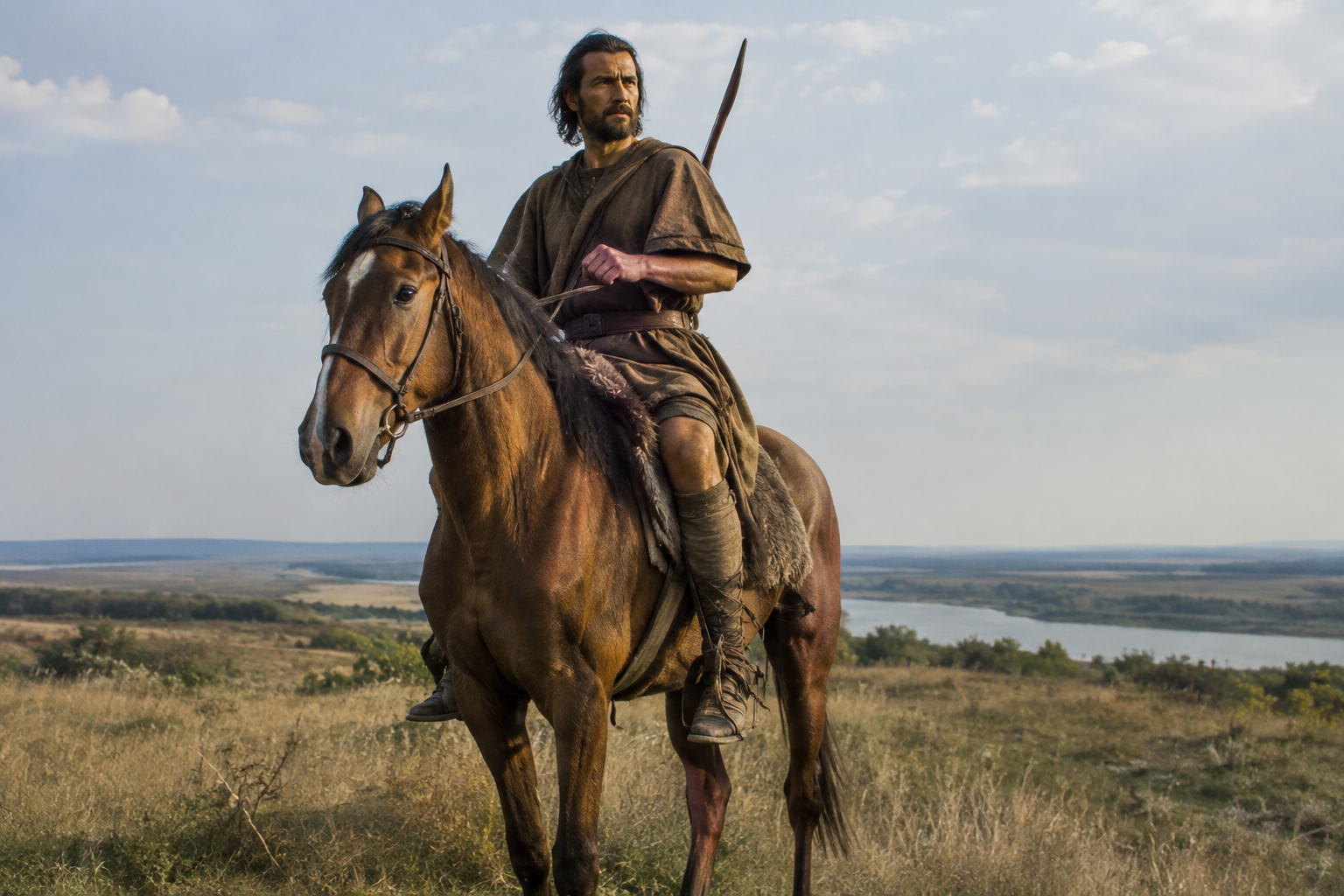
At Ilyatka in present-day Ukraine, one Bronze Age man has become an unexpectedly useful witness for the paternal lineage I2a2a1b2. He is recorded as sample ILK002, dated to around 2800 BC, and described as a horse rider from the North Pontic world. That is already enough to make him interesting: not because one grave can explain an entire haplogroup, but because it places this paternal branch in a landscape where mobility, herding, and new forms of social life were transforming eastern Europe.
For people researching I2a2a1b2 today, ILK002 offers a rare anchor point. Y-DNA follows one direct paternal line only, so it does not sum up a person's whole ancestry or identity. Still, when a branch appears in an ancient individual from the Ukrainian Bronze Age, it gives us something solid to work with: a place, a period, and a human life set within one of the most consequential regions in Eurasian prehistory.
The Ilyatka find sits in a broad zone stretching across the grasslands and forest-steppe north of the Black Sea. Around the late 4th and early 3rd millennium BC, this was not some remote edge of history. It was one of the great contact regions of prehistoric Eurasia, where communities moved animals, exchanged technologies, and linked river valleys with open steppe.
ILK002 is described simply as a Bronze Age horse rider, and that description matters. It places him in a world where horsemanship, whether early, developing, or socially prestigious, was becoming increasingly significant. In this setting, a paternal lineage like I2a2a1b2 is best understood not as the badge of a single "people," but as part of a mixed human landscape in which older European male lines and steppe-associated populations interacted over centuries.
A major ancient DNA study of the region, published in Nature, helped establish just how dramatic these population changes were in Bronze Age Europe. The large historical importance of that research is not that it turns every individual into a stereotype, but that it showed how the steppe zone became central to later European population history.
The haplogroup in question here is I2a2a1b2, a narrow branch within the wider Y-DNA haplogroup I2. That wider family has deep roots in Europe, but it is important not to flatten the story. A broad parent haplogroup can be very old and widespread, while a much narrower branch may have a more specific and later history that still remains only partly mapped.
That is why ILK002 matters so much. He does not tell us where the entire I2 family began, nor does he prove a direct line from one ancient rider to any later medieval or modern surname. What he does show is that a lineage associated here with I2a2a1b2 was present in the Ukrainian Bronze Age, in a region that was crucial to the movement of people and ideas between eastern and central Europe.
There is also a useful warning in the sample itself. Archaeologists and geneticists work with several different kinds of evidence at once: burial context, date, ancestry profile, and paternal line. These do not always point to the same sort of story. A man can carry an old European Y-line while belonging, in genome-wide terms, to a community shaped by recent mixing and mobility.
The label "horse rider" immediately tempts us toward big claims, but the more interesting approach is the careful one. Around 2800 BC, communities north of the Black Sea were living through major economic and social changes. Herding lifeways, wheeled transport, and growing long-distance connections were reshaping daily life. A mounted individual from this setting belongs to that wider story of movement, even if one skeleton cannot tell us precisely how often he rode, where he traveled, or what language he spoke.
That said, the association is historically valuable. Early horse use has become one of the central questions in Eurasian archaeology because it helps explain how steppe societies expanded their range and influence. If ILK002 carried I2a2a1b2, then this branch was present among the kinds of Bronze Age communities participating in those changes, rather than being confined to some imagined isolated refuge.
This is one of the most useful things ancient DNA can do for family historians. It does not give a heroic biography. It gives placement. It tells you that your paternal line, or a branch close to it, can be found in real archaeological landscapes where some of the great turning points of prehistory were unfolding.
Because I2 branches are often associated with deep European paternal ancestry, it is tempting to imagine a simple contest between "local" men and incoming steppe groups. Real prehistory was messier than that. The North Pontic and adjacent regions had already seen millennia of interaction among hunter-gatherers, early farmers, and pastoral populations.
In that long background, lineages related to I2 had moved through several different cultural worlds before the Bronze Age. By the time of ILK002, the point is not survival in a vacuum but incorporation into new social formations. A paternal line could persist while the surrounding ancestry, economy, and cultural habits changed dramatically.
This makes I2a2a1b2 especially interesting for anyone with eastern or central European paternal roots. Rather than pointing neatly to one tribe or later ethnic label, it may reflect the persistence of an older male lineage through periods of intense reorganization. In other words, the story is not one of stasis. It is one of continuity within change.
Ancient DNA articles often pile up dozens of individuals, but there is value in staying with one well-placed case. ILK002 matters because he is not floating in abstraction. He belongs to a time and region where archaeologists can connect genetics to wider changes in mobility, exchange, and steppe lifeways. Even a brief sample label becomes historically rich when the context is this important.
He also reminds us that narrow Y-DNA branches are often archaeologically elusive. Many paternal lines survive in modern populations without frequent ancient matches at the same fine level of resolution. When a branch like I2a2a1b2 appears in a documented Bronze Age individual from Ukraine, that is not the last word on its history, but it is a precious point of contact between living testers and the prehistoric record.
The strongest supported insight for I2a2a1b2 is not a grand claim about kings or a tidy migration map. It is the presence of this paternal branch in ILK002, a man from around 2800 BC in Ukraine, living in a region where Bronze Age mobility was reshaping Eurasia. For someone exploring this haplogroup today, that suggests a paternal story tied to the deep and complicated human history of eastern Europe: older European male ancestry carried forward into a fast-changing steppe world.






Comments