Haplogroup I2a2a1a2a

– 5 min read


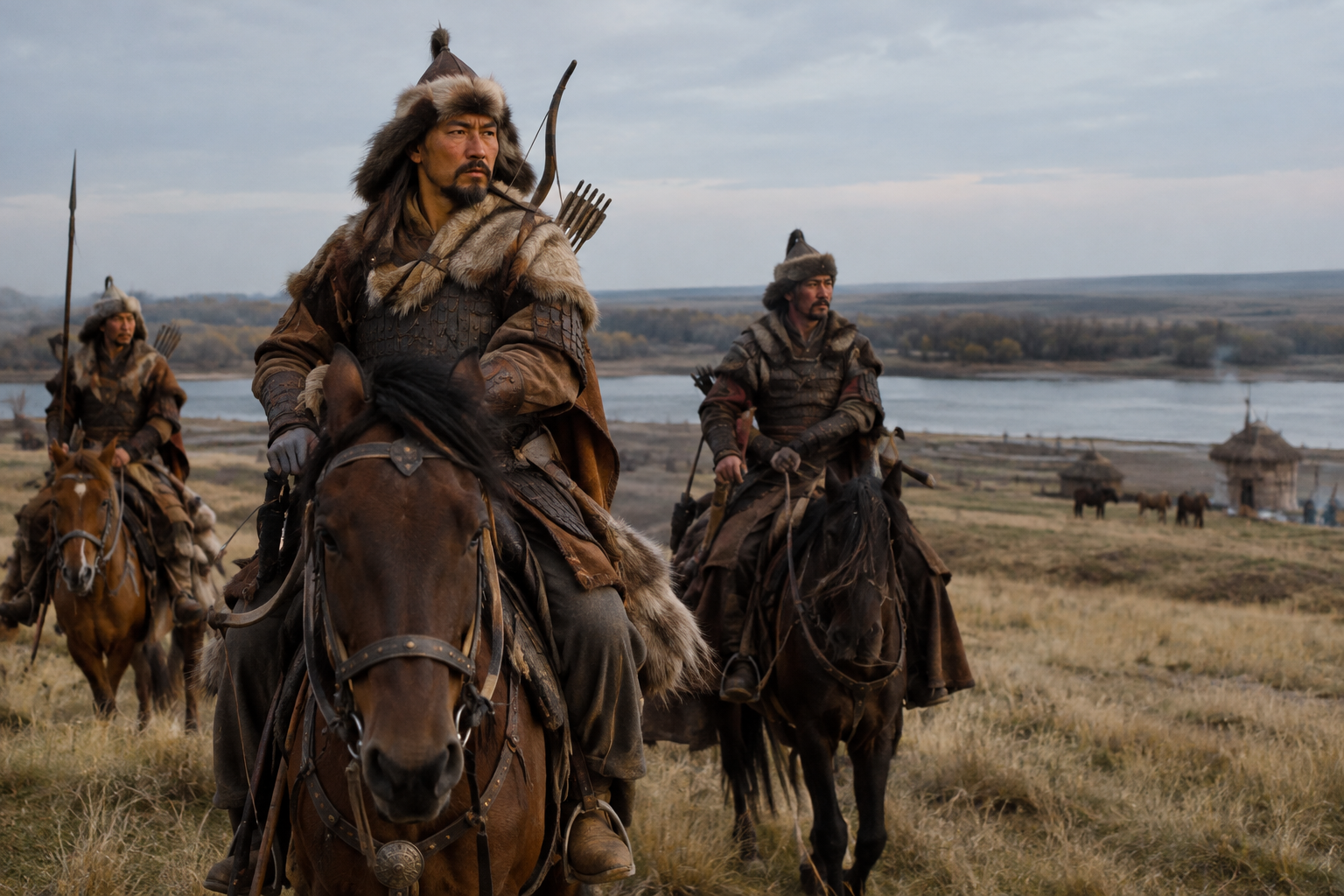
One of the more arresting appearances of haplogroup I2a2a1a2a in the ancient record comes from the middle Danube, in a man identified as HNF016, dated to around AD 450 and described as a Hun invader from the Danube-Tisza region of Hungary. That date matters. It places him in the unsettled decades when the Hunnic world pressed into the former Roman provinces and the Carpathian Basin became a meeting ground of steppe power, local populations, and other migrant groups.
For anyone tracing a paternal line, this is immediately intriguing because Y-DNA follows one direct male line only, not a person's whole ancestry. A man carrying I2a2a1a2a in a Hunnic-period context does not mean the haplogroup was uniquely "Hun" in any simple ethnic sense. But it does show that this branch could be present inside the mixed and politically volatile world assembled under Hunnic rule.
The Danube-Tisza Interfluve was no sleepy backwater in the fifth century. It sat in the heart of the Carpathian Basin, a region repeatedly reorganized by imperial retreat, military confederations, and new ruling elites. By the time of Attila and his successors, this landscape had become one of the great laboratories of post-Roman Europe, where local communities, incoming groups, and imperial leftovers all had to negotiate a new order.
That is the historical setting in which HNF016 appears. The label "Hun invader Hungary Danube-Tisza" should be read carefully: it identifies the burial in a Hunnic-period framework, but it does not magically solve the man's language, self-identity, or full family background. What it gives us, solidly, is a paternal lineage tied to a grave from the Hunnic sphere in Hungary at a moment when power moved fast and identities were layered.
A recent ancient DNA study focused on the European Huns and their wider context has helped sharpen that picture, showing just how varied these populations could be and how much the Hunnic horizon in Europe drew together people from different genetic backgrounds rather than representing one uniform biological bloc. That broader research context is essential when thinking about a lineage like I2a2a1a2a in a Hunnic-period burial.
Haplogroup I is one of the old European Y-chromosome families, with deep roots on the continent. But that broad statement can easily mislead if it is pushed too far downward onto a very specific subclade like I2a2a1a2a. The narrower the branch, the more cautious we have to be. A subclade is not a people, still less a ready-made migration story.
What makes HNF016 valuable is precisely that tension between old lineage depth and late antique political upheaval. Here is a paternal line from a wider European family appearing in a context associated with the Huns, a regime often imagined in stark outsider terms. Ancient DNA keeps spoiling that neat picture. Again and again, the archaeology of the Migration Period shows coalitions, recruitment, intermarriage, local incorporation, and shifting loyalties rather than tidy ethnic packages.
So the real significance of I2a2a1a2a here is not that it lets us pin one modern family to Attila's horsemen. It is that it places this paternal branch inside one of the most consequential historical transformations in late Roman Europe: the remaking of the Carpathian Basin by mobile power and mixed populations.
There is a temptation, especially with famous historical names, to imagine a single biological origin behind a confederation. The Huns are a perfect example. Texts describe them as a formidable power; archaeology shows elite display, military mobility, and abrupt political change; genetics adds a more complicated human picture. The people buried in Hunnic-period cemeteries and related contexts do not all belong to one simple ancestry profile or one single paternal tradition.
That matters when reading HNF016. If a man with haplogroup I2a2a1a2a could be buried in a Hunnic invasion-period setting in Hungary, then participation in the Hunnic world clearly extended beyond any imagined narrow eastern steppe male lineage. Some men in these settings may have had long local or regional European paternal roots, while others belonged to lineages with stronger eastern or mixed connections. Power drew them together.
This is one of the most useful lessons of archaeogenetics: political identity and paternal ancestry are related only loosely, and sometimes hardly at all. A warrior, retainer, local subordinate, incorporated ally, or descendant of an earlier population might all end up in the same historical orbit.
To understand why this branch turns up here, it helps to step back from the label "Hun" and look at the region itself. The Carpathian Basin had long been a crossroads. Before, during, and after Roman rule, it connected the Balkans, the steppe, Central Europe, and the northern Danube frontier. That made it an ideal zone for repeated resettlement and political experimentation.
By the fifth century, communities in this region had already lived through Roman influence, frontier militarization, and the movement of Gothic and other groups. The Hunnic period did not wipe that slate clean; it intensified it. A burial from this time may represent a newcomer, a descendant of earlier inhabitants, or someone from a family already mixed across several horizons. With only one named ancient sample here, we should resist overconfidence. But historically, the region strongly supports complexity rather than purity.
That wider pattern also fits what other MyTrueAncestry readers will have seen in posts on late antique and early medieval Europe: the frontier world was full of blending, local continuity, and fresh arrivals at once. The dramatic names in the written sources often hide just how entangled ordinary lives had become.
The Danube-Tisza region in the fifth century was not only a Hunnic theatre. It was also a place where Germanic-speaking groups, post-Roman provincial communities, and steppe-derived elites intersected. That makes any single Y-DNA result especially hard to flatten into a one-word identity. A paternal line like I2a2a1a2a may have been circulating in Europe long before the Hunnic political order took shape, then carried forward by men who found themselves absorbed into that order.
That point has implications beyond one sample. When language spread, when confederations formed, and when armies moved, male lines did not march in perfect lockstep with them. This is one reason ancient genomics has been so important for rethinking the spread of peoples and languages across Europe. It shows mobility, certainly, but also adoption, alliance, and layered ancestry.
With the evidence currently in view, haplogroup I2a2a1a2a is worth thinking about here not as a badge of one ancient tribe, but as a paternal line present in the highly mixed world of fifth-century Hungary. The sample HNF016, from around AD 450, places this branch in the middle of the Hunnic-era transformation of the Carpathian Basin. That is a historically rich setting: imperial collapse, mobile elites, regional survival, and new political identities being built in real time.
For a modern tester, the most responsible takeaway is that this branch can belong to a deeply European paternal background that remained part of later, mobile, and sometimes militarized societies. In other words, a lineage like I2a2a1a2a did not vanish when new powers arrived; it could travel with them, serve under them, or become woven into their world.






Comments