Haplogroup I2a1b1b1a1

– 5 min read


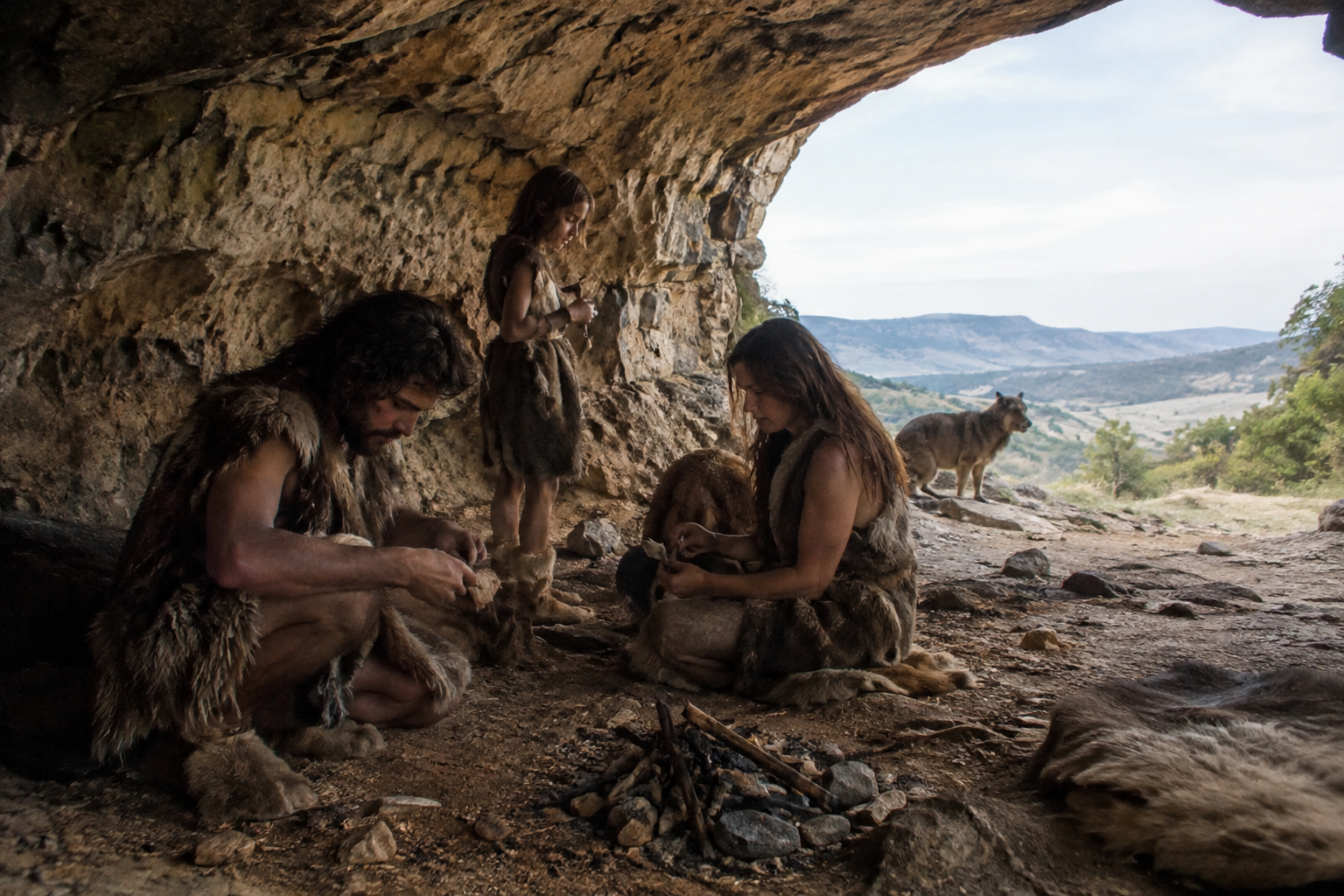
At El Mirador Cave in the Atapuerca hills of northern Spain, one ancient male known as I5838 offers a small but vivid glimpse into the deep history of the Y-DNA haplogroup I2a1b1b1a1. He is dated to around 2600 BC, placing him in the later Neolithic or Chalcolithic world of Iberia, a time when farming communities had long been established but older local lineages still persisted. That matters because this branch sits within the wider haplogroup I2 family, a paternal lineage with deep roots in prehistoric Europe.
One sample is never an entire people. Still, when a lineage like I2a1b1b1a1 appears in a cave site as important as El Mirador, it becomes part of a much bigger archaeological argument: how much continuity survived in Iberia after the arrival of early farmers, and how those local male lines fit into the changing human landscape before the great Bronze Age turnovers.
Atapuerca is famous above all for its extraordinary time depth. This limestone landscape in Burgos preserves evidence from many different chapters of human prehistory, from very ancient hominin occupation to later farming communities. El Mirador Cave belongs to that later story. By the 3rd millennium BC, caves in Iberia could serve a range of roles in community life, including habitation, storage, herding-related use, and the deposition of human remains.
The individual I5838 comes from this rich archaeological setting. The value of the find is not that it tells us everything about one man's life, but that it anchors haplogroup I2a1b1b1a1 in a real place and period: northern Spain around 2600 BC, in a cave used by settled agricultural populations. In other words, this is not a purely abstract branch on a phylogenetic tree. It appears in the lived world of late prehistoric Iberia.
El Mirador has already drawn attention in wider discussions of prehistoric Iberia because the cave preserves evidence for complex and sometimes unsettling mortuary and depositional practices. For readers interested in that specific archaeological background, this earlier piece gives useful context.
The haplogroup in this article, I2a1b1b1a1, is a very specific paternal branch. Y-DNA follows one narrow line of descent: father to son across many generations. It can therefore preserve striking continuity, but it never describes a person's whole ancestry, language, or identity.
That distinction is especially important in prehistoric Europe. A man carrying I2a1b1b1a1 in Chalcolithic Spain was not simply a stand-in for all Iberians, nor does the branch automatically tell us what language he spoke or what community name he would have recognized. What it does suggest is survival of a paternal line within a region where older European hunter-gatherer ancestry and incoming farming ancestry had already been mixing for millennia.
In broad terms, many I2 branches are often associated with lineages present in Europe before and during the spread of farming. But one must be careful here: the deep history of haplogroup I2 as a whole is not identical to the history of every sub-branch. For I2a1b1b1a1 specifically, the secure point in this article is the documented presence of that branch, or an associated classification, in ancient Iberia at El Mirador.
Around 2600 BC, Iberia was already a patchwork of established farming societies. Villages, caves, megalithic monuments, and regional burial traditions formed part of a landscape that had been transformed since the first Neolithic arrivals from the eastern Mediterranean many centuries earlier. Yet ancient DNA has shown repeatedly that this was not a simple tale of replacement. Local ancestry endured, mixed, and reappeared in different forms from region to region.
That is where a lineage like I2a1b1b1a1 becomes interesting. In later prehistoric Europe, especially after the expansion of steppe-related ancestry in many areas, some older paternal branches became rarer or more regionally restricted. A 3rd-millennium-BC Iberian occurrence reminds us that before those later shifts fully took hold, male-line diversity in western Europe could still include lineages with deeper prehistoric roots.
A major ancient DNA study of prehistoric Europe, including Iberian material, helped establish just how dynamic these transitions were across the continent. The larger framework can be explored through research on the genomic transformation of northwest Europe, which is often relevant when placing Iberian late Neolithic and Chalcolithic lineages into a continental setting.
The Iberian story did not end in prehistory, of course. Later periods layered Roman, post-Roman, and medieval mobility onto much older foundations, and that longer arc is worth keeping in mind when comparing ancient and present-day ancestry in Spain.
One of the most useful things about El Mirador is that it reminds us how important caves remained long after the Ice Age. In popular imagination, caves belong to Palaeolithic hunters painting bison on walls. In reality, many later prehistoric communities in Iberia used caves in practical, ritual, and funerary ways well into the Neolithic and beyond.
That makes I5838 more than a bare genetic label. He belonged to a world in which caves could serve as places of memory, deposition, and repeated return. Archaeology here works rather like stratigraphy in history itself: every layer complicates the last. A Y-chromosome assignment, when placed inside that material setting, becomes evidence not just of ancestry but of human presence within a particular social landscape.
Northern and western Iberia preserve several examples of cave use extending into later prehistory and the Iron Age, though each site has its own context and must not be collapsed into a single tradition. The broader pattern is discussed from another regional angle in this piece on Asturias.
Ancient Y-DNA findings are often uneven. Some periods yield many burials but few usable male lines; others produce striking paternal continuity in one cemetery and complete variety in the next. So even one securely placed individual can matter when the archaeological context is good. I5838 does exactly that for I2a1b1b1a1: he shows this paternal branch in prehistoric northern Spain before the historical eras that usually dominate written narratives.
For people exploring their own paternal ancestry today, that is the real value of the evidence. It does not confer a tribe, a coat of arms, or a guaranteed link to a named dynasty. What it offers instead is something more solid: a documented appearance of this lineage in the cave-using farming communities of 3rd-millennium-BC Iberia, at one of Spain's most important archaeological landscapes.
Anyone interested in the wider prehistoric background to Iberian genetic change may also want to compare this with work on later population shifts in nearby parts of the peninsula.
The most distinctive thing we can say about I2a1b1b1a1 from the evidence here is not that it ruled a kingdom or marched with a famous people, but that it is anchored in a real prehistoric individual from El Mirador Cave at Atapuerca, around 2600 BC. That places this paternal branch within the long, layered story of Iberia's farming societies, where older European male lines could endure through major cultural change. For a modern tester, that is a meaningful result: your direct paternal line belongs to a history that was already old in prehistoric Spain.






Comments