Haplogroup I2a1a2b1a1a2c

– 5 min read


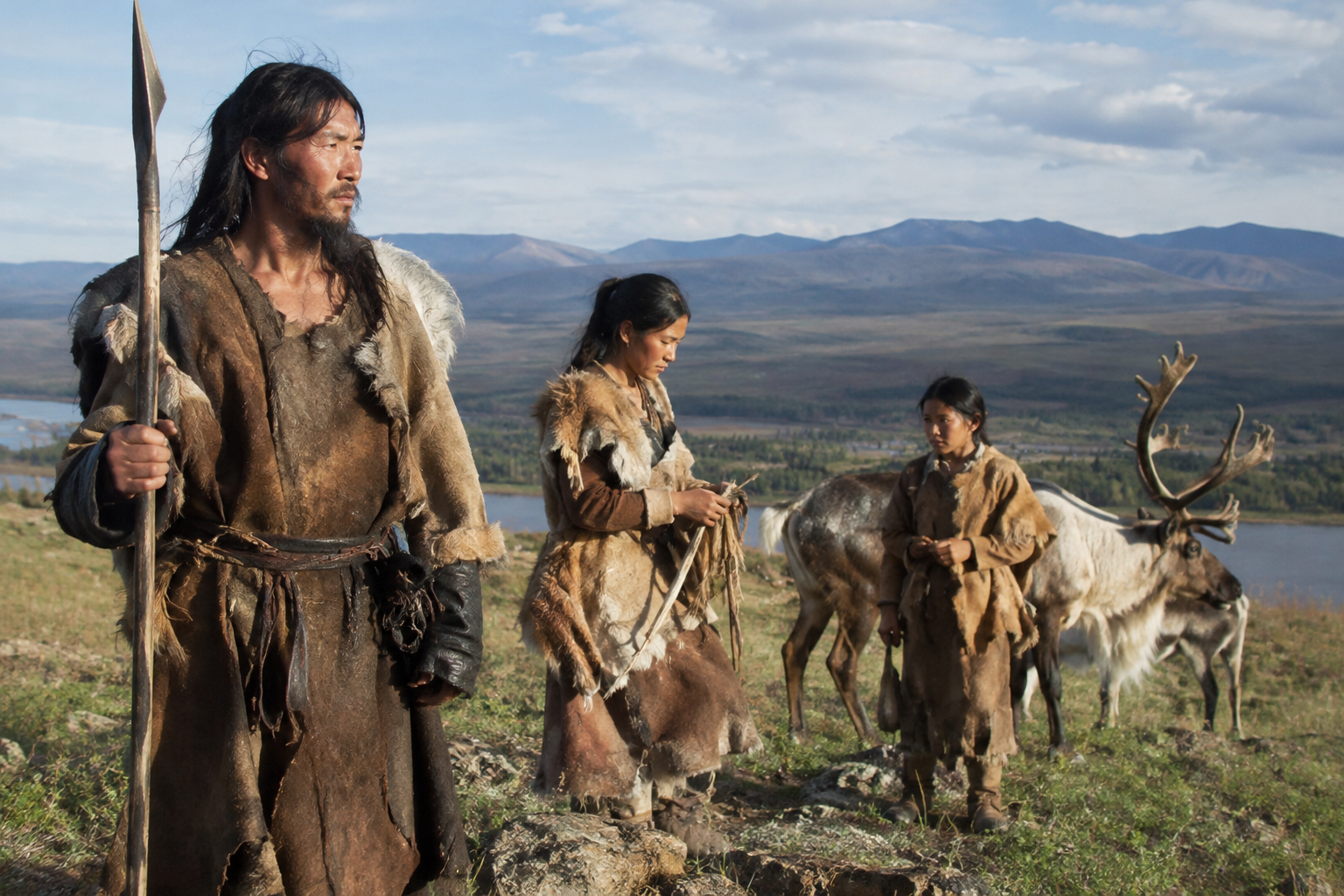
One of the more arresting clues for the Y-DNA branch I2a1a2b1a1a2c comes not from a famous king or a richly furnished tomb, but from a single ancient man identified as irk032, dated to around 1000 BC in the Trans-Baikal region. That is already enough to make historians pause. This is a paternal lineage usually discussed within the larger story of haplogroup I2, a branch with deep roots in Europe, yet here it appears far to the east, in the zone between the steppe, the forest, and the worlds that fed into Inner Asia.
The fascination lies precisely in that mismatch between expectation and evidence. A Y-chromosome tracks one direct paternal line only, not a person's whole ancestry, language, or identity. Even so, when a branch associated with a wider West Eurasian paternal family turns up in Bronze Age Trans-Baikal, it tells us that the human past was mobile, entangled, and quite capable of carrying lineages across enormous distances.
The sample irk032 is placed in the Bronze Age of the Trans-Baikal region, around 1000 BC. That landscape, east of Lake Baikal and stretching toward Mongolia and the Amur world, was never some isolated edge of history. It was a contact zone: herders, foragers, and mixed communities moved through it over many centuries, and later historical steppe networks would only make more visible processes that had much deeper roots.
In that setting, the attribution of I2a1a2b1a1a2c is striking because it suggests that paternal lines connected to broader western Eurasian populations could become part of communities much farther east than many people assume. This does not mean that everyone around irk032 shared that lineage, nor does it mean that one sample maps a neat migration arrow from one place to another. But it does show that by the late Bronze Age, the paternal landscape of Inner Asia could include lineages with histories extending well beyond the local horizon.
A useful wider backdrop comes from research on ancient populations of eastern Eurasia and the Eurasian steppe interface, which has helped show just how mixed and regionally varied these societies were. The broad lesson is not simplicity but overlap: eastern and western ancestries, older local populations, and incoming steppe-related groups interacted repeatedly over long periods.
Ancient DNA of the Mongolian Steppe
The exact haplogroup in question here is I2a1a2b1a1a2c, a very narrow twig on a much older paternal tree. That matters. It is easy, and usually wrong, to take the known history of the broad parent haplogroup I2 and paste it directly onto a tiny downstream branch. Ancient DNA does not work like that.
What we can say carefully is that haplogroup I belongs to an old European-centered paternal macro-lineage, and that some of its branches later appear in populations shaped by large-scale Bronze Age movements. For a specific terminal branch such as I2a1a2b1a1a2c, however, the evidence must come from directly tested men like irk032, not from sweeping generalizations. At present, this makes the Trans-Baikal occurrence more important than any grand origin myth. It is a datapoint anchored in time and place.
That also means the sample should be read historically, not romantically. A man with this paternal line in Bronze Age Trans-Baikal was not automatically "European" in any modern ethnic sense. He belonged to a local ancient community whose full ancestry may have been mixed, and whose language, lifeways, and social identity cannot be reduced to one Y-chromosome label.
The Trans-Baikal region sits in one of the great hinge zones of Eurasian prehistory. To the west lay the steppe corridors that linked the Altai, Kazakhstan, and eventually farther western regions. To the south and southeast were routes into Mongolia and northern China. To the north were forested zones with their own long traditions of mobility and exchange.
By about 1000 BC, these were not sealed worlds. Metalworking traditions, herd management, exchange systems, and people themselves moved across them in complicated ways. A paternal lineage like I2a1a2b1a1a2c in this environment is therefore best understood as evidence of participation in those long-distance networks, whether through migration, assimilation, marriage exchange, or the survival of older male lines within newly mixed populations.
This is one reason ancient DNA from the wider Baikal and Inner Asian zone has transformed the field. Archaeologists long suspected that the region's cultures were shaped by repeated contacts, but genetics has given that suspicion a firmer human scale. Instead of abstract arrows on a map, we get actual individuals whose bodies preserve traces of those encounters.
One of the most important themes in Eurasian archaeogenetics is that paternal lineages do not always stay where we expect them. Branches that are commoner, or better known, in one broad region can appear unexpectedly far away when ancient remains are tested. That does not make them anomalies in the theatrical sense; rather, it reminds us how much human history depended on movement over generations.
In the Bronze Age and early Iron Age, the steppe and its neighboring zones acted less like a barrier than a conveyor belt of contacts. Some of those contacts were dramatic, involving expansions of herding populations and new social formations. Others were smaller and slower: one household joining another community, one male line surviving while others vanished, one burial population preserving a paternal signature that later became rare.
For I2a1a2b1a1a2c, that is the sensible historical frame. The branch's appearance in irk032 does not require a tidy saga of conquest or a named tribe from later texts. It fits a broader archaeological picture in which western-associated paternal lines could travel east and become part of the human mosaic of Inner Asia.
That wider pattern also connects with current work on steppe-linked language dispersals and mobility. While a single Y-line cannot prove a language shift, studies of ancient genomes have made it increasingly clear that the spread of people, pastoral systems, and social networks often went hand in hand with cultural change.
Language Spread and Ancient Genomics
There is a temptation, when evidence is sparse, to make one individual stand for an entire people. Historians should resist that. irk032 is valuable precisely because he is specific: one man, one Bronze Age context, one paternal line documented in Trans-Baikal around 1000 BC.
Yet one sample can still matter greatly. In regions where ancient Y-DNA remains thinly sampled, each securely dated individual helps redraw the map of male-line history. irk032 suggests that the branch I2a1a2b1a1a2c, or at least a lineage closely associated with it in current reporting, had reached or persisted in eastern Eurasia by the late Bronze Age. That is a serious historical observation even if the finer details of the branch's route remain unclear.
It also sits comfortably beside other MyTrueAncestry discussions of eastern steppe and northern Eurasian mobility, where ancient genomes repeatedly show population change without simple replacement. Communities were often formed by layering, mixture, and local continuity rather than by one clean incoming wave.
Ancient DNA of Northern Eurasia
If you belong to I2a1a2b1a1a2c, the strongest ancient signal here is not a claim to any named dynasty or a single ethnic label. It is something more historically interesting: your direct paternal line belongs to a branch that appears in at least one documented Bronze Age man from Trans-Baikal, a region shaped by deep connections between the steppe, Siberia, and Inner Asia. In other words, this lineage fits a world of movement, contact, and survival across very large distances.
That is often how ancient DNA is most illuminating. It does not hand us a ready-made legend. It gives us a harder, better story: one real man, one real place, and a paternal branch that shows how wide the Bronze Age world could be.






Comments