Haplogroup I1a4

– 5 min read


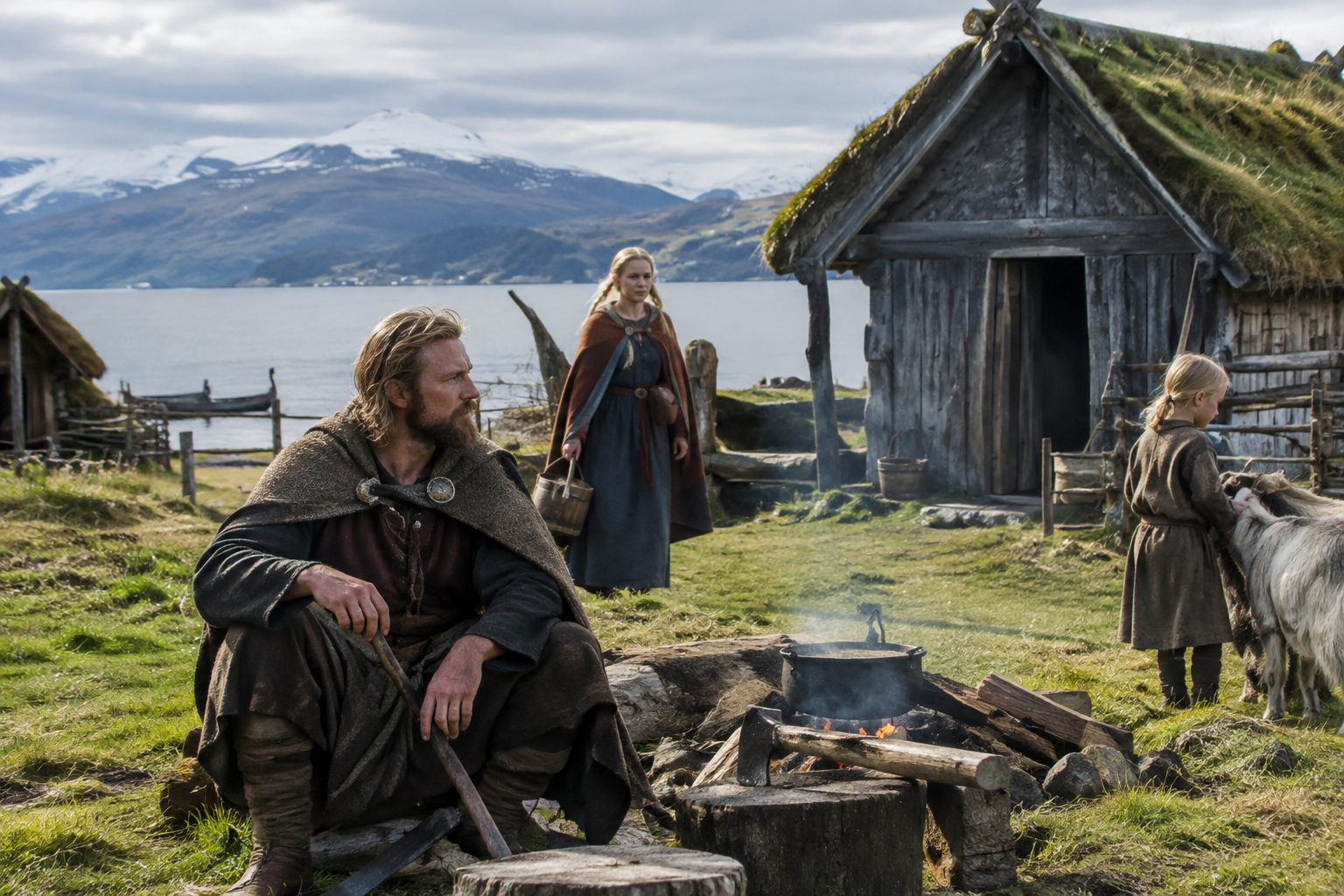
In around AD 925, one man was buried at Aunvollen in Trondelag, Norway, and modern ancient-DNA work has preserved at least one precise clue from his paternal line: sample CGG105915 is reported in connection with Y-DNA haplogroup I1a4. That is a narrow branch within the wider I1 lineage, a paternal line strongly associated with Scandinavia in both modern and ancient genetic studies. Even with just a single ancient sample securely placed in time and landscape, the find matters, because it anchors this branch in a recognizably Viking Age setting rather than leaving it floating in a purely modern family-tree world.
Aunvollen sits in Trondelag, a region that was central to the making of early medieval Norway. That alone does not turn one burial into a saga hero, a chieftain, or the founder of a dynasty; archaeology is not improved by wishful thinking. But it does let us say something solid: by the 10th century, a man linked with I1a4 was living and dying in one of the core zones of Norse society, in a period when seaborne movement, regional kingship, and expanding Scandinavian networks were reshaping northern Europe.
There is a temptation, when a haplogroup article has only one ancient individual to work with, to pad the story with sweeping claims. Better to linger over what is genuinely useful. CGG105915, from Viking Age Aunvollen in Trondelag and dated around AD 925, gives I1a4 a concrete archaeological foothold: a real person, in a real place, in a period of intense historical visibility.
That matters because Y-DNA is often discussed as if it were abstract heraldry. In fact, it is at its most interesting when it can be pinned to excavated people. Y-DNA traces one direct paternal line only, not a person's full ancestry, but that single line can still be historically revealing when it turns up in a well-dated burial. Here, the setting is especially telling: Trondelag was no fringe district. It was one of the political and cultural heartlands of Viking Age Norway.
An ancient DNA study investigating Scandinavian material, including Viking Age individuals, is linked here through research on ancient genomes from the region. Without inventing details that are not in the burial record provided, the key point is simple: the genetic classification ties this man to a specifically northern paternal tradition that fits the broader Scandinavian context well.
The wider haplogroup I1 is one of the best-known Y-chromosome lineages in northern Europe, especially in Scandinavia. But this article is about I1a4, not I1 in general, and that distinction is important. A narrow branch cannot automatically be given the whole history of its parent lineage, still less the whole history of Germanic-speaking peoples.
What can responsibly be said is that I1a4 belongs inside that broader northern European paternal framework, and the Aunvollen burial shows that this subclade, or a classification associated with it, was present in Viking Age Norway. That is a useful scale of interpretation: specific enough to be meaningful, cautious enough to be credible.
This is also where genetics and language have to be kept in their proper lanes. A Y-chromosome branch is not a language, a tribe, or an ethnicity. Still, in the Viking Age Scandinavian setting, paternal lineages like branches of I1 are part of the same historical world in which Old Norse speech, regional polities, and outward migration were all in play. For the broader background to that relationship between genetics and Germanic expansion, see this related piece on language and ancient genomics.
To understand why Aunvollen is a strong setting for an I1a4 article, it helps to remember what Trondelag was in the 9th and 10th centuries. This was an agriculturally productive, politically important district facing both the Norwegian Sea and inland routes. It belonged to the zone from which many of the processes we call "Viking Age" were driven: raiding, trade, alliance, kingship, and settlement.
So when a paternal line like I1a4 appears here, it is not merely "Scandinavian" in a vague sense. It is tied to a region deeply implicated in the historical formation of Norway itself. That does not prove this branch began in Trondelag, nor that every later bearer descends from men of that district. But it does place the lineage in one of the most historically resonant parts of Norse Europe at a very active moment.
There is a wider lesson here too. Many people imagine Viking ancestry as something belonging only to famous raiders or settlers abroad. Ancient DNA keeps bringing us back to the less glamorous but more important reality: most lineages survived because ordinary regional communities endured. Burials like Aunvollen matter because they connect a named haplogroup branch to the local societies that sustained Viking Age Scandinavia.
Although the Aunvollen burial is the only ancient sample provided here, it sits in a much larger Scandinavian story. By around AD 925, Norwegian-linked networks stretched across the North Atlantic and into the British Isles, Ireland, Iceland, and beyond. A paternal branch found in Trondelag during this period belongs, at the very least, to the demographic world that made those expansions possible.
That should be phrased carefully. We cannot take CGG105915 and declare that his descendants sailed to every Viking colony, or that I1a4 was especially common in all Norse migrations. But if your paternal line is I1a4, this burial does show that your branch belonged to the same broad historical environment as the Norse movements that shaped medieval Britain and the North Atlantic islands.
That broader context is especially relevant because Norwegian-linked migration left lasting marks far beyond Scandinavia. The movement of people around the North Sea did not end with the Viking Age; it blended with later medieval and early modern histories as well. MyTrueAncestry readers interested in those longer northern connections may want to compare this with work on later North Sea population history.
One ancient individual is not a population survey. Yet one sample can still be historically valuable if it is well located in place and time. In the case of I1a4, CGG105915 does exactly that: he gives the branch an excavated presence in Viking Age Norway, in a region central to Norse history.
This kind of evidence is often more useful than grander but vaguer claims. Rather than promising mythical founders or forcing links to named dynasties, it offers something sturdier: a documented paternal branch in a documented society. For genealogists, that is often the difference between fantasy ancestry and real historical anchoring.
Other Scandinavian ancient-DNA studies, including work on early medieval and post-Viking burials, help show how genetic continuity and change played out across the region. A related discussion of early Christian-age Scandinavian burials is worth reading alongside this one, because it captures the world that followed hard on the heels of the late Viking period represented at Aunvollen.
The most distinctive thing we can say about haplogroup I1a4 from the evidence here is pleasingly concrete: it is represented by an ancient man, CGG105915, buried around AD 925 at Aunvollen in Trondelag, one of the historic cores of Viking Age Norway. That does not turn every modern bearer into a saga character, but it does place this paternal line firmly inside the lived world of Norse Scandinavia. If you carry I1a4 today, the safest historical insight is also the most interesting one: your direct paternal line belongs to a branch that was present in Norway during the Viking Age, in a region that mattered enormously to the making of medieval Scandinavia.






Comments