Haplogroup I1a3a1a2a1b

– 5 min read


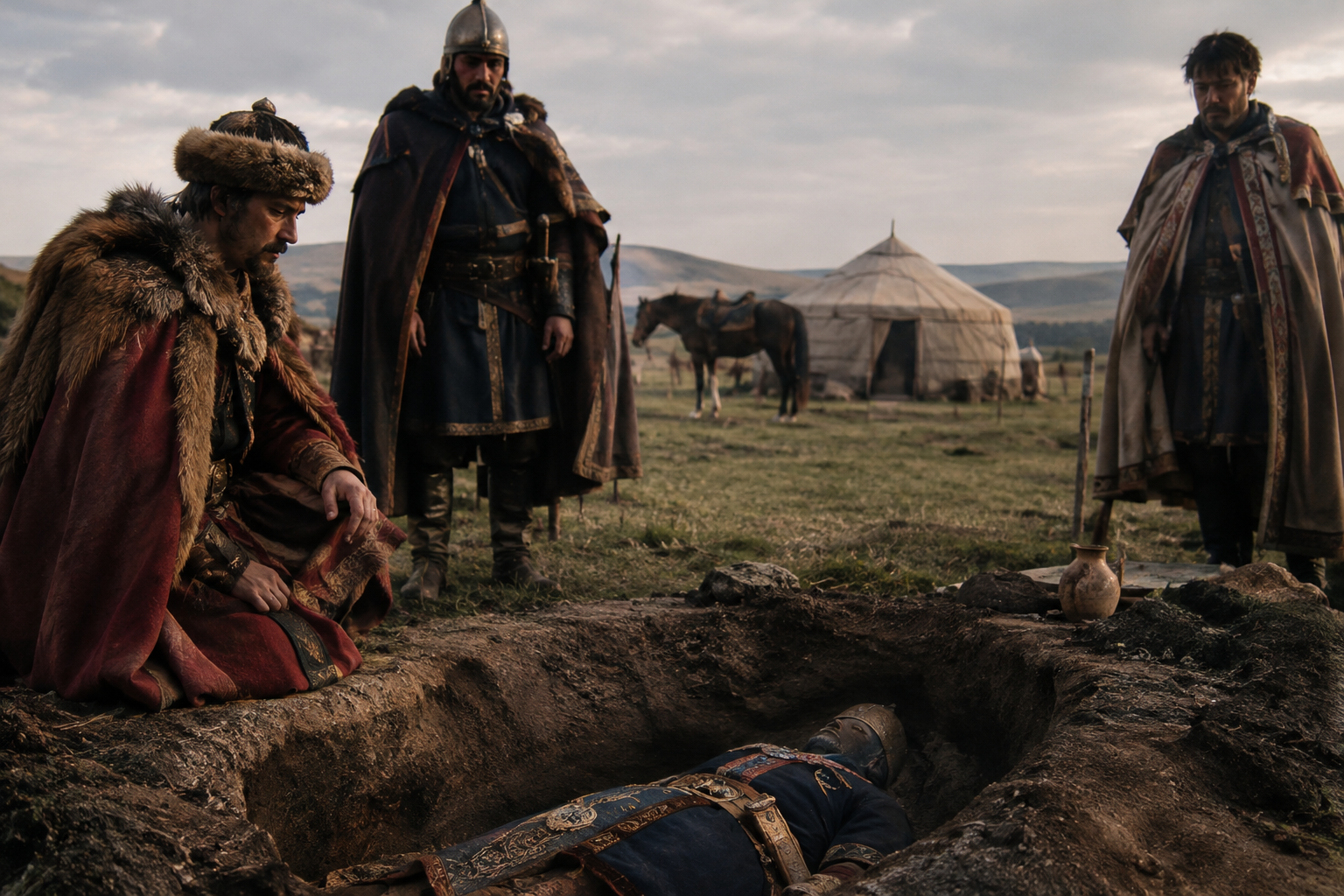
At Kunpeszer in Hungary, one early seventh-century burial stands out because it belonged to the Avar-period elite yet carried a Y-chromosome line more often associated with northern and central Europe than with the steppe world usually imagined for the Avars. The individual is recorded as KUP014, dated around AD 609, and linked here with the haplogroup I1a3a1a2a1b. That is a very precise paternal label, and it makes this grave interesting not because it solves the history of the Avars, but because it shows how mixed and mobile elite society in the Carpathian Basin could be.
A second clue comes from Late Antique Bulgaria: sample I41203, from a Gothic grave at the Aul of Kan Omurtag near Han Krum Village, dated around AD 400. Put beside the Kunpeszer burial, it suggests that this paternal branch, or at least a very close ancestral line within the same wider family of Y-chromosomes, appeared in very different political worlds on the lower Danube and in the Carpathian Basin. The real story here is not a neat ethnic badge, but a series of male lines moving through frontier zones where Goths, Romans, steppe groups, and later Avar elites all met.
The haplogroup I1a3a1a2a1b belongs to the wider Y-DNA family I1, a paternal lineage best known from northern Europe. Y-DNA tracks only one line of descent: father to son to son again. It does not describe a person's full ancestry, language, or cultural identity. A man buried as an Avar elite could carry a Y-line with deeper roots elsewhere; a man buried in a Gothic context could have ancestors from several regions. Archaeology and genetics have to be read together, not collapsed into one another.
That matters especially with a subclade as narrow as I1a3a1a2a1b. The broader history of I1 cannot simply be pasted onto this exact branch. What the ancient evidence does show is that a paternal line assigned to this branch appears in two historically charged settings east and southeast of the old Roman frontier, during the centuries when Europe was being remade by war, alliance, migration, and incorporation into new ruling groups.
The earlier of the two anchor points is I41203, from a Gothic grave near the Aul of Kan Omurtag in Bulgaria, dated to about AD 400. That date matters. It places the burial in the turbulent age when Gothic groups were established in the Balkans and around the Black Sea world, in the aftermath of Roman-Gothic conflict and amid the wider dislocations triggered by Hunnic expansion.
What makes this sample valuable is not that it proves all Goths shared one paternal origin; plainly they did not. Rather, it adds one more piece to an increasingly familiar picture: communities called "Gothic" in archaeology or history were often genetically varied. A related MyTrueAncestry discussion, Ancient DNA Reveals Mixed Origins of Gothic Communities in Late Antique Bulgaria, explores precisely that broader context.
So I41203 is best read as evidence for a paternal line present inside a Gothic-associated population in Late Antique Bulgaria, not as a simple ethnic signature. Frontier societies absorbed newcomers, clients, soldiers, and dependants. A Y-line could persist through those changes even when political identities shifted dramatically.
The later sample, KUP014, comes from an Early Avar elite grave at Kunpeszer in Hungary, dated around AD 609. This setting is especially revealing because Avar-period elites are often discussed in terms of steppe connections, mounted warfare, and the new power structures that emerged in the Carpathian Basin after the collapse of Roman imperial authority in the region.
Yet the Avar realm was never a sealed ethnic container. It was a confederative power drawing in different groups across a broad zone from the Balkans to the middle Danube. A genetic study of the period published in research on the ancient population history of the Carpathian Basin helped make this point forcefully: early medieval elites could carry very different ancestry profiles, reflecting both steppe and European inputs. In that light, KUP014 is less a surprise than a useful reminder that elite status and paternal descent were not locked to one origin story.
The significance of KUP014 is therefore historical as much as genetic. If a line associated here with I1a3a1a2a1b appears in an early Avar elite burial, it tells us that men bearing this paternal background could be incorporated into high-status circles of a powerful post-Roman polity. That is exactly the kind of evidence that turns grand labels like "Avar" into something more human and more complicated.
Seen together, I41203 in Bulgaria and KUP014 in Hungary sketch a corridor rather than a homeland. Between AD 400 and AD 609, the lower Danube and the Carpathian Basin were not peripheral backwaters. They were among the most intensely connected regions in Europe, where armies moved, federate groups settled, imperial frontiers broke down, and new ruling powers assembled followers from many backgrounds.
This is exactly the sort of landscape in which a paternal lineage can appear in more than one cultural horizon without implying a straight, traceable genealogy from one grave to the other. The man in the Gothic burial and the man in the Avar elite grave need not have belonged to the same close family. But their shared placement within this narrow haplogroup points to a line circulating in populations involved in the post-Roman transformation of southeastern Europe.
For readers interested in the wider Black Sea and steppe-facing setting, MyTrueAncestry has also explored Ancient DNA and Migrations in the Northern Black Sea Region, a useful companion to the world in which Gothic and later steppe-linked polities operated.
There is a temptation, with any rare or precise Y-DNA label, to turn it into a badge of a people: Gothic, Germanic, Avar, Scandinavian, or something equally tidy. But archaeology keeps spoiling tidy stories. A branch like I1a3a1a2a1b matters precisely because it appears in contexts where identities were political and social as much as ancestral.
In Late Antique Bulgaria, the branch is associated with a Gothic-context grave. In early seventh-century Hungary, it appears in an elite Avar-context burial. That spread is not enormous in time, but it is historically dense. It covers the age of the Huns' aftermath, the reshaping of Gothic communities, the end of Roman authority in much of the Balkans, and the rise of new steppe-linked power in the Carpathian Basin.
A newer study on ancient populations in this wider zone, available as a preprint examining the region's genomic history, is part of the continuing effort to refine these connections. Even where individual subclade assignments remain only pieces of a larger puzzle, the direction of travel in the research is clear: early medieval Europe was full of mixed communities, and paternal lines often crossed the labels historians inherited from texts.
Goths as a Multi-Ethnic Community
If your paternal line falls under I1a3a1a2a1b, the best-supported ancient picture here is not one of a single tribe or royal house, but of a lineage present in the mobile, politically entangled societies of southeastern Europe during Late Antiquity and the early Middle Ages. The known ancient examples tie this branch to a Gothic-associated burial in Bulgaria and an Avar elite burial in Hungary, two settings that underline movement, recruitment, and cultural mixture rather than isolation.
That is, in its own way, a more interesting inheritance. It places this paternal line in the thick of the Danubian world when old empires were fragmenting and new ones were being built from many kinds of people.






Comments