Haplogroup I1a3a1a1

– 5 min read


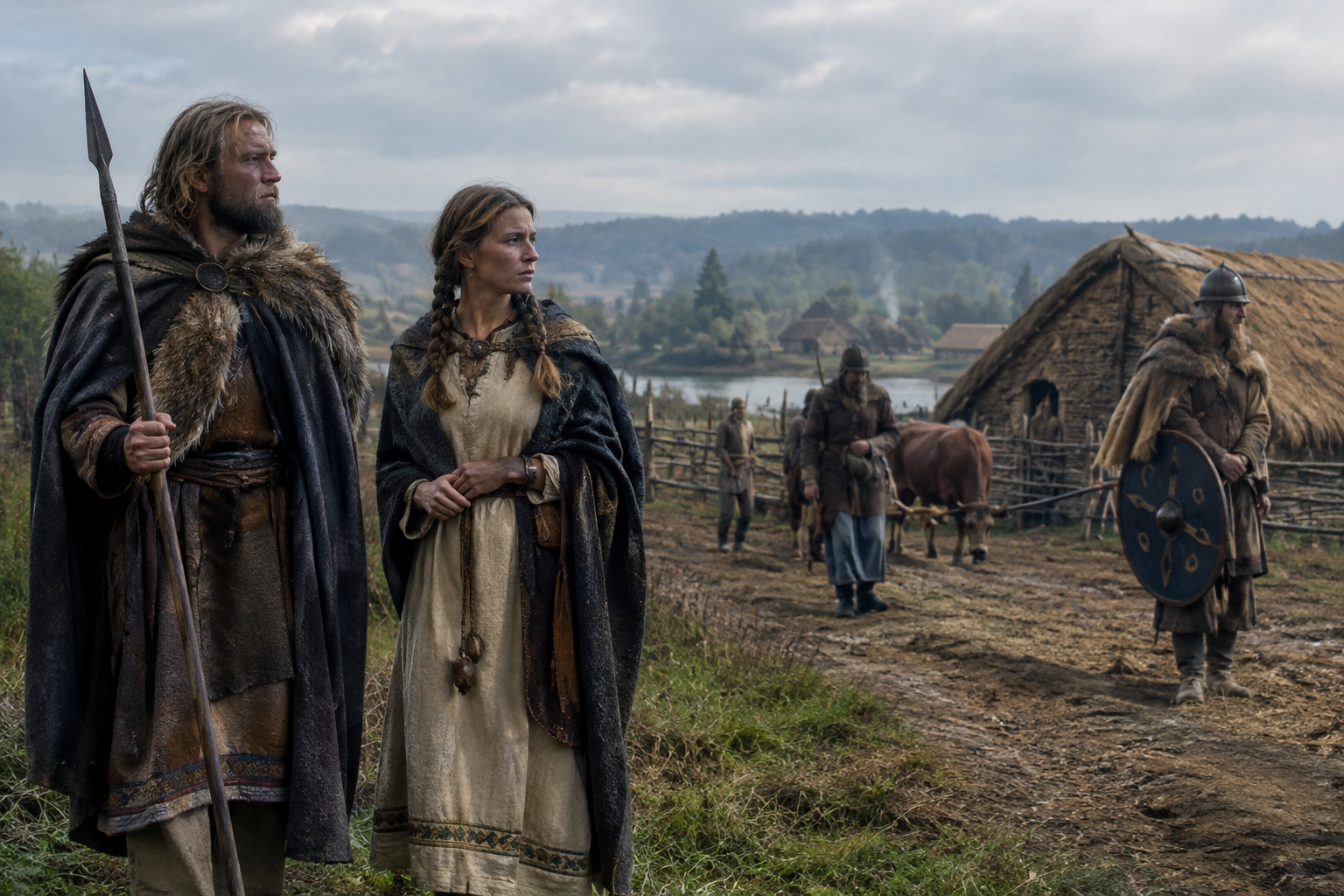
At Kowalewko in northwestern Poland, archaeologists uncovered burials linked to the Wielbark cultural horizon, a community often discussed in connection with the Gothic world of the Roman Iron Age. One of the men from that cemetery, sample PCA0018, dated to around AD 160, is associated here with the Y-DNA haplogroup I1a3a1a1. That is a very precise paternal label, and like all Y-DNA it follows only one narrow line of descent: father to son, across many generations. Even so, when such a lineage appears in an archaeological context as historically charged as Wielbark Poland, it becomes a useful thread for asking how male lines moved through the Baltic and into the migration-era world.
The second sample in this small but telling picture comes several centuries later and much farther south: RKF274 from Rákóczifalva in Hungary, dated to around AD 650. Between these two men lies the most interesting part of the story. We are not looking at a tidy ethnic signature or a simple tribal badge. We are looking at a paternal branch appearing in two different archaeological settings, one in the orbit of the Wielbark cultural sphere and another in the mixed, mobile societies of the Carpathian Basin after Rome.
Kowalewko matters because it sits in one of the best-known archaeological landscapes for studying the communities that classical and later sources associated with Goths. The Wielbark culture, centered in parts of present-day Poland, has long attracted attention because of its role in debates about movement around the southern Baltic and toward the Black Sea. Ancient DNA has complicated that older picture in useful ways: these were not simple, sealed populations, and the people buried in such cemeteries could be genetically varied even when sharing material culture and burial customs.
That makes PCA0018 especially valuable. A paternal line associated with I1a3a1a1 in a Wielbark cemetery does not prove that this exact branch was uniquely "Gothic," nor that everyone in that community shared it. What it does show is that this lineage was present in a northern-central European setting that later became central to migration-period history. For readers exploring this haplogroup today, that is the first solid archaeological anchor: a Roman-era man buried in the Wielbark world of Poland.
Research on Gothic-associated populations has increasingly emphasized diversity rather than purity, and that is the right lens through which to view this sample. MyTrueAncestry readers interested in that broader context may want to compare this with the post on late antique Gothic communities in southeastern Europe.
Gothic communities in late antique Bulgaria
The larger haplogroup behind this branch is I1, a well-known Y-chromosome lineage with a long history in northern Europe. But the article haplogroup here is not I1 in general. It is the much narrower branch I1a3a1a1, and that distinction matters. Broad statements sometimes made about all I1 lineages cannot automatically be transferred to this exact subclade without direct evidence.
In practical terms, these two ancient samples suggest that a paternal line related to I1a3a1a1 was present in historically important zones stretching from Roman-period Poland to early medieval Hungary. That is interesting precisely because it cuts across neat textbook boxes. Archaeology, language, political identity, and paternal descent do not line up tidily. One male line can persist through changing cultures, alliances, and migration routes.
An ancient DNA study of mobility and ancestry in the migration-period world has helped underline just how connected these regions became, even when identities remained locally specific. One relevant example is the large-scale research published in a genetic study of the European Migration Period, which has been important in showing the scale of movement and mixture across this era.
The Hungarian sample, RKF274, belongs to a very different historical landscape. By around AD 650, the Carpathian Basin was a post-Roman frontier zone shaped by the aftermath of Hunnic power, the presence of Germanic groups, the rise of the Avars, and local populations whose lives did not fit neatly into any single label. Rákóczifalva is therefore not merely "another site." It is a reminder that paternal lines seen farther north in earlier centuries could also turn up in the deeply mixed societies of early medieval Hungary.
This is where the story of I1a3a1a1 becomes more than a note about northern origins. If a lineage connected with Roman-period Poland also appears in migration-period Hungary, the simplest responsible conclusion is continuity through movement and re-settlement somewhere within the wider European network of the first millennium AD. It does not tell us whether RKF274 was a Goth, a Gepid, an Avar subject, or something else entirely. But it does place this paternal branch in one of the great contact zones of early medieval Europe.
That broader Hungarian setting has become much clearer thanks to archaeogenetic work on post-Roman cemeteries and elite burials in the Carpathian Basin. Readers following that theme may find this related discussion useful.
The real force of these two samples lies in their combination. One appears in the Wielbark sphere of Poland around AD 160; the other in Hungary around AD 650. That does not give us a straight genealogical chain, but it does sketch a historical corridor. The centuries between them saw repeated reorganization of power, long-distance mobility, military service, marriage exchange, and the formation of new communities from older ones.
In older histories, such movements were often narrated as if whole "peoples" marched intact across Europe. Ancient DNA has made the picture both messier and more convincing. Communities associated with Goths and other migration-period groups could include people of varied ancestry, and the same paternal lineage might persist across several cultural settings. A cemetery label is not a bloodline, and a bloodline is not an ethnicity.
For the Polish side of this story, genetic work on Wielbark-related remains has helped support the view that these communities belonged to a wider northern and central European world rather than to an isolated local pocket. The details of every lineage remain debated, but the overall lesson is robust: movement happened, and it happened through socially mixed groups. That point is explored from another angle in this MyTrueAncestry article on Gothic diversity.
Goths as a multi-ethnic community
Two ancient men do not define the whole history of I1a3a1a1. But small sample sets often matter in archaeogenetics because they place a lineage in a securely dated human context. PCA0018 tells us that this paternal branch, or a very close reported association to it, appears in Roman-period Wielbark Poland. RKF274 shows that the same branch was also present in early medieval Hungary, in a region transformed by the collapse of Roman frontiers and the emergence of new political orders.
That is a better kind of evidence than a vague modern frequency map. Ancient samples let us tie a lineage to real places, real cemeteries, and real moments in history. In this case, the pattern fits a world of north-to-south links across the first millennium AD, without reducing that world to a single tribe or origin myth.
Readers interested in how early medieval populations around the Baltic continued to shift and connect across time may also enjoy this article on Finland's changing genetic landscape.
Early medieval Baltic connections
What can someone with Y-DNA haplogroup I1a3a1a1 take from this evidence? Not a promise of descent from a named people, and certainly not a shortcut to a royal pedigree. But there is a historically meaningful pattern: this paternal line is attested in a man from the Wielbark cultural world of Roman-period Poland and again in migration-period Hungary centuries later. In other words, it belongs to the human traffic of northern and central Europe during one of the most mobile periods in European history. For family historians, that is already a substantial clue: your direct paternal line may have been part of the networks that linked the Baltic, the Polish plain, and the Carpathian Basin long before medieval kingdoms fixed later identities.






Comments