Haplogroup I1a3a1

– 5 min read


In the early 11th century, a high-status man was buried at Bodzia in central Poland. He is known to genetic researchers as VK157, and his grave has become one of the more intriguing windows onto the Viking Age world east of the Baltic. For anyone interested in Y-DNA haplogroup I1a3a1, that burial matters because it places this paternal line, or a lineage reported within its branch, inside an elite setting shaped by mobility, war, and long-distance political connection.
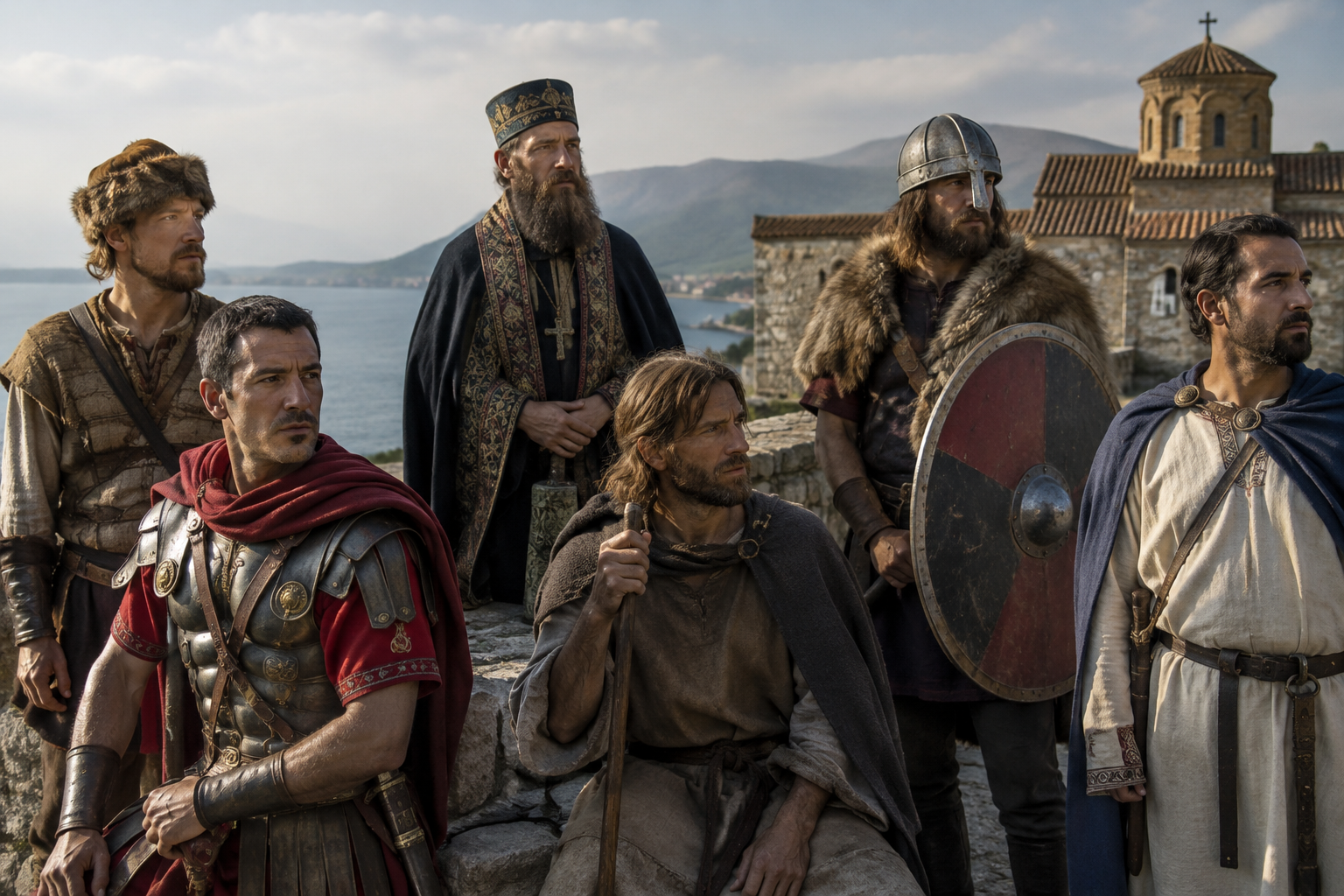
That is a useful place to begin, because I1a3a1 is not a culture, a language, or a ready-made ethnic label. It is one paternal line within the wider I1 family, tracked through the direct male line only. What the ancient evidence shows is not a single tribe marching neatly across the map, but men carrying this branch appearing in very different historical worlds: Roman frontier violence in Croatia, post-Roman communities in Hungary, early medieval England, Byzantine Anatolia, and Viking Age Poland.
VK157, dated to about AD 1015 at Bodzia, stands out because Bodzia is one of those cemeteries that immediately tells us we are dealing with connections larger than the village horizon. The site has long been discussed as part of the wider political world linking Scandinavia, the Baltic, and the Piast realm. A reported I1-related paternal assignment in such a burial fits a pattern already familiar from Viking Age studies: northern-linked male lines turning up far beyond Scandinavia proper, especially in martial and elite contexts.
That does not mean every man in Bodzia was "a Viking" in the simple storybook sense, nor that one haplogroup can explain the cemetery. But it does show that paternal lines associated today with northern Europe were present among people operating in the corridors between the Baltic and the emerging states of central Europe.
A much earlier appearance comes from Roman-period Croatia. Sample OSIJ007 is identified as a Roman-period Germanic warrior from Mursa, dated around AD 260, during the Third Century Crisis. That date alone tells you why the find is so evocative. This was an age when the Roman Empire's frontiers were under pressure, armies were moving constantly, and identities on the Danube were entangled rather than neatly separated into Roman and barbarian boxes.
Mursa, near the Drava and Danube networks, sat in precisely that world of military movement and cultural contact. If a lineage connected with I1a3a1 was present here, it reminds us that northern or north-central European paternal lines were not confined to their supposed homeland. They could appear in frontier violence, recruitment, raiding, settlement, and alliance. The point is not that Y-DNA reveals a man's language or loyalty, but that it can catch a paternal thread moving through the upheavals of late Roman Europe.
One of the broader studies useful for this kind of context is research on ancient DNA and migration-period Europe, which helped establish just how mixed and mobile these late antique populations could be. That larger backdrop makes a sample like OSIJ007 much more historically interesting than a bare label on a chart.
Another important sample is RKO003 from Rakoczifalva in Hungary, dated around AD 650. By then the old western Roman order had gone, but the Carpathian Basin was anything but empty or isolated. It was a contact zone where local survivors, incoming groups, and shifting political powers met. A paternal line reported as I1a3a1 here is therefore historically plausible in exactly the way one would expect for the Migration Period and its aftermath: not as proof of a single mass replacement, but as one male line carried into a mixed regional society.
The Carpathian Basin repeatedly turns out to have been a place where ancestry, language, and political identity did not line up tidily. Men with very different backgrounds could end up in the same cemeteries and under the same rulers. In that sense, RKO003 is valuable because it places this haplogroup branch within the real messiness of post-Roman Europe rather than in a nationalist myth of pure origins.
A recent genetic study of post-Roman and medieval populations in Hungary is especially relevant for understanding that setting of mixture and continuity. Even when a precise subclade in an individual burial must be handled cautiously, the regional picture is clear enough: the basin was a human crossroads.
Sample S16508, from Wolverton Radcliffe in Buckinghamshire and dated around AD 600, brings I1a3a1 into early medieval England. This is exactly the period when the political map of lowland Britain was being reshaped by migration and local adaptation. The old habit was to speak as if "Anglo-Saxon" cemeteries represented a straightforward folk movement. Ancient DNA has made that picture much less tidy and much more interesting.
What a male line like this suggests is participation in the wider North Sea world, where people, marriages, alliances, and households linked Britain to the coasts of the Continent and beyond. Some individuals in early medieval England had substantial recent continental ancestry; others were more locally rooted; many communities included both. A reported I1-associated paternal line at Wolverton Radcliffe fits that pattern of mixture rather than replacing it with a simplistic invasion story.
That wider argument is developed in research on the Anglo-Saxon migration and the formation of the early English gene pool, which has helped move discussion away from crude either-or models. Y-DNA here is one strand in a broader social history of movement across the North Sea.
Two other samples make the branch even harder to lock into one neat regional story. I14832, from the Zeytinliada Monastery in Anatolia and dated around AD 800, places this paternal line in a Byzantine Christian context. Meanwhile R110, described as a Vasconic-Roman mix from Crypta Balbi around AD 500, points to late antique Rome itself, a city still full of population movement long after the imperial capital had shifted elsewhere.
Now, one must be careful here. A single Y-chromosome does not tell us whether a man in Byzantine Anatolia spoke Greek, Armenian, Latin, or something else at home; nor does it let us collapse the diversity of late Rome into a single origin story. But these appearances matter precisely because they widen the map. I1a3a1, or lineages reported within its orbit, are not confined to a northern homeland in the ancient record supplied here. They show up in imperial, monastic, frontier, and urban settings.
That is, in fact, one of the great lessons of ancient DNA when handled properly: the old civilisational borders look much less solid once actual bodies from cemeteries begin to speak.
If you belong to Y-DNA haplogroup I1a3a1, the strongest lesson from these ancient finds is not a claim to one famous people or one royal pedigree. It is something subtler and more historical. This paternal branch appears in the evidence across the late Roman, Migration Period, early medieval, Byzantine, and Viking Age worlds, often in places shaped by movement across frontiers and seas.
So the branch is best understood, on present evidence, as part of the wider northern European male-line landscape that became deeply entangled with the political and military history of early medieval Europe. In other words: not a static tribe, but a lineage repeatedly caught up in the making of post-Roman Europe.






Comments