Haplogroup I1a10b1b
– 4 min read


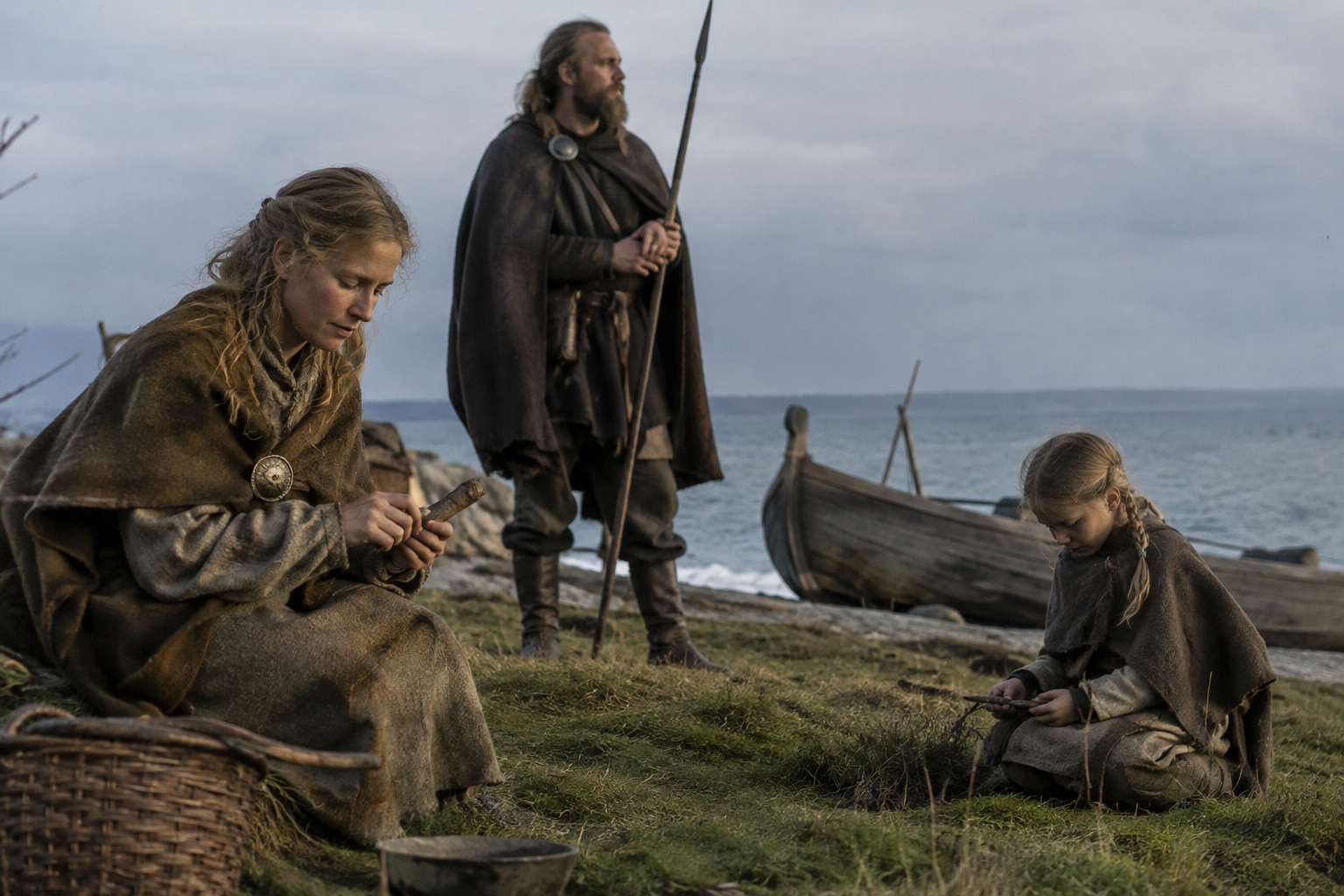
At Salme on the island of Saaremaa, off Estonia's western coast, archaeologists uncovered one of the most arresting finds of the early Viking world: boat burials containing men killed around AD 725. Among them was an individual identified as VK482, also recorded as Salme II-XVI. He matters here because he has been associated with the Y-DNA haplogroup I1a10b1b, a very specific paternal branch within the broader I1 lineage that is often linked with northern Europe.
That is already enough to make the case interesting. Salme is not just another cemetery and VK482 is not just another label in a spreadsheet. He belongs to a moment before the classic Viking Age raids of the late 8th and 9th centuries had fully entered written history, yet the archaeology already shows organized seaborne violence, long-distance movement across the Baltic, and the presence of men whose paternal ancestry fits neatly into a northern European context.
The first thing to say is that Y-DNA follows one line only: father to son, through the direct paternal chain. It does not describe a person's whole ancestry, language, or identity. Even so, a lineage like I1a10b1b can still be historically illuminating when it turns up in a securely dated burial from a famous site.
In this case, the broader context is especially useful. The Salme burials have become central to discussions of early Scandinavian mobility around the eastern Baltic. A genetic study of these burials and related material circulated at this research preprint, helping place the site within the developing field of ancient DNA on Viking-period populations. For a branch such as I1a10b1b, the importance lies less in any grand claim about a single "tribe" and more in the way a direct paternal line appears inside a documented maritime warrior setting.
The island setting matters. Saaremaa sits in the Baltic zone where Scandinavia, the eastern Baltic, and wider northern European networks met. By the early 8th century, this was not a remote fringe but a corridor of contact, competition, and seaborne travel. The Salme burials show that armed groups were crossing these waters well before the later age of famous kings and saga heroes.
VK482 comes from Salme II, one of the two boat burials at the site. That makes his context unusually strong even when sample-level details remain limited. We do not need to embroider the story with invented biographical detail to see what is significant: a man associated with I1a10b1b was buried in a setting that speaks of organized group movement across the Baltic, probably involving Scandinavian-linked men operating far from their home shores.
That is where the history becomes properly chewy. The eastern Baltic in this period was not simply "Viking" in the later textbook sense. It was a contact zone where conflict and alliance could involve men from different localities, and where cultural labels must be handled carefully. A paternal lineage from the wider I1 world fits comfortably into this northern setting, but the burial context tells us more than the haplogroup ever could on its own.
I1a10b1b is a downstream branch of I1, and that distinction matters. The parent lineage I1 is well known in Scandinavian and broadly Germanic-associated discussions, but one should not lazily project every broad I1 pattern onto a narrower subclade. What VK482 gives us is a datapoint for the specific branch in an early medieval Baltic context, not a license to claim that every bearer of I1a10b1b descends from a single Viking war band or that the branch itself was born at Salme.
Still, this one datapoint is valuable because it is anchored to archaeology rather than later surname tradition. So many paternal-line narratives drift quickly into wishful thinking. Here, by contrast, the evidence begins with a real excavated individual from around AD 725, in a real boat burial, in a region of demonstrable Scandinavian-Baltic interaction.
Baltic connections in the early Middle Ages
If you are trying to understand what a lineage like I1a10b1b may have been doing in this period, the best answer is not to leap straight to dynasties or national identities. Instead, look at the sea. The Baltic in the 7th and 8th centuries connected communities from present-day Sweden, Estonia, Finland, and beyond. Men, goods, and ideas moved along these routes long before chroniclers pinned neat ethnic labels onto them.
That wider setting makes Salme unusually important as a threshold site. It catches northern Europe at an awkward, fascinating moment: after the Migration Period, before the fully documented Viking Age, and during the expansion of maritime networks that would soon reshape much of Europe. A paternal branch such as I1a10b1b appearing here is therefore less about prestige than about placement. It helps locate one direct male line inside the human traffic of the early Baltic world.
There is also a useful caution in this. Ancient DNA can support the picture of northern-linked male lineages in such contexts, but it does not collapse archaeology into genetics. Boat burial, violent death, regional mobility, language, and paternal descent are different kinds of evidence. The value of VK482 is that these kinds of evidence meet in one excavated person.
Germanic languages and ancient genomics
With a haplogroup article built around a single ancient individual, restraint is not a weakness; it is good history. We can say that VK482 from Vendel Age Saaremaa Salme II-XVI, dated around AD 725, provides a concrete ancient association for I1a10b1b in an eastern Baltic maritime context. We can also say that this fits broader expectations for the presence of I1-derived paternal lines among northern European populations of the period.
What we should not do is inflate that into a complete migration map for the subclade, or a claim that the branch belonged exclusively to one people. One ancient sample is a precious anchor point, not the whole ship. Its importance lies in chronology and context: I1a10b1b is not merely a modern testing label but a lineage that can now be glimpsed in the world of early Baltic sea-raiders and warrior burials.
Violence and kinship in Baltic Viking burials
For someone researching I1a10b1b today, the strongest historically grounded insight is not a promise of famous descent but a setting: this branch is represented in the archaeology of the early medieval Baltic, in the world of seaborne northern European networks that linked Scandinavia and its neighbors before the Viking Age was fully named. VK482 at Salme gives that lineage a human face, even if only briefly - an excavated man from a violent and mobile age, buried on an Estonian island at the edge of a changing northern world.






Comments