Haplogroup H2c
– 5 min read


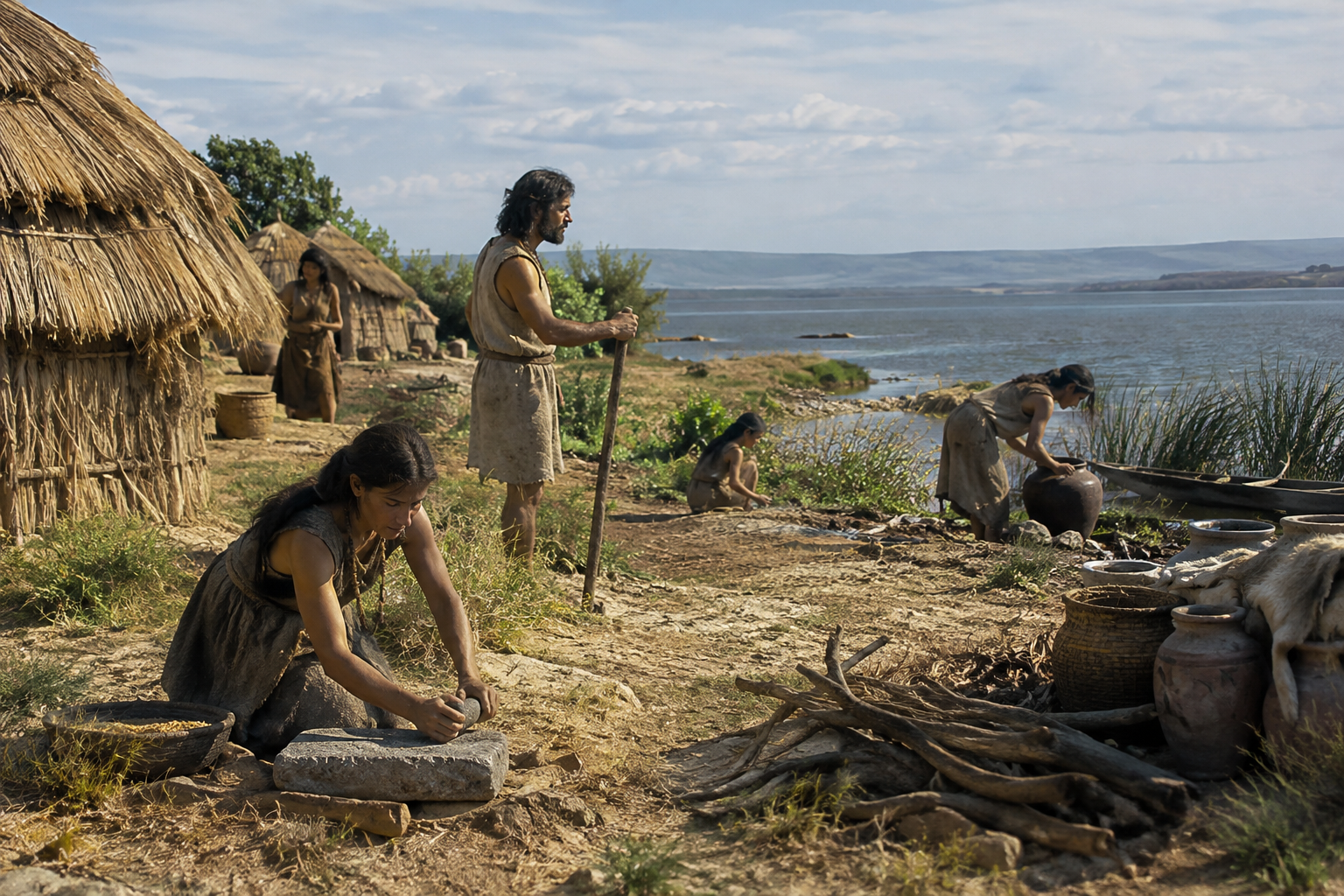
At Ilipinar in the Marmara region of northwestern Anatolia, one ancient male sample offers a particularly neat way into haplogroup H2c. The individual known as I10545, dated here to around 4500 BC, belongs to a world that sat at a hinge point between Asia and Europe: farming settlements, growing regional networks, and communities whose descendants helped shape much of later Neolithic Europe. When a paternal line like H2c turns up in that setting, it matters not because it tells us everything about the man, but because it places one direct male line firmly inside the early farming societies of Anatolia.
That is the first useful thing to say about H2c. It is a Y-DNA branch, so it traces one strictly paternal line among thousands of ancestors any person would have had even a few centuries later. But for prehistory, even that narrow line can be revealing. In this case, H2c belongs to the broader haplogroup H2, a lineage repeatedly associated in ancient DNA research with early European farmers and with the movement of farming populations out of Anatolia into southeastern and central Europe.
Ilipinar is not just another dot on the map. Northwestern Anatolia was one of the great contact zones of the Neolithic world, where communities were linked to the Aegean, the Balkans, and inner Anatolia. An individual from this region carrying H2c is therefore historically interesting because he stands near one of the main launch points for the agricultural expansion into Europe.
That does not mean I10545 was a migrant founder marching westward with a bag of seed and a slogan. Archaeology is rarely so obliging. What it does mean is that the H2c branch was present among settled farming populations in a region central to the spread of Neolithic lifeways. That is a much stronger and more precise statement than the vague habit of assigning whole haplogroups to entire continents or peoples.
A major ancient DNA study of the wider region, published in Science, helped sharpen this broader picture by examining long-term population change around the southern arc of Europe. For readers with H2c today, the significance is straightforward: this branch fits well within the paternal landscape of the early farming world, especially in the Anatolian-Balkan sphere.
There is a temptation, whenever a rare or ancient lineage appears, to turn it into a banner for a nation, a tribe, or a language. H2c resists that sort of tidy labeling. The branch is better understood as part of an older paternal layer found among Neolithic farmers, especially before later Bronze Age male-line expansions transformed much of Europe's Y-chromosome landscape.
That last point is crucial. In many parts of Europe, the Bronze Age saw a dramatic rise of other Y-DNA lineages, especially those associated with steppe-related expansions. As a result, branches like H2 and its subclades often appear more clearly in earlier farmer contexts than in later periods. H2c therefore belongs to a paternal story that is ancient, important, and often partly obscured by what came after.
So if your Y-DNA is H2c, the best-supported historical frame is not "royal," "tribal," or "ethnic" in any simple sense. It is deeply Neolithic: a lineage rooted in the male lines of early agricultural communities, including those in Anatolia who stood close to the threshold of Europe's farming transition.
Anatolia was not merely a backdrop to early farming; it was one of its major centers. By the sixth and fifth millennia BC, communities across western and northwestern Anatolia were part of a dense world of villages, cultivated crops, livestock management, and local exchange. The appearance of H2c in that environment gives the lineage a very different historical feel from lineages that first become visible in steppe pastoralist or later Iron Age settings.
There is also a pleasing archaeological sobriety to this. We do not need heroic narratives. A man from Ilipinar, sample I10545, tells us that one branch of H2 was present in a settled Anatolian farming population around 4500 BC. That is already a substantial historical anchor. It places H2c in the ordinary but transformative business of Neolithic life: households, fields, kin groups, and village continuity.
This makes H2c especially relevant to the bigger question of how Europe's first farmers spread and mixed with local hunter-gatherers. Those encounters varied enormously from region to region, as shown in broader discussions such as MyTrueAncestry's look at Denmark's Mesolithic-Neolithic Transition: Culture, Genetics, and Timing. H2c belongs on the farming side of that early encounter, even though each later population had its own local history.
Neolithic Transition in Denmark
One of the more striking lessons of archaeogenetics is that not all successful ancient populations leave equally visible paternal signatures in later times. Early farmers transformed Europe economically and culturally, yet some of their Y-chromosome lineages later became much less common. H2 appears to be one of those quieter survivors: clearly present in early agricultural populations, but often overshadowed in later prehistoric and historic periods.
That should not be mistaken for insignificance. Quite the reverse. A lineage that points back to the first farming centuries in Anatolia and southeastern Europe connects modern carriers to one of the great demographic and cultural reorganizations in human history. Farming altered diet, settlement, labor, disease exposure, social scale, and eventually the political map of Europe. A paternal branch embedded in that transition carries real historical weight, even if it is not one of the most common lineages today.
Readers interested in how ancient DNA keeps reshaping these long narratives may also enjoy MyTrueAncestry's broader overview of Ancient DNA and the Rise of Archaeogenetics. H2c is a good example of why the field matters: one sample from one Anatolian settlement can suddenly give a modern lineage a much older and more precise archaeological home.
Strictly speaking, this article's strongest direct anchor is I10545 from Ilipinar, and it is wise to keep the claim at that level. But the broader context of haplogroup H2 makes that sample more than an isolated curiosity. Across ancient DNA research, H2 lineages have repeatedly turned up in early farming contexts stretching from Anatolia into Europe, which is exactly the kind of pattern one would expect if this paternal family was part of the demographic package carried by early agricultural communities.
That broader pattern also helps explain why H2c may feel historically older than later lineages associated with famous kingdoms, tribes, or medieval dynasties. Its story belongs to an era before written names for most populations involved. The evidence comes instead from settlement archaeology, radiocarbon dates, and ancient genomes. In other words, H2c leads not first to kings or castles, but to the villages that changed Eurasian history.
For another angle on how ancient DNA illuminates farmer ancestry in western Europe, see MyTrueAncestry's article on Ancient DNA and Cerny Culture Ancestry in Neolithic France. It is a useful reminder that once farming expanded, its genetic history quickly became regional and varied rather than uniform.
Neolithic France and Farmer Ancestry
The most distinctive supported insight about H2c is not glamour but depth. The branch has a credible place in the paternal world of early farmers, and sample I10545 at Ilipinar shows that clearly in northwestern Anatolia around 4500 BC. For someone researching H2c today, that points toward a lineage connected with the Neolithic expansion zone linking Anatolia and Europe, and with a male line that was present before many of the later paternal turnovers of Bronze Age and historic Eurasia.






Comments