Haplogroup H2a

– 4 min read


At Cova d'en Pardo in eastern Spain, two Late Neolithic men dated to around 2950 BC, sample IDs CDP009 and CDP002a, were reported with the Y-DNA haplogroup H2a. That is a small detail on paper, but archaeologically it is a striking one. H2a is not the kind of lineage that dominates later European paternal histories; when it appears in ancient DNA, it often turns up in the quieter, earlier story of farming communities moving, settling, and fragmenting across Neolithic Europe.
The interest of H2a lies precisely there. It is a paternal line associated with the broad world of early and middle Neolithic farmers, and in this case the evidence links Anatolia and Iberia across two millennia of prehistory. Y-DNA traces one direct male line only, not a whole person's ancestry, but that single line can still reveal how some very old family branches survived as farming spread westward.
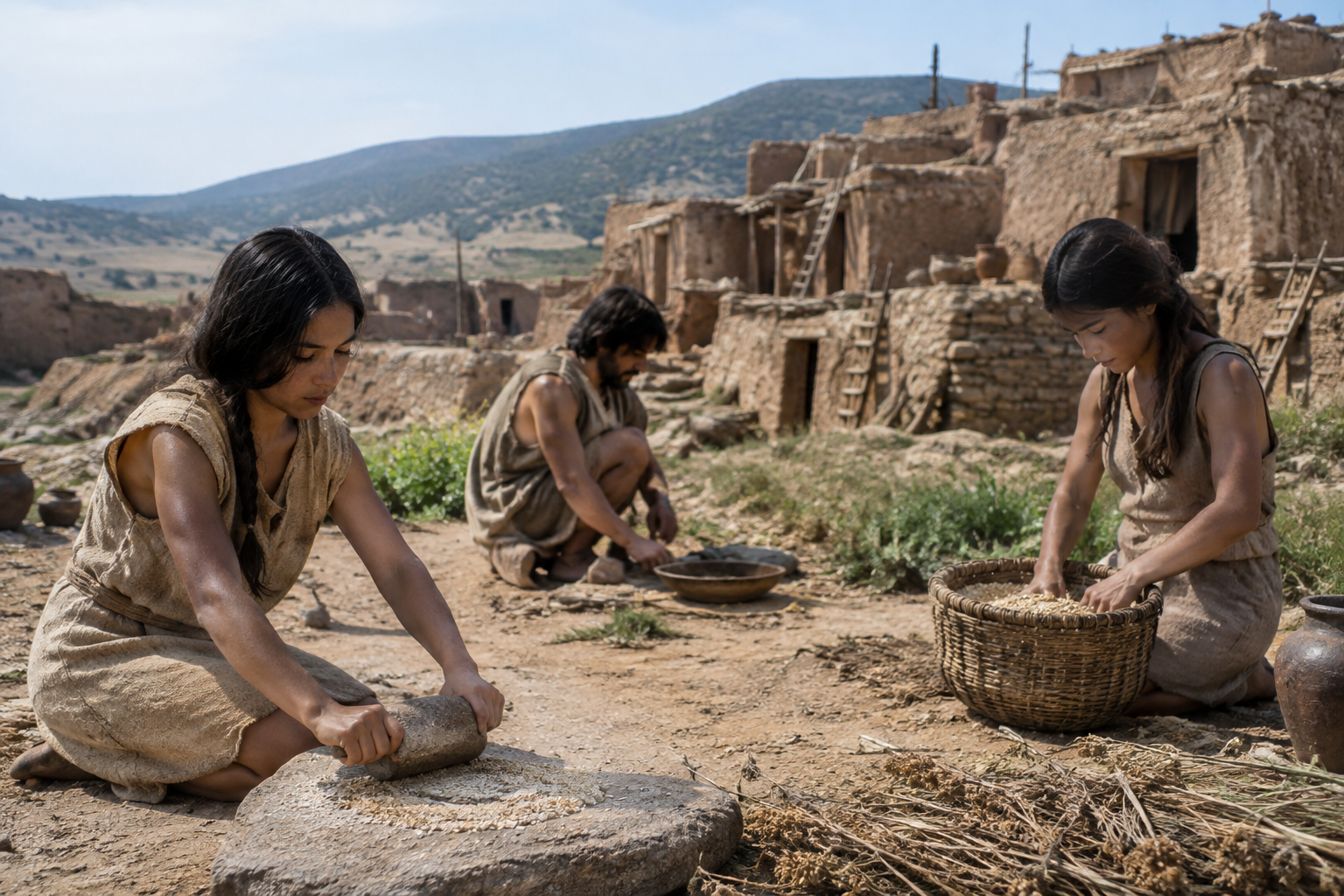
The earliest sample in this set is cch3418, from Late Neolithic Anatolia at Catalhoyuk, dated here to about 5000 BC. Catalhoyuk hardly needs embroidery. It is one of the great archaeological names of the Neolithic world: a vast settlement of closely packed mudbrick houses in central Anatolia, long central to discussions about the social worlds of early farmers.
To find H2a in that setting matters because Anatolia is fundamental to the spread of farming into Europe. A recent ancient Y-chromosome study of prehistoric males across West Eurasia has helped sharpen this picture by showing how some paternal branches connected with early farmers were much more visible in Neolithic contexts than they are today; see the research here: https://www.biorxiv.org/content/10.1101/2024.06.23.600259v1. We should be careful not to turn one man from Catalhoyuk into the ancestor of every later H2a carrier, but he does place this branch securely inside the old Anatolian farming horizon.
That is important because H2a is not just "a European haplogroup" in any simple sense. In ancient DNA it belongs to a deeper Neolithic layer, one that predates the later reshaping of European paternal lineages in the Bronze Age. The Catalhoyuk sample gives H2a a clear foothold in one of the central homelands of early agriculture.
The Spanish evidence is later, but in some ways even more revealing. At Cova d'en Pardo, a cave site in the Valencian region, both CDP009 and CDP002a are listed around 2950 BC. The repetition is the thing worth noticing: not a lone, isolated H2a result, but two men from the same Late Neolithic site associated with the same paternal branch.
That does not automatically mean they were close relatives, let alone a ruling lineage or a local "clan" in any dramatic sense. But it does suggest that H2a had a real presence in at least one Iberian farming community long after the first arrival of agriculture in the peninsula. In other words, this was not merely a passing signal left by the earliest settlers and then lost at once. Some male lines endured locally for generations.
Archaeological work on caves of this region has been especially useful for understanding how Neolithic communities in eastern Iberia used different kinds of sites, including settlement and funerary places. A location figure connected to research on Cova d'en Pardo and nearby caves can be found here: https://www.researchgate.net/figure/Location-of-the-Cova-del-Randero-1-Cova-de-lOr-2-Cova-dEn-Pardo-3-Cova-de-la_fig1_356409411. Without inventing details beyond the present evidence, the broad point is clear enough: H2a appears in a real Late Neolithic Iberian context, not as an abstract phylogenetic label.
Ancient DNA articles sometimes tempt us into chasing the rarest lineage as if rarity alone were the point. But with H2a the value is historical rather than exotic. By the later Neolithic, western Europe was not a blank map waiting to be filled; it was already a patchwork of established farming populations, local traditions, and inherited family lines. The two men from Cova d'en Pardo show that one such paternal line, with older roots in the farming world, was still there in eastern Spain around the end of the 4th millennium BC.
That continuity matters because later European Y-DNA histories often look very different. Many Neolithic paternal branches became much less common after the demographic upheavals of the 3rd and 2nd millennia BC. H2a therefore offers a glimpse of an earlier male landscape, one in which the descendants of Europe's first farmers were still plainly visible.
Neolithic to Bronze Age Catalonia
It is tempting to draw a bold arrow from Catalhoyuk straight to Iberia and call the matter settled. History is seldom so tidy. The better way to put it is that the known H2a samples fit very well within the wider archaeological picture of farming expansion from Anatolia into Europe, followed by long regional histories in which some early paternal lines survived unevenly.
The dates themselves show the scale of that story. cch3418 belongs to a Late Neolithic Anatolian world around 5000 BC; CDP009 and CDP002a belong to Late Neolithic Spain around two thousand years later. That is not a single migration episode caught in the act. It is evidence that the same broad paternal branch existed at both ends of a long Neolithic chain.
For people with H2a today, that is perhaps the most responsible and interesting takeaway. Your direct paternal line may preserve a connection to the early farming populations of West Eurasia, including communities tied to the Neolithic expansion into Europe. What it does not do is identify a specific ethnicity, language, or famous tribe. Archaeology gives us a more grounded picture: households, caves, settlements, and ordinary men whose descendants did not always become the dominant lineages of later history.
On present evidence, H2a stands out as a lineage with a distinctly Neolithic profile in this article's sample set: old Anatolian roots at Catalhoyuk, and later survival in Late Neolithic Iberia at Cova d'en Pardo. That combination does not give a neat dynasty or a romantic saga. It gives something better: a credible glimpse of how one ancient paternal branch travelled with, and endured within, the world created by early farmers.
For a MyTrueAncestry user, that makes H2a less a badge of later political identity than a marker of deep agricultural prehistory. Its story is written not in castles or chronicles, but in Anatolian settlement layers and Iberian cave burials, where the direct male lines of Neolithic Europe can still be recovered.

Comments