Haplogroup G2a2b2a1a1c1a
– 5 min read


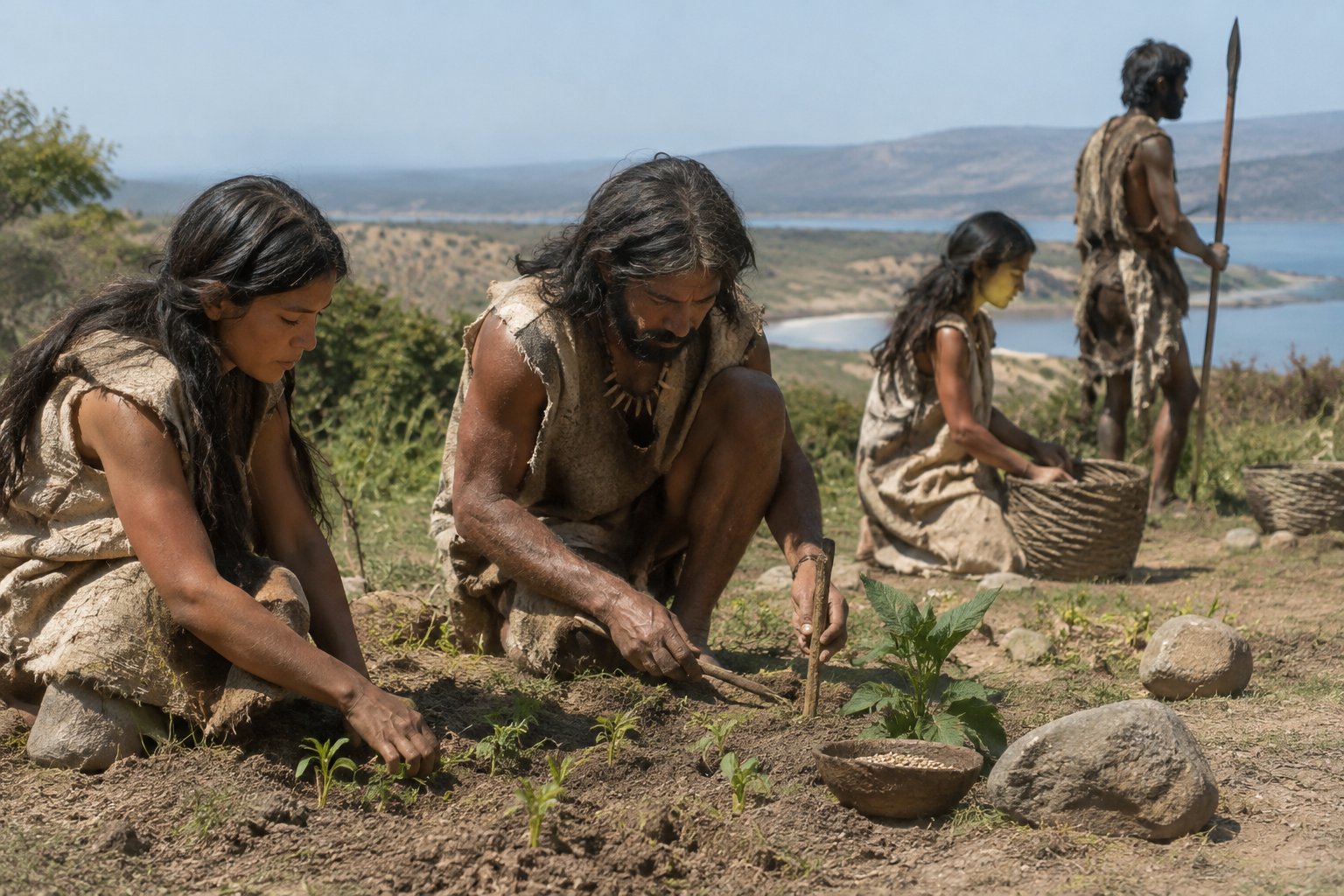
At Kaf Taht el-Ghar, a cave site in northern Morocco, two Early Neolithic males dated to around 5250 BC, ktg004 and ktg006, carry a clue to one of the more interesting paternal lines in the ancient DNA record: G2a2b2a1a1c1a. That matters because this is not a lineage turning up in one tidy European farming village alone. Here it appears on the southern side of the western Mediterranean, in a community already entangled with the great Neolithic transformation of food, settlement, and mobility.
The attraction of this haplogroup, then, is not grandeur but placement. It sits within the wider G2a family, a paternal lineage well known from many early farming populations, yet this precise branch should not be lazily equated with the whole of G2a's history. What the available ancient evidence does show is that lineages associated with this branch were present in two strikingly different Neolithic settings: Early Neolithic Morocco and Chalcolithic Bulgaria.
Kaf Taht el-Ghar lies in a region that faced both inland North Africa and the sea routes of the western Mediterranean. By the sixth millennium BC, northern Morocco was no isolated margin. It was part of a world in which pottery, farming, herding, and new forms of settlement were moving, sometimes together and sometimes unevenly, across coasts and straits.
The two men from the site, ktg004 and ktg006, dated to around 5250 BC, are therefore important beyond the narrow business of haplogroup labels. They place a branch associated here with G2a2b2a1a1c1a in one of the earliest farming contexts yet noted for Morocco. That gives the lineage a clear archaeological home in the Early Neolithic Maghreb rather than leaving it suspended in abstract phylogenetic space.
An ancient DNA study of North Africa and adjacent regions, published in Nature, has helped sharpen this broader picture of prehistoric movement and mixture across the Maghreb. Even without forcing every detail onto these two individuals, the wider implication is clear enough: northern Morocco's early farmers were part of a connected Mediterranean story, not a sealed local episode.
For anyone interested in paternal ancestry, there is a useful lesson here. Y-DNA follows one direct male line only, but archaeological context tells us what that line was doing in the world. In this case, the world was one of early cultivation, maritime contact, and the complicated formation of North African Neolithic societies.
There is sometimes a temptation to talk about Neolithic lineages as though they moved in a single arrow from one origin to one destination. The Moroccan evidence resists that kind of simplification. Kaf Taht el-Ghar is not central Europe, not the Aegean, and not the Levant, yet it still preserves a paternal line nested within the broader G2a pattern often associated with early farmers.
That does not mean every bearer of G2a in prehistory belonged to the same population, spoke the same language, or shared the same ancestry in every other respect. It means that one paternal tradition linked to early farming lifeways had reached, or developed within, communities in the far western Maghreb by the mid-sixth millennium BC. Archaeology and genetics together make that finding much more concrete than older, vague talk of "Mediterranean influences."
The western Mediterranean has increasingly emerged as a zone of movement rather than a hard frontier. If you have followed work on Iberia and its links across the sea, there is a useful comparison in how later populations around the peninsula preserved, reshaped, and absorbed different ancestries over time.
Roman Hispania's Genetic Legacy
The other ancient sample attached here is I2431, from Ivanovo in Bulgaria, dated to around 4668 BC and described as Chalcolithic. This is a very different archaeological setting from Early Neolithic Morocco: southeastern Europe several centuries later, in a period when farming societies were well established and local regional traditions had become more elaborate and more distinct.
That single Bulgarian occurrence should be handled carefully. One sample is not a tribe, not a people, and certainly not a map of migration all by itself. But it does show that a lineage associated with G2a2b2a1a1c1a appears in the Balkans as well as in Neolithic North Africa, and that alone makes the branch historically interesting.
The Balkans were one of the great laboratories of early European farming. By the fifth millennium BC, this was a landscape of tells, villages, copper use, and regional cultural development. A reported appearance of this haplogroup in Chalcolithic Bulgaria fits that wider world of established agrarian communities, and it reminds us that paternal lines associated with early farmers could persist across very different local settings.
Research on prehistoric genomes from southeastern Europe has been developing for years, and an earlier preprint at bioRxiv helped set out some of the broader genetic background for Neolithic and later populations in the region. It is best not to overclaim from that alone at sample level, but it helps frame why a Bulgarian occurrence of this branch belongs in a larger continental conversation.
Balkan Deep Population History
If there is a theme linking Kaf Taht el-Ghar and Ivanovo, it is the durability of farmer-associated male lines across a wide arc of the Mediterranean and southeastern Europe. The broader G2a umbrella is famous in ancient DNA because it appears again and again among early agricultural populations. What makes G2a2b2a1a1c1a worth a closer look is that the branch, as represented here, turns up at both ends of an important prehistoric corridor: the Maghreb and the Balkans.
That does not give us a neat migration itinerary for every generation in between. Prehistoric populations mixed, split, moved, and stayed put in combinations that rarely match simple stories. Still, the evidence does suggest that this paternal branch belongs in the world created by the spread and local rooting of Neolithic lifeways.
There is also a chronological point worth noticing. The Moroccan samples are Early Neolithic, while the Bulgarian one is later, in the Chalcolithic. So the branch is not confined to the first arrival of farming in one place. It seems, at least from the present evidence, to have remained part of settled agricultural societies after the initial transition.
Three ancient men are not a dynasty and not a continent-wide census. Yet they do give G2a2b2a1a1c1a a historically meaningful profile. At present, that profile is tied to early and middle farming worlds: two Early Neolithic individuals at Kaf Taht el-Ghar in Morocco, and one Chalcolithic individual at Ivanovo in Bulgaria.
For a modern tester exploring this haplogroup, the most responsible takeaway is that your direct paternal line belongs to a branch with visible roots in the prehistoric societies that helped define the Neolithic Mediterranean and Balkan worlds. That is not the same thing as proving a single origin story for your whole ancestry. But it is a real and rather elegant result: one male line, glimpsed in caves and settlements thousands of years apart, surviving inside the much larger human history of farming, contact, and settlement.






Comments