Haplogroup G2a1a1a2

– 4 min read


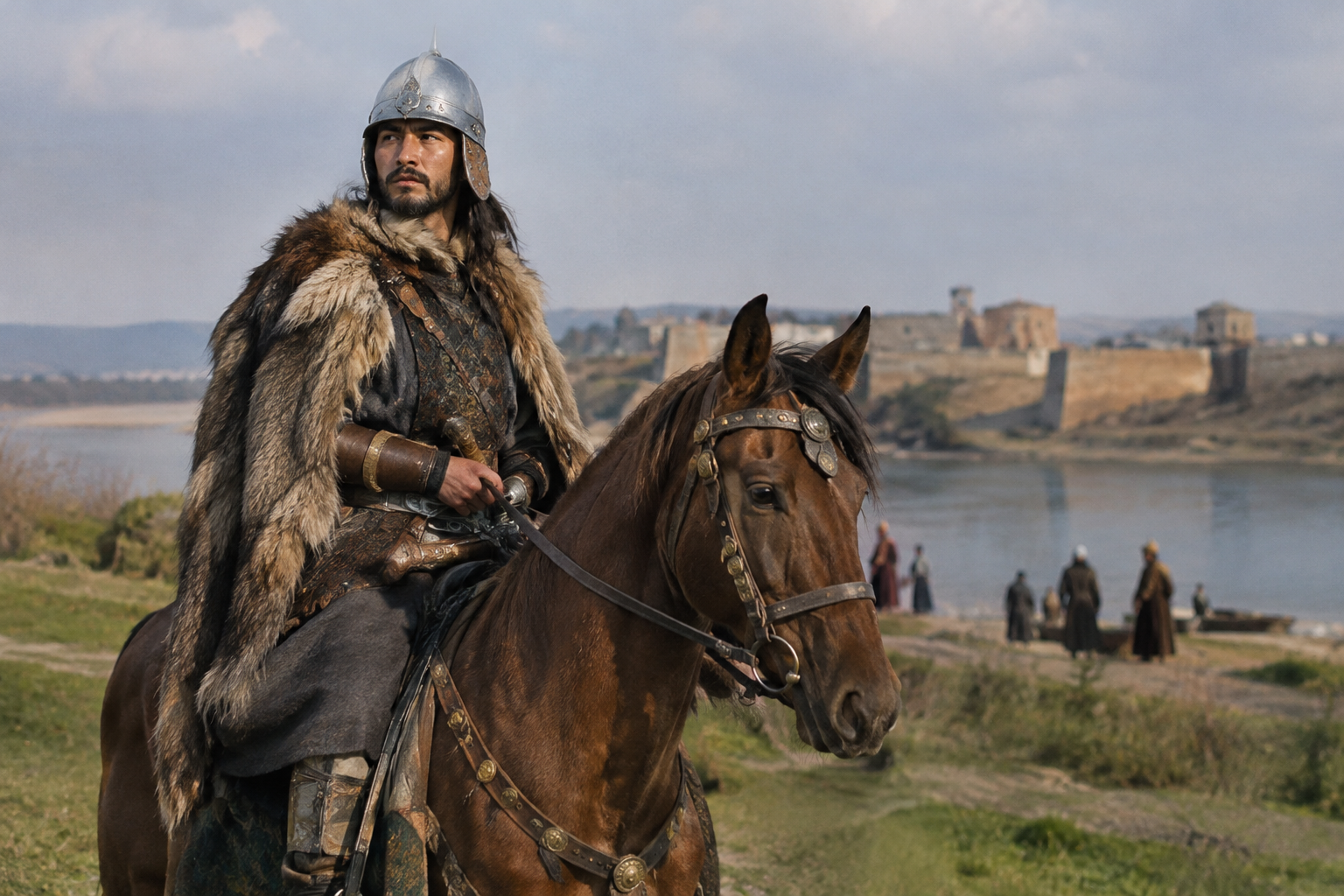
At Budapest's Nepfurdo Street, archaeologists uncovered the grave of a man identified as NEP2, dated to around AD 450 and described as a Hun elite warrior. That is already enough to place him in one of the most politically charged moments in European history: the age when the Hunnic confederation dominated much of the Carpathian Basin and unsettled the Roman world. What makes him especially interesting for paternal-line research is his reported association with Y-DNA haplogroup G2a1a1a2.
That label needs handling with some care. Y-DNA traces one direct paternal line only - father to son across generations - and not a person's whole ancestry, language, or ethnic identity. Even so, a finding like G2a1a1a2 in a fifth-century burial from Hunnic-period Hungary is valuable because it reminds us that the men buried in elite Migration Period contexts were often not genetically uniform, and that steppe empires were built from mixed populations rather than a single biological bloc.
The sample NEP2 comes from Budapest XIII, Nepfurdo Street, in a period when the Carpathian Basin had become a center of Hunnic power. Around AD 450, this was not a quiet provincial landscape. It was a frontier zone of diplomacy, tribute, military service, and movement, where Roman, post-Roman, steppe, and local traditions met uneasily and sometimes violently.
Calling NEP2 a Hun elite warrior places him in that archaeological and historical setting, but it does not turn his Y-chromosome into a simple ethnic badge. The Huns, as ancient DNA keeps showing, were not a single neatly bounded people in genetic terms. Their political networks could include men with very different paternal backgrounds, and that is exactly why a lineage such as G2a1a1a2 matters here: it sits awkwardly with any cartoon version of a purely homogeneous "Hun" ancestry.
An ancient DNA study examining these burials and the broader population history of the region has helped sharpen this picture of elite graves and mixed origins in the fifth-century Carpathian Basin: research published on these ancient populations is part of a wider effort to understand how power, mobility, and ancestry intersected in Hunnic-period Europe.
Haplogroup G as a whole is an old and widespread branch in West Eurasia, familiar to ancient-DNA readers from early farming populations as well as later historic groups. But that broad background should not be lazily transferred to the much narrower branch G2a1a1a2. A subclade this specific represents only one twig on a very large paternal tree, and its appearance in a Hunnic-period grave does not by itself tell us when that twig first arrived in the Carpathian Basin, or through which exact chain of migrations.
What it does suggest is continuity of complexity. By Late Antiquity, the Hungarian plain was a meeting ground for lineages coming from different directions: some deeply rooted in Europe, some associated with the Caucasus or western Asia at broader scales, and some linked with eastern steppe expansions. G2a1a1a2 in NEP2 therefore fits a world in which political identity could be assembled faster than biological uniformity.
That point is worth lingering over, because it is one of the great lessons of archaeogenetics. The men who served, ruled, traded, or were buried with prestige in the fifth century did not have to share one paternal origin. Empire, confederation, and military rank were social facts; Y-DNA is a genealogical one.
One ancient sample is never the whole story, but a well-placed single burial can illuminate a historical problem. NEP2 matters because he comes from the Hunnic horizon in the very region most associated with Attila's power. If a lineage like G2a1a1a2 appears in that setting, it strengthens the larger picture emerging from post-Roman archaeology: the Hunnic world incorporated men from varied backgrounds and operated through alliances, recruitment, and layered local histories.
That should sound familiar to anyone who studies empires. Roman armies were full of recruits from outside Italy; Gothic groups were never genetically identical from cemetery to cemetery; medieval ruling houses could expand through adoption, marriage, and political incorporation as much as descent. The Huns belong in that same untidy human reality.
The Carpathian Basin repeatedly appears in ancient-DNA research as a place where populations met and remade one another. Long before the Huns, it had seen major shifts through the Neolithic, Bronze Age, Iron Age, Roman period, and the centuries of post-Roman transformation. By the fifth century AD, any elite burial in the region potentially stood at the end of several different family histories, not one clean ancestral stream.
That is one reason overconfident labels can mislead. A burial may be archaeologically classified as Hunnic-period, historically associated with a Hun-dominated milieu, and genetically show a paternal lineage that has a deeper history elsewhere. None of those observations cancels the others. Together, they tell us that power in Late Antiquity rested on mobile coalitions.
In practical terms, G2a1a1a2 in this setting may reflect a paternal line already present somewhere in the wider West Eurasian world before the Hunnic period, later drawn into the political orbit of the Huns in Hungary. That is a modest conclusion, but a sound one - and good history is usually built from exactly that sort of restraint.
There is also a larger methodological point here. Earlier histories of the Migration Period often treated names in written sources - Hun, Goth, Alan, Roman - as though they described biologically fixed peoples. Ancient DNA has not abolished those labels, but it has made them much more interesting. They now look less like sealed boxes and more like moving social coalitions.
NEP2 is useful precisely because he does not allow a lazy reading. He is an elite individual from Hunnic-period Hungary, yet his paternal line is reported as G2a1a1a2 rather than some imagined "typical Hun" marker. In that sense, his grave helps pull history back toward what archaeology has long suspected: groups on the ground were assembled, negotiated, and often mixed.
If your paternal line falls under G2a1a1a2, the most distinctive lesson from this evidence is not a promise of descent from a famous conqueror. It is something subtler and more historically satisfying: this branch could appear within the elite military-political world of fifth-century Hungary, in a society shaped by long-distance movement and cultural blending. NEP2 shows that a direct paternal line like G2a1a1a2 could be present in one of Late Antiquity's most dynamic frontier zones, where identity was made through history, allegiance, and mobility as much as ancestry.






Comments