Haplogroup G2a1a1a1a

– 5 min read


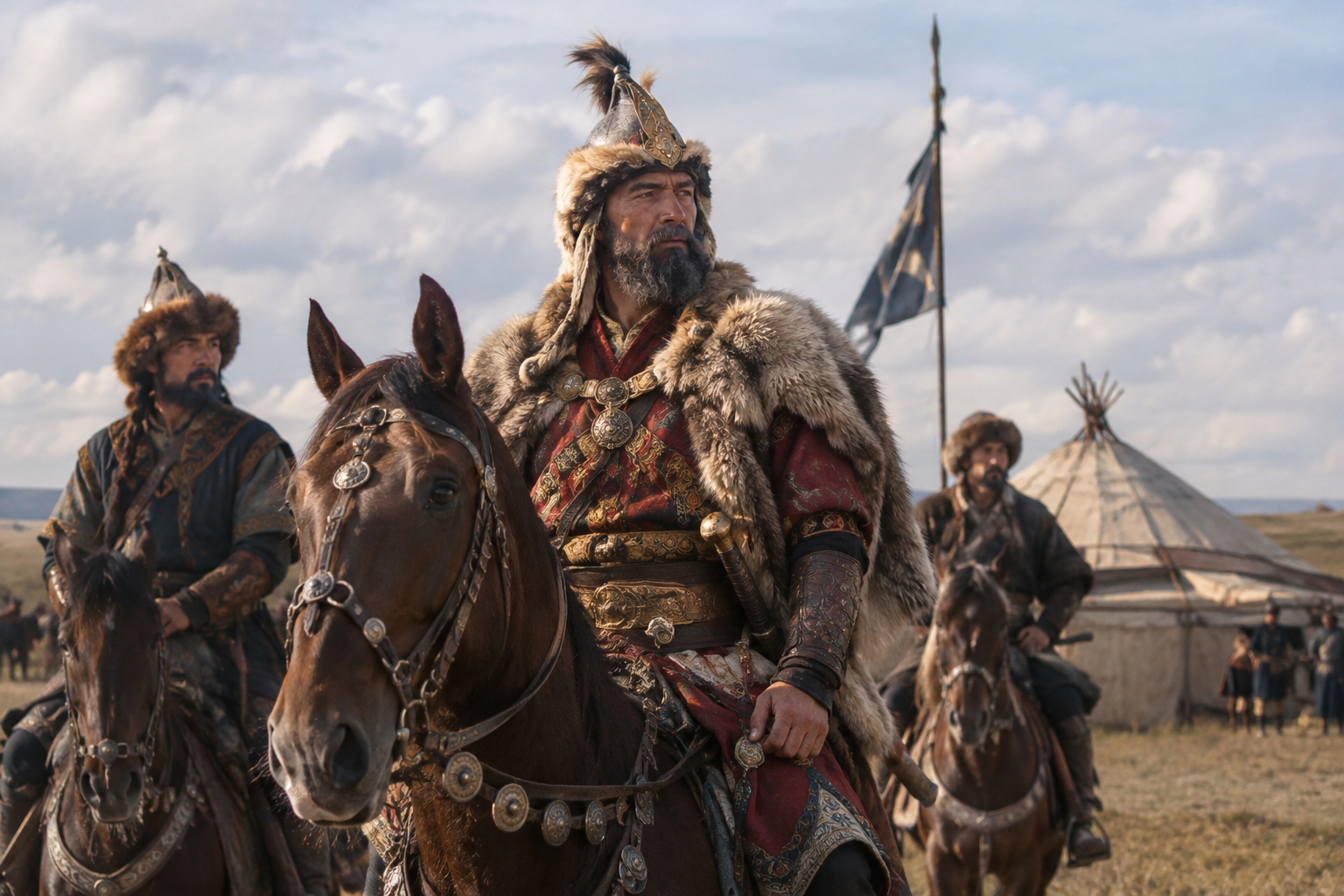
At Szeged-Othalom in southern Hungary, one of the most discussed burial groups from the age of the Hungarian conquest has produced a paternal line that is easy to overlook if one is chasing only the most famous steppe haplogroups. The individual SEO-4, dated to around AD 950 and identified as part of the Hungarian Conqueror elite, has been associated here with Y-DNA haplogroup G2a1a1a1a. That matters because it places a very specific paternal branch inside a social world usually described in broader political or military terms: mounted newcomers, mobile elites, and a newly established power in the Carpathian Basin.
It is worth pausing on what such a result does and does not mean. Y-DNA follows one direct paternal line only, not a person's whole ancestry, language, or identity. But precisely because it is so narrow, it can illuminate something that archaeology alone often cannot: the persistence of particular male-line ancestries within mixed and fast-changing frontier societies.
Szeged-Othalom belongs to the archaeological landscape of 10th-century Hungary, the period after the Magyar entry into the Carpathian Basin when burial customs, weapons, dress fittings, and horse-related finds have often been used to identify high-status groups. SEO-4 sits in that world. Even without overloading the sample with invented biographical detail, the key point is clear enough: this was not a random Neolithic farmer dug from deep prehistory, but a man buried in the political aftermath of conquest.
That context makes G2a1a1a1a especially interesting. Haplogroup G as a broad family has a deep history in western Eurasia and is often connected, at a much wider level, with early farming populations and with long-standing lineages of the Caucasus and adjacent regions. Yet the exact branch in this article is much narrower than haplogroup G as a whole, and one should not lazily paste the entire history of G onto SEO-4. What the Szeged-Othalom result really shows is that conquest-period elite groups in Hungary could include paternal lines not reducible to a single "steppe" stereotype.
A major ancient DNA study of the conquest-era and early Arpad-period population brought this diversity into sharper focus, showing that elite groups in Hungary were genetically varied and carried ancestry tied to several different historical zones across Eurasia. That broader research context is important for understanding why a lineage like G2a1a1a1a appears in an elite burial rather than being treated as an anomaly to be explained away by wishful storytelling or crude ethnic labels.
Popular history still likes tidy boxes. Steppe nomads are expected to carry one set of lineages, farmers another, mountain peoples yet another. Ancient DNA has been quietly wrecking that habit for years. By the 9th and 10th centuries AD, the world stretching from the Eurasian steppe to the Carpathian Basin was full of mixed communities, layered alliances, and long-distance family histories.
So the presence of G2a1a1a1a in SEO-4 should not be read as evidence that this individual was somehow "not really" part of the conqueror elite. Quite the opposite: it reminds us that elite formation is social and political, not genetically pure. Men could belong to the same armed retinues, funerary traditions, or ruling coalitions while carrying quite different paternal lines.
That is one of the most useful lessons of archaeogenetics. A burial group may look culturally coherent, yet its members can preserve very different paternal histories. In other words, the archaeological label and the Y-chromosome label are answering different questions. One describes a historical setting; the other traces a single male line through time.
To understand why this branch catches the eye, it helps to zoom out carefully. Haplogroup G2a in its broader forms is famous in ancient DNA because it appears again and again among early farming populations of Europe and in regions further east and south around the Caucasus and Near East. In prehistory, G2a lineages were often widespread enough to be historically consequential, even if many later European populations came to be dominated by other Y-DNA branches.
But G2a1a1a1a is not shorthand for "the first farmers" or for any single ancient people. It is a narrower paternal twig nested inside a much larger tree. By the early medieval period, such a branch might turn up in many different social worlds: local descendants of older populations, migrants from regions to the southeast or east, or lineages absorbed into mobile confederations over generations.
That is precisely why SEO-4 is valuable. The sample does not tell us that all conqueror elites shared one paternal ancestry. Instead, it shows how older west Eurasian male lines could still be active participants in a 10th-century elite society that was itself shaped by movement across the steppe and into central Europe.
Szeged lies in a region that makes historical sense for such complexity. The southern Carpathian Basin was never an isolated pocket. Long before the Magyar conquest, it had seen Roman power, post-Roman reorganization, Avar rule, Slavic settlement, and contact with steppe polities. By AD 950, this was a landscape where earlier populations and incoming groups had already been meeting, mixing, and renegotiating status for centuries.
Seen in that light, a paternal lineage such as G2a1a1a1a is not some stray footnote. It belongs to the deeper demographic grammar of the region. The conquest-period elite emerged in a world already full of inherited local complexity, and their own networks likely reached far beyond the Carpathian Basin. Ancient DNA is increasingly showing that early medieval political communities were often built from people with very different ancestral backgrounds.
Research on medieval and conquest-era Hungary has repeatedly emphasized exactly this point: elite groups could preserve notable steppe-linked ancestry while also containing lineages that speak to older and broader west Eurasian histories. The significance of SEO-4 is therefore not that he solves the origin of haplogroup G2a1a1a1a, but that he anchors this branch securely within a documented 10th-century historical formation.
For a broader look at how ancient DNA has reshaped discussion of Hungary's ruling and elite strata, see this research context, which is linked to the conquest-era material associated with these burials.
If your own Y-DNA falls within G2a1a1a1a, the most sensible takeaway is not a fantasy of direct descent from one famous rider buried near Szeged. The more useful conclusion is that your paternal line belongs to a branch with real historical depth in western Eurasia and that, by the 10th century, such lineages could be present in high-status communities tied to the Hungarian conquest horizon.
That opens interesting possibilities rather than delivering a single neat answer. Your direct male line may connect, somewhere further back, to populations in the Caucasus, Near East, or the older farming worlds of Europe - but the medieval evidence also shows that by the time of the conqueror elite, these paternal histories were already woven into mixed frontier societies. A lineage could be old, local, mobile, and politically important all at once.
The most distinctive thing about G2a1a1a1a here is not abundance but placement. In SEO-4 from Szeged-Othalom, this paternal branch appears in an elite burial from around AD 950, at the very moment when Hungary was being forged out of conquest, alliance, and settlement. That is a useful reminder that the men who built early medieval polities did not come from one simple biological background, and that even a narrow Y-DNA branch can open onto a remarkably wide historical landscape.






Comments