Haplogroup E1b1a2b2

– 5 min read


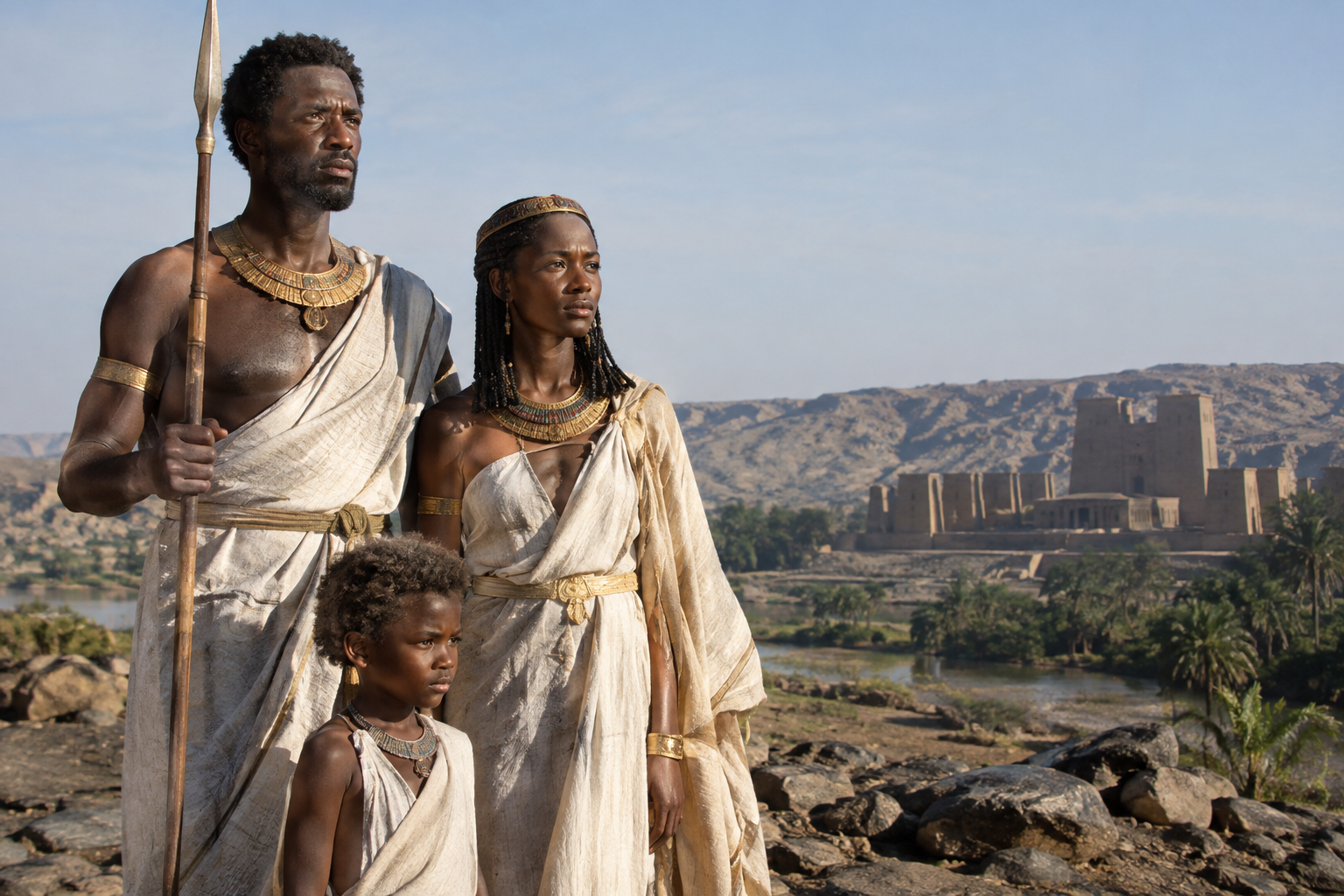
One of the oldest clues in this article sits in ancient Ethiopia, around 2450 BC: sample I5950. It is only a short label in a much bigger prehistoric record, but that is exactly why it matters. When a Y-chromosome lineage such as E1b1a2b2 turns up in an early Horn of Africa context, it gives us something rare and valuable: a fixed point in time for a paternal branch that is often discussed in broad continental terms and far too seldom anchored to a real ancient individual.
That anchoring is important because Y-DNA traces one direct paternal line only. It does not tell us everything about a man's ancestry, language, or identity. But in archaeology, even a single ancient male lineage can sharpen the picture of how populations were structured, connected, and changing. In the case of E1b1a2b2, the Ethiopian evidence points us toward northeastern Africa in the third millennium BC and forces us to think carefully about African population history on its own terms, not as a side note to Eurasian prehistory.
The key evidence here is straightforward: I5950 is reported from ancient Ethiopia and dated to about 2450 BC. That places the individual in a period when communities in the Horn of Africa were already part of long regional histories of herding, local mobility, environmental adaptation, and contact across adjoining landscapes. Even without an elaborate burial description, the date and place alone make this sample significant.
Too often, discussions of African Y-chromosome branches are flattened into modern frequency maps. Ancient DNA changes the tone completely. Instead of asking where a lineage is common today and then projecting backwards, we begin with an excavated person in a documented prehistoric setting. That is a much sounder archaeological habit.
A landmark ancient DNA study helped open this wider conversation by examining deep population history in and around Africa and western Eurasia. Even where a single sample cannot carry the whole story, such work has made it possible to place individuals like I5950 into a better researched prehistoric frame.
How archaeogenetics reads the past
The lineage name matters. E1b1a2b2 is not the same thing as all of haplogroup E, nor even all of E1b1a. Those larger parent branches have long and complex histories across Africa, and it would be careless to pour all of that background directly into this narrower subclade as though nothing changed along the way.
What we can say more safely is that E1b1a-related paternal lines form a major part of African population history, especially in sub-Saharan contexts, and that the appearance of E1b1a2b2 in ancient Ethiopia shows one branch of that wider family already present in northeastern Africa by the mid-third millennium BC. That is an important observation because it pushes against the lazy idea that African paternal history can be summarized as one simple movement or one uniform ancestry block.
It also reminds us that prehistoric Ethiopia was not an isolated edge. The Horn sat at the junction of ecological zones and exchange networks linking highlands, lowlands, the Nile corridor, the Red Sea world, and the wider northeast African sphere. A paternal lineage found there may reflect local continuity, regional mobility, or older population structure within Africa itself. With the evidence we have, those are possibilities to weigh, not certainties to dramatize.
To understand why I5950 is interesting, we need to look beyond the code and date. Around 2450 BC, the Horn of Africa was already home to societies adapting to varied landscapes with different mixtures of herding, foraging, and early food production. This was not a historical blank page waiting for outside actors to arrive. It was a region with its own deep demographic history.
That point matters especially in popular genetics, where northeastern Africa is sometimes treated merely as a corridor between somewhere else and somewhere else again. Ancient Ethiopian DNA helps correct that habit. People in the Horn were not simply pass-through figures in someone else's migration map; they were populations with their own lineages, local histories, and long-term biological presence.
When a paternal branch like E1b1a2b2 appears in this context, the finding encourages a more African-centered reading of prehistory. Instead of asking only how the Horn connected to Arabia or the Mediterranean, we can also ask how its populations related to other African regions over long spans of time, and how different male lines may have been distributed before later historical movements reshaped the landscape.
African population history through DNA
There is a temptation, when evidence is sparse, to dismiss a lone sample as too small to matter. Archaeology usually teaches the opposite lesson. A single well-dated individual can overturn assumptions, especially when earlier discussions relied on modern distributions alone.
In this case, I5950 gives E1b1a2b2 a prehistoric presence in Ethiopia rather than leaving it floating in an undated cloud of present-day genetic data. That does not mean the branch originated exactly there, nor that every later carrier descends from that particular local population. What it does mean is that this paternal line, or a very close ancestral form of it, belonged to a real man living in ancient northeastern Africa during the third millennium BC.
For family historians, that distinction is more useful than grand claims. It offers a firm historical horizon: your paternal line belongs to a branch with documented ancient roots in Africa, and at least one securely ancient point on that map lies in Ethiopia around 2450 BC. That is already a richer answer than a generic statement about "African origin."
There is another reason to treat this evidence carefully. African genetic history has often been described through sweeping formulas that blur together language, ancestry, and archaeology. Yet ancient DNA repeatedly shows that populations can change language without replacing all earlier ancestry, can share ancestry without sharing the same paternal lines, and can occupy the same broad region while preserving quite different family histories.
E1b1a2b2 sits inside that more complicated human story. A Y-line can expand dramatically in one period, persist quietly in another, and travel through social processes that leave little trace in written records. In Africa especially, where the documentary record is patchy for many early periods, ancient burials become indispensable witnesses.
That is why prehistoric and historic discoveries of African ancestry in unexpected places have generated such interest across the field. For a later example of how mobility can complicate assumptions, see this MyTrueAncestry discussion of West African DNA in seventh-century England. It is a very different case from ancient Ethiopia, but it makes the same larger point: ancestry does not always stay where modern maps expect it to be.
West African ancestry in early medieval England
If your paternal haplogroup is E1b1a2b2, the ancient evidence is still limited, but it is not empty. The presence of sample I5950 in ancient Ethiopia suggests that this branch belongs within a deep African paternal landscape that was already established in the prehistoric Horn more than four thousand years ago. That is not a claim about one tribe, one kingdom, or one simple migration. It is better than that: it is an archaeological foothold.
For a modern tester, the responsible reading is that your direct paternal line is part of an old African story with at least one documented ancient appearance in northeastern Africa by about 2450 BC. As more African ancient DNA is published, that picture will almost certainly become sharper. For now, I5950 stands as a reminder that even one excavated individual can rescue a lineage from vagueness and return it to history.






Comments