Haplogroup C1a1a1a1

– 4 min read


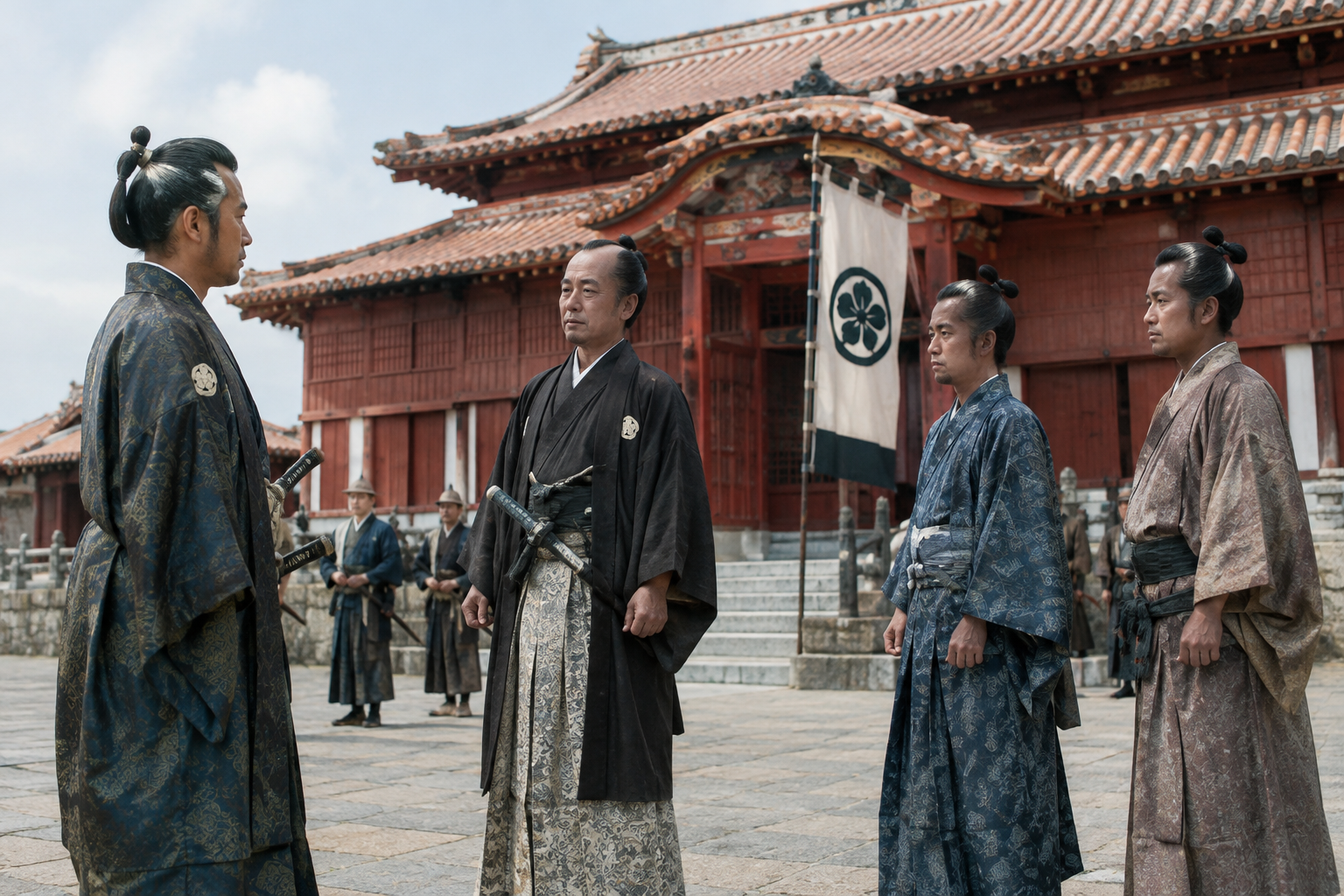
One of the few concrete ancient anchors for Y-DNA haplogroup C1a1a1a1 in this set is a man identified as NAG035, dated to around AD 1700 in Okinawa, Japan, within the era of the Tokugawa shogunate. That may sound surprisingly late for an article about a deep paternal lineage, but in fact it is exactly the sort of find that makes archaeogenetics so interesting. Ancient DNA is not only about Ice Age caves and Bronze Age chiefs; sometimes it is about placing a documented historical-period individual inside a much longer human story.
In this case, the longer story matters because C1a1a1a1 belongs to a very old Y-chromosome family with deep roots in East Asia. Y-DNA follows one direct paternal line only, father to son across generations, so it does not describe a person's whole ancestry. But when a branch as uncommon and ancient-looking as C1a1a1a1 turns up in an Okinawan individual from the early modern period, it raises an important historical question: how much of the older paternal landscape of the Japanese archipelago, and especially the Ryukyu Islands, survived into comparatively recent times?
The context of NAG035 is historically rich even if the sample note itself is spare. Around AD 1700, Okinawa stood within the distinctive political world of the Ryukyu Kingdom, already deeply shaped by the 1609 Satsuma invasion and by its position between Japan, China, and the wider maritime networks of East Asia. This was not an isolated island world in any simple sense. It was a place of trade, tribute, layered sovereignty, and cultural negotiation.
That makes the presence of haplogroup C1a1a1a1 especially intriguing. Rather than pointing to some dramatic one-off migration that can be neatly dated to the Tokugawa period, the more cautious reading is that this paternal line may represent continuity: one strand of male ancestry persisting in the Ryukyus despite major political change. An Okinawan man living in the 17th or early 18th century could still carry a lineage whose deeper history reaches far beyond the age of castles, tribute missions, and samurai bureaucracy.
Within East Asia, haplogroup C as a broad Y-DNA family is ancient and widespread, but its branches have very different histories. That distinction is crucial. One should not casually transfer the story of all haplogroup C lineages onto the very specific subclade C1a1a1a1. The narrower branch has its own history, and in Japan it has drawn attention because some C lineages appear connected to old layers of population history in the archipelago rather than to later, more expansive mainland-derived paternal expansions.
That does not make C1a1a1a1 a synonym for any single archaeological culture or ethnic label. It does, however, fit into a broader pattern in which Japan preserves traces of older paternal diversity that became rare elsewhere. This is one of the recurring lessons of ancient DNA in island settings: isolation is never total, but islands can conserve lineages that later demographic shifts reduce on nearby mainlands.
A wider discussion of paternal history in East Asia can be found in MyTrueAncestry's piece on ancient Y chromosomes and East Asian paternal migrations. That broader framework helps explain why a single Okinawan sample can matter disproportionately: rare lineages often survive in patchy, local ways, and every securely placed ancient individual helps refine the map.
The Ryukyu chain has become increasingly important in archaeogenetics because it complicates any tidy, one-directional model of Japanese prehistory. The islands were connected to the main Japanese islands, yet they also preserved regional histories of their own. That is why Okinawan samples matter so much: they test whether older ancestry components survived locally, and whether later state formation erased or merely overlaid those deeper structures.
Research highlighted in MyTrueAncestry's article on ancient human DNA from Katsuren Castle shows just how much promise the Ryukyu Islands hold for reconstructing long-term population history. Even when evidence comes from unusual contexts, such as sediments rather than a conventional burial, the underlying question is the same one raised by NAG035: who remained, who moved, and how much biological continuity sat beneath visible cultural change?
Seen in that light, C1a1a1a1 is less a badge of identity than a clue. It suggests that the paternal history of Okinawa cannot be reduced to a single wave or a single political order. The Tokugawa-era date of NAG035 is precisely what gives the sample its force: it shows that early modern society in Okinawa still contained men carrying lineages with much deeper roots.
It is worth being sober about the scale of the evidence. A single individual, even a very informative one, does not stand for all Okinawans, all Ryukyuans, or all historical Japanese populations. Nor does the recovery of C1a1a1a1 from NAG035 prove an unbroken documented genealogy back to any named ancient community. Archaeology is rarely so obliging.
But one sample can still do real work. It can show that a lineage was present in a specific place at a specific time. It can place that lineage inside a historical setting rather than a vague prehistoric haze. And it can help test bigger models built from both ancient and modern DNA, especially where island populations preserve lineages that later became uncommon.
For readers exploring their own paternal ancestry, the most interesting feature of C1a1a1a1 is not prestige or conquest, but survival. In much of Eurasia, repeated expansions of successful male lineages can make older branches difficult to trace. Japan, and especially the Ryukyus, seem to preserve some of those older layers in a way that is historically revealing.
This is why archaeogenetics in Japan has become so valuable. It shifts the discussion away from simple origin stories and toward a more textured picture: regional persistence, later admixture, and the uneven survival of paternal lines. A lineage like C1a1a1a1 may therefore point not to a famous dynasty, but to something in some ways more interesting - the endurance of a deep ancestral thread within an island society that was fully part of early modern history.
NAG035 from Okinawa does not give us a grand royal pedigree or a dramatic migration saga on his own. What he offers is subtler and, in good archaeology, often more valuable: firm evidence that haplogroup C1a1a1a1 was present in the Ryukyus in the Tokugawa age. For anyone who carries this paternal branch today, that is a reminder that rare lineages can preserve unexpectedly long local histories, surviving through major political and cultural transformations while leaving only faint traces in the record.






Comments