The House de Mandeville

– 3 min read


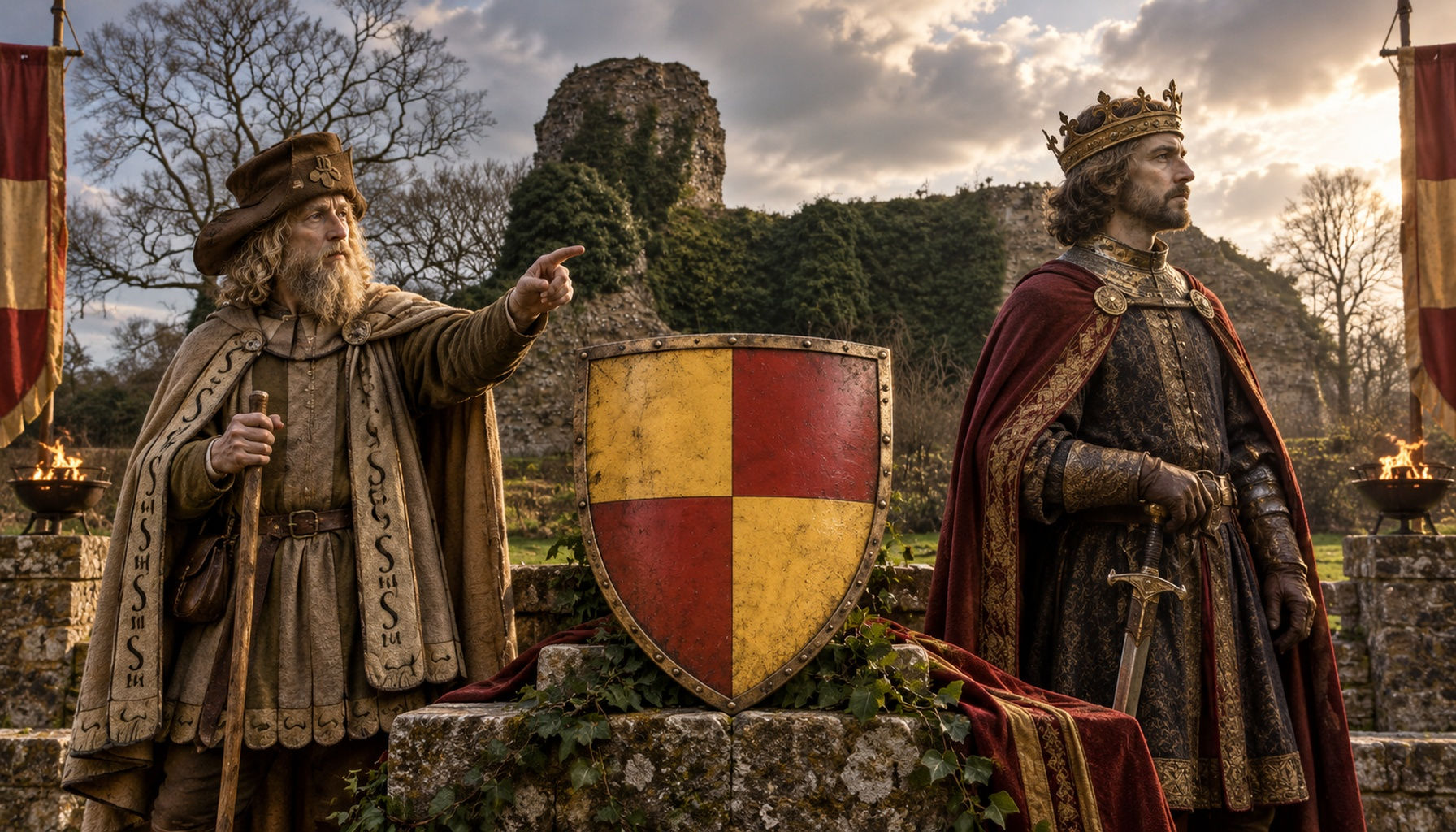
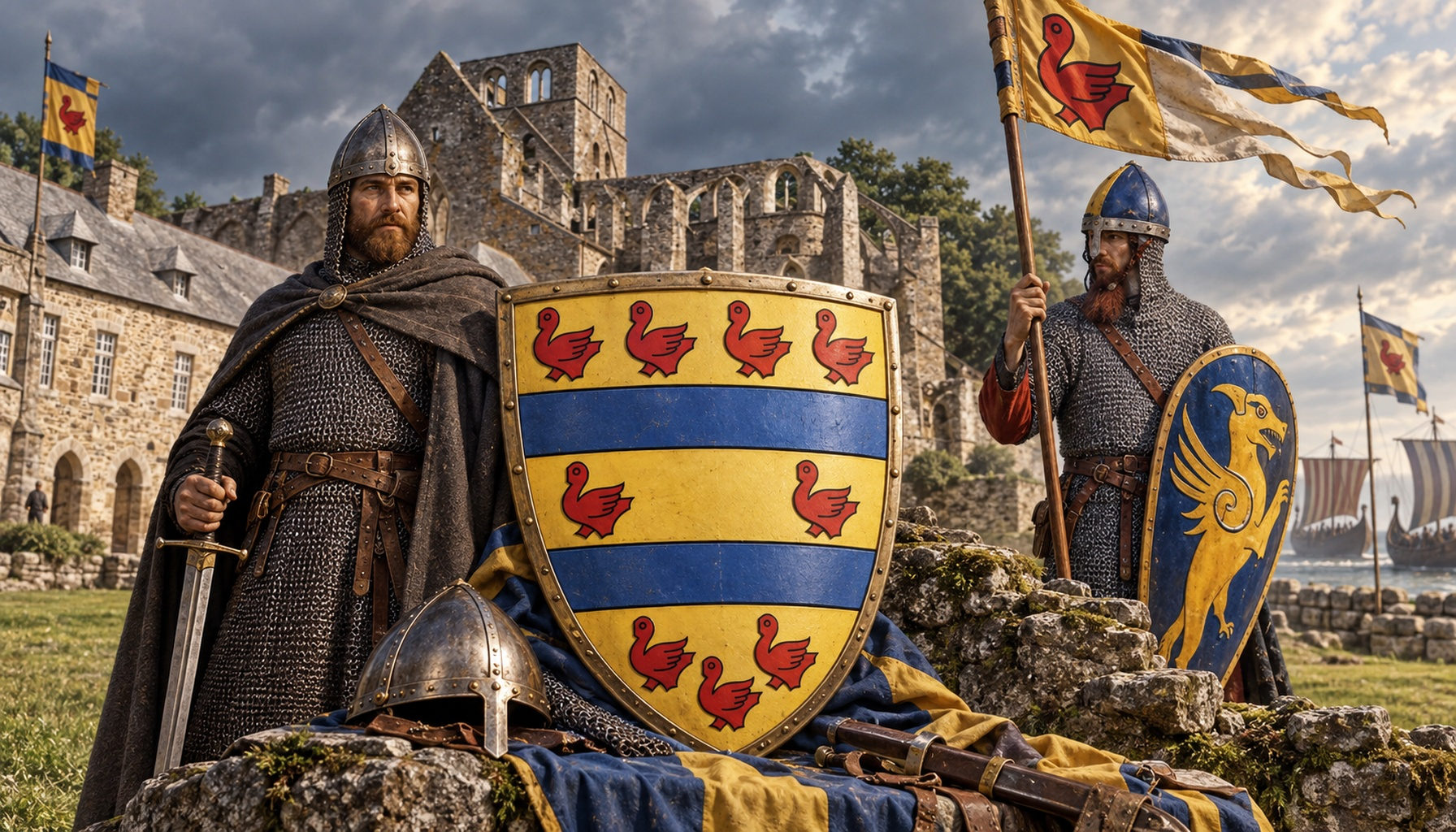
The House de Mandeville was one of the great Norman and Anglo-Norman noble families to rise in the wake of 1066, and it is closely associated here with the Y-DNA haplogroup I1a2b1c1a, treated as the primary family haplogroup tag. The name itself points back to Normandy, most likely from Magnaville in the Cotentin peninsula, in that world of ducal lordship, mounted warfare, and ambitious families who crossed the Channel with William the Conqueror or attached themselves to the new regime soon after. In England, the de Mandevilles became a textbook example of how conquest turned into landed power: royal favour, sheriffdoms, castles, feudal rights, and a careful grip on estates spread across several counties.
The family background is richer than a bare list of titles. Geoffrey de Mandeville I (1046-1100) established the family securely in post-Conquest England, while William de Mandeville (1072-1130) consolidated its position in the next generation. Then came Geoffrey de Mandeville, 1st Earl of Essex (1092-1144), by far the most famous and notorious member of the line. During the civil war of King Stephen and Empress Matilda, he became one of the most formidable magnates in England, not because he was uniquely noble in spirit, but because he understood power in its raw medieval form: castles, bargaining, shifting loyalties, and armed followings. The de Mandevilles stand for a very recognisable Anglo-Norman pattern, where service to the crown could produce astonishing advancement, but where overreach in a fractured political world could turn prestige into ruin with alarming speed.
Walden Castle in Essex became one of the clearest symbols of Mandeville power. Built in the 12th century, probably by Geoffrey de Mandeville, 1st Earl of Essex, it was an important stronghold during the period known as the Anarchy. This was not simply a residence in the modern sense, but a statement in earth, timber, and stone that a lord intended to dominate the surrounding landscape. The castle was a motte-and-bailey fortress, with a large mound and defensive enclosure, set near what became Saffron Walden. It helped anchor Mandeville authority in a region where local control mattered enormously, especially when royal government was weak or disputed. Today, the earthworks survive as a scheduled monument in the public castle grounds at Saffron Walden, so yes, it can still be visited in a meaningful sense. You are not walking into a complete standing fortress, but you are standing in the footprint of one of the most charged political sites of 12th-century England, where aristocratic ambition was turned into topography.
Read about the House of de Warenne
For readers interested in the deeper genetic backdrop, the de Mandeville haplogroup tag here is I1a2b1c1a. We should be careful: that does not mean every ancient sample with a related branch is a direct ancestor of the family, nor that we can leap from archaeology to a named medieval pedigree. What we can say is that a set of related or linked I1a2b1c1a-associated samples helps sketch the wider paternal landscape from which later northern European and Anglo-Norman lineages emerged. Among them are Post-Roman England, North Yorkshire, Vale of Pickering (I20638); Early Anglo-Saxon Cemetery, West Heslerton, Yorkshire (I20639, I20646, I20661, I20656); Post Roman Era Worth Matravers, Dorset, England (I20637); Neolithic Denmark, Karlstrup (CGG106702); and even the later historical sample of Ludwig van Beethoven, Wiener Zentralfriedhof (lvb). Taken together, these linked samples point to a long and complicated northern European story stretching from Neolithic Scandinavia into early medieval England and beyond, exactly the kind of broad background one might expect behind a Norman family that made its name in conquered England.
If the House de Mandeville catches your imagination, for its Norman origins, its castles, its earls, or its place in the dangerous chess game of 12th-century England, you can take the next step yourself. Upload your DNA to MyTrueAncestry and see whether you match the House de Mandeville, the haplogroup I1a2b1c1a, or related ancient DNA samples from Anglo-Saxon and post-Roman Britain.
Comments