The House de Lalaing
– 3 min read


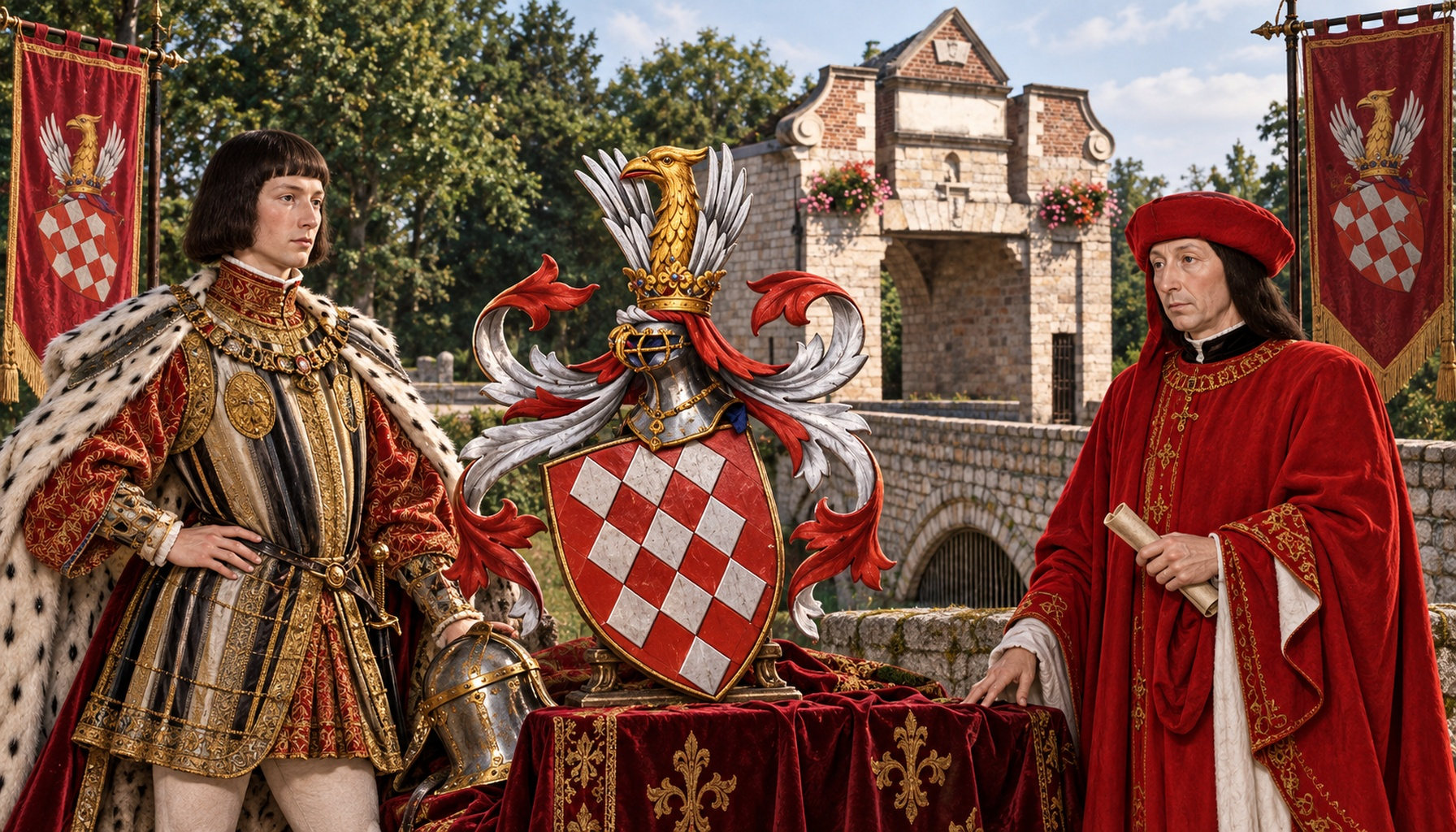
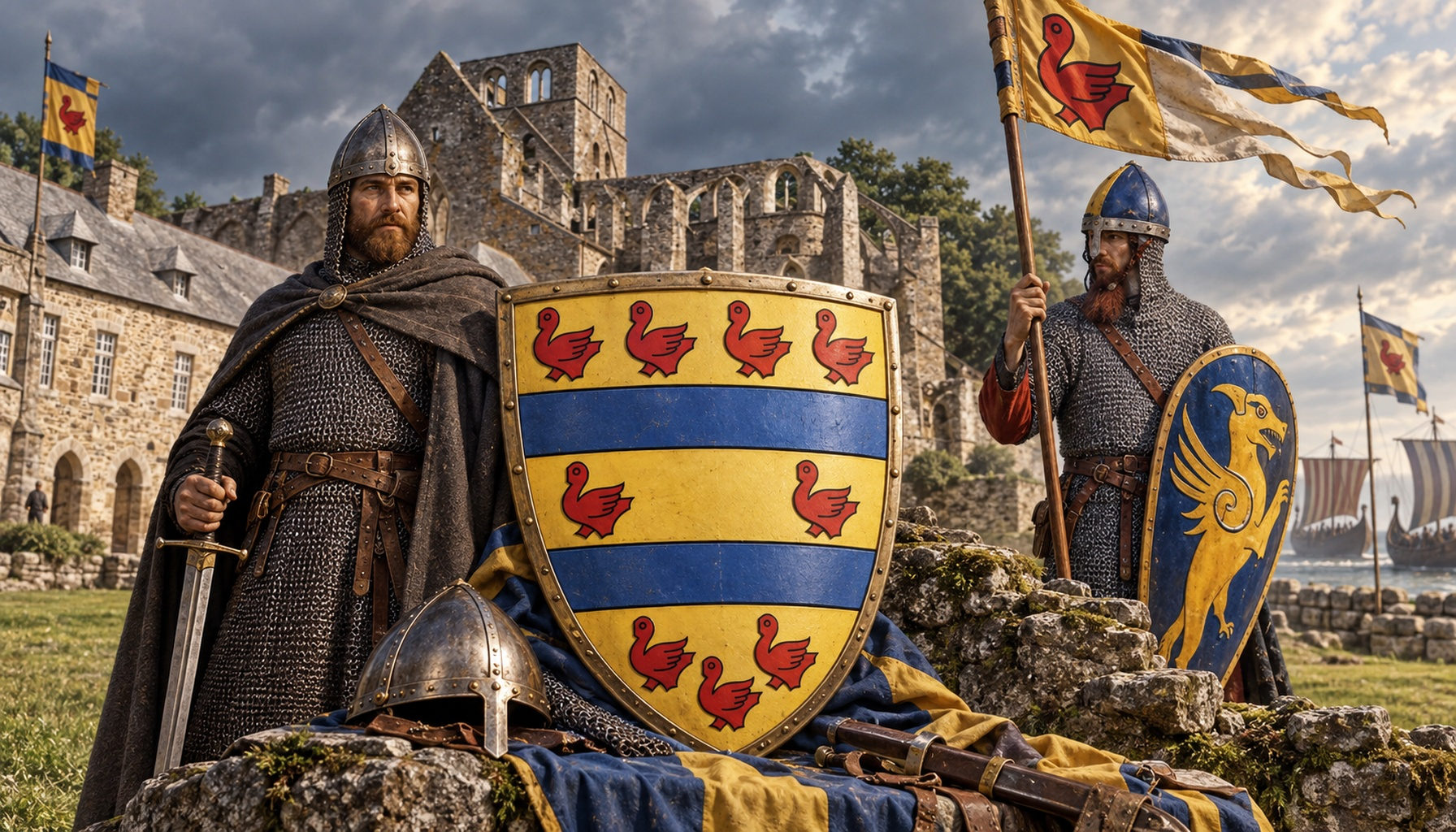
The House de Lalaing was one of the notable noble families of Hainaut, rooted in the lordship of Lallaing in the southern Low Countries, in what is now northern France near the old frontier world of Flanders, Hainaut, and Brabant. Their primary family haplogroup is tagged here as I1a3a1a3a, a lineage label that sits neatly alongside a family story built on land, war, office, and service. The de Lalaings rose in the later Middle Ages not as fairy-tale castle extras, but as practical aristocrats of a very Burgundian kind: men who fought, negotiated, governed, married well, and stayed close to power.
That matters because Hainaut in this period was not some sleepy corner. It was part of the busy political engine room of the Burgundian Netherlands and later the Habsburg Low Countries, where noble families could turn local lordship into regional importance. The de Lalaings did exactly that. Through military distinction, court office, diplomacy, and advantageous marriage alliances, they became tied to the ruling structures of the dukes of Burgundy and then the Habsburg rulers. Figures such as Simon de Lalaing (1405-1476), Josse de Lalaing (1437-1483), and Charles I de Lalaing, 1st Count of Lalaing (1466-1525), show the family at its height: knightly, ambitious, politically useful, and very much woven into the high aristocratic fabric of the Low Countries.
The family's location anchor is the Chateau de Lallaing, the stronghold that gave the house its name and local identity. As the record gathered at castles.nl makes clear, the site has deep medieval roots and was long associated with the seigneurial history of Lallaing. What survives today reflects centuries of rebuilding, damage, adaptation, and aristocratic continuity, which is often the real story of European castles: less a frozen medieval postcard than a layered building biography. The chateau stands in a landscape shaped by lordship, agriculture, and regional conflict, and it helps explain how a family like the de Lalaings could project authority from a local base into the wider politics of Hainaut and the Burgundian-Habsburg world. The site is presented as a known historic castle and is reasonably visitable as an extant heritage location, so for anyone interested in the family, it remains the obvious place to start.
Read more about the House of de Lannoy
The haplogroup tag I1a3a1a3a also opens an intriguing ancient-DNA window, though with the usual important caution: related or linked lineages do not prove direct descent from any named ancient individual. Still, the spread of I1-linked and closely related paternal lines across time and place is fascinating. Comparable linked samples include RKO003 from Migration Period Rakoczifalva in Hungary, OSIJ007 from a Roman-period Germanic warrior context at Mursa in Croatia during the Third Century Crisis, I14832 from the Byzantine Roman Zeytinliada Monastery in Anatolia, S16508 from Early Medieval Wolverton Radcliffe in Buckinghamshire, VK157 from the Viking Age elite warrior burial at Bodzia in Poland, and R110 from the Vasconic-Roman mix at Crypta Balbi in Rome. Taken together, these do not map a family tree for the de Lalaings, but they do place this haplogroup in a long northern and central European story of movement, military service, frontier contact, and elite networks; all themes that suit the historical world in which the House de Lalaing later flourished.
If the House de Lalaing captures your imagination, the next step is simple: upload your DNA to MyTrueAncestry and see whether you match the family story, the haplogroup I1a3a1a3a, or related ancient DNA samples from the wider European past. It is one thing to read about noble lineages, castle lordship, and Burgundian courts; it is another to test whether your own genetic history brushes against that world.
Comments